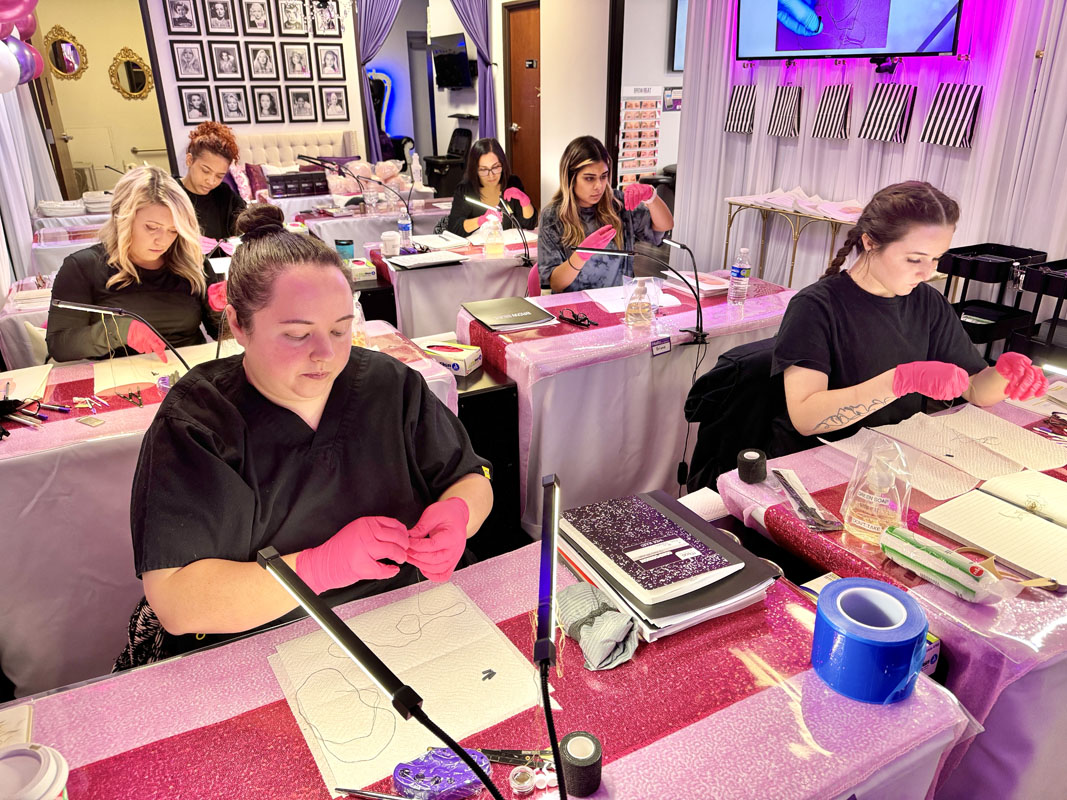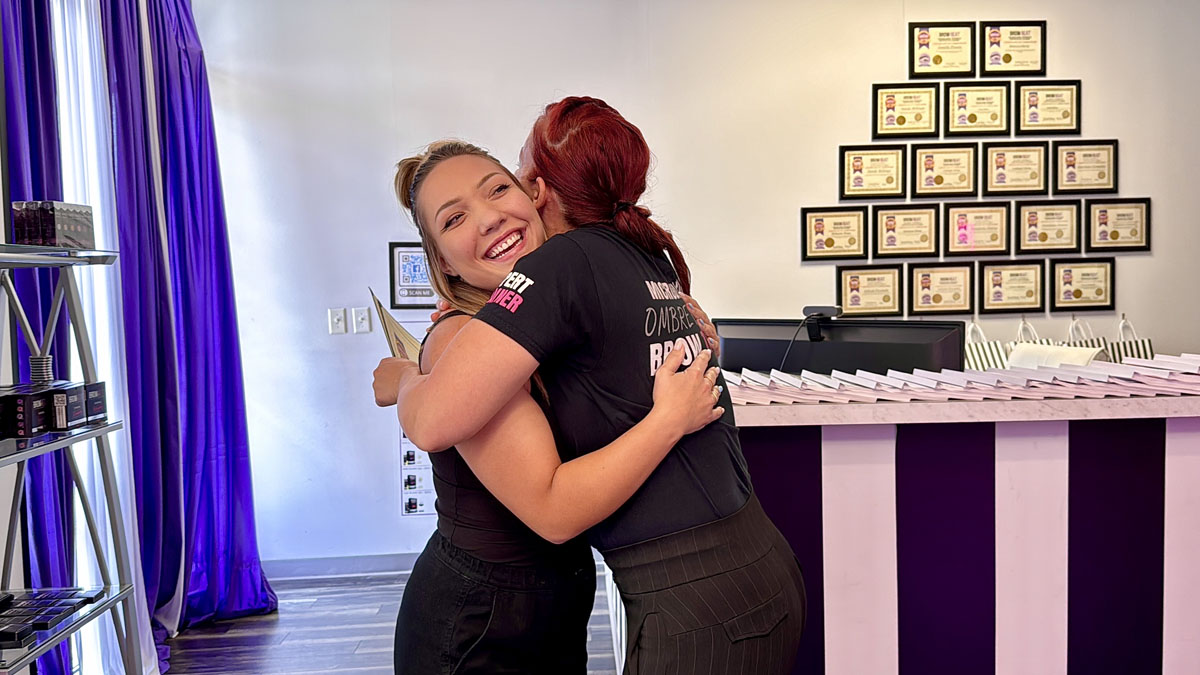
When most people hear the word advanced, they assume it’s reserved for experts. At
BrowBeat Studio Dallas Microblading Certification and Training Academy, advanced means something very
specific: thorough, expertly structured education taught by trainers with a decade of experience in
semi-permanent makeup. Because our instructors have refined both technique and teaching for over ten years, we are able
to teach three core skills—microblading, Ombré powder, and combo brows—within one cohesive certification
program. This is not about difficulty for difficulty’s sake; it’s about clarity, sequencing, and repetition that
builds real capability for students at any starting point.
Our approach combines exact explanations with carefully staged practice so that each concept becomes something you can
actually do. Instead of memorizing disjointed steps, you’ll understand the why behind those steps and how to
adapt them to different faces and brow histories. We’ll move from foundational concepts to controlled repetition and
then to structured decision-making—exactly the way complex skills should be taught. If you’d like to see how this
structure flows inside our curriculum, review the core outline on our
Microblading Certification
page as you read; the same teaching logic threads through our Ombré and Combo training, too.
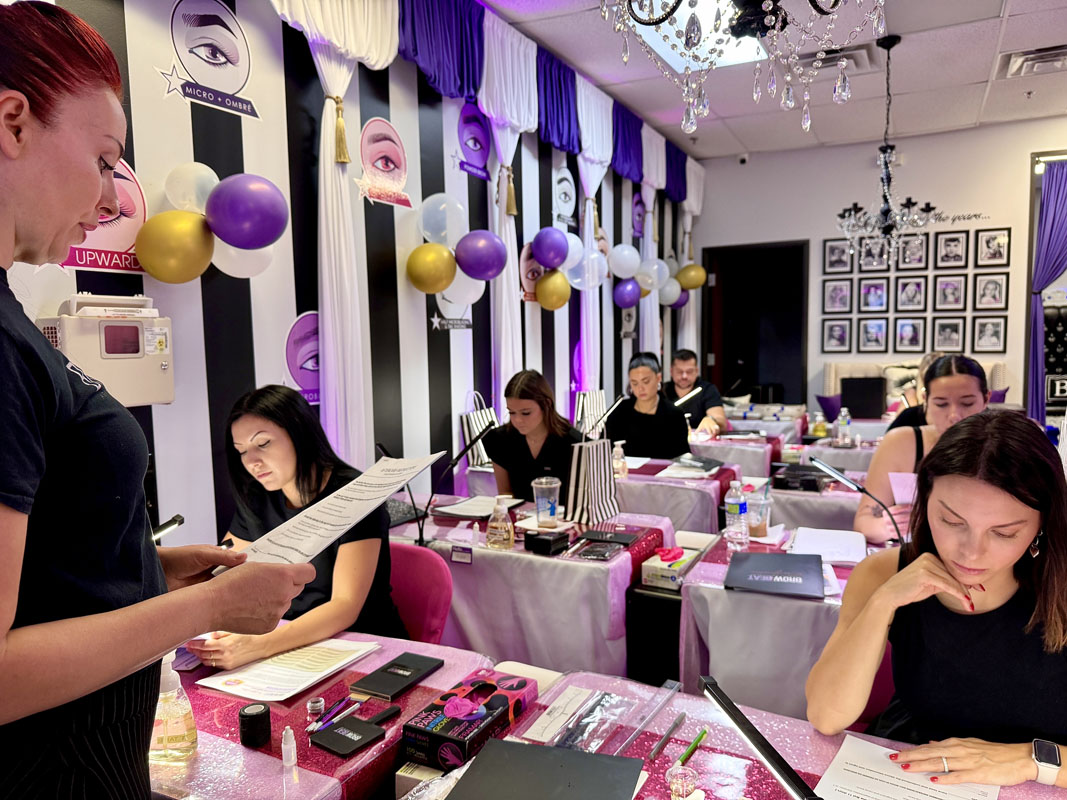
Why “Advanced” Training Is for Everyone
Advanced training can sound intimidating until you understand what we mean by it. We call our program advanced because
it is designed at an advanced level—built to translate complex mechanics into clean, repeatable actions—rather
than because it excludes beginners. We believe beginners deserve the same caliber of instruction as experienced
artists—clear terms, reliable demonstrations, and a learning arc that prevents confusion. Meanwhile, returning artists
need a system that fills gaps, tightens technique, and challenges decision-making without creating chaos. Good training
can do both, and that is what this course delivers.
The result is a classroom rhythm that feels focused, not frantic. You will see micro-skills demonstrated precisely,
practice them in a controlled way, and then apply them with increasing independence. We’ll teach you to make choices the
way professionals do: by reading anatomy, understanding technique logic, and working with intention instead of hoping for
a good outcome. That is what transforms a training day into a real step forward in your career.
Three Certifications, One Cohesive System
Microblading, Ombré powder, and combo brows are often taught separately as if they do not influence each other. In real
practice, they are three languages in the same conversation. Hair-stroke logic (microblading) gives believable texture
by respecting direction, spacing, and flow. Pixel shading logic (Ombré powder) gives controllable density and gradient
through machine angle, motion, and layering. Combo work blends both to solve real design problems—gaps in growth, patchy
prior work, or clients who want texture in the head with velvety smoothness through the body and tail. Teaching them
together creates a stronger artist because you learn not merely how to execute, but when to choose each method
and how to combine them gracefully.

We also structure the program so you loop back to the same core controls—placement, pressure, speed, and sequencing—across
all three techniques. That repetition is not accidental. It fixes the fundamentals into muscle memory while showing you
how those same fundamentals express differently in each method. Open our
Ombré Powder Brow Certification
page and you’ll notice the emphasis on gradient control and pixelation. Compare that to microblading’s focus on precise
stroke architecture. Both are anchored in the same disciplined attention to proportion, balance, and restraint—the
hallmarks of work that looks refined now and continues to look refined as it softens.
How We Teach Complex Skills Without Overwhelm
The secret to learning fast is not to move quickly; it’s to move clearly. Our sequence looks like this:
- Clarify the concept. Define the technique’s goal in plain language, then translate it into the
handful of controllable variables that produce that result. - Demonstrate at full speed, then in slow motion. Watching both allows your eye to catch the parts
you’ll be responsible for repeating—angle, direction, pressure, lift points, and speed changes. - Practice via simulation exercises. We isolate motions, patterns, and decisions so you can repeat
them with focus. Mistakes become useful, not discouraging, because they surface exactly which variable you need to
adjust. - Combine and apply. Once the patterns are clean, we ask you to integrate them (for example, placing
clean microblading heads, then shading smoothly through the body). - Evaluate and refine. We teach you to critique your own work with an expert checklist so your growth
continues after class.
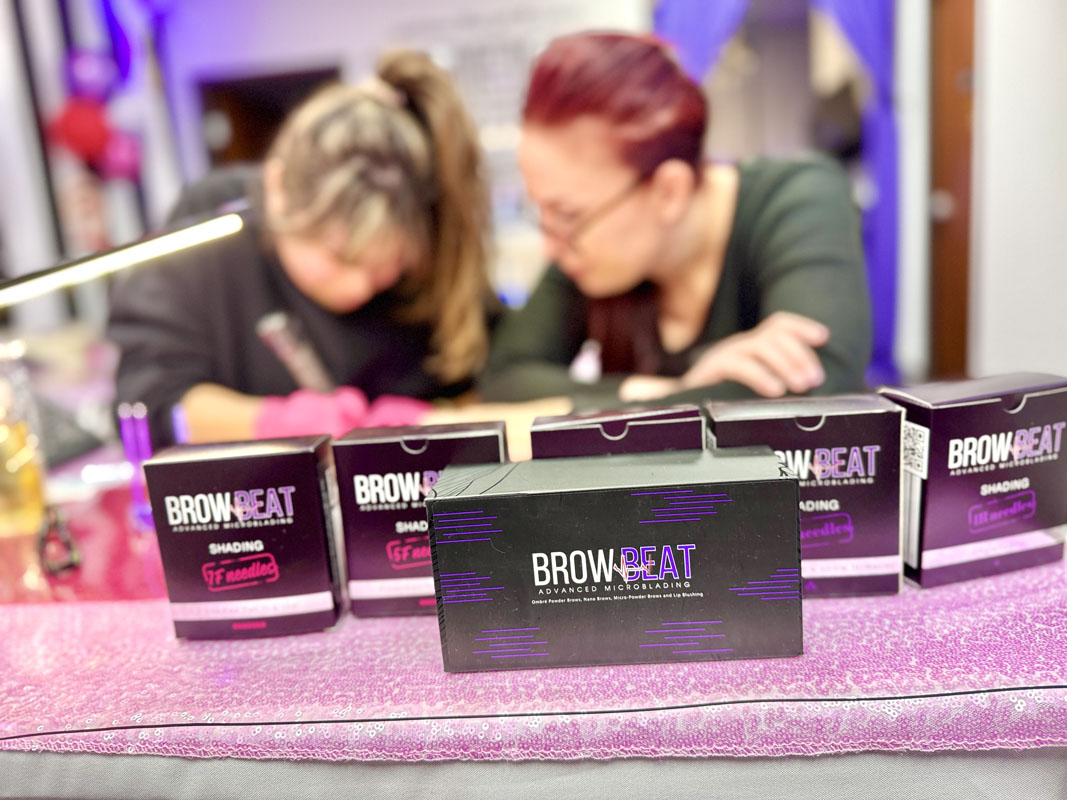
This structure is what allows us to teach three certifications within a single, coherent course. Each technique is
introduced with its own logic, then cross-referenced and blended so you can use the right method for the right reason.
Nothing is random. Everything has a place.
Foundations That Never Change
Styles come and go, but solid technique keeps paying dividends. We emphasize the fundamentals that protect skin, preserve
proportion, and produce work that ages gracefully:
- Design literacy: how to read face shape, brow bone, and natural growth patterns so design decisions
align with anatomy rather than trends. - Mapping discipline: consistent reference points, straight string lines, and proportional checks so
symmetry is built into your process instead of guessed at the end. - Tool control: pressure, angle, speed, and repetition count—how each variable alters healed results
across different skin types. - Finish judgment: when to stop, what to leave soft, and how to maintain believable texture while
solving visual problems.
These are not “nice to have” extras; they are the backbone of professional work. You will practice them deliberately
because they are the fastest path to reliable results.
Design and Mapping: Where Great Results Begin
Competent mapping does more than place lines; it clarifies relationships—head height against the spine, upper to lower
balance, tail path relative to bone. We use a transparent, step-based mapping rhythm so you always know what you’re
measuring and why:
- Establish the brow heads using golden ratio calipers to set the starting width and vertical
alignment. This ensures the first impression of the brow—the head—is believable at a glance. - Anchor your reference points with string so you can see true horizontal and vertical relationships
on the face rather than trusting eye-only estimation. - Define the upper line with attention to spine continuity and arch placement that respects each
client’s bone structure. - Define the lower line to control thickness intentionally instead of letting it creep thicker
during execution.
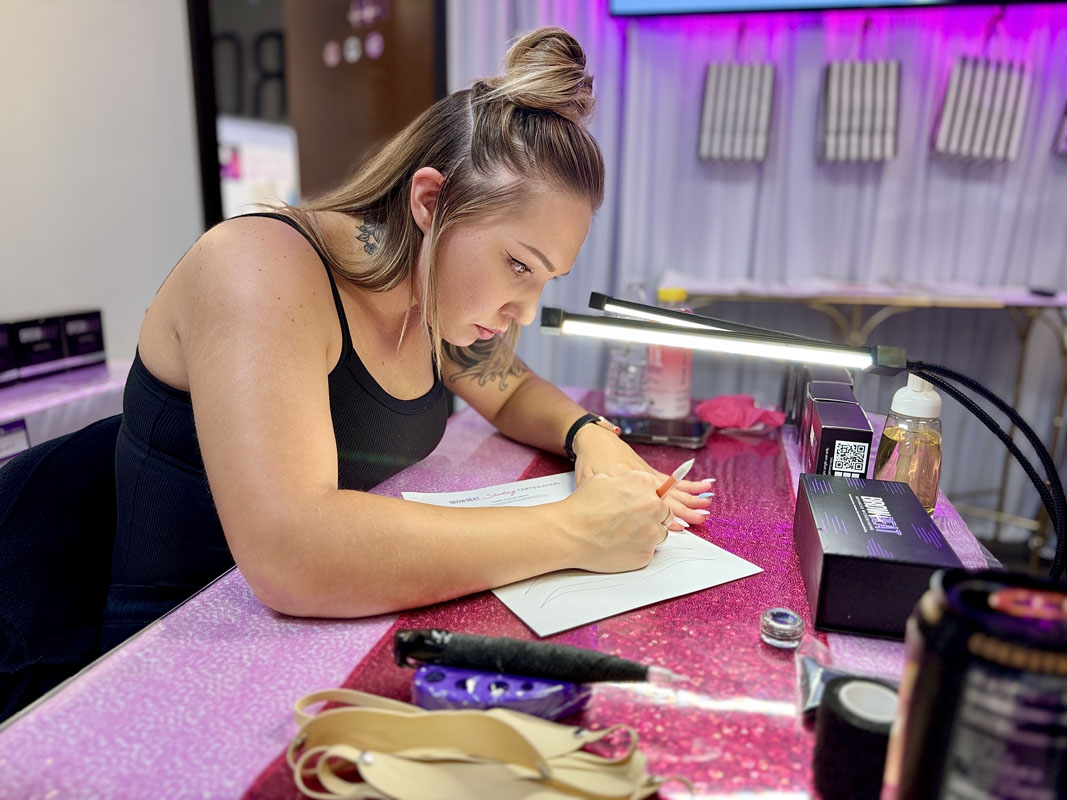
With clean mapping, stroke planning becomes straightforward and shading density becomes predictable. You’ll practice
both until they feel natural. If you want to visualize how tools and materials support this process, browse the
essentials on our
student kit overview
—we include what you need to map and execute with consistency.
Microblading: Stroke Architecture That Reads as Natural
Microblading’s power is its subtlety. To look like believable growth, strokes must honor direction, spacing, and rhythm.
We teach a stroke system that focuses on the head conversion, spine, and upper/lower families working together. The
system’s goal is not to create maximal density; it is to create deliciously restrained texture that invites the eye to
see hair, not ink. This is where “advanced = comprehensive” shows up. Rather than memorizing a single template, you will
learn the logic that lets you place strokes that belong on this face, not any face.
You will also train restraint. More strokes are not better; the right strokes are. We practice planning the pattern
first, then executing with clean pressure and consistent depth. The result is work that heals softly and remains
convincing after softening. To see how we sequence the build from mapping into stroke execution, review the overview on
our
Microblading Certification
page while you read—notice how each step has a purpose and feeds the next.
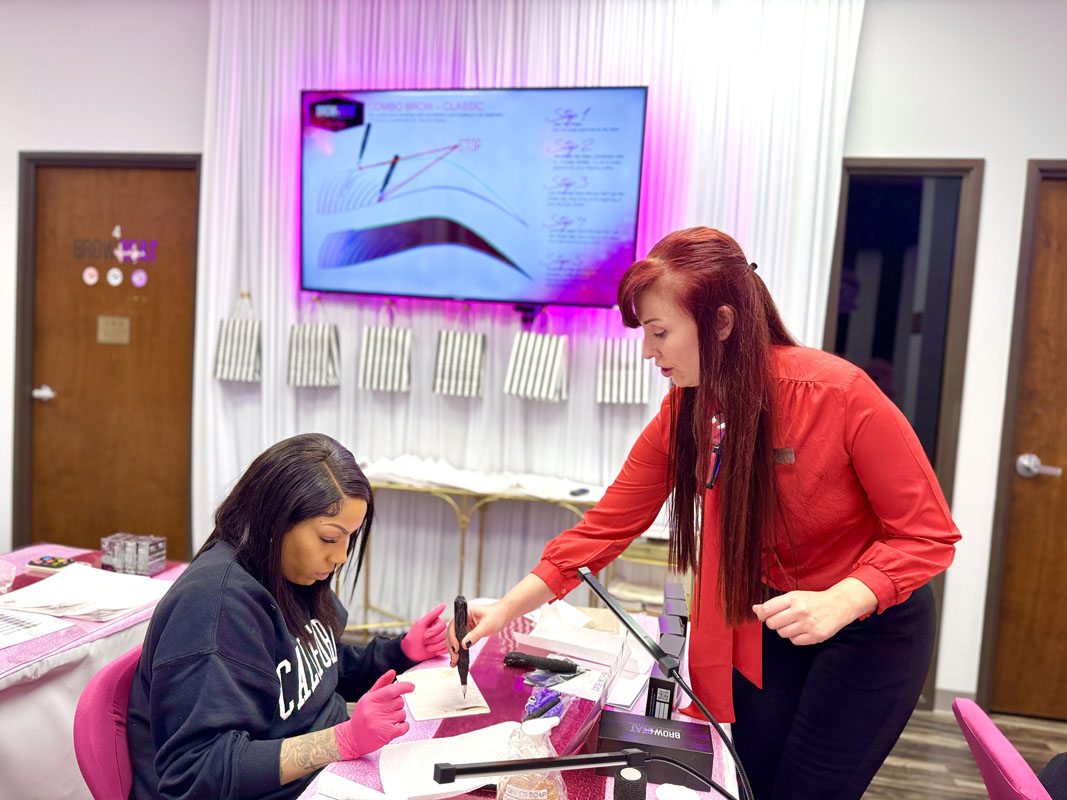
Ombré Powder: Controlled Density and Gentle Gradient
Where microblading speaks in strands, Ombré powder speaks in pixels. Your controls are machine angle, motion, pass
timing, and layer count. We teach you how each variable influences gradient—how crisp or soft a front appears, how
weight builds through the body, and how to taper density into an elegant tail. Training your eye to judge density is
essential, so we build your practice around predictable repetitions and self-checks: observe, adjust, repeat.
You’ll learn to use the machine as a brush rather than a blunt tool: lift-ins and lift-outs without scarring, rhythm that
prevents blotchiness, and layer spacing that lets air live inside the pixels. The goal is a velvety finish that looks
delicate up close and balanced from a distance. For a quick snapshot of how we structure the Ombré learning arc, peek at
our
Ombré Powder Brow Certification
page—our classroom pacing mirrors that same emphasis on control and subtlety.
Combo Brows: Texture Where You Want It, Smoothness Where You Need It
Combo work is the art of using two languages in one sentence. Texture sets the tone in the head, shading polishes the
body, and the tail lands with confident taper. You will practice the design conversation: if the head needs lift without
heaviness, where should strokes be placed and where should they pause? If a mid-brow gap asks for cohesion, how can you
use pixel density to smooth without creating a block? Combo training gives you the freedom to solve specific design
problems while keeping the finish believable.
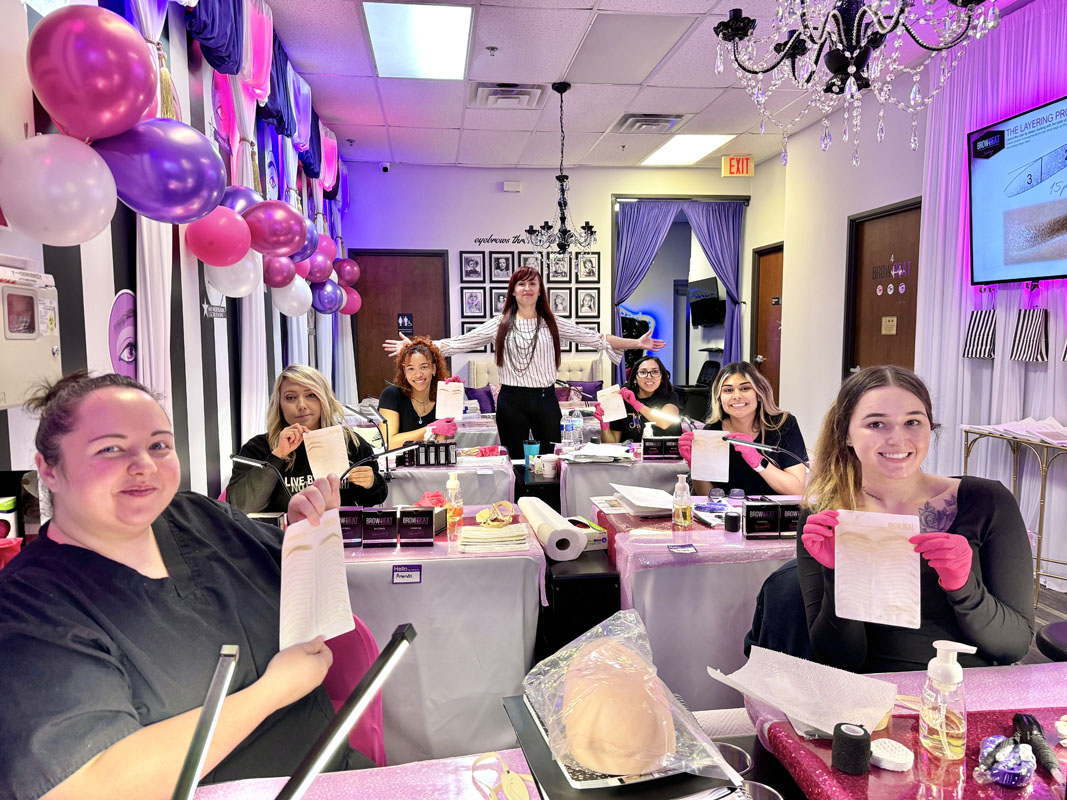
We teach you to make these choices by returning to fundamentals again and again—mapping, proportion, restraint—and then
showing how small technical changes produce large aesthetic improvements. By the time you blend techniques, your hands
will already know how to execute each component cleanly; combo then becomes a matter of judgment, not guesswork.
Why Ten Years of Teaching Experience Changes Everything
A decade in this field refines your eye, but it also refines your teaching. We’ve seen what lasts and what fades, what
creates beautiful healing and what looks good only on day one. That perspective lets us design a course that skips
dead-ends and leads straight to methods we trust. We cut through noise and emphasize repeatable mechanics that work on
a variety of canvases. We also know where students typically struggle and in which order to present solutions so that
the learning curve feels smooth and encouraging.
Our accumulated pattern recognition shows up in small but meaningful ways: how we teach lift-outs to protect tissue,
how we stage mapping to prevent creep in thickness, how we prevent “density panic” by giving your eye a reliable
density scale to judge against. This is the real difference of advanced training—it’s not faster, it’s wiser.
Practice That Builds Confidence
Confidence isn’t a personality trait; it’s a track record of successful reps. We structure your practice to produce that
track record. You’ll repeat core motions until they feel stable. You’ll practice pattern transitions until they feel
smooth. You’ll practice density builds until your eye can call “enough” without second-guessing. Because your practice
aligns with the way you’ll work after certification, the confidence you gain is portable. It doesn’t disappear when you
leave the classroom—it becomes part of your process.

Decision-Making: The Quiet Core of Professional Work
Tools matter. Technique matters. But the center of professional results is decision-making. We teach a practical
decision tree you can carry with you:
- Read the canvas: oil/dry tendencies, thickness, sensitivity, and the presence of prior work.
- Set the intention: what must be added (texture, cohesion, lift) and what must be minimized (gaps,
heaviness, unevenness). - Choose the method: hair-stroke, pixel shading, or a specific combo placement to serve the intention.
- Control the variables: angle, pressure, speed, and passes adjusted to the canvas in front of you.
- Stop with purpose: finish while it’s elegant—not when it’s maxed out.
We make this decision tree second nature by practicing it out loud during training. You will explain your choice, try the
move, evaluate the outcome, and tune the variables. That cycle is the engine of professional growth.
A Kit Designed for Learning, Not Just Possessing
The tools we provide are selected to support clarity. You’ll have the mapping tools that make symmetry reliable, the
cartridges and machine motion that make pixel control predictable, and the practice materials that make repetition
meaningful. Nothing extra, nothing missing. As you read, you can preview the essentials on our
kit overview
so that when we reference a control or motion, you know exactly which tool enables it.
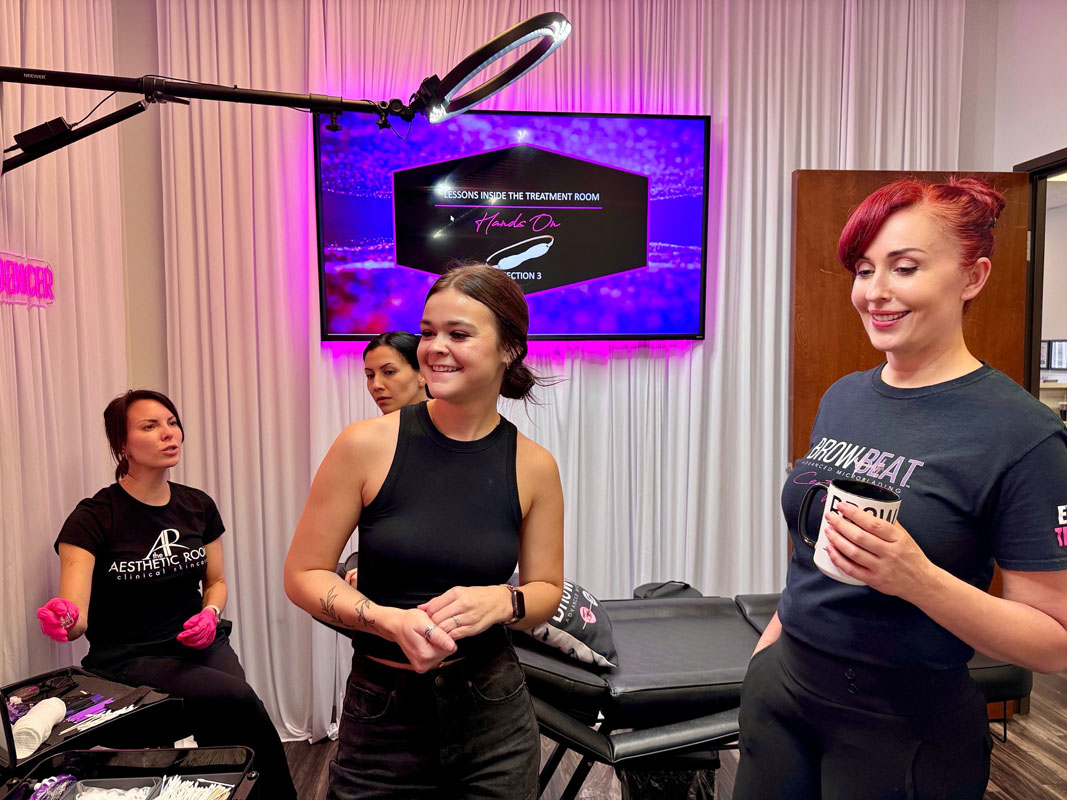
Professional Readiness: Beyond Technique
Technique is the craft; professional readiness is the system. We introduce simple, dependable systems—intake flow,
pre-appointment guidance, aftercare explanations, and organization habits—so that the experience you deliver feels
intentional and calm. You’ll see how a well-structured workflow frees mental space for quality execution. For an
overview of the supportive materials we use to make this transition from classroom to practice smoother, explore our
Business Solutions
hub after you finish this section.
What You Will Be Able to Do After This Training
By the end of the course, you will be able to design with proportion, map with confidence, execute clean microblading
patterns, build controlled Ombré gradients, and blend both methods into elegant combo results. You will understand the
logic behind each decision so that you can explain it clearly and replicate it consistently. You will also have a
repeatable practice routine so continued improvement is built into your weeks and months after certification.
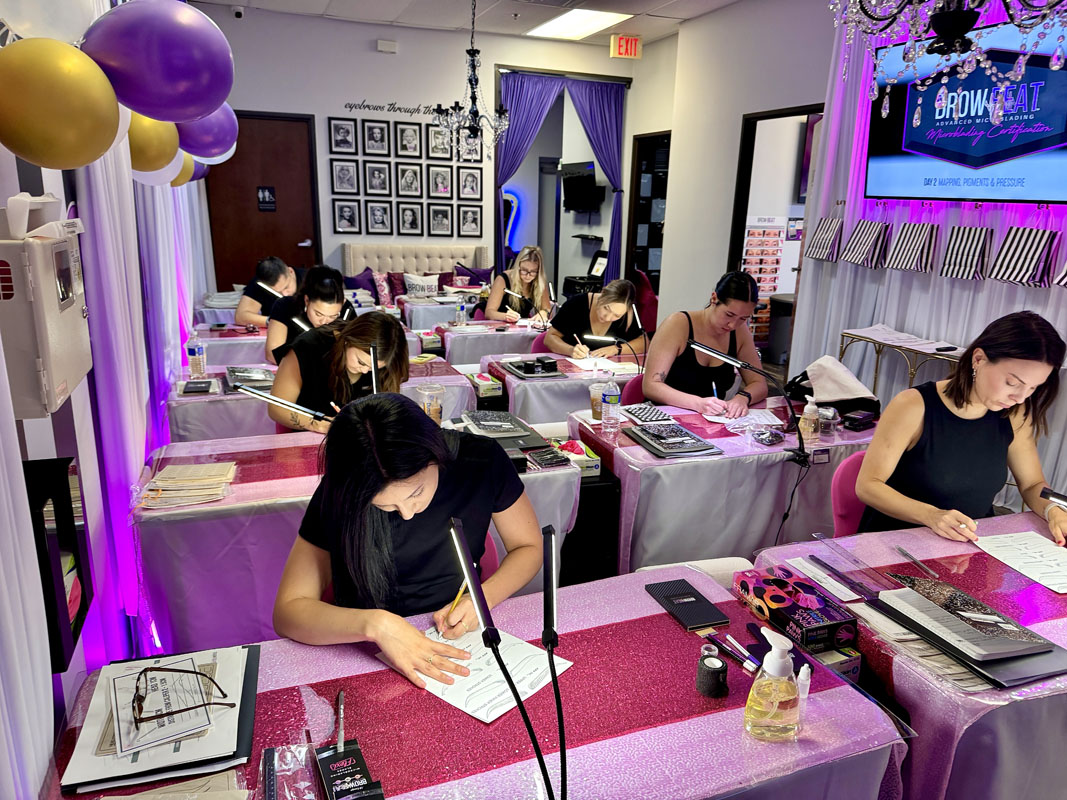
Why a 3-in-1 Structure Is Efficient for Learning
Some students worry that combining three certifications might be “too much.” In reality, coherence is more efficient than
separation. When concepts live together, every hour of practice reinforces multiple skills: mapping repetition helps both
microblading and shading; density judgment helps both Ombré finishing and combo smoothing; restraint learned in
microblading prevents overbuilding in shading. Instead of starting from zero three times, you build once and apply the
same backbone across all three methods.
Reading Results Like a Professional
We also train your eye to evaluate healed aesthetics, not just fresh-day appearance. Subtlety matters. Pixel spacing that
looks gentle now should remain gentle as it settles; stroke paths that look fluid now should remain fluid as they
soften. We discuss how to aim for elegance at both moments—now and after softening—so you’re not tempted to overbuild in
pursuit of fresh-day drama. Elegant work wins over time.
Culture in the Classroom
A focused learning environment encourages better skill acquisition. We keep instruction clear, practice honest, and
feedback specific. You will always know what went right, what needs refinement, and how to make that refinement. We
believe students improve fastest when the goalposts are obvious and the next step is practical. That’s the “advanced”
difference you’ll feel every hour you’re with us.
From Training Day to Working Day
The bridge between classroom and professional setting is built into the way we teach. Because your practice mirrors real
decisions and your tools match what you’ll use later, the transition is natural. The checklists and sequences you rely on
during training can be used again and again. As you repeat them, your rhythm speeds up—not because you rush, but because
you waste fewer movements and make fewer corrections. That is how competence turns into calm.
Your Next Step
If the idea of advanced training now feels less like “hard mode” and more like “smart mode,” you are exactly the kind of
student who thrives in our program. Start by reviewing the structure and daily flow on our
Microblading Certification
and
Ombré Powder Brow Certification
pages, then browse the supportive materials within our
Business Solutions
hub. In the second half of this article, we’ll walk through a deeper dive on technique logic, practice blueprints you
can keep using after class, and how we teach combo decisions that make sense in the real world.
Building Depth: The Second Half of Advanced Brow Training in Dallas
Having laid out the foundations of our advanced training, let’s move further into how our curriculum supports
long-term growth. This is where advanced instruction becomes unmistakable. We focus not just on “how” to execute
strokes or shading, but also on “why” those decisions matter for the life of your career. That philosophy is what
has kept BrowBeat Studio Dallas Microblading Certification and Training Academy trusted for more
than a decade.
Refining Technique Through Simulation
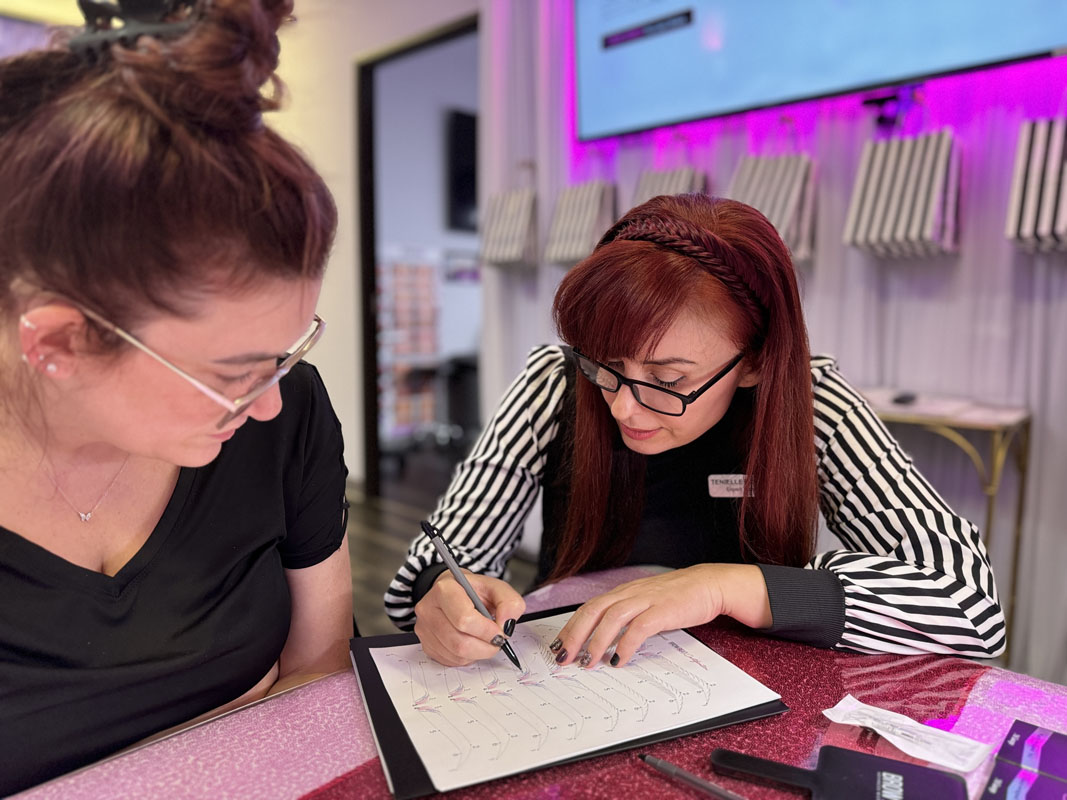
Our program emphasizes simulation exercises because repetition without pressure is the key to refinement. Students
practice on silicone skins, paper layouts, and structured headband simulations. These materials let you repeat
motion and judgment calls as often as necessary until they become second nature. Every stroke, every pass, every
pixel laid down in practice is an opportunity to learn without fear. That’s why students finish the course with
confidence that doesn’t evaporate the moment they step into a real-world setting.
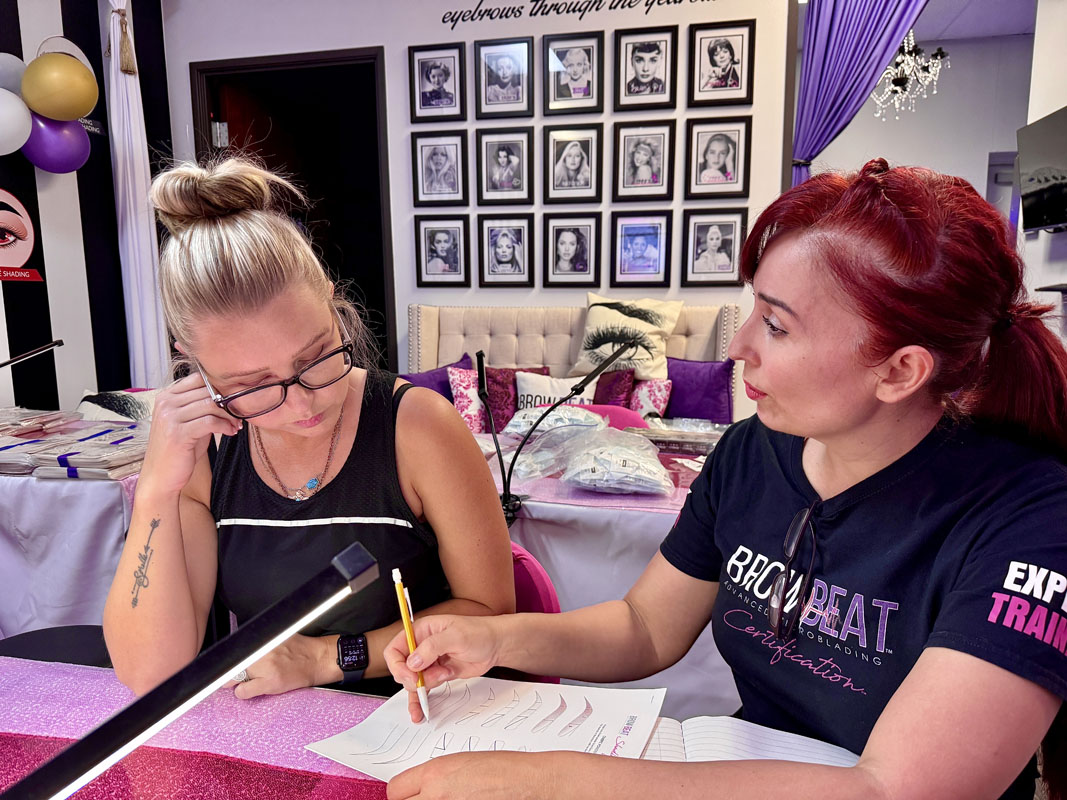
These simulations are paired with exact feedback. Instead of vague encouragement, you’ll hear specific notes: adjust
your angle, lighten your pressure, smooth your gradient. That clarity allows you to change one variable at a time and
watch your results improve in real time. To see how this structure links into our formal certification, browse the
breakdown of learning outcomes on our
Microblading Certification
page; the same building-block logic applies across every certification we teach.
Long-Term Vision: Why Technique Must Age Well
A brow result that looks strong on day one but falls apart within months is not professional. That’s why we stress
technique longevity. Our trainers demonstrate healed results and explain what choices led to them. You’ll see how
restraint in microblading keeps brows believable after fading, how layering in Ombré creates a velvety softness that
lasts, and how balance in combo decisions prevents heaviness over time. This emphasis on healed aesthetics is one of
the defining traits of our advanced training.
Our ten years in the industry have shown us what holds up and what doesn’t. You benefit directly from that
experience—skipping mistakes many artists only realize after years of trial and error. This wisdom is built into
every lesson, ensuring that you enter the field with not only skill but foresight.

Decision Trees: A Professional Framework
One of the unique features of this training is the decision tree framework we instill in every student. It turns
abstract judgment into a sequence you can apply consistently:
- Canvas assessment: Understand skin type, thickness, and the presence of prior work.
- Goal definition: Clarify what the client wants to gain—lift, texture, density, or balance.
- Technique choice: Decide between microblading, Ombré shading, or combo application.
- Variable control: Adjust pressure, speed, machine angle, and pass count with intention.
- Completion check: Ensure the work looks refined now and will remain balanced as it heals.
By rehearsing this framework, you build professional instincts instead of relying on guesswork. It’s one more reason
this course is described as advanced: we don’t just give you skills, we give you a system for using them wisely.
The Role of the Student Kit
Every student receives a kit chosen for consistency and clarity. The pigments are stable, the cartridges cover a
range of needs, and the mapping tools make symmetry second nature. This kit is not simply a box of items; it is a
carefully curated set designed to support your learning arc. Each tool corresponds to a specific step in the course,
so your training is grounded in the same instruments you’ll later use with clients.
You can see a complete breakdown of what’s included by reviewing the
student kit overview
. We believe transparency in training tools sets expectations correctly and gives students confidence from the
moment they begin.
Professional Systems That Support Growth
Advanced training is not only about technique. It’s about learning the systems that make artistry sustainable as a
career. That’s why we weave in professional practices such as appointment preparation, aftercare explanations, and
organized workflows. These are not business extras—they are skills that make your artistry feel professional from day
one. For an extended look at how we prepare students beyond the chair, explore our
Business Solutions
section. It’s all part of ensuring you graduate with both craft and confidence.
What Advanced Training Unlocks
By the end of this program, students are able to design brows with confidence, map with precision, execute strokes
cleanly, shade with control, and blend techniques into seamless combo brows. You’ll leave not only with three
certifications but also with a sense of ownership over your process. You’ll know why you’re making each decision and
how to adjust when variables change. That is the true hallmark of advanced training: adaptability built on
understanding.
Why Choose BrowBeat Studio Dallas Microblading Certification and Training Academy
Plenty of programs offer pieces of the puzzle. Few offer the entire picture. Our academy specializes in semi-permanent
makeup training and has refined this 3-in-1 program over years of teaching. Students learn from industry veterans who
understand not just the artistry but also the discipline of teaching. This is why our graduates consistently speak to
the clarity, thoroughness, and long-term usefulness of their education here.
Advanced doesn’t mean exclusive. It doesn’t mean intimidating. It means that the training itself is built with wisdom,
structure, and depth. Whether you are beginning your journey or refining an existing practice, this program equips you
to step forward with skills that endure.
Next Steps
If you are ready to take your place in this advanced but approachable learning environment, start by reviewing the
course pages that outline the day-by-day structure:
Microblading Certification
,
Ombré Powder Brow Certification
,
and
Business Solutions
.
Each page demonstrates our commitment to transparent, structured, and advanced training that is never overwhelming.
This is your opportunity to join a legacy of students who have learned in Dallas with one of the most trusted names
in the field. Ten years of teaching experience have shaped a curriculum that doesn’t just inform—it transforms.
Enrollment opens the door to a career built on clarity, confidence, and three certifications that mark you as a professional trained to the highest standard.