

Last Updated: January 2026
Many nail technicians begin their careers because they love creativity, detail work, and building strong relationships with clients. Nail artistry is hands-on, visual, and rewarding — but many professionals eventually reach a point where they want to expand their skill set and add higher-level services to their beauty portfolio.
That is where professional brow certification training enters the conversation.
Microblading and ombré powder brow services have become some of the most requested semi-permanent makeup treatments in the beauty industry. For nail technicians already experienced with precision work, client service, and aesthetic design, learning brow techniques can feel like a natural next step.
Why Nail Technicians Transition Into Brow Certification Training
Nail technicians already possess several transferable skills that align well with brow services:
- Strong attention to detail
- Steady hand coordination
- Comfort working in close client proximity
- Understanding of hygiene and sanitation standards
- Experience delivering visual cosmetic results
Microblading and ombré powder brows also require precision, symmetry awareness, and controlled technique — skills that many nail professionals already develop throughout their careers.
Instead of replacing their current profession, many technicians choose to expand their offerings by adding brow certification training to their existing skill set.
What Is Microblading and Ombré Powder Brow Training?
Microblading is a semi-permanent brow technique that uses a manual hand tool to create fine hairstroke patterns within the upper layers of the skin. These strokes are designed to blend naturally with the client’s existing brow hair.
Ombré powder brows use a machine-based shading technique that creates soft, layered color density. This method produces a makeup-inspired finish that gradually transitions from lighter tones at the front of the brow to deeper pigment toward the tail.
Professional training programs teach both techniques so students can offer customized brow solutions depending on client preference, skin type, and desired appearance.
Beginner-Friendly Brow Certification Training Pathways
One of the most common misconceptions is that brow certification training is only for experienced tattoo artists or advanced cosmetic professionals. In reality, structured education programs are designed to guide beginners step by step through the learning process.
Students entering certification training begin with foundational instruction before advancing into hands-on technique development. This progression allows new learners to build confidence while developing strong technical habits.
Training programs are structured to support:
- Complete beginners entering permanent makeup
- Beauty professionals expanding service offerings
- Nail technicians seeking skill diversification
- Artists transitioning into cosmetic tattooing
What Students Learn During Brow Certification Training
Professional brow certification programs focus on much more than applying pigment. Students are taught systems that guide every stage of a brow treatment.
Core learning areas typically include:
- Brow mapping structure and facial symmetry
- Skin type analysis
- Pigment theory and color selection
- Tool handling technique
- Microblading stroke pattern development
- Ombré powder shading control
- Client preparation workflow
- Treatment sequencing systems
This structured training approach allows students to understand not just how to perform procedures, but why each step is important for consistent results.
Why Dallas Is a Strong Market for Brow Training
Dallas continues to be one of the most active beauty markets in Texas. Clients increasingly seek semi-permanent makeup services for brows due to lifestyle convenience and aesthetic demand.
Training locally allows students to learn within a competitive beauty environment while becoming familiar with regional client expectations and industry trends.
Dallas-based training also gives students access to advanced educational resources and in-person instruction opportunities that strengthen hands-on learning.
How Brow Certification Complements Nail Technician Services
Adding brow services allows nail technicians to expand their beauty service portfolio while maintaining their creative foundation.
Clients who already trust a technician for beauty services often show interest in exploring additional treatments from the same professional. Brow certification training gives technicians the ability to offer new options without abandoning their original career path.
This layered service approach allows professionals to build a more diverse appointment schedule while continuing to develop artistic skills.
Hands-On Training Structure for Beginner Brow Students
Professional brow certification programs are designed around structured learning progression. Instead of overwhelming students with advanced techniques on day one, training is typically broken down into step-by-step modules that build confidence and technical control.
Students begin with foundational concepts such as brow structure, facial balance, and mapping systems. From there, they advance into controlled stroke execution for microblading and layering techniques for ombré powder brows.
This progressive structure allows beginners — including nail technicians entering the brow industry — to develop strong habits early and avoid common technique mistakes.
Brow Mapping: The Foundation of Professional Results
Brow mapping is one of the most important skills taught during certification training. Mapping provides a visual blueprint for symmetry, proportion, and facial harmony.
During training, students learn how to establish brow heads, arches, and tails using structured reference points and alignment techniques. This system ensures that every brow design follows consistent proportions instead of guesswork.
For nail technicians who already understand design balance and visual symmetry, brow mapping often becomes one of the most engaging parts of training.

Skin Type Education and Pigment Behavior
Professional brow certification programs teach students how different skin types affect pigment retention and appearance. This knowledge is essential for selecting appropriate techniques and achieving long-term results.
Students learn how oil production, pore size, texture, and elasticity influence microblading strokes and powder shading density.
Pigment theory is also covered in detail. Students are taught how undertones interact with pigment blends, how layering affects saturation, and how color selection varies across different skin tones.
Microblading Technique Development
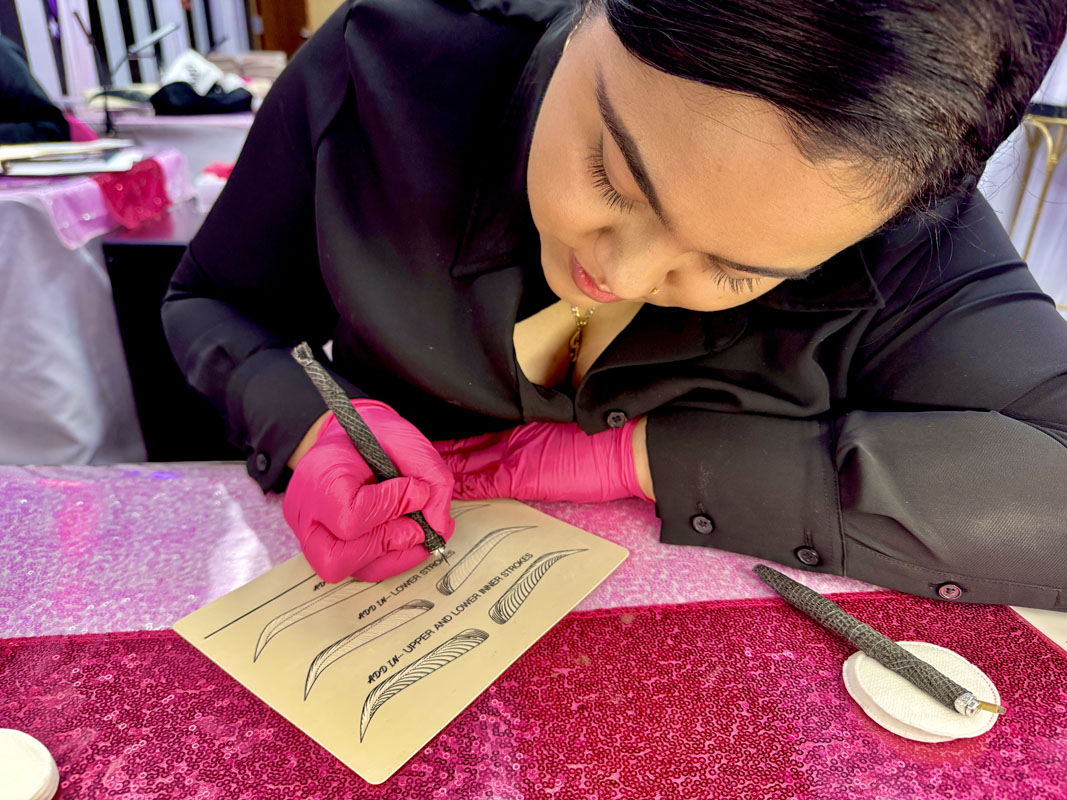
Microblading training focuses on controlled hairstroke creation using manual tools. Students practice stroke direction, pressure control, spacing, and pattern flow.
Training environments use simulation exercises before advancing into more advanced application techniques. This allows students to refine hand movement and blade control without rushing the learning process.
For nail technicians accustomed to precision detail work, microblading technique training often aligns naturally with their existing fine-motor skill set.
Ombré Powder Brow Technique Training
Ombré powder brow certification teaches machine-based shading techniques that create soft, layered pigment effects.
Students learn how to control machine speed, hand pressure, layering density, and gradient transitions. This allows them to create brows that appear soft and natural while maintaining strong structure.
Powder brows are especially popular among clients who prefer makeup-inspired finishes or require longer-lasting color retention.
You can learn more about structured ombré powder brow certification training here:
Ombré Powder Brow Certification Training Program
Why Dual Certification Matters for Students
Training in both microblading and ombré powder brows allows students to serve a broader client base. Some clients prefer crisp hairstrokes, while others want soft shaded finishes.
Dual certification also allows technicians to customize treatments based on individual skin type, lifestyle, and aesthetic goals.
Many training programs structure coursework so students receive exposure to both techniques, allowing them to develop flexibility in treatment offerings.
Microblading Certification Program Overview
Microblading certification programs provide structured education designed to guide beginners through foundational skill development.
Training includes:
- Manual tool handling techniques
- Stroke pattern structure
- Depth control fundamentals
- Mapping alignment systems
- Sanitation workflow education
Students can explore full microblading certification details here:
Microblading Certification Training Program
Training Kits and Practice Materials
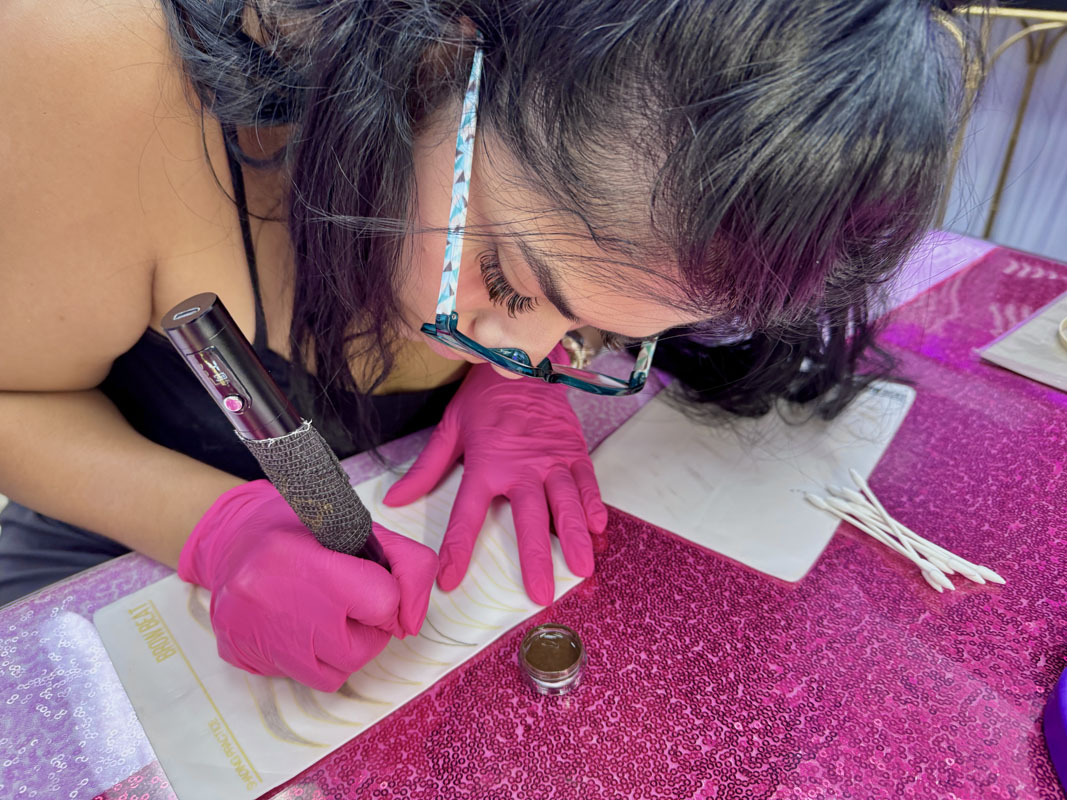
Many certification programs include professional training kits that allow students to begin practicing immediately.
These kits often include:
- Microblading tools and blades
- Practice skins and simulation materials
- Pigments for training use
- Measuring and mapping tools
- Machine equipment for powder brow training
Having access to professional tools during training allows students to develop familiarity with equipment before working independently.
More information about training kits can be found here:
Professional Training Kits Overview
Client Workflow Education
Brow certification training also focuses on treatment workflow structure. Students learn how to prepare clients, guide treatment sequencing, and maintain consistent appointment organization.
Workflow training includes:
- Client intake preparation
- Brow design sequencing
- Procedure order structure
- Aftercare education techniques
This operational training is especially helpful for nail technicians transitioning into brow services because it provides consistency and repeatable treatment systems.
Career Expansion Without Starting Over
One of the most appealing aspects of brow certification training is that it allows professionals to expand their skill set without abandoning their current beauty background.
Nail technicians often choose brow certification as an extension of their creative career rather than a complete professional reset.
This allows them to grow within the beauty industry while maintaining client relationships and personal artistic development.
Business Education Integration
Many training programs include educational resources focused on professional development and service organization.
Students are introduced to topics such as scheduling structure, workflow efficiency, service packaging, and long-term professional growth strategies.
Additional business education resources can be explored here:
Professional Business Solutions for Beauty Professionals
Training Environment and Student Support Materials
Structured training environments provide students with educational materials that reinforce in-person learning. These materials often include printed guides, visual diagrams, and workflow reference documents.
This layered learning approach allows students to review content outside the classroom and continue building confidence throughout the certification process.
Who Should Consider Brow Certification Training?
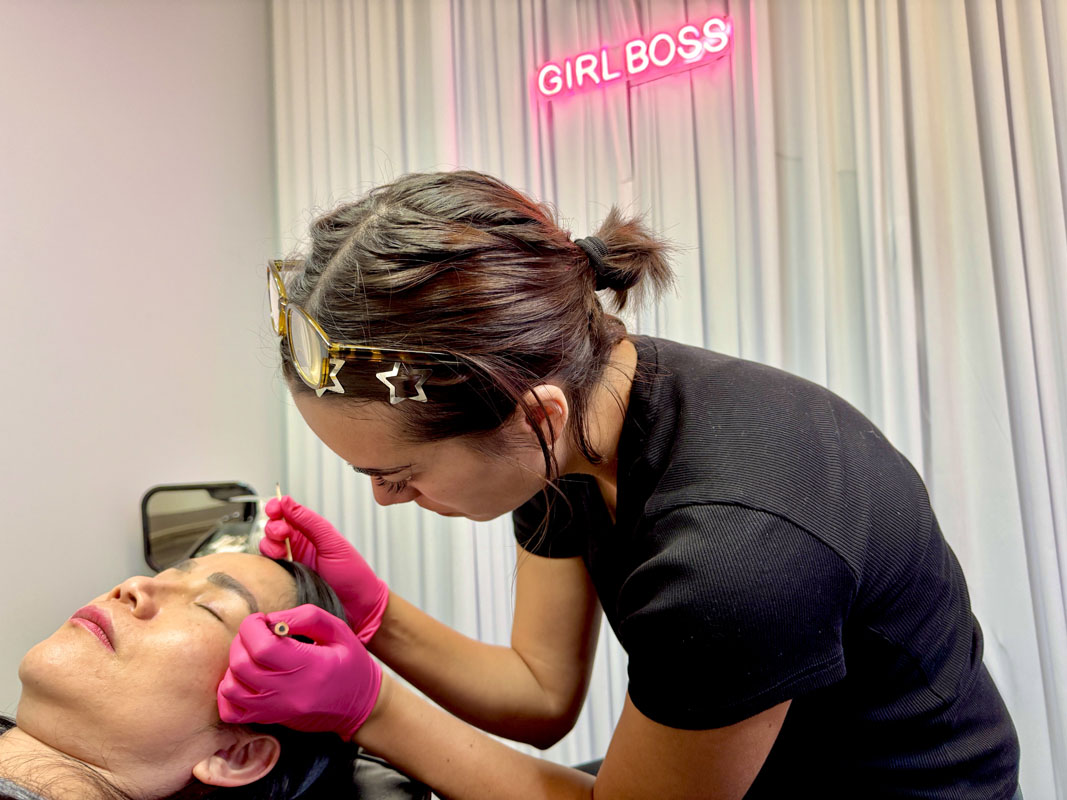
This type of training is ideal for:
- Nail technicians seeking skill expansion
- Beauty professionals adding advanced services
- Beginners interested in permanent makeup
- Artists transitioning into cosmetic tattooing
Programs are structured to support both complete beginners and experienced beauty professionals.
Long-Term Professional Growth Potential
Brow certification training creates opportunities for long-term professional development. As students continue practicing and refining their technique, they build experience that allows for expanded service offerings and continued education opportunities.
Many professionals choose to pursue additional certifications over time, creating a diversified treatment portfolio.
Final Thoughts on Brow Certification for Nail Technicians
Nail technicians already possess creative foundations that translate well into brow services. Microblading and ombré powder brow certification training provides a structured pathway for expanding professional capabilities while staying within the beauty industry.
With proper education, consistent practice, and professional development, brow certification allows technicians to broaden their artistic reach and explore new service opportunities.
Ready to Explore Certification Training?
If you’re interested in expanding your beauty education and adding professional brow certification to your skill set, structured training programs are available for beginners and experienced professionals alike.
Learn more about certification training options at:
BrowBeat Studio Dallas Microblading Certification and Training Academy