
In this guide, we will explore what bleeding actually means during microblading hair-stroke procedures, why certain clients are more prone to it, and what practical steps artists can take to reduce bleeding and keep the appointment on track. We will also look at how moving into machine work and shading, as taught in programs like the Ombré Powder Brow Certification and the Microblading Certification at BrowBeat Studio Dallas Microblading Certification and Training Academy, can give you more options when bleeding becomes a pattern rather than an exception.
Understanding Why Bleeding Happens in Microblading
Microblading creates controlled micro-incisions. Any time the skin is opened, the body responds with a natural defense: blood flow. Platelets move in to begin the clotting process, and plasma can rise to the surface. When you see a tiny bead of blood form over a stroke, you are witnessing the body doing exactly what it is designed to do.
In many training rooms, artists are told that “no blood” is the goal. This creates anxiety when reality does not match the ideal. A more accurate view is that a small amount of pinpoint bleeding can be a sign you are at a workable depth. Completely dry skin may mean you are too shallow. Heavy, persistent bleeding may mean you are too deep, moving too aggressively, or working on a client whose circulation responds strongly.
Bleeding is affected by:
- Depth of the blade and pressure applied.
- Speed of the stroke and number of passes.
- Client circulation and health factors.
- Skin thickness and integrity.
- Use of vasoconstrictor numbing products.
When you see bleeding, the first question is not, “Did I fail?” The better question is, “What information is this giving me?” That mindset allows you to respond rather than panic.
How Much Bleeding Is Too Much?
Artists often ask for a clear rule. Unfortunately, there is no single measurement that fits every client. Instead, think in terms of patterns:
- Pinpoint or bubble bleeding: Tiny, dome-shaped beads of blood that appear on or near individual strokes. This is often a sign that the depth is in a workable range.
- Slow, light oozing: A thin film of blood that can be blotted away and does not immediately reappear. This may still be manageable with adjustments.
- Gushing or pooling: Blood that fills the brow area quickly, returns immediately after wiping, or obscures your pattern. This almost always means you need to reassess depth, pressure, or approach.
Bubble bleeding is frequently taught as a marker of correct depth, but it is only a guideline. It is a useful indicator, not an absolute rule. Some skins bubble more, some less. Some clients bleed more no matter how carefully you work. Your job is to read what you are seeing in context, not to force your expectations onto every face.
Why Some Clients Naturally Bleed More
Before you judge your technique too harshly, remember that client physiology matters. Some people simply bleed more easily than others. You may notice increased bleeding with:
- Redheads: Often have more reactive skin and can show redness and bleeding more quickly.
- Vegans and highly plant-based clients: Diets rich in certain foods and supplements can influence circulation and clotting response.
- People heavily into fitness and supplements: Pre-workout formulas, vitamins, and lifestyle factors can all affect how blood moves.
- Mature clients on blood thinners: Age plus prescribed medications can make bleeding more pronounced.
- Clients on specific medications: Some prescriptions affect clotting, blood pressure, and vascular response.
This does not mean these clients cannot get microblading; it means you must approach them with extra awareness. Clients should always follow their medical provider’s advice regarding medications; artists should never recommend changing or stopping medication. What you can do is design your technique to respect the canvas in front of you.
A Calm, Step-by-Step Process to Curtail Bleeding
When you notice bleeding increasing beyond a light bubble, your next moves should be deliberate and calm. Rushing or pressing harder will not help. Instead, follow a simple process.
Step 1: Pause and Apply Pressure
Gently stop working in the bleeding area. Fold a clean, damp cotton pad or gauze and apply light pressure over the section. This gives the body a moment to respond and begin clotting. Yes, it may add a few minutes to your treatment time, but it supports better healing and pigment retention, which is worth far more than a fast appointment.
After a short pause with pressure applied, remove the pad and reassess. Has the bleeding slowed? Has it stopped? If so, you can continue carefully with more awareness of depth and pressure.
Step 2: Use Numbing Products with Vasoconstrictors Wisely
Some numbing products are formulated with ingredients that cause vasoconstriction — a narrowing of blood vessels that can naturally reduce bleeding at the surface. When used appropriately and according to product directions, these numbing solutions can be helpful for calming active areas and keeping the field clearer while you work.
Numbing is not a replacement for correct depth and pressure, but it is an excellent support. Always follow manufacturer guidelines and your training, and never exceed recommended exposure times.
Step 3: Slow Down Your Hand and Soften Your Depth
The next step is to look honestly at your own technique. Bleeding often increases when strokes are rushed or pressure becomes inconsistent. To reduce trauma:
- Shorten your stroke length slightly and move with deliberation.
- Reduce the downward force of your hand; gliding is better than pushing.
- Check your blade angle — too steep can cut more aggressively.
- Maintain strong skin stretch so the blade glides over a firm surface.
Small technical adjustments can dramatically reduce bleeding, even mid-treatment. Over time, these adjustments become your new normal.
Step 4: Support Pigment Retention with Ink Baths
When a client bleeds more, artists sometimes worry that all pigment is being pushed out. While some loss can occur, you can support retention by using extra pigment “ink baths.” After a pass of strokes, let pigment sit over the area for a moment and gently press it into the channels with a soft, steady rubbing motion. This encourages pigment to settle into the micro-cuts while the surface calms.
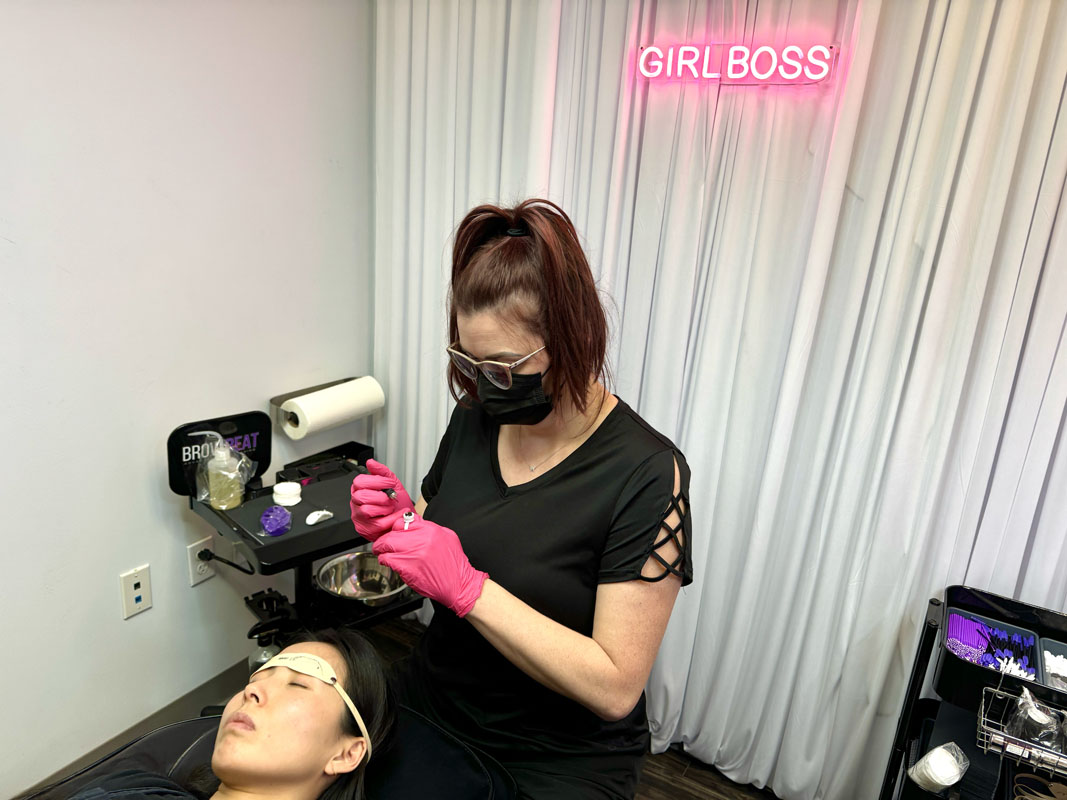
You may also choose to perform an additional pass only where needed, watching the skin closely for signs of fatigue. In some cases a third, very light pass can be useful. The key is to avoid overworking; more is not always better. Controlled, targeted passes are more effective than endless repetition over the same area.
Knowing When to Transition from Microblading to Machine Work
Sometimes, despite all your best efforts, a client’s skin continues to respond with more bleeding than ideal. This can be due to thin skin, medication, circulation, or simple biology. In these cases, it is helpful to remember that microblading is not the only way to create beautiful brows. Moving to a machine can be a smart, gentle alternative.
Machine strokes and shading do not slice the skin; they perforate it with tiny needle movements. Instead of cutting lines, the machine taps color into place. For many clients who bleed more with microblading, this perforation-based approach can feel calmer and may produce less surface bleeding. It is not about one method being “aggressive” and one being “safe” — both can be used safely. It is about choosing the method that best suits the client’s skin and goals.
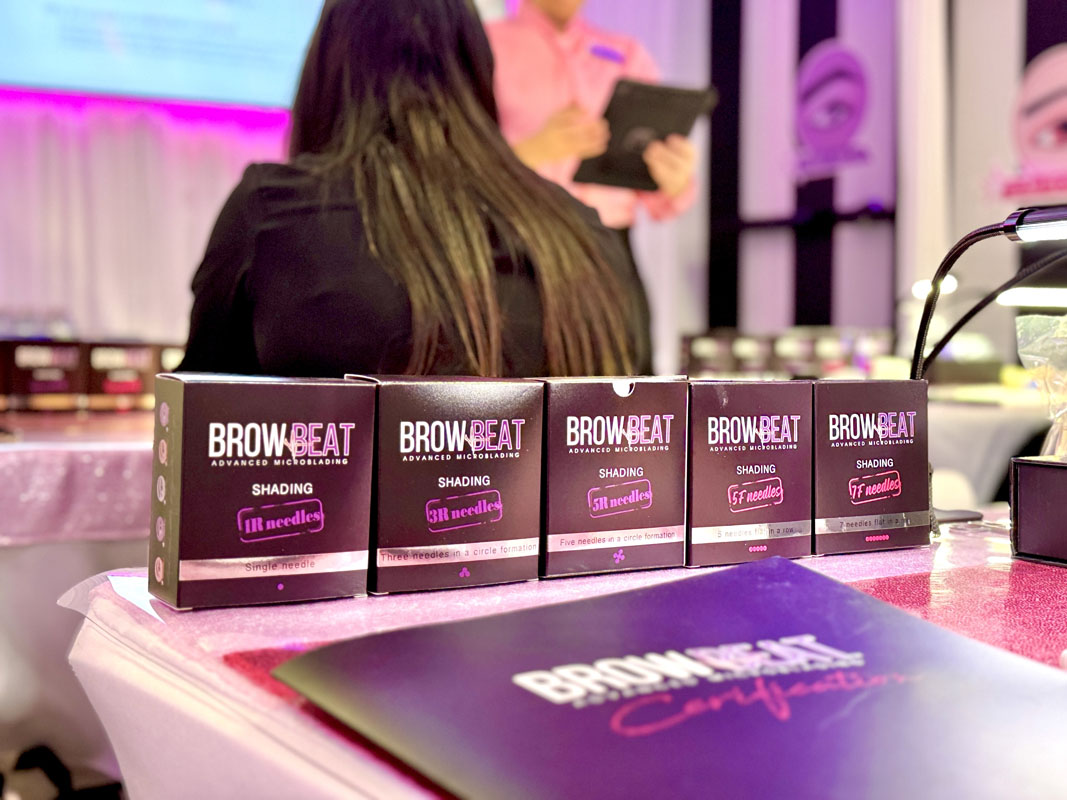
Training in machine methods such as shading, offered in the Ombré Powder Brow Certification, gives artists the flexibility to pivot when microblading alone is not ideal. Instead of forcing strokes into a reactive canvas, you can design a plan that incorporates microshading, powder work, or combination brows with a more controlled skin response.
Shading-Only Approaches for Clients Who Bleed Easily
For some clients, shading-only brows are the most comfortable and reliable option. Machine shading typically produces very minimal bleeding because color is built in layers with lighter contact. The effect can be as subtle or dramatic as the client desires — soft powder, ombré gradients, or fuller makeup brows.
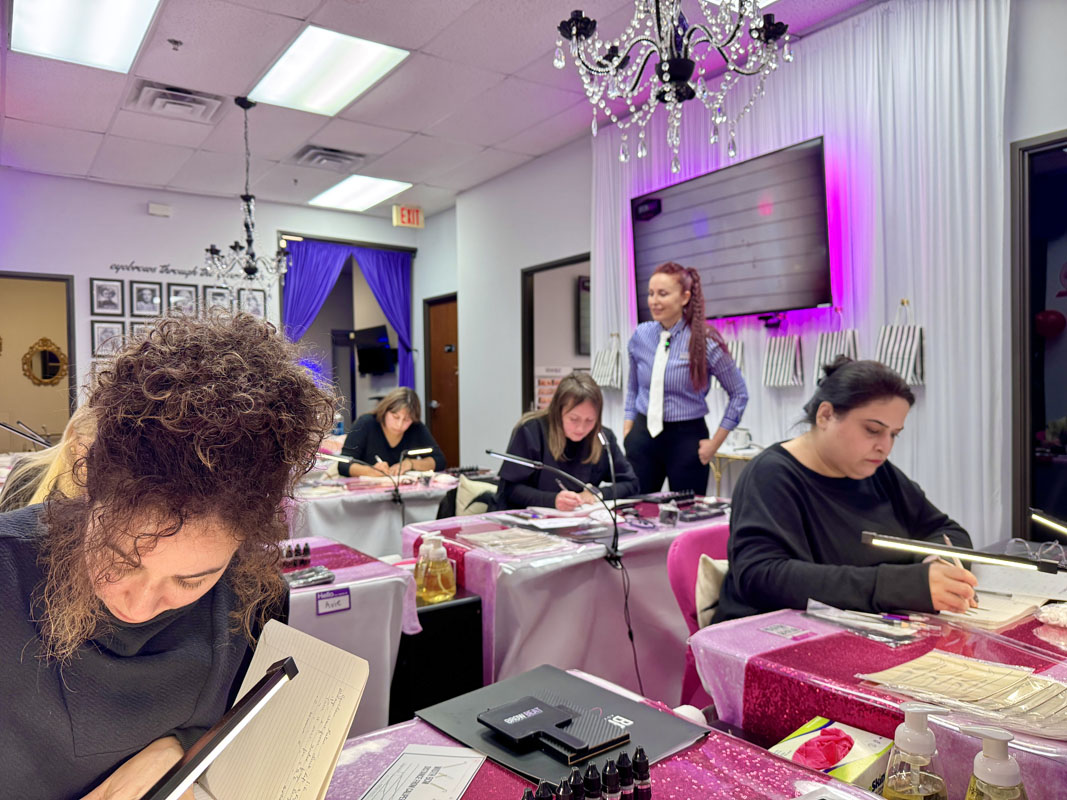
Artists sometimes hesitate to recommend shading-only looks because they assume clients always want visible hair strokes. In practice, many clients are thrilled with powder or ombré results when they see how softly the color can be placed. For clients who bleed more or have skin that does not retain microbladed strokes well, shading can deliver better long-term satisfaction with less stress for everyone involved.
The more skills you have — strokes, shading, machine work — the more you can customize the plan. This is exactly why comprehensive training through courses like the Microblading Certification and Ombré Powder Brow Certification is so valuable. You are not stuck; you have options.
Bleeding as Feedback: Learning from Each Appointment
Many of the biggest lessons in microblading come from what happens after the appointment. Healed results show you whether your pressure, depth, and approach were appropriate. Bleeding is part of that story. If you notice that clients commonly bleed heavily under your hand, it may be a sign that your default depth is too strong or your speed is too quick. If bleeding is rare and retention is good, you know your baseline is working.
Keeping notes after each appointment can help you connect the dots:
- How much bleeding did you observe?
- What skin type and age was the client?
- Were they taking any medications or supplements?
- What technique or blade configuration did you use?
- How did the brows look at touch-up or refresh?
Over time, patterns emerge. You will begin to see which choices lead to calmer, more controlled procedures. You will also learn to recognize in advance which clients are most likely to need a gentler approach, a slower pace, or a shading-forward plan.
Building a Calm, Professional Presence Around Bleeding
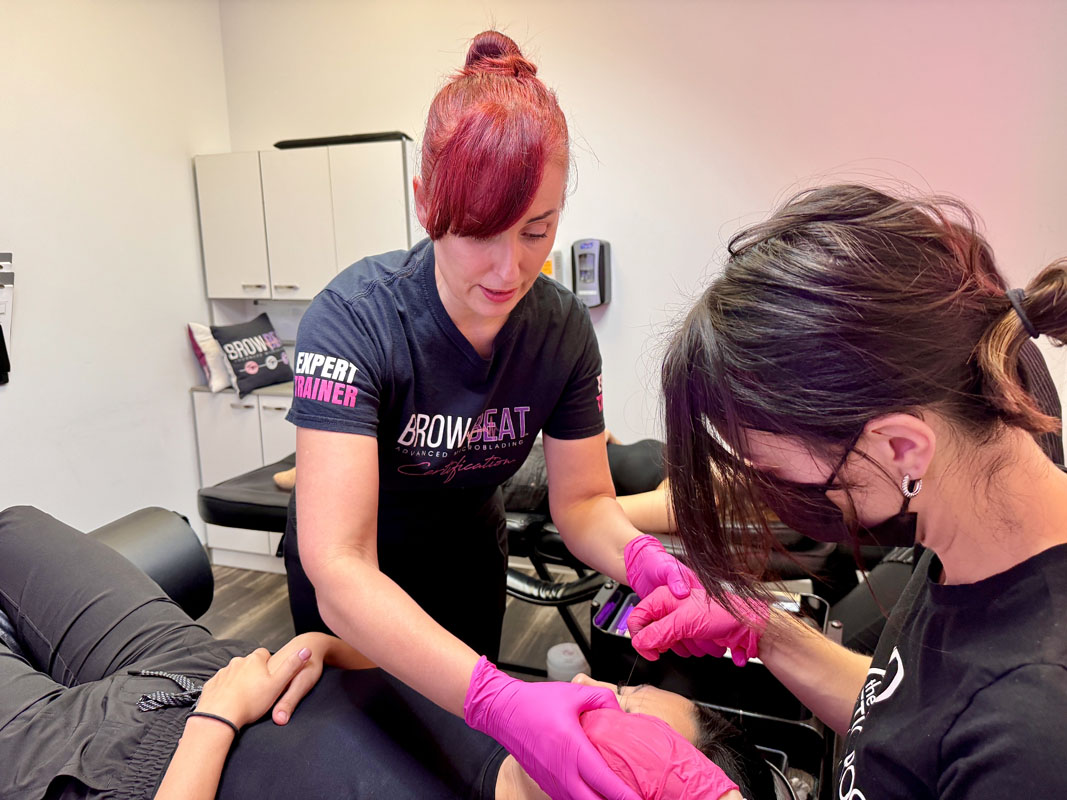
Perhaps the most important part of managing bleeding is managing yourself. Clients watch your reactions closely. If you stay calm, they stay calm. If you treat a little bleeding as normal information that you know how to handle, they feel safe.
You can communicate clearly by saying things like:
- “You may see a bit of pinpoint bleeding — that’s normal with microblading.”
- “I’m just going to pause for a moment and apply a little pressure here; this helps your skin settle.”
- “Your skin is showing me that it prefers a softer approach, so I’m going to adjust how I work to keep everything comfortable.”
Statements like these reassure the client that you are in control and that their body is behaving in a normal, manageable way. They reinforce your professionalism and protect the experience.
Practical Tools That Support Cleaner Procedures
Finally, good tools make managing bleeding easier. Quality blades, consistent pigments, and properly prepared workstations help you focus on technique instead of struggling with uneven performance. A well-curated professional kit, such as the Microblading and Lip Blushing Kit, ensures you always have the appropriate supplies on hand to work efficiently and cleanly.
From pigment cups to disposable wands and mapping tools, every item that supports smoother workflow also supports better oversight of what the skin is doing in real time. When you are not distracted by missing items or inconsistent tools, you can pay closer attention to bleeding, color, and client comfort.
Bringing It All Together
Bleeding during hair-stroke microblading does not mean something has gone wrong. It means you are working with a living canvas. Some skin will show only the slightest bubble of blood. Some will ooze more. Some clients will be naturally reactive due to genetics, lifestyle, or medication history. Your role is to understand, adapt, and guide the process toward a result that heals beautifully.
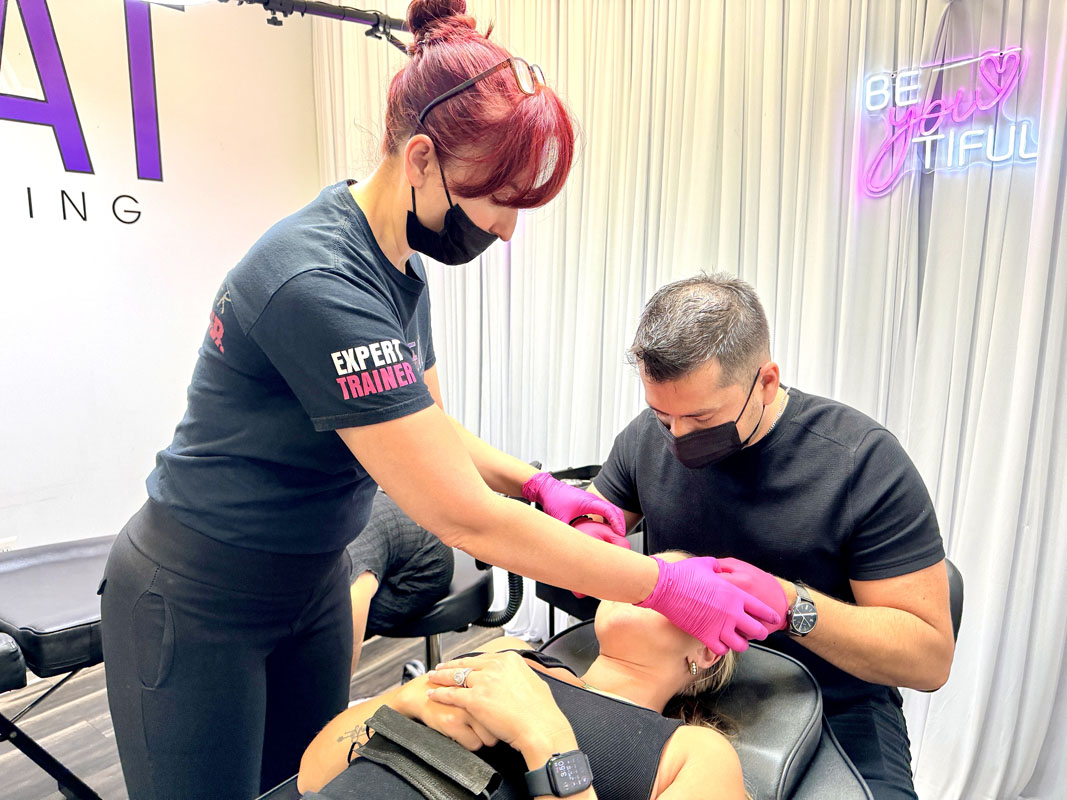
When you see bleeding as information instead of alarm, you gain power. You can:
- Pause and apply pressure when needed.
- Use numbing products with vasoconstrictors appropriately.
- Adjust your depth, speed, and stroke pattern.
- Support pigment retention with ink baths and careful passes.
- Transition to machine work or shading when it serves the client better.
Over time, as you see more skin types and more healing outcomes, you will develop a calm certainty about bleeding. It will stop feeling like a threat and start feeling like one more guidepost on the path to mastery. With solid education, thoughtful practice, and a willingness to adapt, you can keep procedures clean, clients comfortable, and results consistently beautiful.
As your hands mature, you begin to feel microblade pressure differently. Early artists think pressure is something you “choose.” Experienced artists know it is something you sense. You begin to feel when the blade glides instead of digs. You begin to hear the difference — yes, skilled artists listen as much as they look. A shallow stroke sounds like a whisper. A deeper stroke feels more resistant, more dense. This sensitivity cannot be taught in one module or one practice day — it is built through repetition, healed results, and intentional review.
One of the most overlooked skills in bleeding control is observational reflection. After a client heals, ask yourself: did the strokes stay crisp? Did they blur? Did retention lighten evenly or drop out in patches? Did the client mention excessive redness or sensitivity afterward? These observations become the blueprint for your future work. Your first appointment teaches you the basics. The healed result teaches you the truth.
Consider keeping a digital or written healing journal — not for marketing, but for mastery. A note like “Client bled lightly, healed clear and crisp” has value. So does “Client bled consistently, retention low — next session reduce depth 10–15% and slow hand speed.” Over a year of entries, your skill sharpens in a way no single class could provide.
Understanding bleeding also means understanding the biology beneath your blade. The dermal layer is vascular — it houses blood vessels, capillaries, fluids, and connective tissue. When the blade enters the upper epidermis, the body sends blood as a natural defense response. Plasma rises to protect the opening. This means some bleeding is not only normal — it is expected. Your role is to stay on the surface edge of that threshold, not below it.
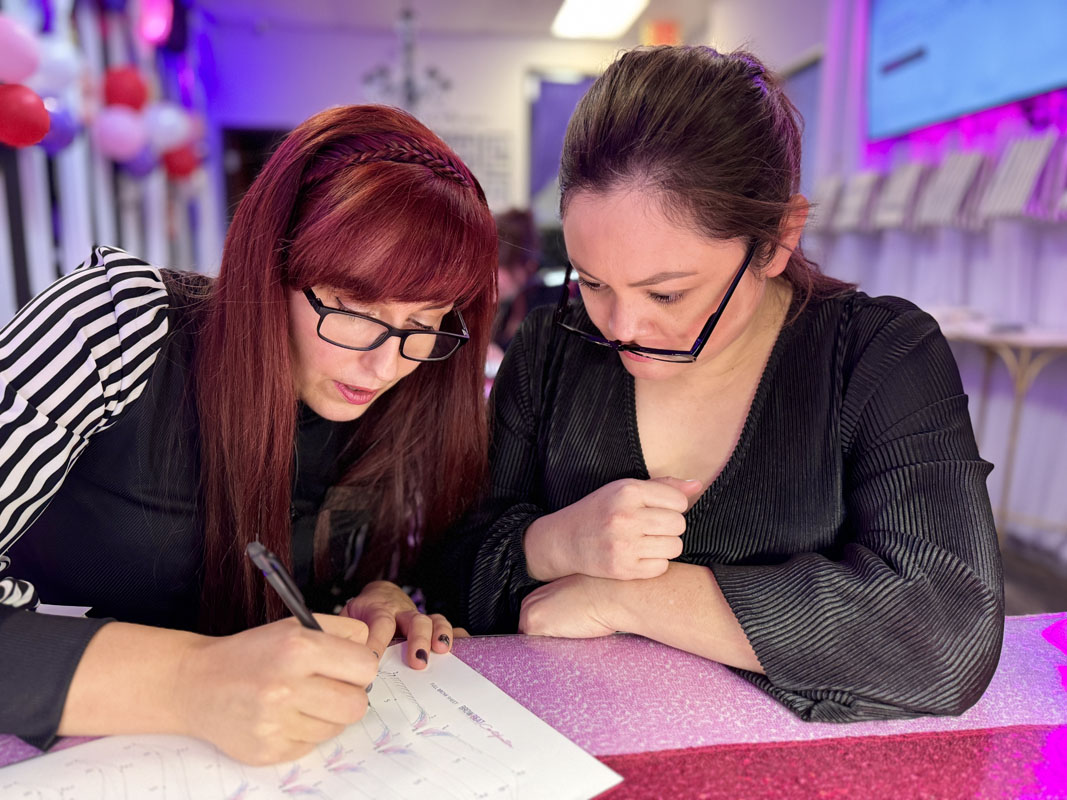
Too deep can cause pooling and persistent re-bleeding. Too shallow can cause poor retention. The artistry is finding center — light enough for delicacy, firm enough for permanence. Like handwriting, pressure becomes automatic with time. You no longer think about how hard to press when you sign your name — the body remembers for you. Microblading pressure eventually becomes just as natural.
When bleeding persists even with corrections, shading becomes an intelligent alternative — not a fallback. Shading does not cut pathways into the skin; it perforates with tiny taps. This means the skin receives color with less structural disruption. For clients who bleed easily, shading may heal more smoothly and last more consistently. Many clients request strokes because they think hairs equal natural. But soft shading can look natural too — often more natural than messy or patchy strokes that blur during healing.
If you learn both microblading and machine shading, you unlock the ability to design rather than default. You can choose strokes for clients who hold crisp pigment well — thin, tight follicles, low-oil skin, and stagnation-prone circulation. You can choose powder shading for clients with high activity, high oil, or medications that increase bleeding. You are no longer limited. You are creative.
This freedom is what separates an artist from a technician. A technician executes one approach and hopes the skin cooperates. An artist reads the skin like a story — adjusts, pivots, edits, and writes a different chapter where needed. Bleeding is simply one line of that story. If you stop fearing it, you hear what it is telling you.
The longer you work, the calmer you will become. The first year of microblading is excitement blended with nerves. The second year is control blended with confidence. By year three, bleeding does not alarm you — it informs you. You will know when to lighten your hand, when to shorten stroke length, when to apply a pressure pause, and when to shift toward shading or a hybrid approach. This wisdom is not accidental. It is earned.
And here is the beautiful truth — you are already earning it. Every client, every outcome, every healed brow shapes your instincts. Bleeding teaches you where the body defends, where the blade sits, and how the skin behaves under stress. Instead of pushing through, you learn to work with it. That is professional growth. That is long-term artistry.
So the next time you see a bead of blood form in your work, do not tense. Observe. Adjust. Continue with intention. Your hands are learning what your mind already knows — that microblading is not a race, but a craft refined through thousands of tiny decisions, each one informed by the last.
Bleeding is not the enemy. It is the conversation. The more fluently you speak it, the more masterful you become.