
Last Updated: January 2026
If you’ve been searching for microblading training in Dallas and wondering what you actually learn (and what you should expect as a beginner), you’re in the right place.
At BrowBeat Studio Dallas Microblading Certification and Training Academy, the goal isn’t to overwhelm you with buzzwords or rush you through a checklist. The goal is to teach you how to think like a professional—how to map, how to plan, how to practice, and how to build consistent results through repeatable systems. And while your course includes three brow skills (microblading, ombré powder brows, and combo brows), this guide focuses on what most beginners care about most: microblading + ombré powder brow education, with combo brows positioned as an added advantage inside the program.
Throughout this blog, you’ll also see how your training fits into broader semi-permanent makeup training programs—so if you’re exploring a full PMU pathway in Dallas (brows now, lips later, advanced correction later), you’ll understand exactly how the pieces connect.
First, what “beginner-friendly” really means in microblading training
Beginner-friendly does not mean “easy” or “watered down.” It means your training is structured in a way that helps you build skills in the correct order—so you don’t skip foundational steps that later create inconsistent results.
In a strong microblading certification Dallas course, beginners need:
- A clear stroke pattern system (so you’re not randomly drawing lines)
- A mapping system that creates consistent structure across different faces
- Hands-on repetition through simulation exercises before advancing
- A practical workflow (so you understand treatment order, setup, and process)
- Guidance on pressure and control (because “too light” and “too heavy” both create problems)
This is why students who want a real foundation often choose an in-person course instead of trying to piece together random tips. If you want to see the core program overview, start here: Microblading Certification.
Why Dallas beginners should learn microblading and ombré powder brows together
Most people begin their search with microblading course Dallas—but in the real world, brow clients don’t all have the same skin, the same goals, or the same brow history. That’s why it’s powerful to train in both microblading and ombré powder brows within one structured certification.
Here’s the simple truth: microblading creates a stroke look, while ombré powder brows create a shaded, soft-makeup look. Learning both gives you flexibility as you grow, because you’re not boxed into one style of result. If you want a full overview of the shading side of your training pathway, visit: Ombré Powder Brow Certification.
And yes—your course includes combo brows as well, but we treat it the right way: as a strategic blend you can add once your fundamentals are strong (rather than making it the only thing you talk about).
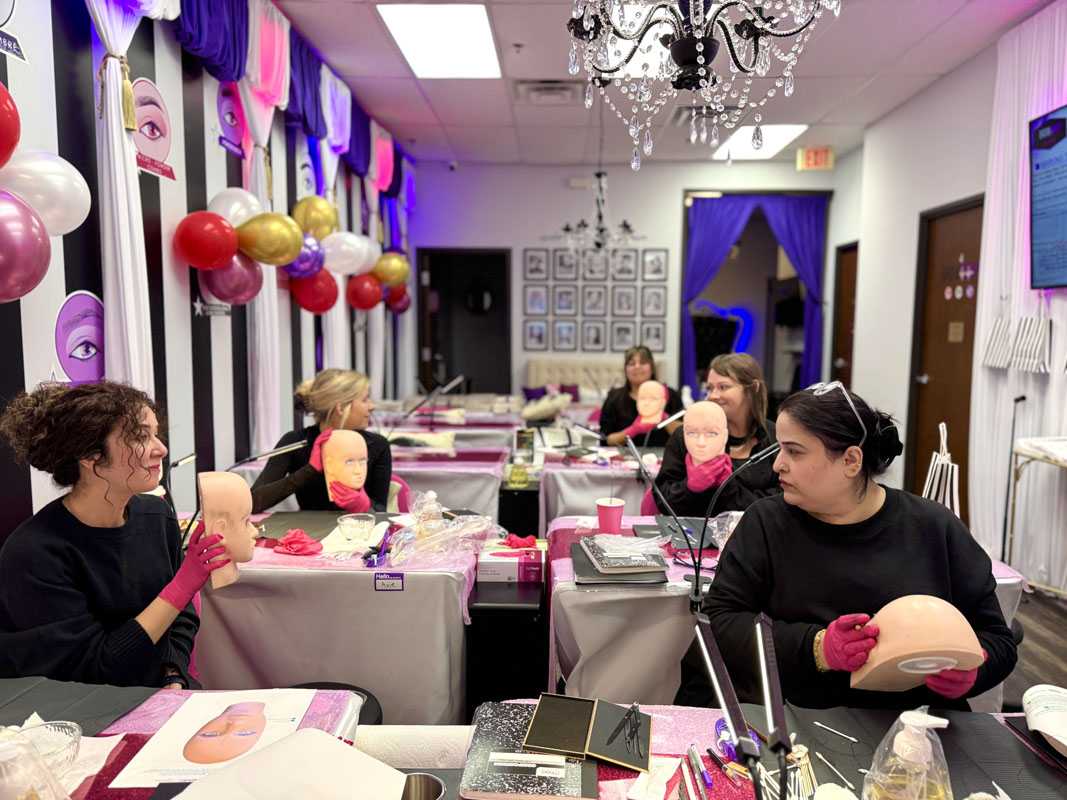
Inside the 3-day structure: how skills are built (without chaos)
Your 3-day certification is designed to build skill step-by-step. Think of it like layers: you don’t jump to advanced techniques until your foundation is stable.
For a deeper overview of the multi-skill structure, this topic ties into your broader “3-in-1” positioning (and it’s a strong internal read for prospective students): 3-in-1 Brow Certification Course.
Day 1: microblading foundations + hairstroke pattern training
Day 1 is where microblading training becomes real. Beginners typically feel excited—and a little nervous—because strokes look simple until you understand the logic behind them. In this course, you don’t just “practice strokes.” You learn a system.
What you learn and practice on Day 1:
- How eyebrows influence the full face (shape, lift, expression, balance)
- Pattern planning so strokes have purpose (not random direction)
- Hairstroke pattern structure (the “why” behind head strokes, flow, and movement)
- How to build natural density without making strokes compete visually
- Simulation exercises to build control and repetition
One of the biggest beginner breakthroughs is realizing that “natural” is engineered. It’s intentional. That’s why pattern training matters so much in a microblading certification Texas pathway.
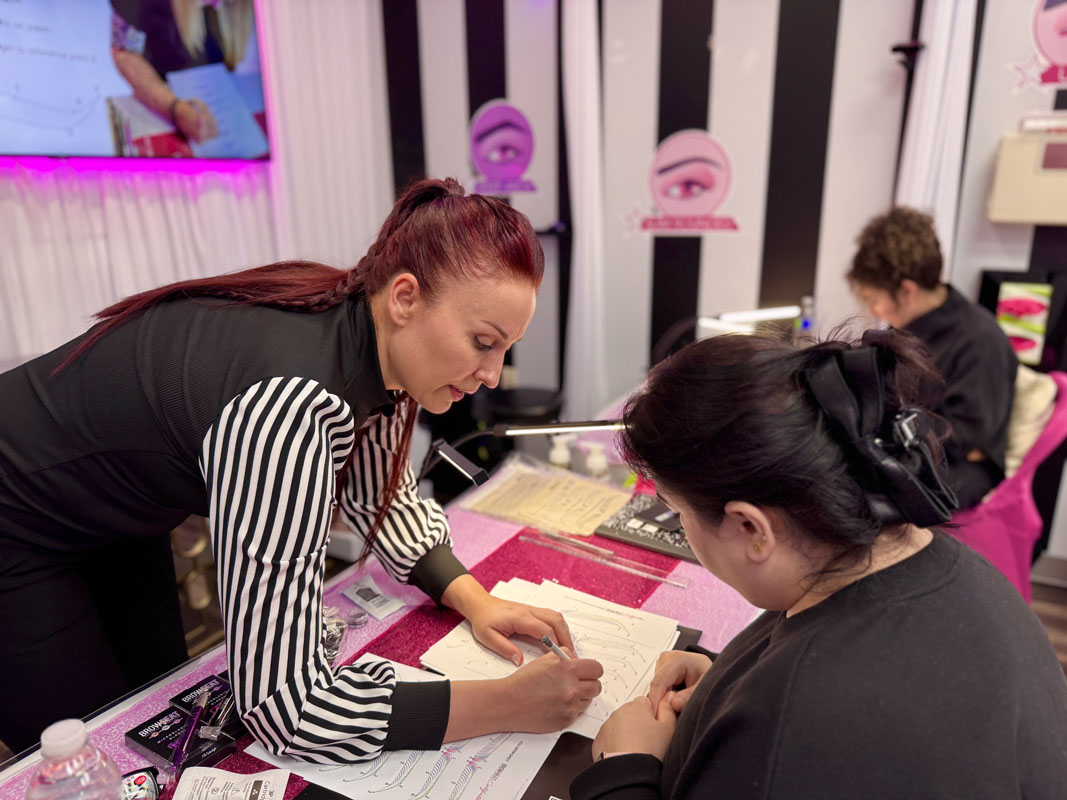
Day 2: mapping systems + treatment order (where beginners become confident)
This is where your course becomes truly distinct: detailed mapping education that supports all brow styles taught in the program.
In your training, mapping is not treated like a quick step. It’s treated like the foundation that holds the entire brow service together.
What you learn and practice on Day 2:
- Treatment order (how a professional appointment flows from start to finish)
- Client communication steps (setting expectations and explaining the process clearly)
- Health and sanitation protocols and why each step matters in practice
- Mapping with precision tools including golden ratio calipers for brow heads
- String mapping to build consistent reference points (structure before artistry)
- Working on different brow shapes so you learn adaptation—not just one template
- Pressure awareness (control, consistency, and why this changes results)
If you want a dedicated overview that pairs well with this blog as an internal support read, link students to your requirements/training expectations page: Microblading & Powder Brow Certification Requirements (Texas).
Day 3: ombré powder brow education + combo brows as the value-add
Ombré powder brows are often the “aha” moment for students who love a soft, polished finish. Day 3 is where you focus on shading logic—how to build a gradient, how to create balance, and how to keep results clean and intentional.
What you learn and practice on Day 3:
- Machine shading fundamentals (how the tool works and why technique matters)
- Needle/cartridge selection logic for shading and blending
- How to build a soft ombré (front-to-tail transitions, density control)
- Layering approach (why “one pass” isn’t the same as a controlled build)
- Combo brows introduction as an enhancement skill—strokes + shading working together
For students deciding between techniques (or wanting to understand where shading fits into a modern training pathway), this internal read supports your cluster well: Dallas Brow Training: Microblading, Powder, Combo.

The real reason our course stands out in Dallas
Many programs separate skills and sell them individually. That means a student might pay once for microblading… then again for ombré… then again for combo. Your course is different because it’s designed as a complete brow skill pathway with structure across styles.
That’s not just a convenience. From an education standpoint, it’s a better way to learn because you understand:
- How mapping supports every technique
- How strokes and shading serve different clients
- How to choose an approach based on desired finish (not based on what you happen to know)
If you’d like an internal link that reinforces the “why choose us” decision angle without repeating this same blog’s phrasing, this is the type of supporting post you can weave in: Why Choose Microblading & Powder Brow Certification in Dallas.
What beginners worry about (and how the training answers it)
“I’m brand new. Will I be lost?”
A beginner-friendly program is built around order. You start with shape and structure, then build technique, then build workflow. When training is organized, beginners don’t feel lost—they feel guided by the system.
“Do I get hands-on time?”
Hands-on practice matters. In this program, students build their foundation through simulation exercises and structured practice steps that help you develop control and repeatable technique.
“What about tools and setup?”
Professional results come from both technique and preparation. That includes learning proper setup, workflow steps, and how to move through a service in a way that makes sense.
If you want to connect this blog to a “kit included / what’s provided” style internal page, this is a strong place to do it (and it helps conversions): Microblading & Lip Blushing Kit.
How your brow training connects to advanced PMU education (optional next steps)
While this post focuses on brows, many students eventually expand into other areas of semi-permanent makeup training. In your education ecosystem, two common “next steps” are:
- 2-day lip blushing + dark lip equalization training (for students who want to expand into lip services)
- 1-day microblading & tattoo correction course (best for working artists who already understand the fundamentals and want advanced correction logic)
If you want to explore the lip training pathway in your academy’s course lineup, you can link students here: Lip Blushing Certification. And for business structure and systems (especially for students planning their next steps), this page supports your training content well: Business Solutions.
How to choose the right microblading training in Dallas (quick checklist)
If you’re comparing programs, here’s a practical checklist you can use—even if you’re still early in your research:
- Is the training structured? (clear steps, clear progression)
- Is mapping taught in depth? (not treated as an afterthought)
- Is there a defined stroke system? (not “just practice lines”)
- Is ombré powder brow education included? (so you can expand skill range)
- Do you understand what you’ll do each day? (day-by-day clarity matters)
- Is the program designed for beginners? (without being watered down
If you want a direct “start here” path for enrollment research, this is the cleanest internal hub link to place near the end of the blog: Microblading Certification Details.
Final thoughts: a beginner can start here—and grow into a full PMU pathway
Microblading is a skill that rewards structure. The students who do best aren’t the ones who “wing it.” They’re the ones who learn a system, practice intentionally, and build confidence through repeatable steps.
That’s why BrowBeat Studio Dallas Microblading Certification and Training Academy is built the way it is: microblading + ombré powder brow training are treated as core skills, mapping is taught with detail, and combo brows are included as a strategic value-add inside the certification pathway.
Ready to explore the program? Start with the course overview here: Become Certified in Microblading & Ombré Brows.