
Last Updated: January 2026
Pressure is real. Pressure to pick the “right” career path. Pressure to be practical. Pressure to not waste time.
And for a lot of people who are naturally visual, detail-driven, and hands-on, traditional learning can feel like a long hallway of hoops—without a clear finish line.
If you’ve been looking for a structured way to learn a true skill—one that blends precision, creativity, and technique—microblading and ombré powder brows are two of the most requested foundations in modern semi-permanent makeup.
The best part? A beginner course can be built for real people with real schedules and real starting points.
At BrowBeat Studio Dallas Microblading Certification and Training Academy, the goal is simple:
take beginners and give them a clear, step-by-step training experience that balances microblading and ombré powder brow skills (with less emphasis on combo), so students build confidence through organized practice, guided structure, and repeatable processes.
If you want to explore the full program details and what’s included, start here:
Microblading Certificationand Ombré Powder Brow Certification.
Why Microblading AND Ombré Powder Brows Belong Together for Beginners
Beginners often assume they must “choose one” first. In reality, microblading and ombré powder brows support each other in training—because they teach different types of control.
- Microblading teaches clean line control, stroke intention, spacing, depth awareness, and how to build hairlike detail without crowding the brow.
- Ombré powder brows teach soft saturation, pixel placement, gradient control, and how to create a polished, makeup-inspired finish that still looks refined.
Together, these two skills help beginners understand the “why” behind brow design: structure, softness, and balance.
And because different clients will want different finishes, learning both expands your technical range—without forcing you to lean on combo work as the main focus.
Want a quick view of how training is laid out for beginners?
You can also explore:
Learn Microblading and Ombré Brows in Texas.
A Beginner Course Should Feel Organized (Not Overwhelming)
A beginner-friendly training experience should feel like you’re building a skill in layers—because that’s exactly how technical confidence forms.
Students do best when the process is broken down into clear phases:
- Setup & workflow: understanding the order of a brow service and how each step connects to the next
- Design & mapping practice: learning how to create balance from face-to-brow structure
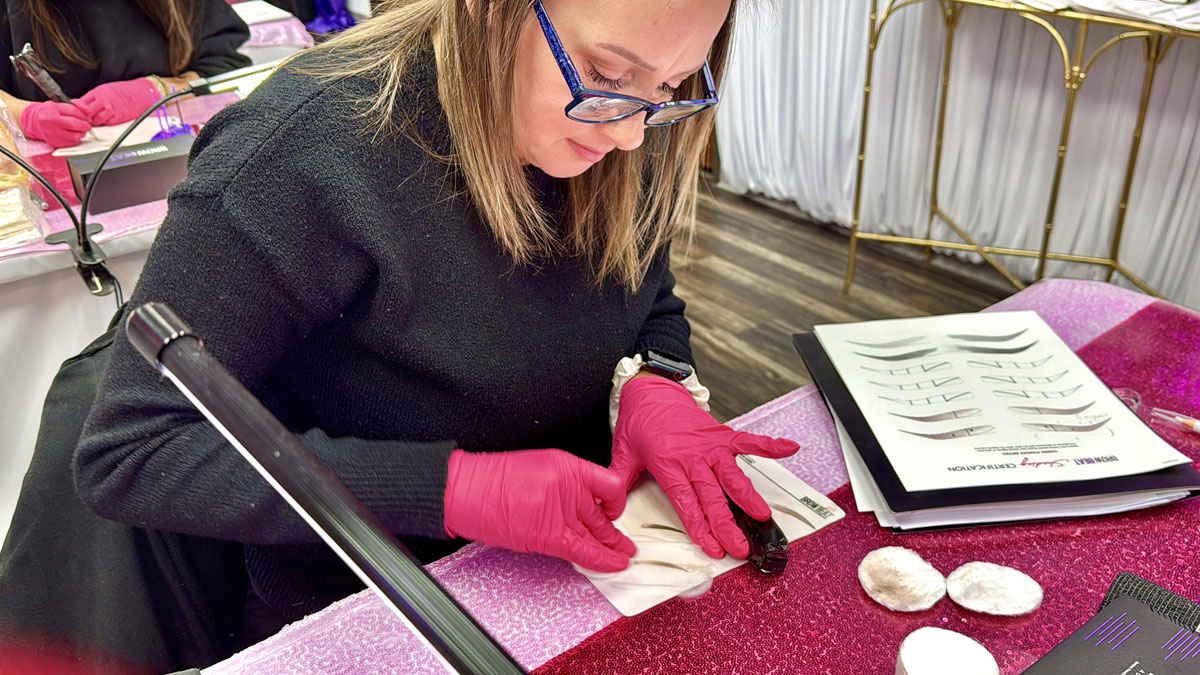
- Technique practice: training hand control through repeatable, guided exercises
- Evaluation thinking: learning how to assess shape, spacing, density, and softness before making the next pass
That’s what makes training feel doable. Not watered down—just organized.
If you like “training with a plan,” you’ll also enjoy:
Texas Microblading and Powder Brow Training.
Microblading Foundations: What Beginners Actually Need to Learn First
Microblading is not about “just making strokes.” Beginners need to understand how to control the tool, pace the work, and create strokes that make sense for the brow pattern and the client’s natural hair direction.
In a beginner program, microblading training should emphasize:
- Stroke planning: where strokes start, where they end, and how they flow together
- Spacing & restraint: learning when NOT to add more strokes
- Pressure control: creating consistent impressions without forcing depth
- Pattern logic: building the brow in sections so the end result looks intentional
This is exactly why beginners benefit from structured practice and guided repetition.
And yes—this course is positioned as available to beginners from all backgrounds.
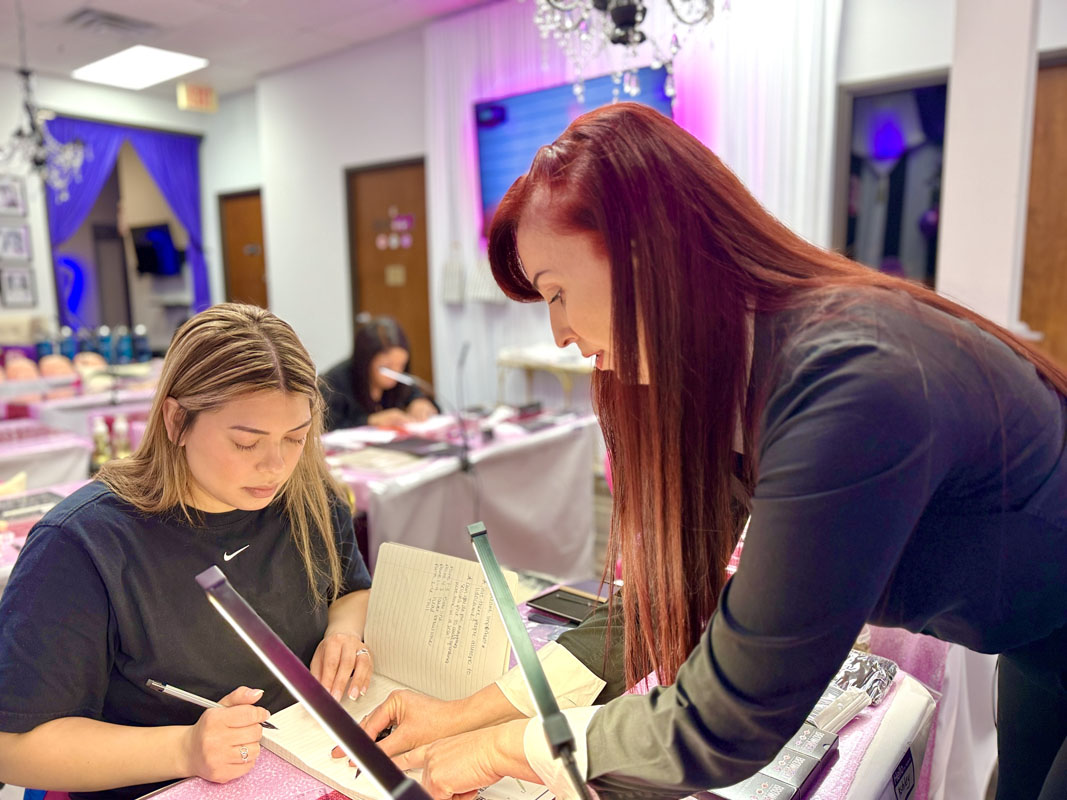
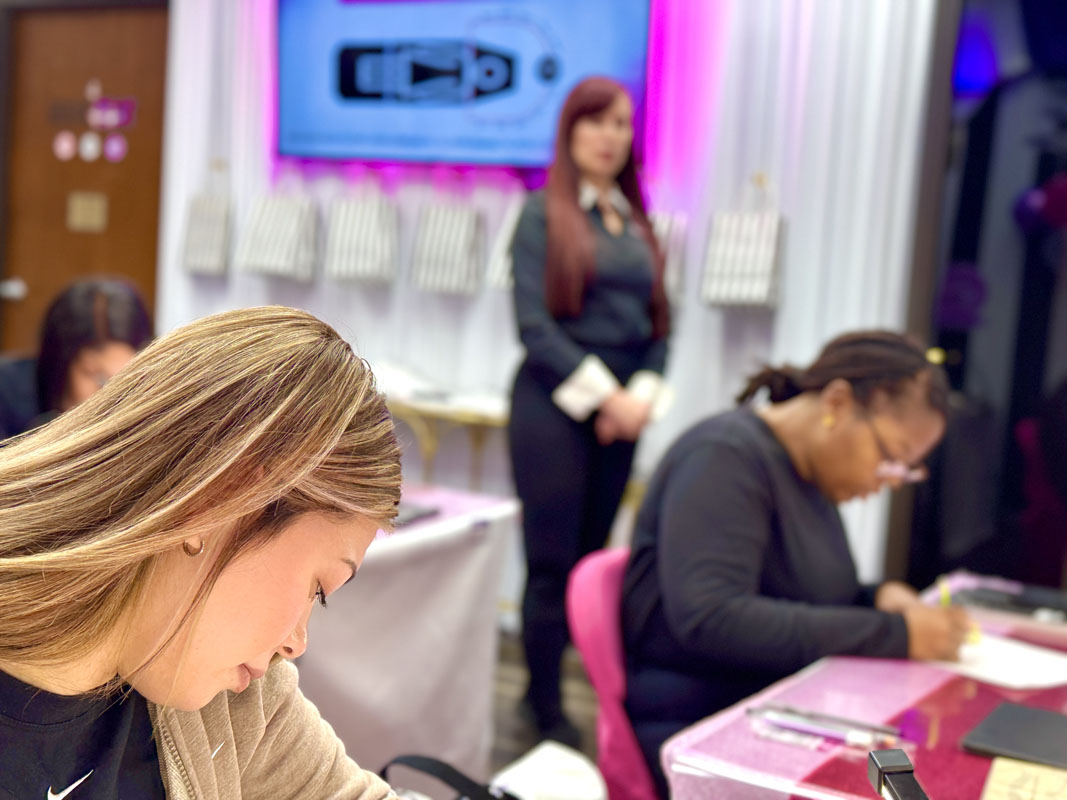
You’ll often see women training in the room, and you’ll also see male students stepping in with serious focus, strong attention to detail, and a desire to learn the craft correctly.
Ombré Powder Brow Foundations: The Skill Beginners Love (Because It Teaches Control)
Ombré powder brows are a favorite for many beginners because the technique teaches patience and precision.
Done well, the brow looks soft, balanced, and “finished”—without harsh edges.
For beginners, the most important ombré powder brow training topics include:
- Pixel placement: learning how to build saturation evenly
- Gradient planning: keeping the front softer while building depth toward the body and tail
- Edge control: creating clean structure without making the brow look stamped
- Layer thinking: knowing when to stop, evaluate, and continue with purpose
If you’re the kind of person who loves a method, a workflow, and a repeatable system,
powder technique tends to “click” fast—because it rewards consistency.
What About Combo Brows?
Combo brows can be part of a broader education, but in this training approach, the priority stays on building strong foundations in
microblading and ombré powder brows first.
When the core skills are solid, combo concepts become easier to understand without confusion.
If you’re exploring options that include multiple brow skills together, you can review:
Microblading Classes Dallas (Combo Brows).
Just remember: beginners grow faster when microblading and ombré powder fundamentals are trained with equal weight and clear structure.
Beginner Training Is About Repetition, Feedback, and Clean Process
One of the biggest differences between “random learning” and real training is a process you can repeat.
Beginners don’t need hype—they need a plan they can follow.
That’s why students receive printed resources and support materials that help keep practice organized after class.
If you want to keep building your business thinking alongside skill development,
this is a strong companion resource:
Business Solutions.
Next, we’ll break down what beginners typically practice, how the learning pace stays realistic, and what “ready” actually looks like in the real world.
What Beginners Practice (And Why It Works)
Beginners improve when practice is intentional—when each exercise has a purpose.
Training should build skill in a sequence that makes sense:
- Workflow understanding: what comes first, what comes next, and why order matters
- Design repetition: mapping practice that trains the eye for balance
- Microblading drills: controlled patterns that teach consistency and restraint
- Ombré drills: pixel practice that teaches softness and saturation control
- Review mindset: learning how to pause, assess, and refine
This is what “beginner-friendly” should mean: not easier—just clearer.
Beginner Confidence Comes From Realistic Expectations
A course can be inspiring and exciting without making unrealistic promises.
Skill grows in stages, and that’s normal.
The best programs help students understand that becoming strong takes practice—so the training environment is designed to make progress measurable.
That means your early wins look like:
- Cleaner, more consistent microblading strokes
- Better spacing and less overworking
- Softer ombré gradients with more even saturation
- Improved brow balance through repeated mapping practice
Then over time, students begin to connect the dots—how shape affects technique, how technique affects finish, and how finish affects long-term outcomes.
Why Dallas Is a Smart Place to Train
Dallas is one of those cities where beauty services are taken seriously—clients care about results, and artists care about technique.
Training in a city with a strong beauty market can shape how you think from the beginning:
professionalism, structure, and consistent execution.
If you’re comparing options and you want a clear overview of how a combined program is positioned, you can also read:
Texas Microblading and Powder Brow Training.
Tools, Training Materials, and What “Prepared” Should Feel Like
Beginners often feel nervous about tools—until the learning environment makes the steps feel predictable.
A strong program focuses on the full learning experience: technique, workflow order, and the materials that help students stay organized.
For students who want to understand what’s included at a deeper level (and how materials support practice), review:
Microblading & Kit Information.
Microblading vs. Ombré Powder Brows: How Beginners Decide What They Love
Some students fall in love with microblading because they love crisp detail and the logic of stroke flow.
Others prefer ombré powder brows because they love gradients, softness, and how “finished” the brow looks.
Many students end up enjoying both—and that’s exactly why equal-weight training matters.
- Microblading: precise detail, hairlike direction, controlled stroke building
- Ombré powder brows: soft structure, pixel control, gradient thinking
When training supports both evenly, beginners don’t feel boxed in.
They learn to think like brow professionals—choosing technique based on the desired finish, the client’s goals, and what creates a clean, balanced result.
Who This Beginner Training Is For
This style of training is positioned for beginners who want:
- a structured learning environment
- clear steps that build confidence in order
- strong foundations in microblading and ombré powder brows
- organized resources that support continued practice
Whether you’re switching paths, leveling up your current beauty direction, or finally committing to a skill you’ve wanted for years,
training should feel like a plan—not a guessing game.
Course Links (Explore the Core Pages)
Learn more about the full program here:
Ready to Start?
If you’re ready for a beginner-friendly training experience in Dallas that gives microblading and ombré powder brows equal weight—built on organized steps, real technique practice, and a clear workflow—this is your next move.