
If you spend any time scrolling through semi-permanent makeup content, it can feel like a new technique is born every week. One of the most talked about ideas in recent years is “nano brows.” Some artists speak about nano like it’s the future, a must-have skill that replaces microblading entirely. Others feel quietly worried, wondering if they are already behind because they do not offer nano yet. But do microblading artists really need to learn nano brows to have a successful, modern career?
The short answer is no—at least not right away. Nano brows are not a replacement for microblading; they are simply another way to create hair-like strokes, using a different tool. The semi-permanent makeup world is always looking for new ways to do things and new names to describe them. “Nano” is one of those new ways to sell and describe a familiar idea: fine, hair-like work created with a machine instead of a manual blade.
Clients, however, are not obsessed with the same details professionals are. When a client sits in your chair, they are not quietly evaluating whether their brows were created with a manual tool or a machine. They are thinking about color, shape, evenness, how natural they look, and how they feel when they leave your studio. They might have heard the word “nano” online, but that does not mean they truly understand what it means—or need it to be happy with their brows.
This is why it is important to keep perspective as an artist. Microblading remains the most well-known, popular, and approachable way to begin creating hair strokes. Manual strokes are often easier to learn for beginners, and once artists understand flow, direction, and spacing, they can decide later if they want to add machine-based techniques, including nano, to their skill set. You do not have to do everything at once to be current. Focusing on the easiest, most widely recognized pathway first can actually set you up for a stronger career in the long run.
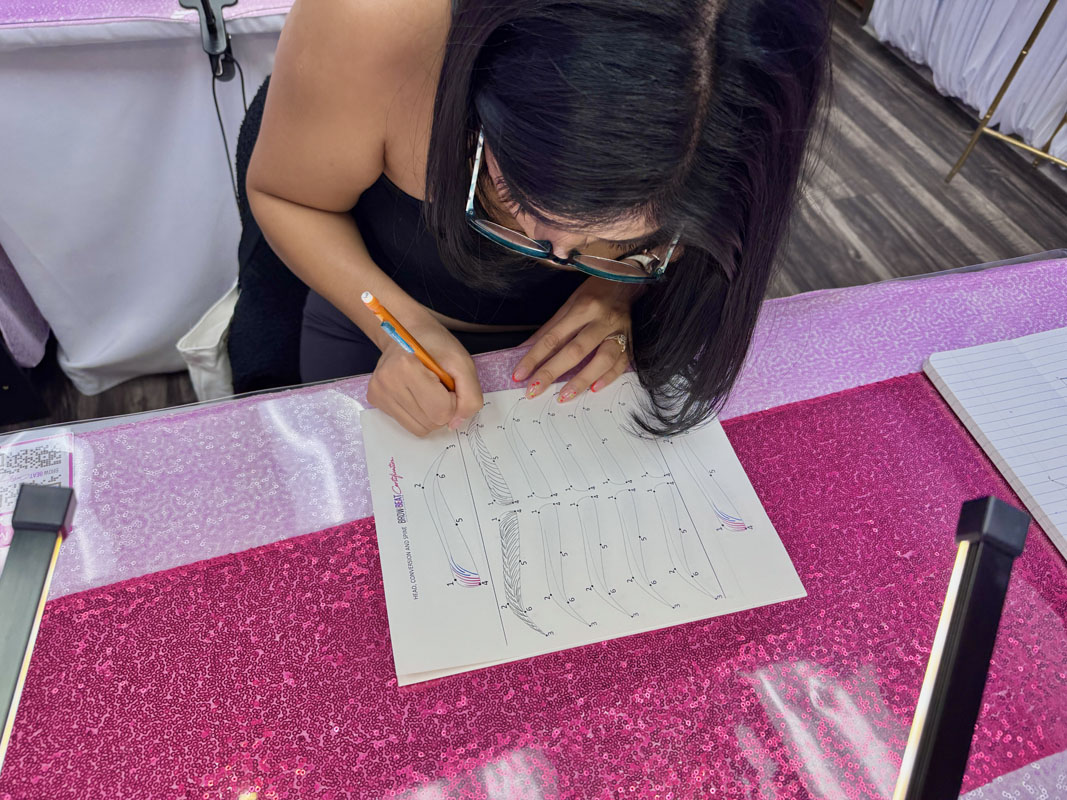
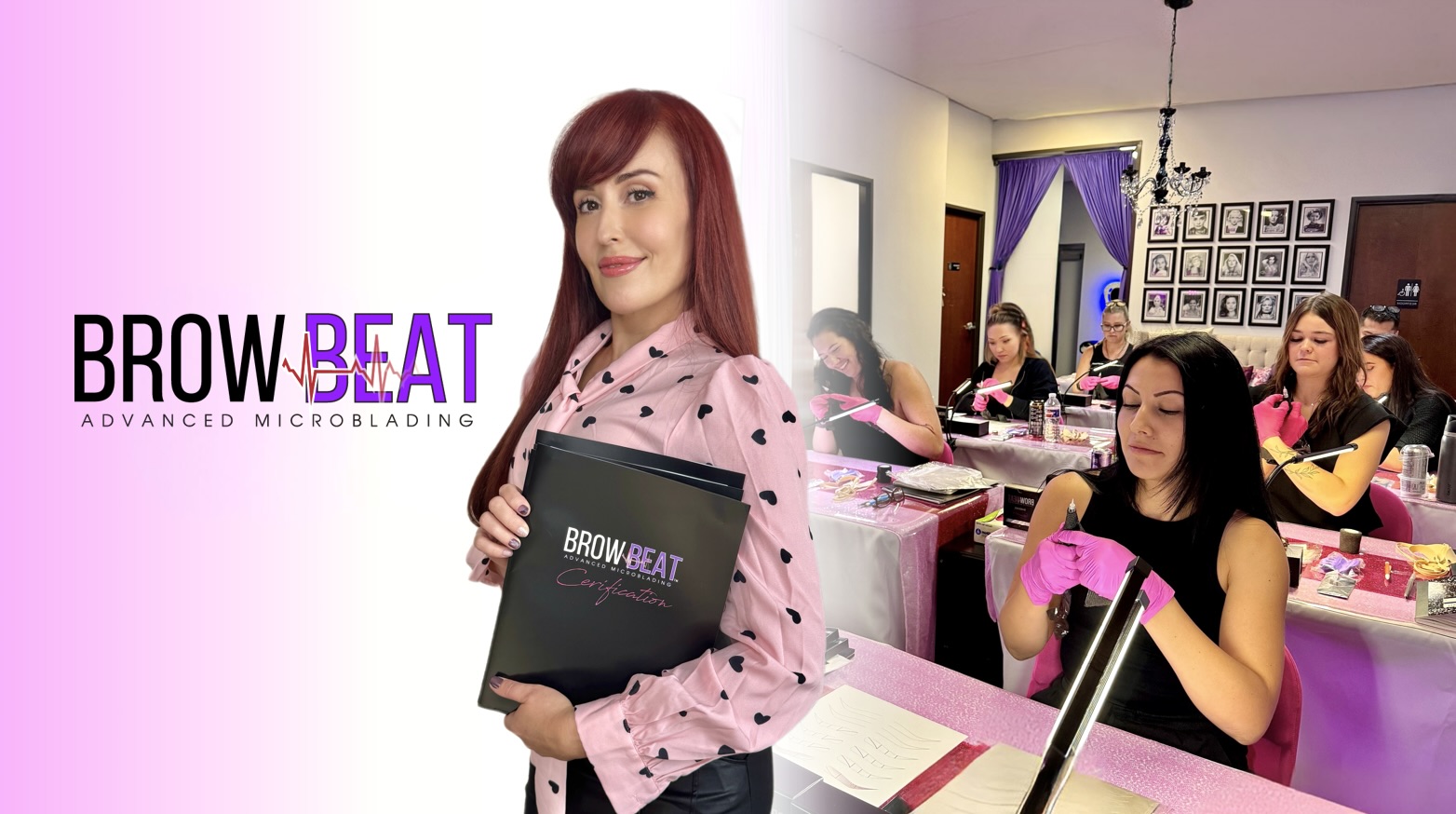
At BrowBeat Studio Dallas Microblading Certification and Training Academy, we focus first on microblading because it teaches artists the language of brows—mapping, pattern, flow, and structure. Once those foundations are solid, you can choose to add more tools, including machine strokes, in a way that feels natural rather than overwhelming.
What Are Nano Brows, Really?
Nano brows are often described as hair strokes created with a tattoo machine instead of a manual microblading hand tool. The needle is very fine, and the intention is to create thin, soft lines that mimic the look of microblading strokes, but using a machine to deliver the pigment.
In practice, nano brows and microblading share the same goal: to create the illusion of hair where hair is missing or sparse. The difference is in how the pigment gets into the skin. Microblading uses a grouped row of needles in a blade configuration to manually carve tiny channels. Nano uses a single needle and a machine’s movement to build lines with repeated, controlled passes.
In photos, especially healed photos viewed at a normal distance, clients often cannot tell which technique was used. Both can look hair-like. Both can be soft. Both can be natural or more defined depending on how they are applied. This is important to understand: the visual difference is far smaller than the marketing difference.
Because “nano” sounds technical, modern, and precise, it has become a powerful buzzword. It sounds like the next generation of brows. But it is still just one more way of placing pigment into the skin, and it requires its own learning curve and practice—just like microblading.
The Semi-Permanent Makeup Industry Loves New Names
Semi-permanent makeup is an evolving field. New tools appear, pigments improve, and artists continue to refine their techniques. That evolution is real and healthy. At the same time, there is a constant drive in the industry to name and rename techniques as a way of refreshing interest.
We have seen this with brows being described as ombré, powder, pixel, micro-powder, airbrush brows, combo brows, hybrid brows, and many more. Each term highlights a particular detail or style, but most are built from similar shading and stroke principles. Nano brows fit into this same pattern. It is a new label that draws attention, creates curiosity, and becomes a way to position services in the market.
Artists can feel pressure from this cycle. When you see new terminology everywhere, it is easy to think, “If I don’t offer this, I’ll be left behind.” But the reality is that solid fundamentals do not go out of style. Clients will always need good mapping, thoughtful color choices, clean strokes, and a positive service experience. Those core skills are not replaced every time a new name emerges.
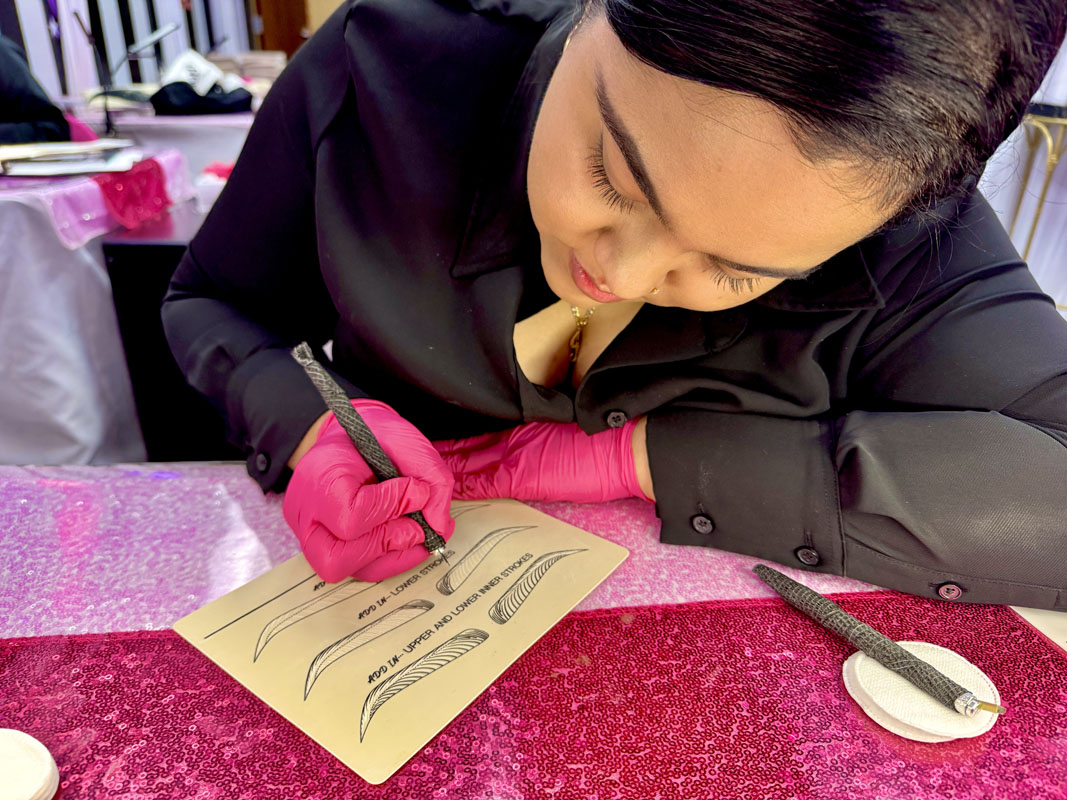
This is why structured training, such as a focused Microblading Certification program, remains valuable even as new buzzwords arrive. It gives you a stable base to stand on while the vocabulary around you continues to shift.
Do Clients Actually Know the Difference Between Microblading and Nano?
From a technical viewpoint, yes, there are differences between microblading and nano. From a client experience viewpoint, those differences often disappear. Most clients are not trained to see how strokes were created. They are looking at their reflection, not at your process.
Clients rarely say:
- “Did you use a single-needle machine to build these lines?”
- “Is this a nano stroke or a microblade stroke in the front of my brow?”
- “What diameter needle created this specific hair?”
Instead, they ask questions like:
- “Will my brows look natural?”
- “Is the color going to suit my skin and hair?”
- “How long will this last before I need a refresh?”
- “Will my brows be even?”
- “How will they heal?”
If a client walks in asking for nano brows specifically, it is usually because they have heard the term online, seen it in a video, or read about it in a caption. That does not mean they fully understand how it differs from microblading. They may simply be saying “nano” when they mean “soft and natural.”
As the artist, your role is to translate their language. When they say “nano,” they may be telling you that they are nervous about harsh or heavy brows. You can reassure them by explaining the result you will create, rather than getting caught up in a technical debate about tools. For most clients, the reassurance that their brows will be gentle, natural, and tailored to their face matters more than whether the work is labeled microblading or nano.
Manual Strokes Are Often Easier to Learn First
For beginner artists, manual microblading strokes are often the most straightforward way to start learning brow structure. The hand tool provides a simple, direct connection between your hand and the skin. You can feel the pressure, you can see each stroke as you create it, and you can connect theory to reality one line at a time.
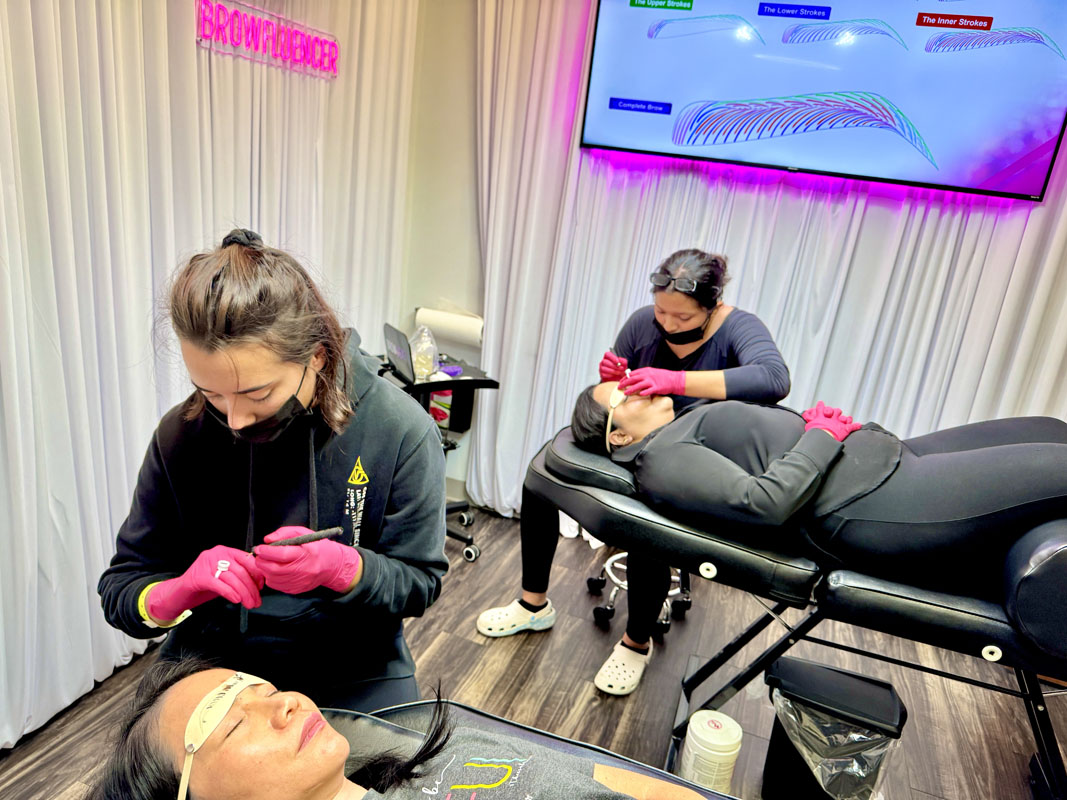
Learning microblading first helps you focus on:
- Direction: understanding how brow hairs grow and how to mimic that direction.
- Flow: seeing how the brow moves from head to arch to tail.
- Spacing: keeping strokes close enough to look full but not so close that they blur together.
- Mapping: placing strokes within a structure that suits the client’s face.
Once you can create clean, consistent strokes with a manual tool, you have built a foundation that can easily support machine work. Moving to a machine becomes a next step, not a complete restart. You will already understand where strokes belong and why; the only new thing you are learning is how to use a different tool to place them.
This is one of the reasons our curriculum at BrowBeat Studio Dallas Microblading Certification and Training Academy begins with strong manual stroke work. When you learn microblading at a deep level, you are not closing the door on future techniques like nano. You are building a bridge that will make those techniques easy if you decide to add them.
Nano as a Buzzword: Useful, But Not a Requirement
“Nano brows” is a powerful phrase. It sounds precise, minimal, and modern. It fits comfortably alongside other trendy terms in the beauty world. As a result, it works well for marketing. There is nothing wrong with that. Buzzwords can help clients discover services and feel excited about them.
However, buzzwords should not make artists feel inadequate. You do not need to adopt every new label to be considered current. It is entirely possible to provide beautiful, natural brows with microblading alone. There are many artists with full books of happy clients who do not offer nano at all.
Instead of thinking, “I must learn nano or I’m falling behind,” it may be more helpful to think, “Nano is one of many options I may explore after my foundation is strong.” This reframing shifts the focus back to what truly grows your career: repeatable, consistent results that clients love, no matter which tool you used.
Do Nano Brows and Microblading Last the Same Amount of Time?
When applied with good technique, both microblading and nano brows can have a similar general lifespan in the skin. Factors such as skin type, aftercare, lifestyle, and pigment choice will often influence longevity more than whether you used a blade or a machine for hair strokes.
Machine-based techniques, including nano, can be a bit gentler over time and may lend themselves well to certain skin types. That may be true in specific situations. But for the purpose of training new artists, microblading when taught and executed correctly, remains a respected and widely used technique in the semi-permanent makeup industry, plus it is the most well know term and an entry point for your clients.
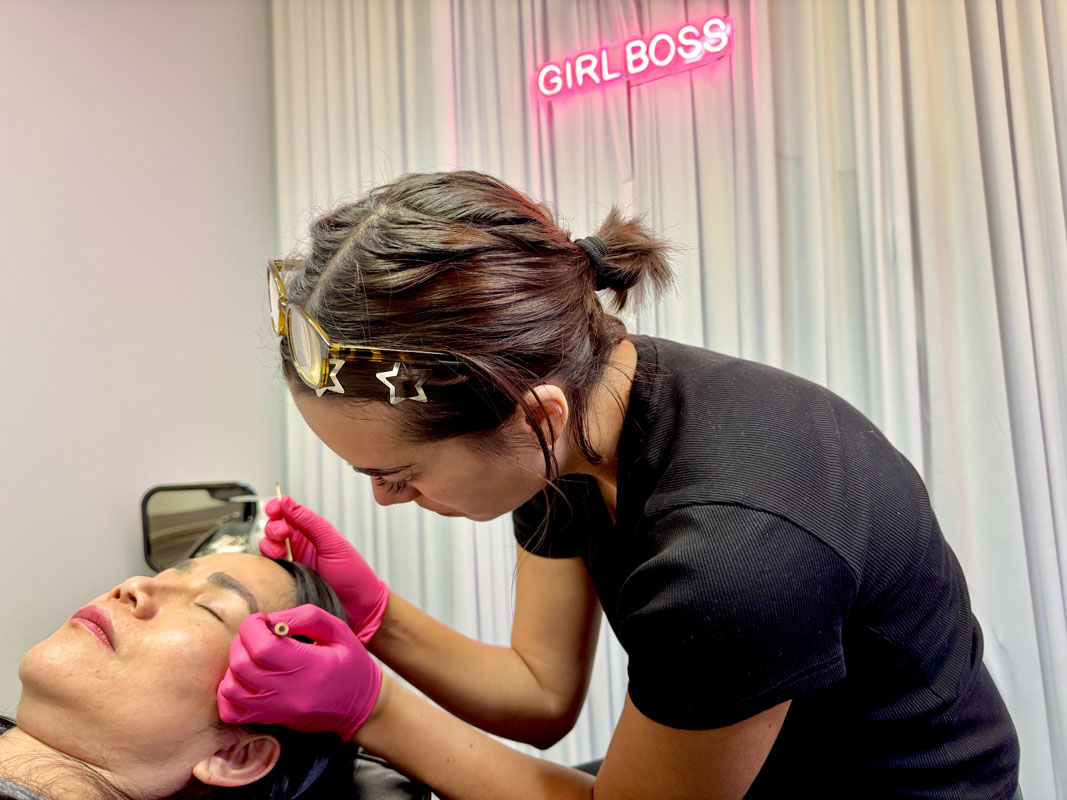
It is more productive to focus on good technique in whichever method you are currently learning. When your mapping is sound, your color choice is thoughtful, and your aftercare instructions are clear, your work has the best chance of aging well.
Will Clients Ask for Nano Brows by Name?
Some clients will. They may have seen nano brows advertised online or heard about them from a friend. When they walk in and use the word “nano,” it does not automatically mean they must receive that specific technique. It simply tells you what language they have been exposed to.
In these moments, you have an opportunity to guide the conversation gently. You might respond by asking what they are hoping to achieve: ultra-soft brows, more natural-looking hairs, a less defined makeup look, or a very subtle enhancement. Once you understand their goals, you can explain which technique you recommend and why.
Often, a client who asks for nano is really asking for reassurance that their brows will not be blocky, harsh, or too bold. Microblading can absolutely create soft, natural results when done thoughtfully, but so can shading, all treatments begin by finding out what the client truly wants.
Later, if you decide to add nano or machine strokes into your services, you can update your language and menu. But you do not need to apologize for working with microblading. It remains one of the most recognized and requested brow services worldwide.
Can You Visually Tell the Difference Between Microblading and Nano?
Up close, under magnification, trained eyes may see subtle differences between microblade strokes and nano machine strokes. But most clients do not examine their brows at that level. They see themselves at a natural distance in a mirror, in photographs, and in everyday life.
At this normal distance, the main things that stand out are:
- Is the brow shape flattering?
- Is the color appropriate for the client’s features?
- Do the brows look like hair, soft shading, or a mix of both?
- Does the overall result feel balanced and believable?
Both microblading and nano can produce crisp or soft results depending on how they are executed. Both can be blended with shading to create combo brows. When done well, the visual difference between the two from a client’s perspective is often minimal.

Knowing this can take the pressure off. You do not need to master every tool to give clients the brows they want. You need to master good design, controlled application, and honest communication.
Focusing on What Is Easiest to Learn and Most Well Known
For many new artists, microblading offers the most straightforward and accessible way to enter the brow world. It is widely recognized, frequently requested, and deeply associated with the look of natural hair strokes.
By focusing on microblading first, you are choosing:
- A technique that clients have already heard of and search for by name.
- A method that teaches you fundamental brow structure and flow.
- An easier learning curve to start building confidence and control.
Once you are comfortable and consistent with microblading, you can explore additional techniques from a position of strength. If you decide to add ombré or powder brows, for example, your understanding of mapping and shape will serve you well. If you later choose to learn machine hair strokes or nano, you will approach it as a skilled brow artist, not as someone trying to learn everything at once.
This approach aligns with how our curriculum is built at BrowBeat Studio Dallas Microblading Certification and Training Academy. Our Microblading Certification course gives you a strong base in stroke work and structure, and courses like our
Ombré Powder Brow Certification allow you to expand into shading as you grow.
Building Skills with the Right Tools
A steady learning path is supported by having the right tools at the right time. A well-organized kit lets you focus on learning technique without constantly worrying about whether your supplies are working against you.
For students learning microblading, it is helpful to have:
- Reliable blades and hand tools.
- Consistent practice materials, such as silicone and simulation exercises.
- Pigments appropriate for a variety of brow tones.
- Measuring and mapping tools that align with your training system.
When your kit is aligned with your education, your practice sessions become more purposeful. You can repeat the same motions, with the same materials, until your hands and eyes start to work together naturally. You are not constantly adapting to unfamiliar tools.
This is why we support our training with a dedicated microblading and lip blushing kit. It is designed to match the techniques taught in our programs so that your tools reinforce your learning rather than complicate it.
Do You Ever “Need” Nano Brows as a Microblading Artist?
The honest answer is that you do not need nano to begin or sustain a successful microblading career. Many artists work exclusively with manual techniques and shading combinations and have long waiting lists of clients who love their work.
Nano can be a valuable addition if you decide to deepen your machine skills, especially when you begin working with more complex skin types or want even finer control over your line quality. It can be particularly appealing if you already enjoy machine shading and want to expand into machine-based hair work.
But it is a choice, not an obligation. Your success will depend far more on your ability to design beautiful brows, communicate clearly, manage your appointments professionally, and deliver consistent healed results than on whether you add the word “nano” to your treatment menu.

It is easy for discussions around technique to slip into arguments about which method is “better.” That kind of thinking rarely helps artists grow. Microblading and nano are both part of the modern semi-permanent makeup toolkit. Each has strengths, and each can produce beautiful results in the hands of a trained artist.
For training purposes, it is more helpful to stay positive and focused. If your current path is microblading, view it as a powerful starting point. Focus on becoming excellent at the things that truly matter: structure, flow, color, communication, and aftercare. If and when you decide to learn nano, it can become another way to apply those same principles, not a replacement for everything you already know.
Instead of asking, “Do I need nano to keep up?” you might ask, “What do I need right now to become the best microblading artist I can be?” That question keeps you grounded in skill-building rather than fear.
Choosing the Right Next Step for Your Career
The semi-permanent makeup industry will continue to evolve. New tools, names, and approaches will appear over time. If you build your career on trends alone, you will constantly feel like you are scrambling to catch up. If you build your career on strong fundamentals, you will feel steadier, no matter what new buzzword appears.
For most artists, the most powerful next step is not “learn everything at once,” but “learn one thing well.” Mastering microblading gives you a language you can use across many services. It anchors your brow work in structure, flow, and intention. From there, you are free to add ombré, powder, combo, or eventually nano in a way that feels natural.
If you are ready to deepen your microblading skills and build a foundation that can carry you through every new trend the industry invents, explore the structured training at BrowBeat Studio Dallas Microblading Certification and Training Academy. Our Microblading Certification course and Ombré Powder Brow Certification are designed to give you confidence in both stroke and shading work, supported by a professional microblading and lip blushing kit that keeps your tools aligned with your learning.
Nano brows may be a buzzword today and an option for your future, but microblading remains a strong, respected, and highly effective foundation. You do not have to do everything at once. Start where the learning is clearest and the demand is strongest, and build from there.