One Technique, Many Names: Why Shading Sounds More Complicated Than It Is
Microshading, micropigmentation, and micro-powder brows can sound like three different worlds. In reality, they are variations of a shared technique: using a machine (or specific manual motions) to build thousands of tiny dots or passes of pigment, layer by layer, until the brow looks softly shaded.
The words themselves tend to emphasize different aspects:
- Microshading points to the technique of creating many small “micro” marks that add up to a shaded effect.
- Micropigmentation describes the overall process of placing pigment into the skin with a machine, not just for brows but for all semi-permanent makeup.
- Micro-powder brows highlight the finished look: a soft, powdery brow similar to makeup.
While those names sound different, the core idea stays the same: controlled, layered pigment that creates a gradient of color instead of visible hair strokes alone. The machine, needle choice, and technique determine whether the shading is light and airy or deeper and more defined. That is the part you need to master—the mechanics and the artistry—not the endless list of labels.
As you grow in your career, shifting your mindset from “I must learn every named technique” to “I must master shading and its variations” makes your path less overwhelming and much more powerful.
Why Shading Is Imperative for Long-Term Artists
Microblading has become one of the most famous brow terms in the world. It is often how clients first discover semi-permanent brows. But as an artist, if you want longevity in your career, shading must sit right alongside microblading in your skill set. Relying on strokes alone can limit what you are able to do for clients over time.
Shading is essential because it allows you to:
- Serve clients whose skin is not ideal for crisp microblading strokes.
- Support mature skin, oilier skin, or textured skin that benefits from softer coverage.
- Offer combo brows—strokes at the front, shading through the body and tail—for a modern, full look.
- Balance previous faded work that needs smoothing and unifying.
- Create soft, powdery brows for clients who love the look of daily brow makeup.
In other words, shading is not an extra. It is a core skill that gives you options. Long-term artists who can shade are better equipped to adapt as client needs and trends change. Machine brows without strokes are already becoming a new frontier in some markets—soft ombré and full powder styles are more and more popular. Without shading, you are limited to one look. With shading, you are able to create many.

Microshading: The Soft Pixel Foundation
Microshading focuses on the technique of building pixels—tiny points or taps of pigment—that, when layered, create a soft background. Instead of sharp, distinct lines like microblading strokes, microshading produces a smoother wash of color. It can be very sheer and delicate or more saturated and defined, depending on how you apply it.
In microshading, you are learning to control:
- How large or small your pixels appear.
- How tightly or loosely those pixels are spaced.
- How many passes you perform over each area.
- How you transition from lighter fronts to deeper tails.
Microshading is often used:
- To give more fullness behind microblading strokes.
- To create a subtle, powdery brow with no visible hairs.
- To even out areas where hair is missing or uneven.
Think of microshading as the way you “fill in” a brow. Just like a client might use a brow pencil and then soften it with a brush, microshading gives you that ability in a semi-permanent form. It is one of the reasons that machine-only brows, without strokes, are becoming a new frontier: many clients love the clean, soft, shaded look that microshading can provide all on its own.
Micropigmentation: The Bigger Picture
Micropigmentation is a broader term. It covers all procedures that use a machine to place pigment into the skin: brows, lips, eyeliner, and more. When you see “micropigmentation” in a description, it usually means that the work is being done with a machine rather than a manual tool.
For brows, micropigmentation includes:
- Microshading.
- Ombré powder brows.
- Micro-powder brows.
- Some styles of nano or machine hair strokes.
Understanding this is important because it helps you see that you are not learning separate careers—you are learning how to control a machine and its output. The same machine can be used to create soft shading, stronger powder, or even very fine lines, depending on your settings and movement.
As an artist, what you really need to know about micropigmentation is less about the name and more about:
- Machine speed and power.
- Needle size and configuration.
- Angle and pressure on the skin.
- Rhythm, motion, and stretch.
- How pigments behave when placed gently and gradually.
Micro-Powder Brows: The Makeup-Inspired Finish
Micro-powder brows are all about the finish. The look aims to resemble brow makeup: soft at the front, fuller through the middle, and rich but still soft at the tail. The brow does not look like individual hairs; instead, it looks like the client has gently filled it in with powder or a fine pencil.
Micro-powder brows:
- Are created through layered pixel shading.
- Often use a gradient from lighter front to darker tail.
- Suit clients who want a ready-made makeup look every day.
- Can be adjusted from very soft to more defined depending on intensity.
For artists, understanding micro-powder brows means learning how to read what kind of intensity a client wants. Some clients want “barely there” softness; others want stronger definition. No matter what they ask for, they usually do not care what you name it. They care if the intensity feels right for them when they look in the mirror.
This is where one of your most powerful tools comes in: seeing your client with their usual makeup. When you look at how they already do their brows, you can understand immediately whether they gravitate toward light, medium, or darker intensity. Instead of launching into buzzwords like microshading or micro-powder, you can simply ask them, “Do you prefer this level of depth, or would you like a little more or less?” That is how you make money with less confusion.
Don’t Get Caught Up in the Hype
The semi-permanent makeup world is full of excitement. New names, new techniques, new tools—there is always something to talk about, post about, and sell. There is nothing wrong with innovation, but hype can make artists feel scattered and behind.
What Clients Actually See: Light, Medium, or Dark
While the industry enjoys using complex names, most clients simplify everything down to intensity and style. When they look at photos, they are deciding:
- Do I like this lighter, airy brow?
- Do I like this medium, softly filled brow?
- Do I like this deeper, more defined brow?
They are not usually thinking, “I prefer micro-powder over microshading.” They are reacting to whether the look feels like them. This is why asking the right questions matters more than reciting technique names.
You can keep your consultations simple and effective by:
- Asking clients to arrive with their usual brow makeup applied.
- Observing how heavy or light that makeup is.
- Showing them a few healed examples and asking, “Which strength do you feel most like you?”
- Explaining that you can adjust intensity within the shading family, from barely-there powder to more solid definition.
Machine Brows Without Strokes: The New Frontier
For many years, the main conversation was about microblading, and shading was seen as an “add-on.” Today, machine-only brows without strokes are quickly becoming a new frontier. Some clients are falling in love with the look of pure powder or ombré brows, especially those who always used brow makeup long before hearing about microblading.
Machine brows without strokes can be:
- Soft and barely-there, ideal for someone who wants just a hint of definition.
- Medium and balanced, for a polished but everyday brow.
- Richer and more defined, for clients who enjoy a “done” makeup look.
For artists, this trend is an opportunity, not a threat. If you know how to shade, you can serve both clients who want strokes and clients who prefer purely shaded brows. You are not stuck in one lane. Because the same shading principles apply across microshading, micropigmentation, and micro-powder brows, you are able to adapt your work without reinventing your education each time the language changes.
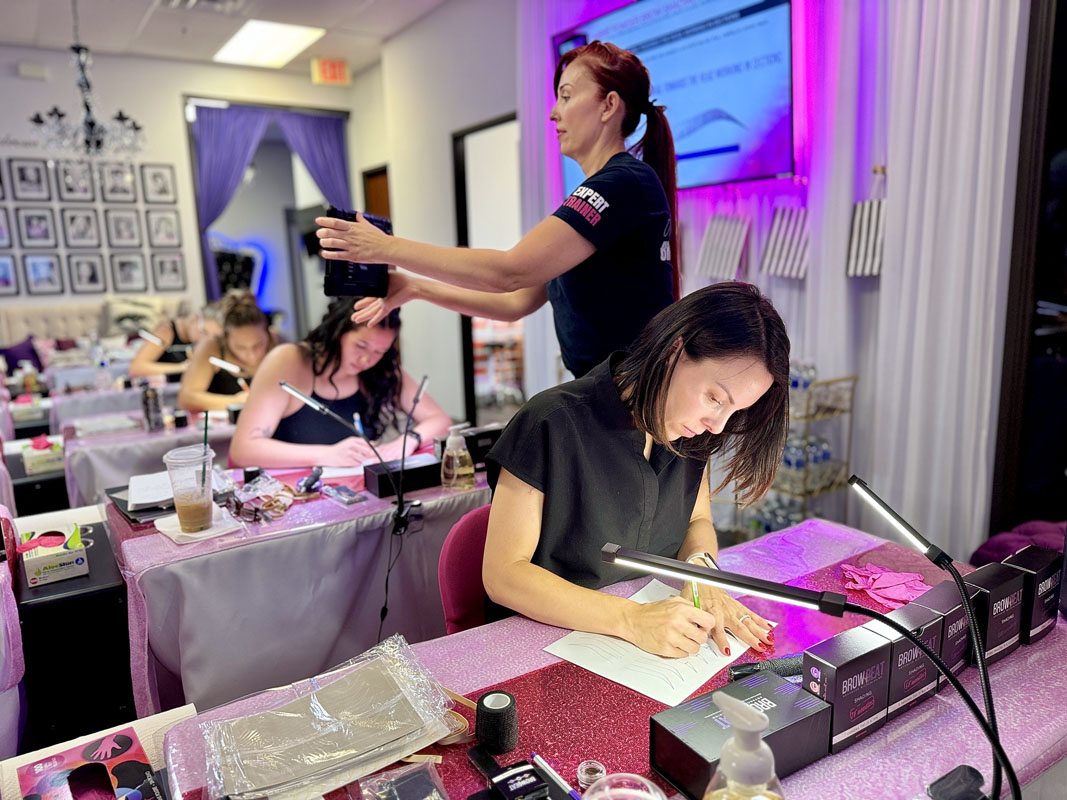
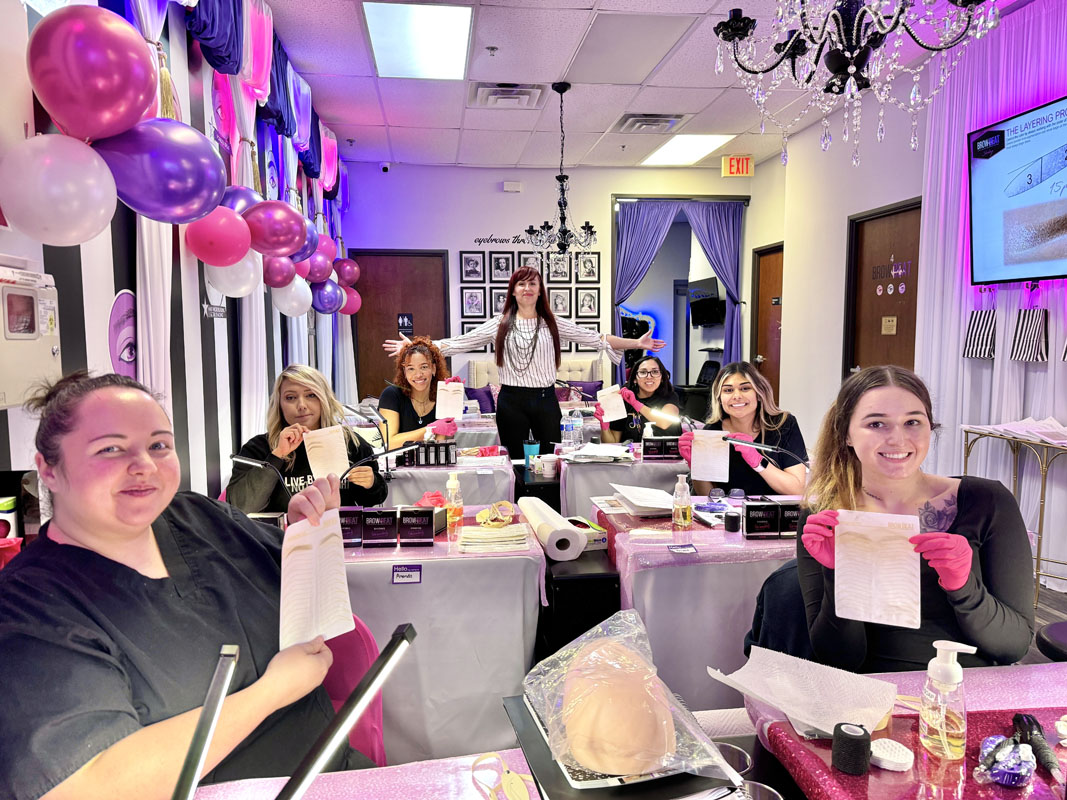
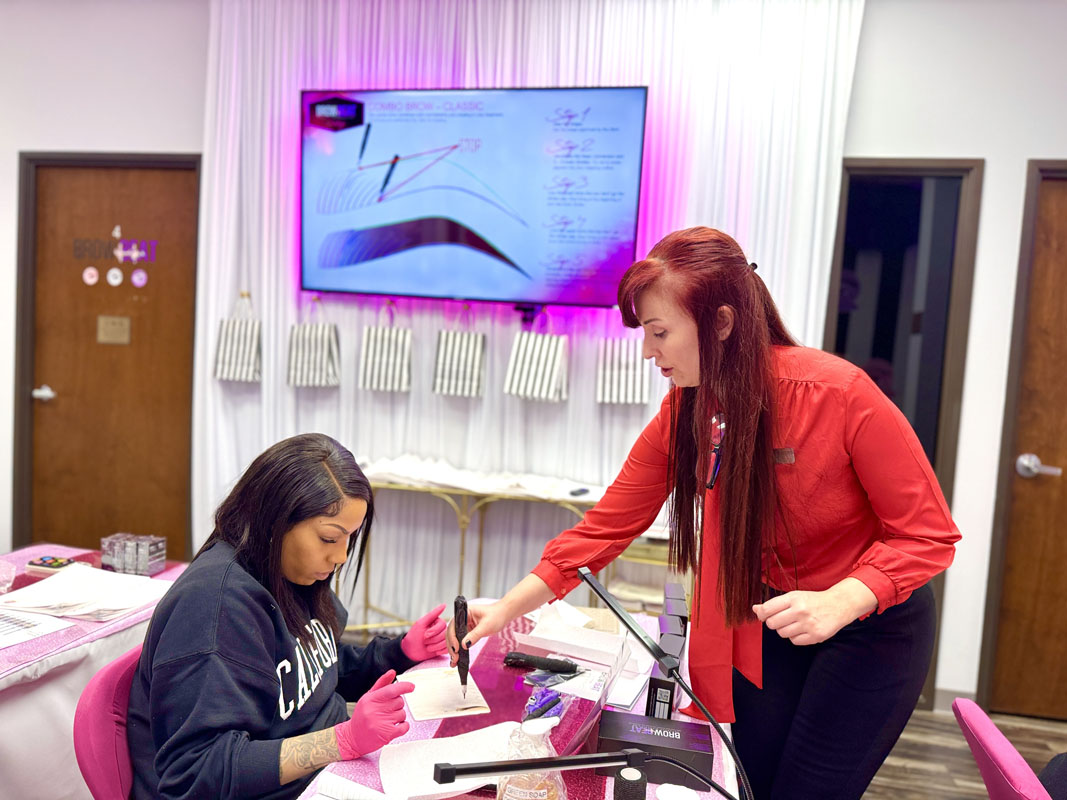
This is one of the reasons we emphasize shading in our education at BrowBeat Studio Dallas Microblading Certification and Training Academy. Machine brows without strokes are not replacing microblading; they are expanding what is possible. When students learn both, they are better prepared for wherever the brow industry goes next.
Training Shading in a Way That Makes Sense
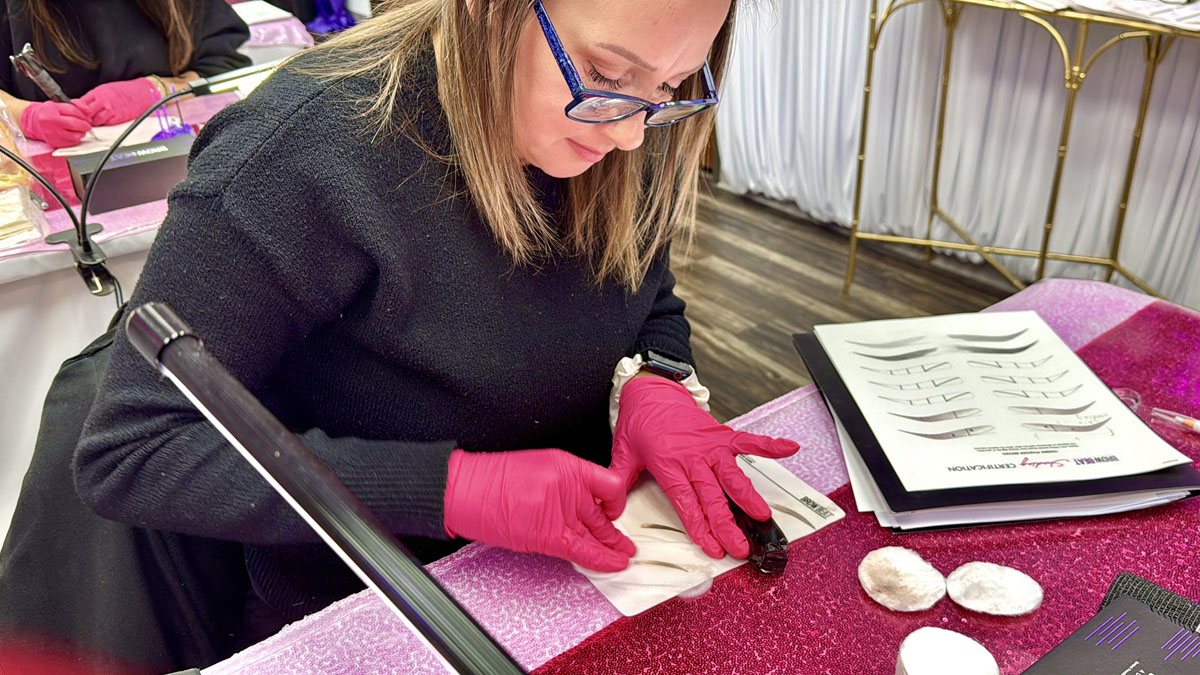
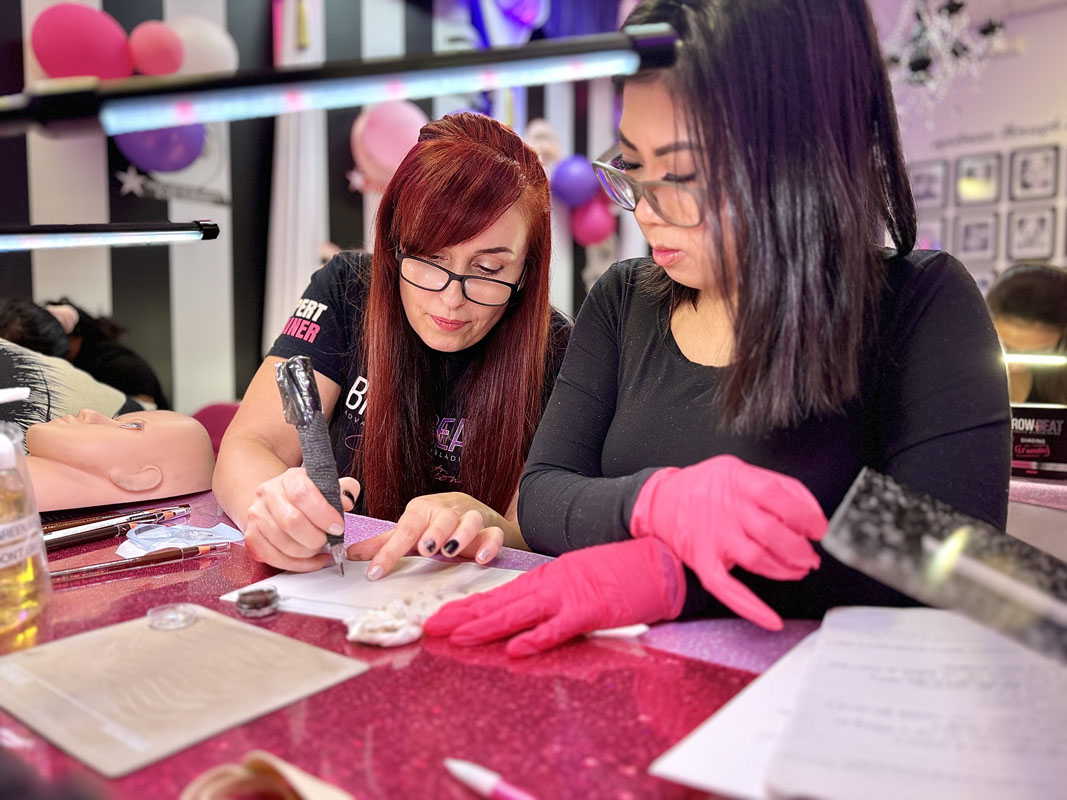
Shading can look effortless in videos, but behind the scenes, there are many moving parts: needle choice, speed, rhythm, stretch, pattern, pressure, and more. Trying to piece these together from random clips can easily become confusing. A structured approach simplifies the learning curve and helps you progress with confidence instead of guesswork.
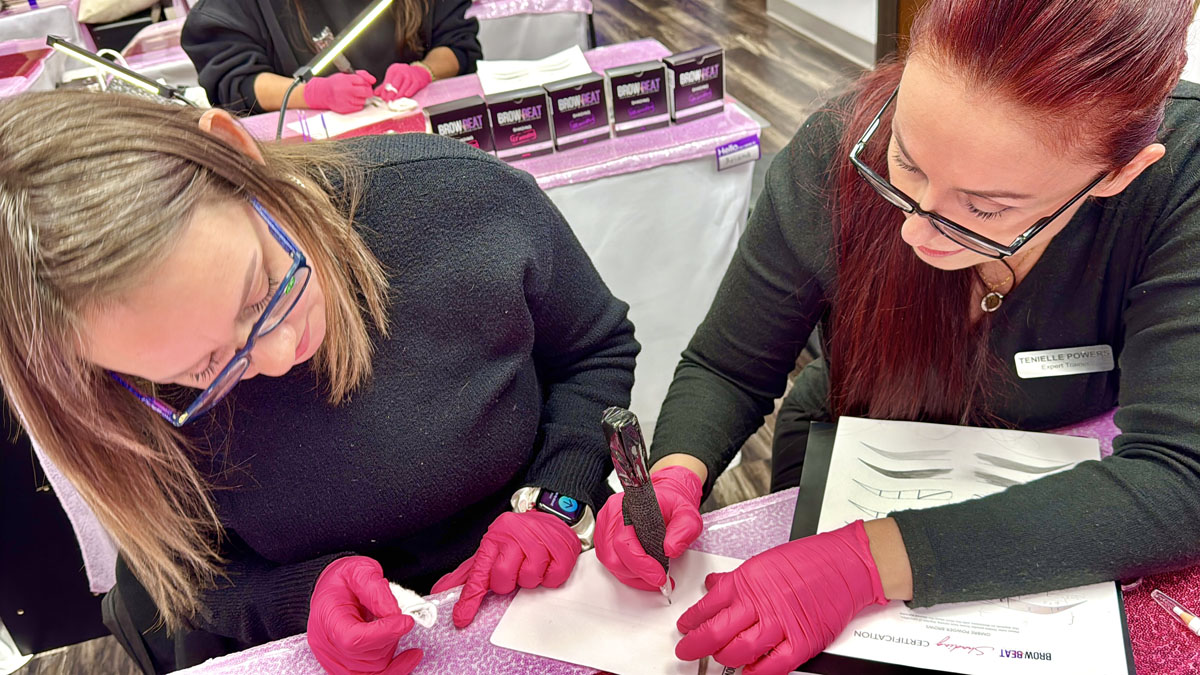
- Understanding how different needles behave in the skin.
- Learning safe machine angles and gentle contact.
- Practicing motion patterns to create consistent pixels.
- Building light-to-dark gradients for ombré effects.
- Adjusting your technique for different brow shapes and clients.
When shading is taught alongside microblading in one connected curriculum, it becomes easier to see how strokes and shading work together rather than competing with each other. The Microblading Certification course establishes your brow structure and stroke confidence, while the Ombré Powder Brow Certification layers in shading technique so your toolkit grows in a logical order.
Tools That Support Your Shading Journey
As your techniques grow, having a well-designed kit makes learning smoother. Consistency in tools allows you to build true muscle memory, because you are not adjusting to new equipment every time you practice.
A strong training kit for brow artists includes:
- Reliable microblading tools for stroke practice.
- A quality PMU machine for shading and future machine techniques.
- Pigments that are appropriate for a range of brow tones and Fitzpatrick types.
- Practice materials such as silicone and simulation exercises.
- Mapping and measuring tools that support both strokes and shading.
When your tools align with your education, your work sessions become more focused. You can concentrate on the feeling of shading—how your hand moves, how your pixels appear, how your gradients look—rather than fighting inconsistent equipment.
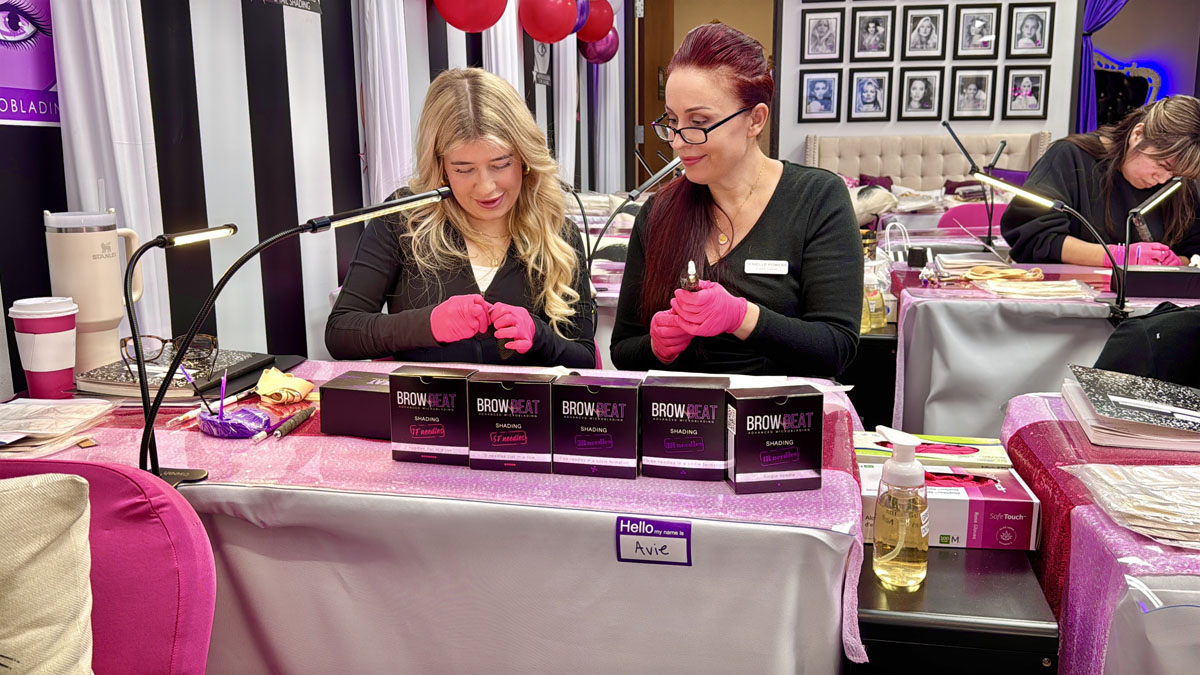
This is the thinking behind the Microblading and Lip Blushing Kit that supports our courses at BrowBeat Studio Dallas Microblading Certification and Training Academy. It is built to match the techniques being taught, so your learning environment and your tools work in harmony.
A simpler way to approach your services is:
- Find out how your clients wear their brows with makeup.
- Ask them whether they like lighter, medium, or stronger brows.
- Match your shading intensity to their lifestyle and comfort zone.
- Explain your plan in plain language: “soft powder,” “more defined,” or “a gentle gradient.”
You do not need to recite every descriptive term. You need to deliver exactly the look they have in their mind. The less confusion you create with language, the more trust you build, and the more easily clients will say yes to booking with you.
Shading—whether you call it microshading, micropigmentation, or micro-powder—is one of the strongest tools you have to do that. It lets you create brows that feel lived-in and wearable, with the precise intensity each client prefers.
Your Next Step: Learn Shading as a Core Skill
If you see yourself as a long-term artist, shading skills are not something to push to “later.” They are part of the foundation that will support your whole career. Learning how shading works in the skin, how to control intensity, and how to communicate those options clearly will put you ahead, even as trends and names continue to evolve.
You do not have to learn every single term or chase every new trend. You can start by mastering shading as a concept—and then use whatever words make sense for your clients and your brand. With solid training like the Microblading and Ombré Powder Brow Certification at BrowBeat Studio Dallas Microblading Certification and Training Academy, and a professional Microblading and Lip Blushing Kit supporting your practice, you can grow with clarity instead of confusion.
Microshading, micropigmentation, and micro-powder brows might have different names, but they are all ways of using shading to create beautiful, wearable brows. When you understand that, you stop chasing terminology and start building the kind of skill that truly lasts.