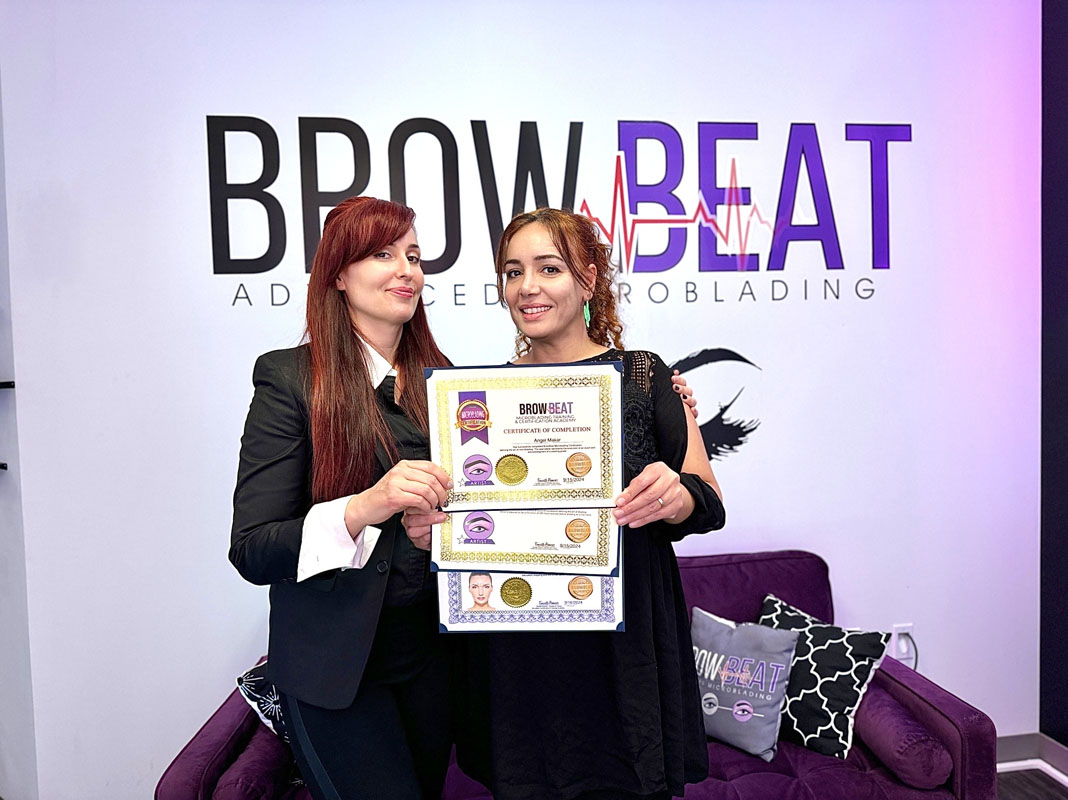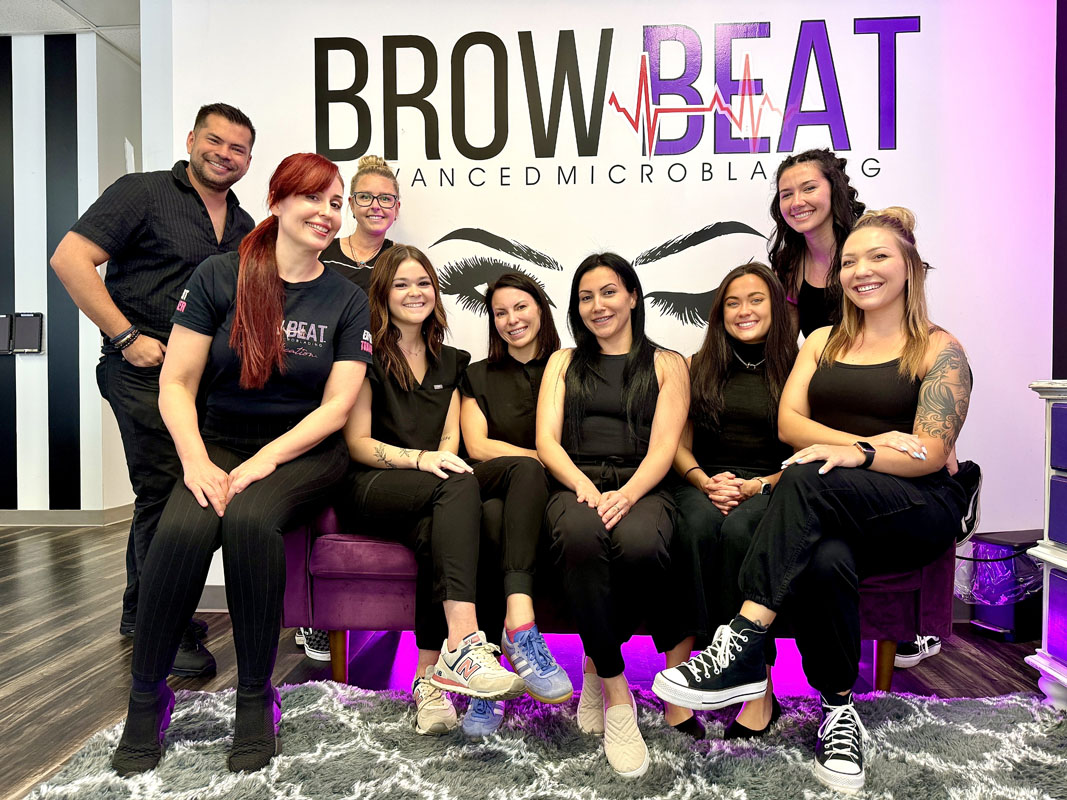
Nothing builds confidence faster than hands-on training. When you’re preparing for a career in semi-permanent brows, it’s not enough to watch demos or take notes—you need to feel the angles, practice the mapping, and work through full-service simulations until the sequence becomes second nature. That’s exactly what students experience in the Dallas microblading certification program at BrowBeat Studio Dallas Microblading Certification and Training Academy, where practical learning takes center stage from the moment you arrive.
Why Hands-On Brow Training Matters More Than Ever
Today’s clients are informed. They scroll healed results, compare styles, and expect a customized service plan. To deliver at that level, you need training that goes beyond theory. Hands-on practice helps you:
- Develop muscle memory: Consistency in stroke length, depth, and angle isn’t learned from slides—it’s learned by doing.
- Master mapping: Precision brow design comes from repeating measurement and symmetry checks in real exercises.
- Understand sequence: A full-service run-through—setup to finish—shows how each step supports the next.
- Build client-ready confidence: Rehearsing communication, positioning, and pacing in simulations reduces “first client” nerves.
When training relies mostly on lecture, graduates leave with information—but not integration. Hands-on training fuses knowledge with action so you can execute professionally on day one.
Dallas: The Ideal Place to Learn by Doing
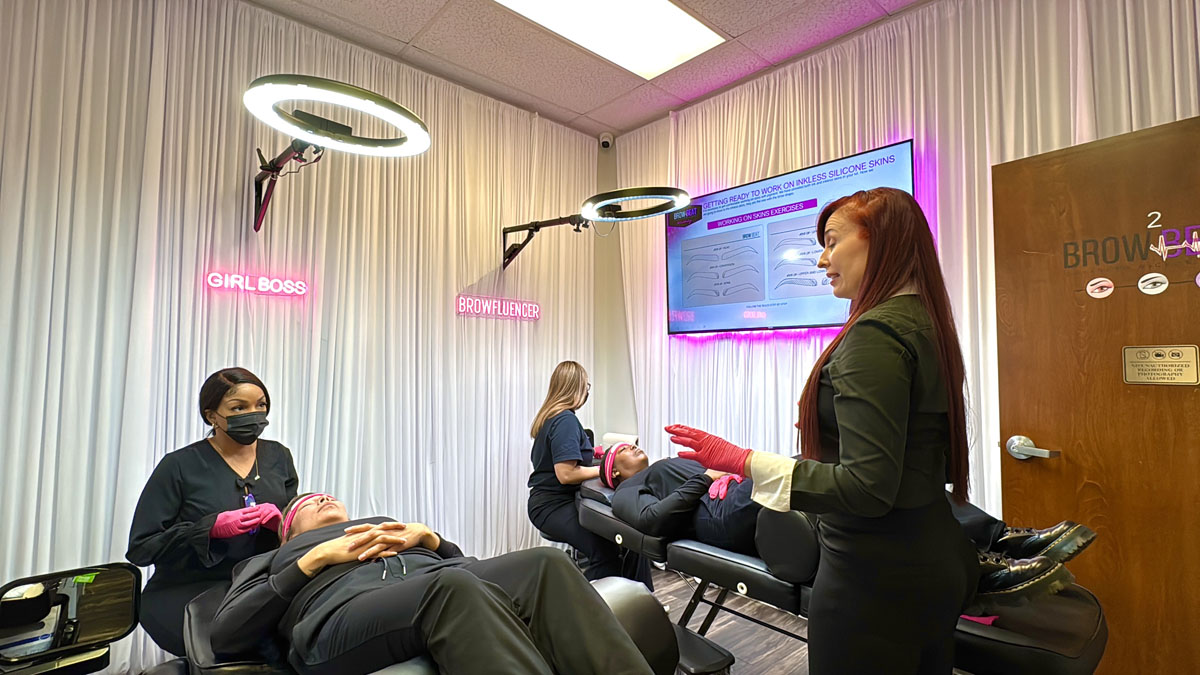
Dallas is a powerhouse for beauty education and services. The city’s fast-growing client base, emphasis on high standards, and central location make it the perfect place to learn brows the right way—through practice. At BrowBeat Studio Dallas Microblading Certification and Training Academy, students come from across Texas (and beyond) to train where the bar is set high and the schedule is focused on practical progression.
Instead of cramming information into a short lecture-only session, the academy’s Dallas program balances instruction with immediately applied practice. You’ll map, simulate, practice strokes, test machine control, and walk through full-service sequences with supportive coaching at each step.
What “Hands-On” Really Means Here
Many programs claim to offer hands-on training. In practice, that can mean a few brief exercises tacked onto a day of slides. At BrowBeat Studio Dallas Microblading Certification and Training Academy, hands-on means:
- Daily simulation blocks: Dedicated blocks for stroke practice, mapping drills, and machine work.
- Full-service run-throughs: Practice the order of treatment repeatedly, so nothing feels new when you meet paying clients.
- Progressive complexity: Paper → silicone → mannequin → partner simulation for step-by-step confidence.
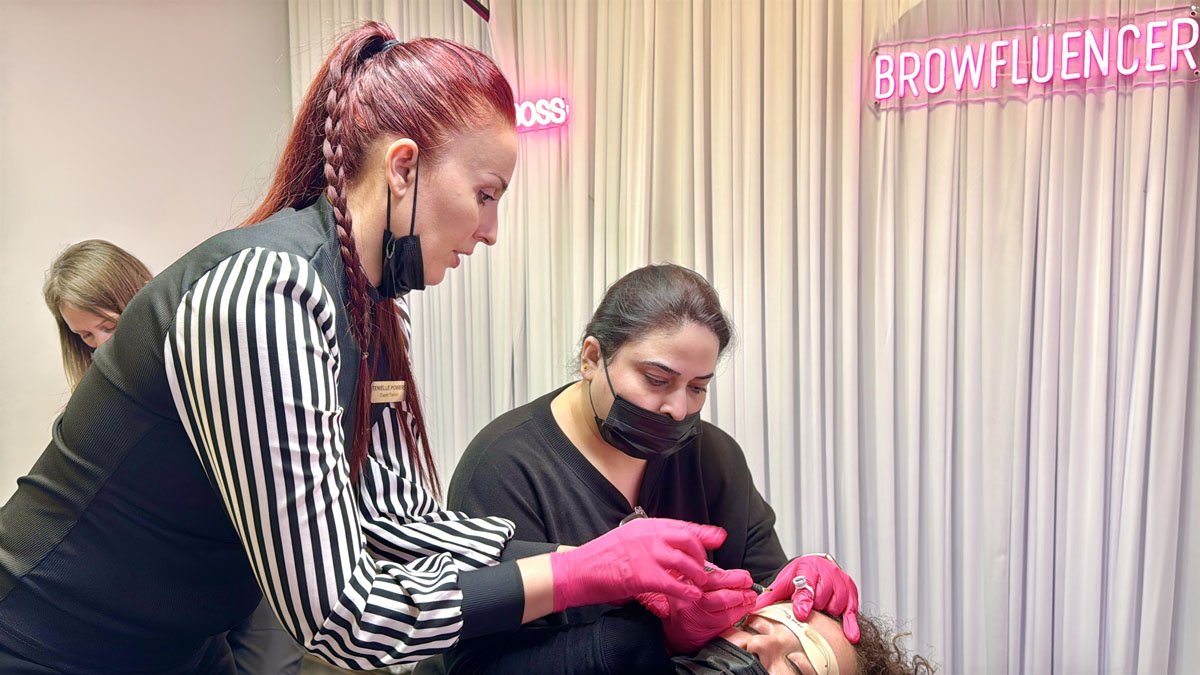
- Guided repetition: You’re not left alone; trainers circulate, coach, and refine technique in real time.
This structure turns repetition into refinement. Instead of “trying your best,” you’ll know exactly how to improve with every pass.
The Three-Core Skills You’ll Train—By Doing
1) Microblading Stroke Mastery
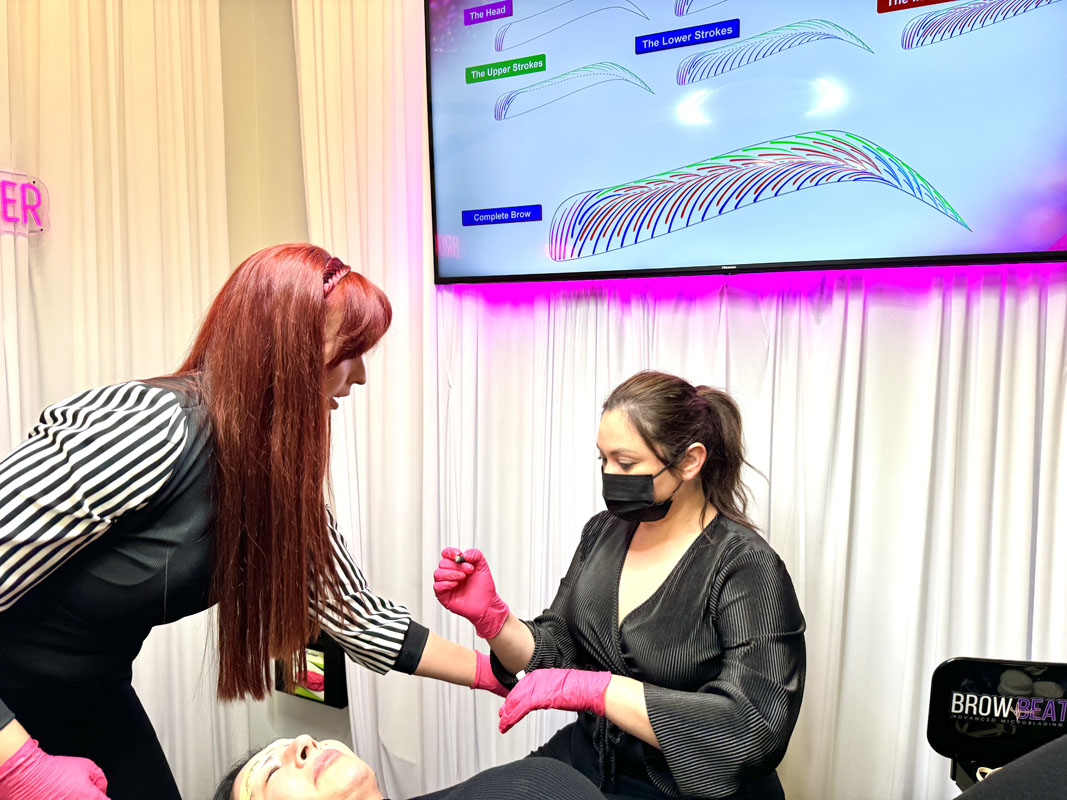
Microblading begins with stroke discipline—precise, repeatable movements that mimic natural hair flow. In the Dallas hands-on format, you’ll:
- Practice head conversion, spine, upper line, and lower line strokes on paper and silicone.
- Refine angle and pressure to maintain clean, consistent incision depth.
- Learn how small variations in wrist control create visible differences in stroke texture.
- Use timed sets for endurance and precision, building muscle memory for real-service pace.
Rather than memorizing a diagram, you’ll build a repeatable stroke rhythm you can trust in live scenarios.
2) Powder/Ombré Machine Control
Powder brows require the finesse of machine control—pixelation, layering, and lining. Through hands-on drills, you’ll learn to:
- Hold and guide the machine to achieve a soft shaded gradient without hot spots.
- Use pixel-building passes to develop density gradually and evenly.
- Practice lining for clients seeking more defined tails or edges.
- Adapt your technique to different skin resistances, using mindful pressure and speed.
By the end of training, machine handling won’t feel experimental—it will feel familiar.

3) Hybrid Thinking for Combo Brows
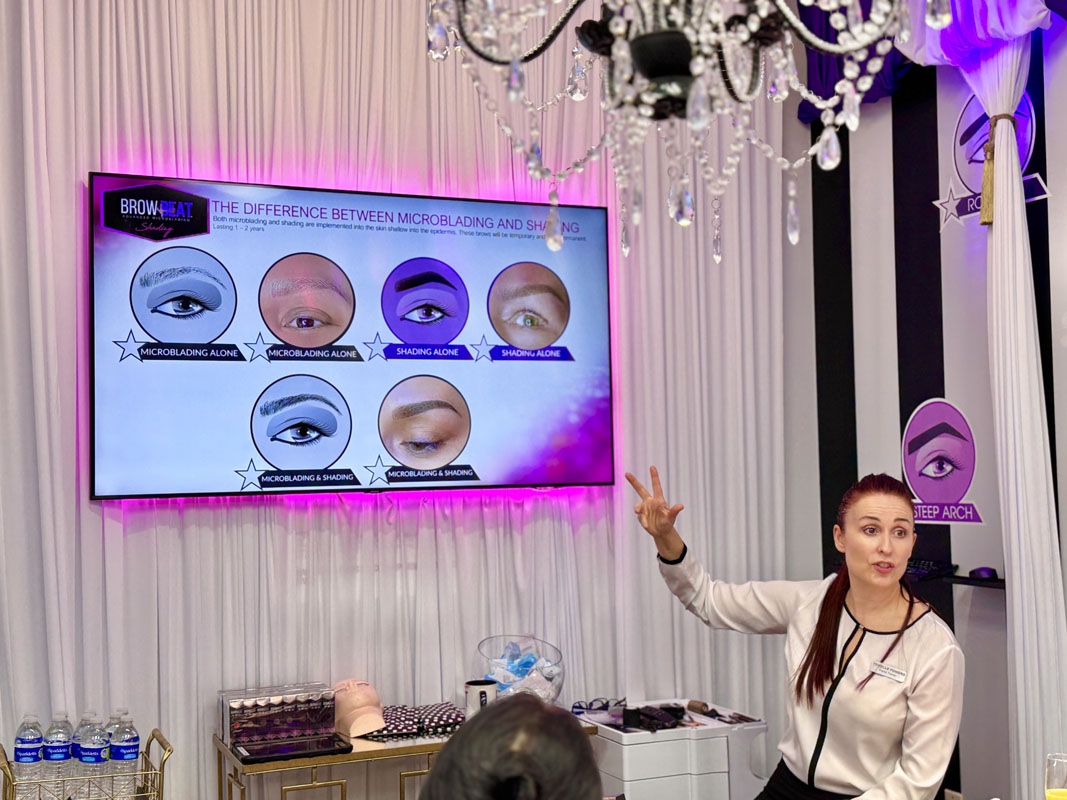
Combo brows integrate stroke realism with powder depth. That means planning the brow’s “architecture” before the first mark. Practical drills teach you to:
- Decide where strokes give the most realism—and where shading adds the most dimension.
- Blend techniques smoothly so the brow reads as a single, cohesive design.
- Adjust the plan for hair pattern, face shape, and client preference.
Hands-on planning prevents guesswork. You’ll leave prepared to explain why you chose a hybrid layout—and then execute it cleanly.
From Setup to Finish: Practicing the Full Service
Confidence comes from repetition—of the whole service, not just parts. In Dallas, you’ll rehearse complete appointments multiple times, including:
- Professional setup: Station organization, disposables, sharps protocol, surface protection.
- Client intake flow: Consultation rhythm, expectations, contraindication awareness.
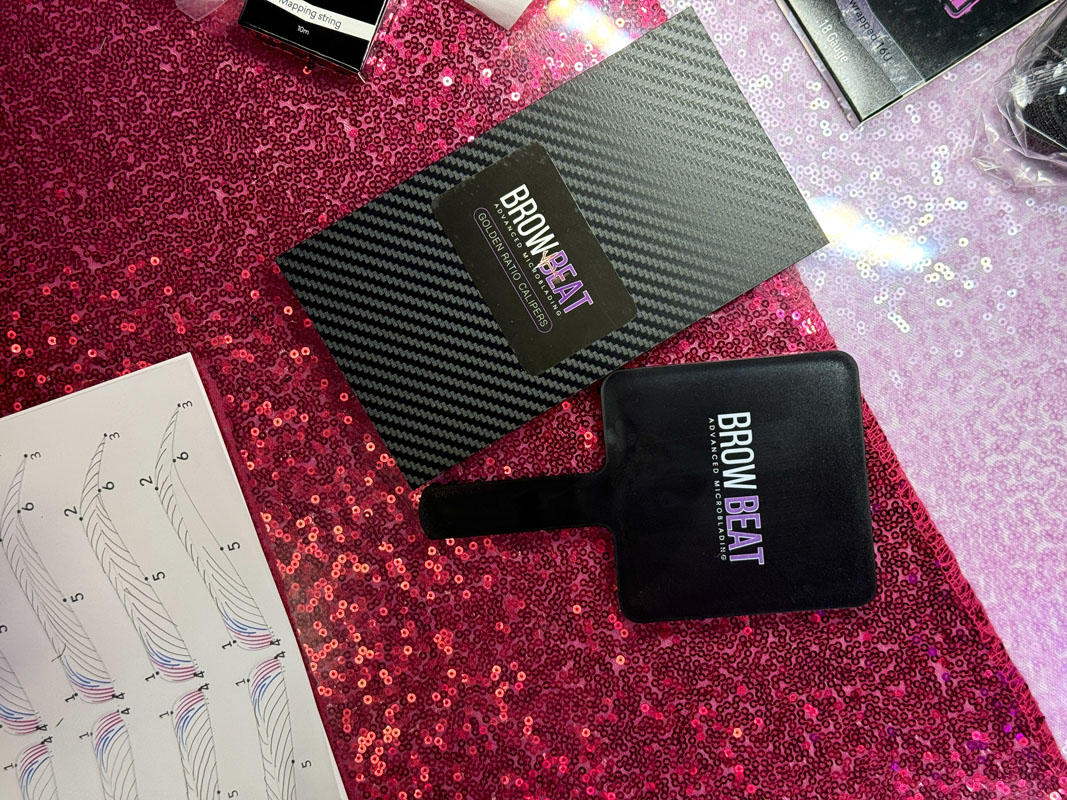
- Mapping and pre-draw: Golden ratio calipers, string mapping, and symmetry checks.
- Execution: Strokes, pixelation, layering, and clean wipe technique.
- Finish and aftercare: Clear instructions and realistic healing expectations.
Hands-On Tools You’ll Use (and Keep)
Your kit is more than a box of supplies—it’s your practice partner. The academy’s Dallas program equips you to train during class and continue at home. Typical inclusions:
- Pigments for microblading and shading work.
- Pigment cups, holders, brow wands, and micro swabs.
- Golden ratio calipers and mapping string for symmetry training.
- Silicone sheets and headbands for stroke and pixel drills.
- A PMU machine with multiple cartridges for shading and lining.
- Client forms and organizational materials to simulate real appointments.
Because you’ll train with the same tools you take home, the learning curve doesn’t reset after graduation.
Guided Practice: Coaching That Meets You Where You Are
Hands-on training at BrowBeat Studio Dallas Microblading Certification and Training Academy is structured but personalized. You’ll get:
- Real-time feedback: A trainer notes a wrist angle, suggests a speed adjustment, and your next pass improves instantly.
- Technique corrections: Small fixes—tool tilt, anchor finger, forearm stabilization—create major improvements.
- Confidence checkpoints: Assessments that verify you’re ready to move from paper to silicone, then to mannequin and partner simulation.
It’s not “one pace fits all.” It’s your pace—guided, supported, and steadily raised.
Inside the Classroom: A Positive, Practice-First Culture
Students consistently note the atmosphere: supportive, focused, and encouraging. The goal isn’t to rush you through a checklist; it’s to help you feel ready. Expect:
- Clear demonstrations, then immediate practice.
- Short explanations followed by long drill windows.
- Group shares on challenges and quick solutions.
- Steady skill stacking: each block builds on the last.
By the time you reach your final simulations, you’ll recognize the sequence, your hands will remember the motions, and your notes will serve as prompt cards—not crutches.
Day-by-Day: How Hands-On Progression Works
Day 1 — Stroke Foundations and Mapping
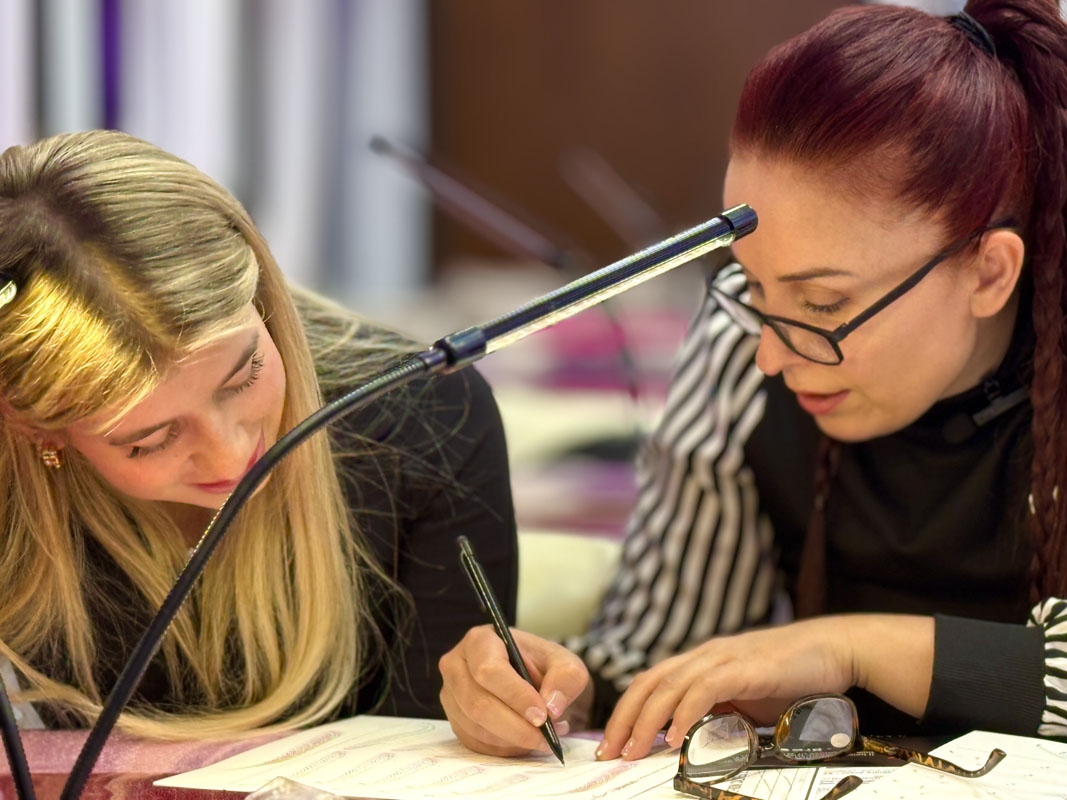
Morning: stroke fundamentals on paper, then silicone, with immediate feedback on angle, length, and pressure. Afternoon: mapping drills using calipers and string, symmetry checks, and pre-draw practice. You’ll end the day with a repeatable morning warm-up you can use after graduation.
Day 2 — Full-Service Simulation
Morning: workstation setup, sanitation, and order-of-treatment walk-through. Midday: mannequin simulations with timing goals. Afternoon: partner mapping and service flow practice. This day ties your skills into a client-ready appointment.
Day 3 — Machine Work and Hybrid Planning
Morning: machine handling, pixelation, layering, and lining. Midday: shading density control and gradient building. Afternoon: combo brow design and hybrid execution on mannequin/partner simulation. You’ll leave understanding how to plan a brow, not just perform one.
What Makes This Dallas Program Different
Plenty of courses say “hands-on”—but the difference is in the schedule and coaching. This Dallas program stands out because it:
- Front-loads practice time: You won’t spend hours sitting—you’ll be practicing.
- Runs full-service drills: You’ll connect the dots between each technical block.
- Uses progressive milestones: Each step verifies readiness before you level up.
- Pairs tools with use: Every kit item has a drill—so you know exactly how to use it later.
The goal is simple: convert curiosity into capability—reliably, confidently, and quickly.
Links to Keep You Moving
If you’re ready to dive into practice-first learning, start here:
- Microblading Certification — overview of the core program structure and inclusions.
- Ombré Powder Brow Certification — deeper look at machine shading, pixelation, and layering.
- Business Solutions — resources that help you turn training into a client-ready operation.
Who This Hands-On Dallas Training Is For
This program is designed for:
- Beginners who want a clear, supportive path from first strokes to full-service practice.
- Beauty pros who want to add brows to an existing service menu with confidence.
- Career changers who learn best by doing and want a practical, structured approach.
If you prefer to learn through action—with coaching that turns practice into progress—you’ll thrive here.
From Practice to Professional: Bridging the Gap
Hands-on training doesn’t end at graduation; it builds a practice habit you can keep. You’ll leave with repeatable warm-ups, mapping routines, and shading drills that convert into reliable results. That’s the bridge from “I’ve learned this” to “I do this well.”
In Block 2, we’ll cover advanced practice strategies, student FAQs, common pitfalls hands-on training solves (like shaky lines, uneven gradients, slow setup), and how to transition from simulation to paid services with confidence—plus a clear roadmap for your first 30–60 days after training.
Advanced Practice Strategies After Graduation
One of the advantages of a practice-first course is that you leave with a repeatable framework. At BrowBeat Studio Dallas Microblading Certification and Training Academy, students are encouraged to continue training at home using the same drills from class. Here are proven strategies to keep building skill:
- Daily warm-ups: Ten minutes of stroke patterns on silicone sheets reinforces wrist memory and angle control.
- Mapping drills: Practice measuring and marking symmetry on mannequins or paper face diagrams to stay sharp.
- Pixel layering sets: Time yourself layering light passes on silicone to replicate appointment pacing.
- Hybrid planning: Sketch combo brow maps on paper, marking where strokes and shading should transition.
These strategies make progress feel measurable. Instead of vague “keep practicing” advice, you’ll have specific, repeatable drills.
Common Pitfalls That Hands-On Training Solves
Graduates of lecture-heavy courses often hit walls when they try to apply knowledge in real situations. Hands-on training avoids those pitfalls by addressing them early:
- Shaky lines: Practice blocks strengthen grip, arm stability, and consistency.
- Uneven shading: Pixel drills train even spacing, preventing patchy gradients.
- Slow setup: Full-service rehearsals build efficiency, reducing wasted time with real clients.
- Mapping confusion: Daily caliper and string exercises ensure symmetry is second nature.
- Confidence gaps: Partner simulations rehearse not just technique but communication and flow.
Because these pitfalls are resolved in class, your first paid service feels like a repeat—not a risk.
Frequently Asked Questions
Do I need experience before enrolling?
No. The Dallas hands-on program is designed for complete beginners as well as beauty professionals looking to add new skills. Everything is taught step by step.
How much time is spent practicing versus listening?
Practice is prioritized. Every concept is followed by immediate application, so students spend most of their time doing rather than just watching.
What certificates will I receive?
Graduates earn three certificates: microblading, ombré powder brows, and combo brows. Hands-on training applies to all three.
Will I be ready to work with clients after the program?
You’ll graduate with practical skills, a complete kit, and a clear understanding of licensing requirements in Texas. Many students feel ready to transition quickly to client services because they’ve rehearsed the full appointment flow in class.

How does this differ from shorter workshops?
Short workshops often lack depth, limit practice time, and don’t provide full-service simulations. The Dallas hands-on program ensures you build real confidence before leaving the classroom.
The ROI of Hands-On Brow Training
While cost is always a consideration, hands-on training offers the best return on investment because it minimizes gaps. Students who graduate from lecture-based programs often need to spend more money on additional courses or retraining. By contrast, BrowBeat students leave with:
- Three certifications: Microblading, ombré powder, and combo brows.
- A complete kit: Tools, pigments, and practice supplies included in tuition.
- Licensing paperwork: Guidance to complete your Texas tattoo license application.
- Practice habits: Daily warm-ups and simulation drills you can continue at home.
That means less time backtracking and more time building a client base and income.
Links to Support Your Journey
If you’re serious about hands-on brow training in Dallas, these resources will guide you further:
- Microblading Certification — see how the course is structured for skill progression.
- Ombré Powder Brow Certification — understand why machine shading training is crucial.
- Business Solutions — discover how to turn certification into a working business.
Confidence Through Simulation: Your First 60 Days
One of the most powerful outcomes of this Dallas program is that you leave with confidence strategies for your first 60 days post-graduation:
- Week 1 – 4: Daily warm-ups on silicone, repeat mapping drills, review course notes.
- Week 4 –12: Time yourself completing full simulated services, from setup to finish.
- Week 12 – 24: Begin practicing on models under your license application, building photos for your portfolio.
- Week 24 + : Transition to paying clients, using your practiced routines and paperwork to support a smooth launch.
This roadmap removes uncertainty and replaces it with clear, actionable steps.
Conclusion: Hands-On Brow Training in Dallas Builds Real Confidence
When you choose hands-on microblading and powder brow training in Dallas, you’re not just learning strokes or shading—you’re rehearsing the complete service flow until it feels natural. This kind of training builds confidence, reduces mistakes, and ensures you’re truly prepared for clients.
BrowBeat Studio Dallas Microblading Certification and Training Academy is dedicated to delivering this practice-first experience. From stroke drills to machine shading to partner simulations, every detail of the program ensures you graduate confident, capable, and licensed-ready.
If you’re ready to stop watching and start doing, schedule your enrollment today at BrowBeat Studio Dallas Microblading Certification and Training Academy. Your hands-on journey begins here—and so does your future in brow artistry.