What many artists don’t know is that there are two retention realities inside the epidermis. Color in the upper epidermis may look beautiful immediately, but it lives closer to exfoliation, sweat, friction, and turnover. Color that sits deeper — but is still within epidermal boundaries — can last significantly longer. One heals bright but shallow. One heals strong with endurance.
The mastery is knowing how to choose depth intentionally, not accidentally. Artists who understand that difference move from hoping for longevity into engineering longevity with purpose.
The Truth About Longevity in Brows
There is a common myth in the PMU world: that longevity is a product of pigment alone. Good pigment matters — of course it does — but pigment is not the engine of longevity. Placement is. Distribution is. Technique is. Pigment is the material, not the architect and your training matters.
Longevity is created through three primary mechanisms:
- Depth control — placing pigment where it can remain stable
- Color saturation — enough layers to resist natural fade-out
- Design choices — shading, strokes, or both
If color is placed lightly and minimally, it will fade beautifully but quickly. If color is layered, packed, and supported, it remains. Clients today are not afraid of depth — they want presence. Many arrive saying “natural”, but show healed photos of brows rich with color, density, shape and contrast.
Artists must learn to read what a client means, not just what they say.
It’s Okay to Be Light-Handed in the Beginning
Every new artist starts light-handed. It’s normal. It’s expected. In the beginning, pressure feels like a risk — not a tool. Many beginners heal brows too light, too shallow, or too faint because they are still building muscle memory. This isn’t a flaw. It’s the developmental stage of PMU skill.
Your price at that time will be aligned with your experience. As your confidence increases, so does your saturation. As your saturation increases, so does your retention. As your retention increases, so does your value. Learn more about booking, pricing and business solutions with BrowBeat Microblading and Ombre Brow curriculum at www.microbladingcertificationtx.com/business-solutions.
Longevity is not just about how you work — it’s about how long you’ve been working.
Microblading pressure becomes cleaner with time. Machine shading becomes fuller with repetition. Layering becomes second nature. New artists rush to perfection, but longevity comes from hours, not shortcuts.
Shading = Longevity Multiplied
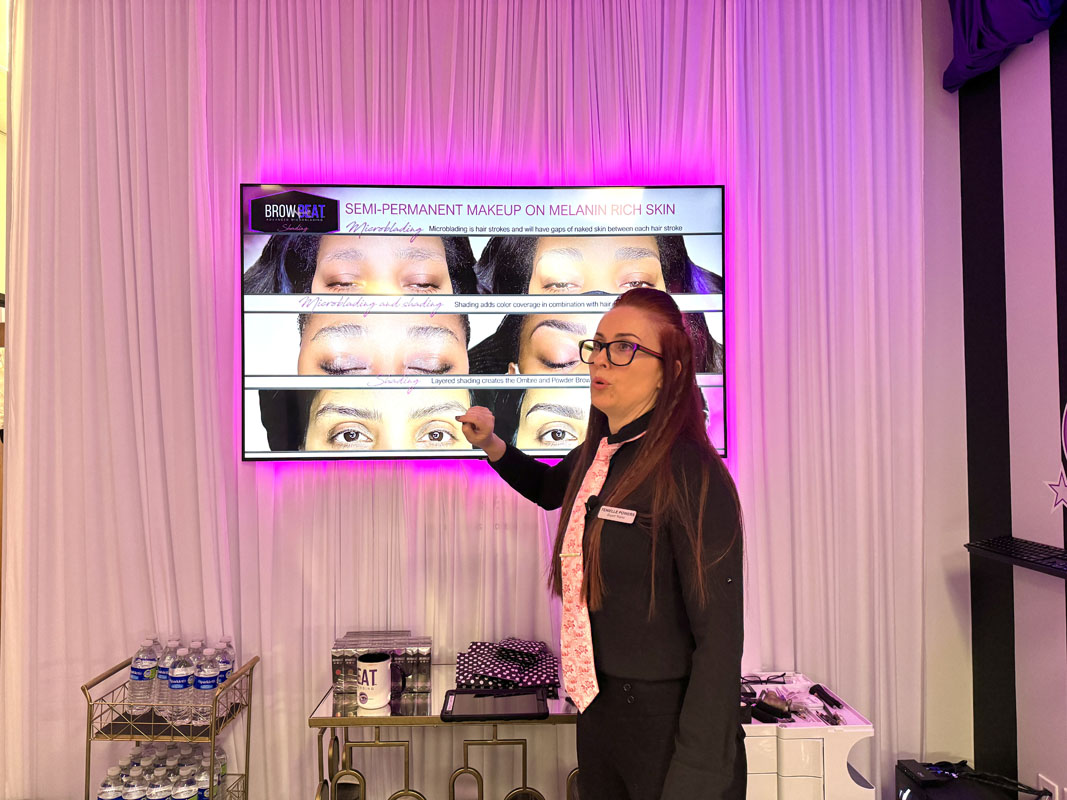
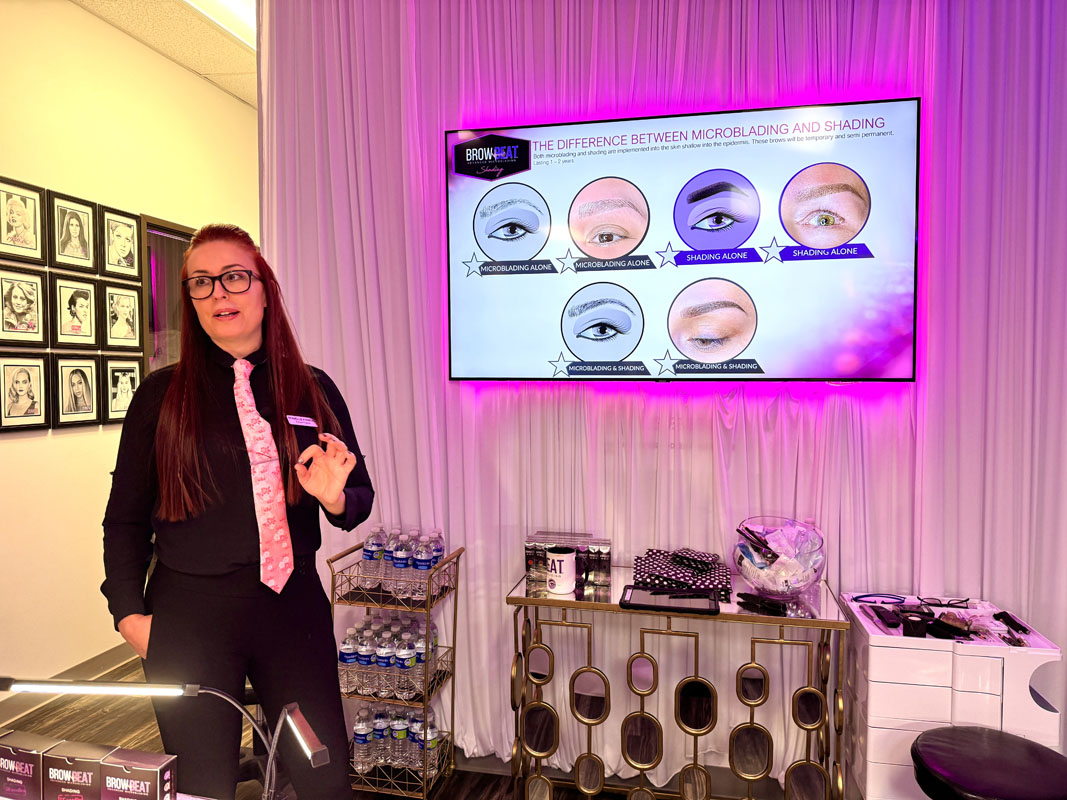
Microblading alone can be beautiful — crisp, airy, delicate. But shading has a longer shelf life. The more layers placed into the skin, the longer the result resists fading. Ombré powder brows and microshading distribute color more evenly across the brow, which gives the body more pigment mass to fade through.
One layer fades quickly.
Three layers fade meaningfully slower.
Five layers live.
Clients today love brows with more density than they admit. They show artists brows rich, full, dimensional. They ask for “soft,” but they show “established.” This is where longevity meets communication. You can guide them to accept a slightly darker healed result by intentionally placing the color one shade deeper during application. Not dark — just durable.
Brows fade. Always. All pigment lightens over time. Because of that truth, a result that starts slightly deeper often lands perfectly months later.
When you see an artist whose work holds for 18–24 months, look closely. The brows were likely placed slightly richer than natural because longevity is planned, not hoped for.
Why More Layers = More Time
Think of brows like watercolor on textured paper. One wash of pigment is soft and gentle, but it lifts easily when water passes over it. Two washes deepen tone. Three washes build identity. Five washes are a commitment — a statement that cannot be erased with a quick fade.
Shading is layered watercolor beneath the skin. Longevity comes from stacking color in controlled passes, each contributing to the final healed result. The magic is not intensity — the magic is structure. Color survives because it has volume. It has material presence. It has weight.
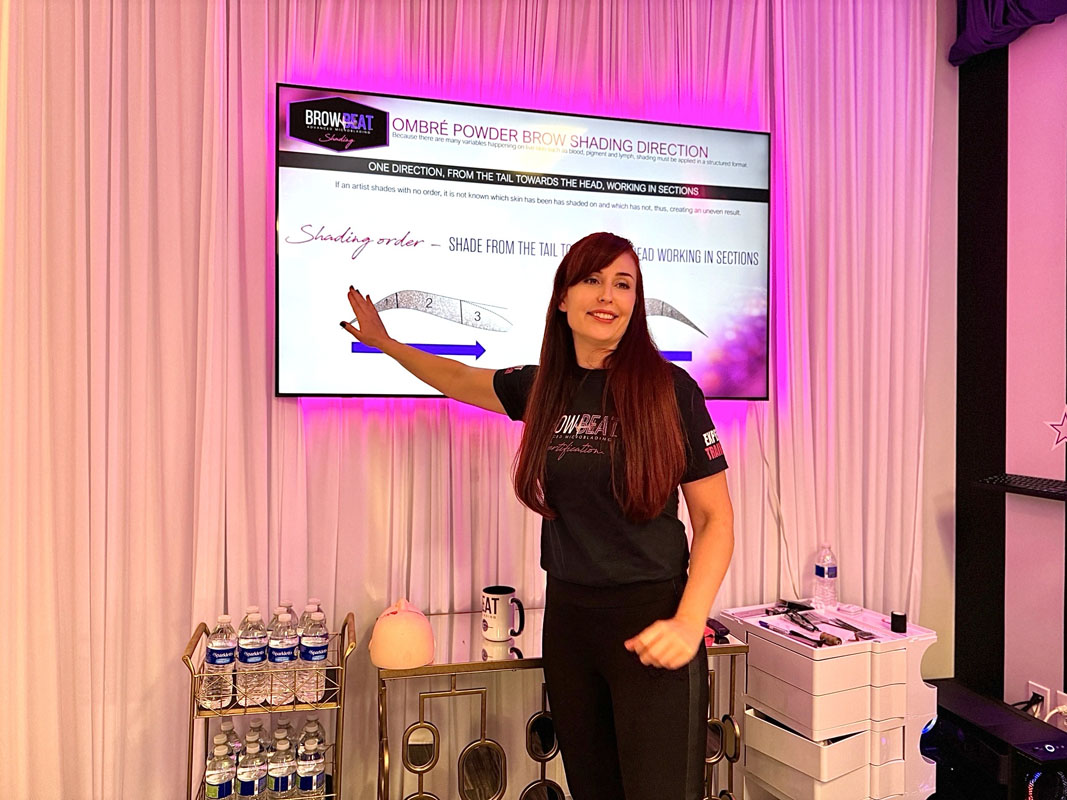
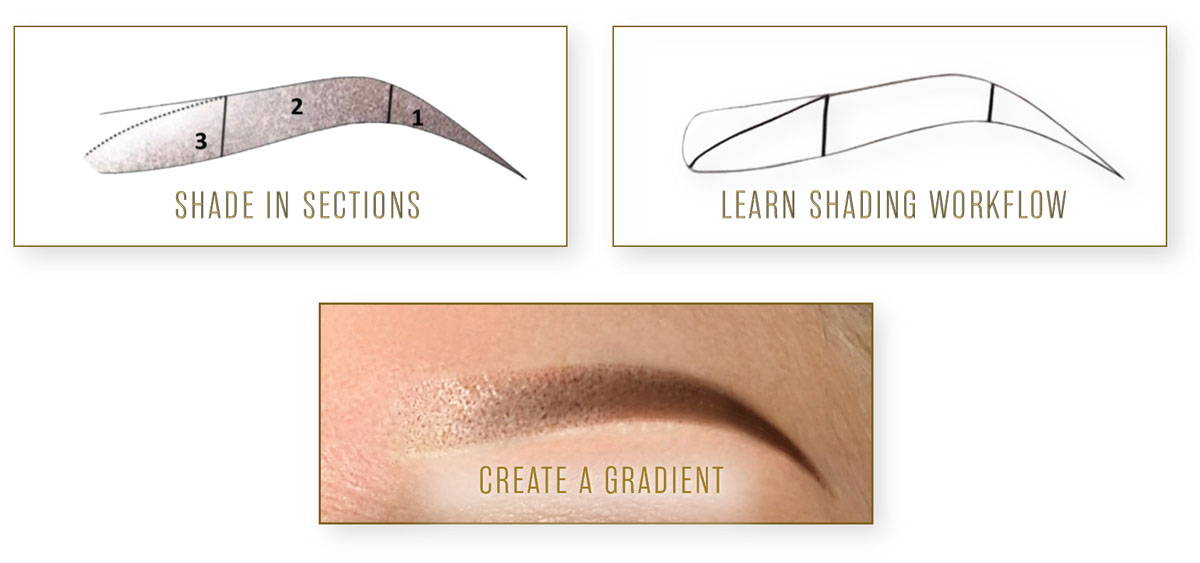
In ombré powder brows, the front is light and breathable, but the tail carries strength and anchoring tone. That tail is what sustains a brow as the softer bulb fades. Longevity is engineered into gradients — bright at the front, rich at the end, continuous through the spine. Clients return with shape intact because shading distributes pigment in a way microblading alone cannot.
Machine work offers the same benefit. The needle perforates gently, building tone without slicing skin. Each pass lays down new particles for the body to metabolize slowly. Where strokes break down one by one, shading fades like mist — evenly, gracefully, predictably.
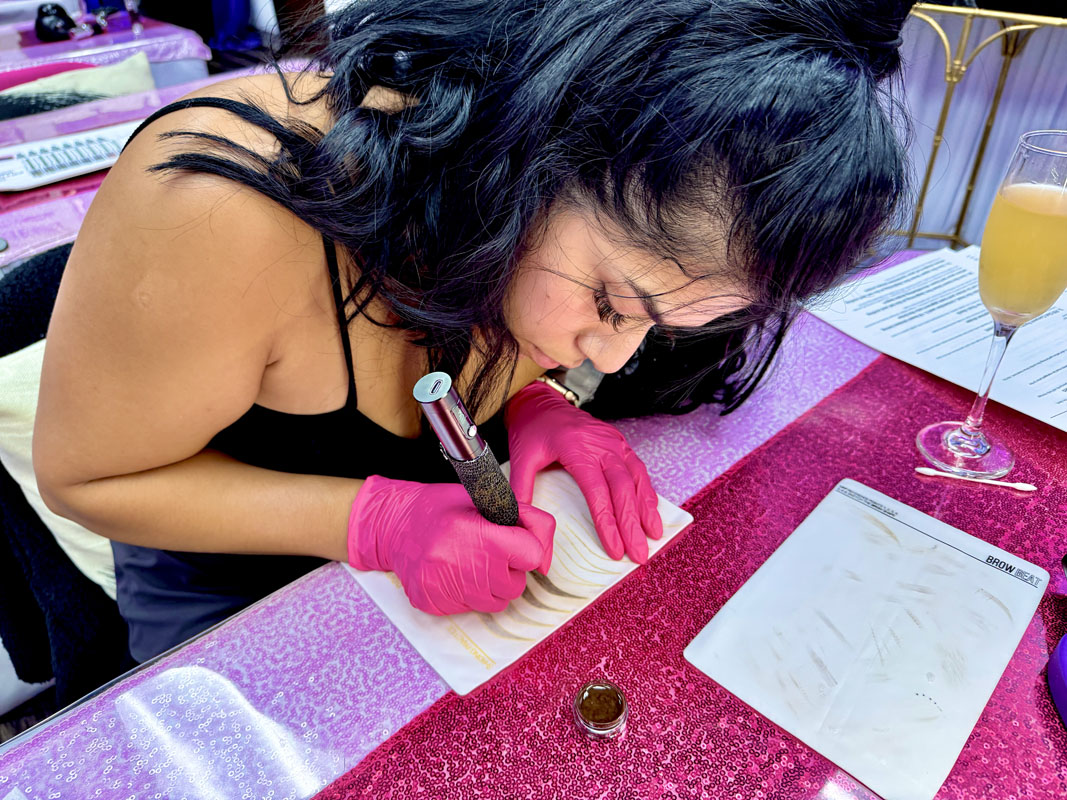
Microblading Retention: The Role of Backfilling
Microblading strokes are singular, linear, and delicate. They require accuracy. They also fade more quickly than shading because there is less pigment per millimeter of skin. This is where backfilling becomes a longevity tool.
Backfilling is the act of re-entering the original stroke pathway to deposit more pigment directly inside the channel. It is not smudging. It is not shading. It is not just “another pass.” It is precision re-entry.
Backfilling works because:
- The original stroke is already open and defined.
- Additional pigment lands exactly where it should.
- The second pass reinforces tone without widening the stroke.
When done well, backfilling strengthens weak lines and extends the lifespan of the design. When done poorly — rushed, repeated, or over-pressured — it bruises and clouds. Longevity is not achieved by force. It is achieved by finesse.
If a client wants clean hair-stroke brows with staying power, backfilling is one of the most refined retention tools an artist has.
The Relationship Between Technique and Pricing
Beginners are light, cautious, tender. Their brows heal soft — sometimes too soft to last beyond three to six months. This is not failure. This is apprenticeship. As pressure improves and shading confidence grows, so does durability. With durability comes value.
Longevity is a skill, and skills are monetizable.
Pricing should not be based on time alone. It should be based on outcome. When artists reach a point where their work consistently lasts 12–18 months, they are no longer charging for a brow appointment — they are charging for long-term wear.
Clients will pay for longevity. They always have.
This means your income will grow with your retention rates — directly and naturally — without needing to hard-sell. The market rewards quality. Learn more about longevity with BrowBeat Microblading and Ombre Brow curriculum at www.microbladingcertificationtx.com
Why Brows Fade — and Why They Last
Brows are exposed to more friction, more oil, more UV light, and more exfoliation than most tattooed areas of the body. Every wash, every sweat session, every pillow surface breaks pigment down slowly. The goal is not to stop fading — the goal is to slow it.
What slows fading?
- Correct depth (not dermal, not superficial)
- Even pigment distribution
- Layered shading rather than single-line reliance
- Client acceptance of slightly deeper initial tone
What accelerates fading?
- Too-light application
- Surface-only microblading strokes
- Single-pass work with no layering
- Clients who refuse depth or density
- UV and skincare exfoliants
Longevity is not a mystery. It is predictable. It is a sum of choices. Each choice affects how brows evolve in real skin.
Communicating Longevity to Clients
One of the most valuable longevity skills is not technical — it is conversational. Artists who guide clients honestly have better healed results and better trust. Instead of saying, “These will last two years!”, say:
- “Brows fade — our goal is to slow the fade beautifully.”
- “If you want longer retention, we can go slightly darker today.”
- “Microblading alone fades faster than shading — I recommend combining both for wear.”
Clients want confidence. When you teach them how brows age, you give them control. You remove fear. You eliminate unrealistic expectations. An informed client collaborates — they do not resist.
Longevity is a shared result, not a one-sided responsibility.
The Skin Zone of Retention
Let’s return to the most important concept in this entire article — the depth where pigment survives. There are three zones to understand:
- Upper epidermis: Heals softest but fades fastest.
- Lower epidermis: Heals stronger, more stable, longer-lasting.
- Dermal layer: Too deep — risk of healed darkness.
The magic sits in the lower epidermis. Not dermal. Not superficial. Deep within the epidermis. This placement gives the body enough pigment to metabolize gradually while still keeping color crisp, controlled, and breathable.
This zone is where mastery lives.
How to Engineer Long-Lasting Brows Through Technique
Longevity is built in layers — not just of pigment, but of decision-making. A healed brow that lasts is not the result of lucky retention; it’s the result of intentional layering, controlled depth, educated pressure, and strategic color steps. Artists who understand these mechanics don’t hope for longevity — they produce it.
Here is the core framework that leads to longer-lasting semi-permanent brows:
- Correct epidermal placement — not too shallow, not dermal-deep
- Even saturation through shading & microshading
- Layer building instead of single-pass application
- Balanced pigment load (not overly diluted or overly dense)
- Stability through healed contrast instead of faint strokes that vanish
When you design brows for longevity, you stop thinking about what they look like on day one — and instead focus on day 30, 90, 180. A healed brow is the only brow that matters. The chair moment is temporary; the healed result is the artwork.
The Role of Machine Shading in Longevity
Machine work has become the future of durability. A PMU machine does not slice the skin; it perforates softly, allowing pigment to build below the surface without creating trauma. This means color settles gradually and predictably — fading through tone rather than breaking apart stroke by stroke.
Where microblading relies on fine channels, machine brows rely on pigment clouds. Clouds fade evenly. Lines fade individually. This is why so many advanced artists are turning toward hybrid and shaded styles — they heal gracefully through time instead of degrading one stroke at a time. Learn about combo brow certification.
For long-term artists, longevity isn’t about trends. It’s about building a client base that trusts your healed work. Machine shading is one of the strongest ways to create that trust.
Why Clients Often Prefer Slightly Deeper Color
You will hear it every day:
“I want soft brows — really natural — barely-there.”
But then they show you inspiration photos with full color, defined tails, clean structure, bold saturation, and established outline. They’re not wrong — they just don’t have our vocabulary. What they mean is:
- They want brows that look natural in expression.
- They want brows that don’t look stamped.
- They want brows that look intentional without hard edges.
- They want brows that last and don’t fade out quickly.
To achieve that, healed results must land one shade deeper than “natural.” Brows anchored slightly deeper at application soften beautifully into everyday wear. Too-light brows fade into the universe — a breath of pigment gone in months.
That does not serve the client.
That does not serve the artist.
That does not build longevity.
The balance is simple: apply for the heal, not the moment.
Building Long-Term Careers Through Long-Term Brows
Artists with longevity-based technique grow differently than artists who chase visual trends. Microblading alone is elegant — but shading is sustainable. If you build brows your clients must refresh every year, you create work. If you build brows that hold 18 months and beyond, you create reputation.
Longevity skills don’t just build retention — they build careers.
Every healed brow that still looks good after a year becomes:
- A walking billboard
- A referral engine
- A testimonial you didn’t ask for
- A returning client at a higher rate next time
Longevity is not just pigment — longevity is business architecture.
You are not just tattooing brows — you are planting years of growth into the community around you.
Where Microblading Wins — and Where Shading Wins
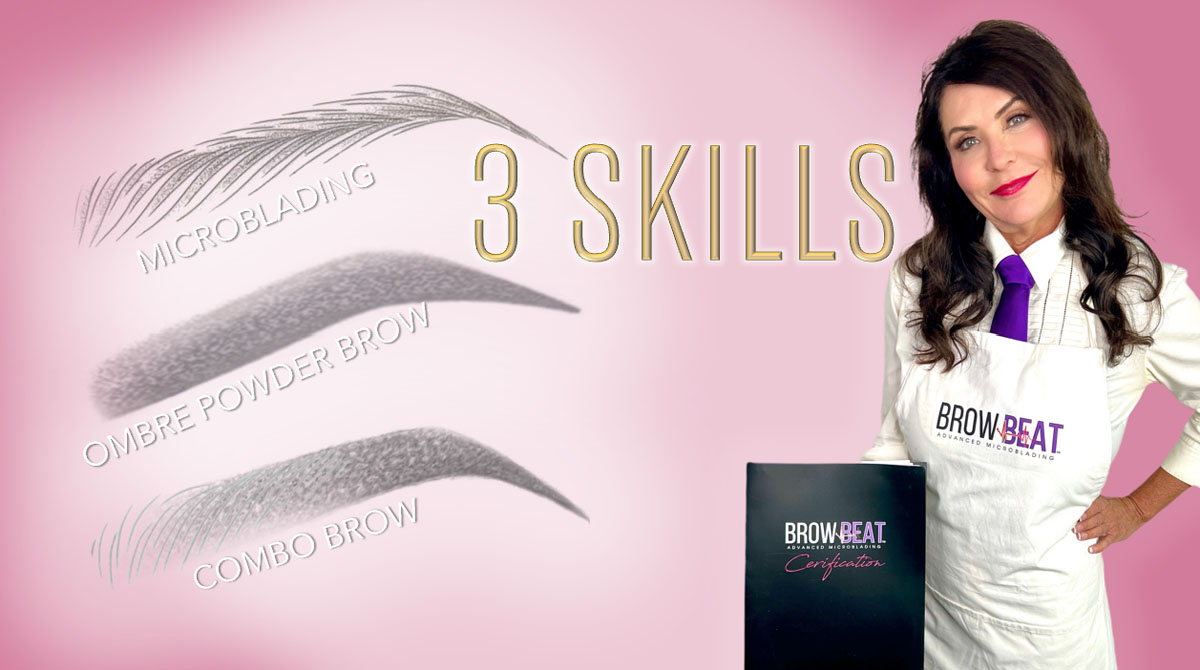
Microblading creates realism — true hair stroke illusion.
Shading creates retention — warm, gradient, breathable color.
Together, combo brows create the best of both worlds.
If your client:
- Loves definition → Shading wins
- Wants realism → Microblading wins
- Wants both realism and longevity → Combo brows win
Longevity doesn’t require abandoning microblading — it requires integrating shading strategically to support it. If strokes fade, shading holds the brow together. If shading softens, strokes give texture. It is a relationship — each technique filling the other’s gaps.
The most successful long-term artists are bilingual — fluent in strokes and fluent in shade. Gert your microblading and shading certification today, www.microbladingcertificationtx.com
Retention Psychology: Why Longevity Builds Loyalty
Clients return for one of two reasons:
- They love their brows and want to keep them.
- They are afraid of losing what you created for them.
Both drive retention bookings.
Both create dependable revenue.
Both are built through longevity.
When your clients know their brows will fade gradually instead of disappearing suddenly, they trust the process. They don’t fear appointment day — they look forward to it. They become advocates, evangelists, referrers.
The longer brows last, the longer your business lasts.
Longevity Requires Patience — Both Artist and Client
One of the most overlooked factors in retention is tempo. Artists rush because they’re excited. Clients rush because they want results. But longevity is built slowly. Pressure control is slow. Depth mastery is slow. Layer stacking is slow. The best brows are not fast — they are considered.
Brows that last are built in deliberate passes, each pass delivering purpose instead of panic. There is a difference between “I hope this works” and “I know how this will heal.” Artists who slow their hand long enough to feel pressure, to watch depth, to read skin under the needle — they are the artists who build brows that remain.
The Technical Foundations of Longevity
There are five pillars that hold up every long-lasting brow:
- Pressure control — the hand must be steady, even, consistent
- Depth regulation — within the epidermis, not beyond it
- Layered application — shading, passes, reinforcement
- Strategic pigment choice — tone that ages gracefully
- Realistic healed expectations set with the client
When these five foundations are in balance, retention becomes a science instead of a gamble. Brows do not survive because of hope — brows survive because structure supports them.
The skin is a living canvas, not a static one. It metabolizes, regenerates, remodels, and reveals. Artists who work with that biology instead of against it produce art that grows, not collapses.
The Confidence Behind Long-Lasting Brows
There is a moment in every artist’s journey where they stop questioning their work and start owning it. That moment rarely happens because of praise — it happens because of healed results. Healed results are the mirror that reflect who you are becoming.
When brows return a year later looking full, balanced, and well-aged, confidence becomes earned. The hand steadies. The voice strengthens. The technique locks in. Longevity builds artists, not only brows.
Clients feel the difference. Confidence is not loud — it is steady. It is shown in how you hold your machine, how you speak about healed results, how you recommend shading over single-stroke techniques when longevity is the goal.
A confident artist does not oversell or dramatize. They state facts, they guide gently, they build trust — and retention follows.
The Long Game — A Career Built on Healed Brows
Longevity isn’t just aesthetics — longevity is career security. When brows last beautifully, clients return like clockwork. They return not because they lost their brows — but because they liked having them. That is retention in its highest form.
Every long-lasting brow is a future booking. Every year of retention is a year of proof. Every healed result is marketing you didn’t pay for.
Longevity builds empires one face at a time.
Shading will continue to dominate the long-term retention landscape. Microblading will continue to offer realism and texture. Hybrid work will continue to bridge the gap between aesthetic preference and duration. The key is not to choose one — the key is to master all three and deploy them strategically.
Where All Artists Eventually Arrive
There is a point in the journey where an artist stops asking:
“How do I make this look good today?”
and begins asking:
“How will this heal tomorrow, six months from now, one year from now?”
That is the transition point. That is where beginners become professionals and professionals become masters.
Longevity is maturity.
Longevity is mastery.
Longevity is the future of PMU.
In Summary — Long-Lasting Brows Are Built, Not Born
Microblading alone will always be beautiful.
Shading alone will always be durable.
Together, they become legacy.
There is a place in the skin where pigment survives. There is a technique that reinforces it. There is an education that teaches it. There is a future for artists who build brows that last not weeks — but years.
And the artists who learn longevity today are the same artists clients will still be booking five years from now.