At BrowBeat Studio Dallas Microblading Certification and Training Academy, our approach is to ground artists in strong fundamentals first through a structured Microblading Certification course, then expand into shading, combo brows, and machine work with programs like our Ombré Powder Brow Certification. With the right tools at your side, such as the Microblading and Lip Blushing Kit, you have everything you need to experiment with stroke variations from a place of understanding and control.
What Clients Actually See Versus What Artists Obsess Over
Artists and clients often live in two very different mental worlds. Artists zoom in, literally and mentally, on the first few strokes at the brow head. They see direction, spacing, angle changes, and the relationship between one tiny line and the next. They know the names of patterns and the difference between a slightly curved stroke and a straighter one.
Clients, on the other hand, step back. They stand at a normal mirror distance and ask entirely different questions:
- Does this brow suit my face?
- Is the shape flattering and balanced?
- Does the color match my hair and skin?
- Do I feel comfortable and cared for here?
- Do I recognize myself when I look in the mirror, just slightly more polished?
They may glance at your close-up videos and reels and think your work looks beautiful, but when they book in, they are not memorizing stroke directions. They are measuring how much trust they feel. They are noticing how you speak to them, how clearly you explain the process, and whether their brows look great in real life, not just on camera.
This does not mean stroke patterns are unimportant. It means they serve a different purpose than many artists assume. Stroke patterns are a tool for structure, hand control, and consistency. They are part of your internal language as a professional, not the main thing your client evaluates. Understanding this difference can help you relax and make smarter decisions about where to invest your learning energy.
Why Artists Fall in Love with Head Stroke Variations
Artists are often drawn into semi-permanent makeup because they want to make something beautiful with their hands. They like details, lines, and patterns. Head stroke variations appeal directly to that artistic side. They are satisfying to practice, fun to refine, and visually striking in photos and videos.
Learning variations can:
- Improve your control over angle, spacing, and direction.
- Teach you how different patterns flow into the body of the brow.
- Give you new ideas for accommodating different natural hair growth patterns.
- Keep your practice sessions interesting and creatively fulfilling.
- Provide eye-catching content for your social media and portfolio.
There is nothing wrong with enjoying this part of your craft. In fact, a curious mind is one of your biggest assets as an artist. The key is to remember that stroke variations are one piece of a much bigger picture. They should sit on top of solid fundamentals like mapping, pigment choice, pressure control, hygiene, communication skills, and a well-structured appointment flow.
When you approach head stroke variations with that mindset, they become a way to deepen your artistry rather than a source of pressure or confusion.
Head Stroke Variations Artists Love to Practice
Over time, artists and trainers have developed a number of recognizable head stroke patterns. Each is simply a way of organizing those first strokes at the front of the brow to create a particular flow or aesthetic. Here are some of the variations many artists enjoy studying and practicing:
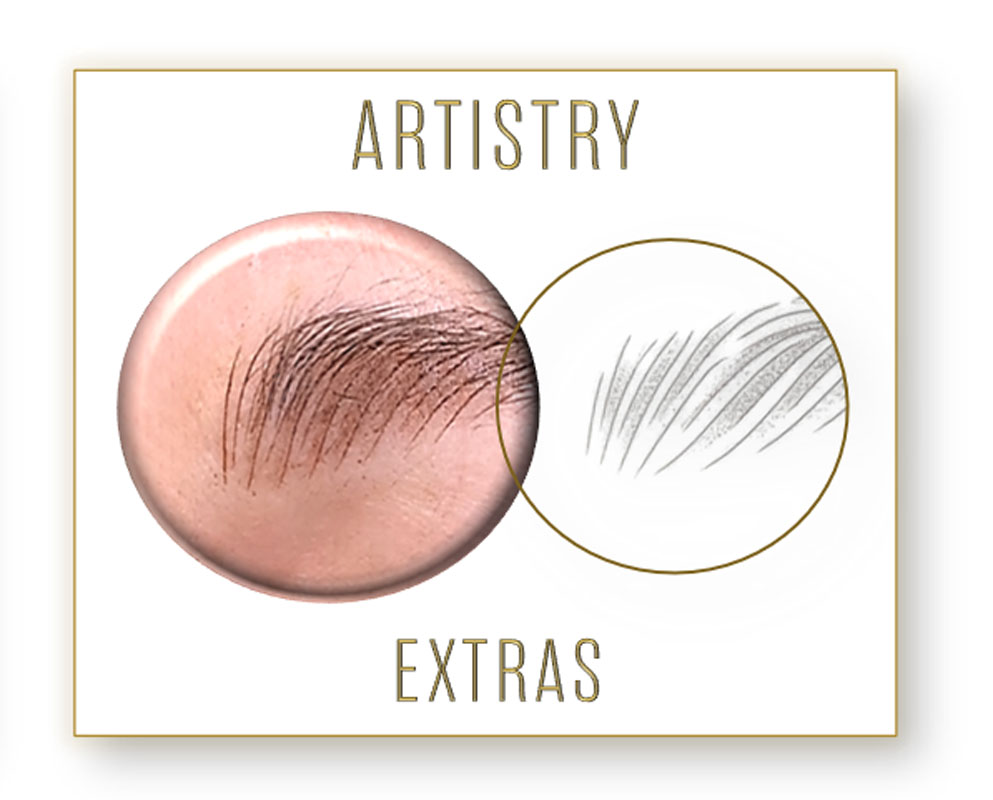
Classic Series Head Strokes
These patterns form the backbone of many microblading approaches. They provide clear, teachable sequences for new artists and plenty of refinement potential for advanced artists.
- Classic 1, 2, 3, 4
- Classic with Straight Inner
- Classic with Curved Inner
- Classic with Curved Inner and Loose Stroke
- Classic M
Each of these variations changes how the very first strokes rise, curve, or lean as they leave the lower brow line. Some give a more upright, structured head; others lean and curve to mimic particular hair growth patterns. They are all built off the same foundational idea: layering strokes in a way that looks like natural hair.
Alternate Pattern Head Strokes
Alternate patterns experiment with different stroke counts and arrangements, often using numbers to describe the sequence. Examples include:
- 1, 2, 3, One, Two
- Three, One, Three
- One, Two, Three
- 8 – One, Two, Three
- Three, Two, Two
These descriptions help artists remember how many strokes are assigned to each little section of the head, and in what order they appear. The goal is to create variety in how the hairs emerge and interlock, so the brow head looks less “stamped” and more individual. They can be adapted for different brow densities and starting shapes.
For training purposes, these patterns give you a structured way to think about the head, rather than approaching it as random strokes. When you can name and repeat a pattern, you can also improve it, troubleshoot it.
Do Clients See These Differences?
From artist to artist, head stroke variations can look very different. From client to client, however, most of those differences disappear once the brow is viewed at a normal distance and allowed to heal. Clients are unlikely to recognize whether you used “Classic with Curved Inner” or “Three, Two, Two” at the front of their brow. What they do notice is whether the head looks overcrowded or sparse, too sharp or too soft, too vertical or too slanted.
In other words, they see the outcome of your pattern, not the pattern itself. That outcome is influenced not only by the stroke sequence you choose, but also by:
- Your pressure and depth.
- Your pigment choice.
- The client’s skin type.
- How the strokes interact with the client’s natural hair.
- How you transition from the head into the rest of the brow.
This is why it is important to view head stroke variations as tools. Learning them is beneficial, but they are not magic tricks that guarantee amazing brows on their own. Their real value is in how they help you refine your control, plan your work, and create consistent results across many faces.
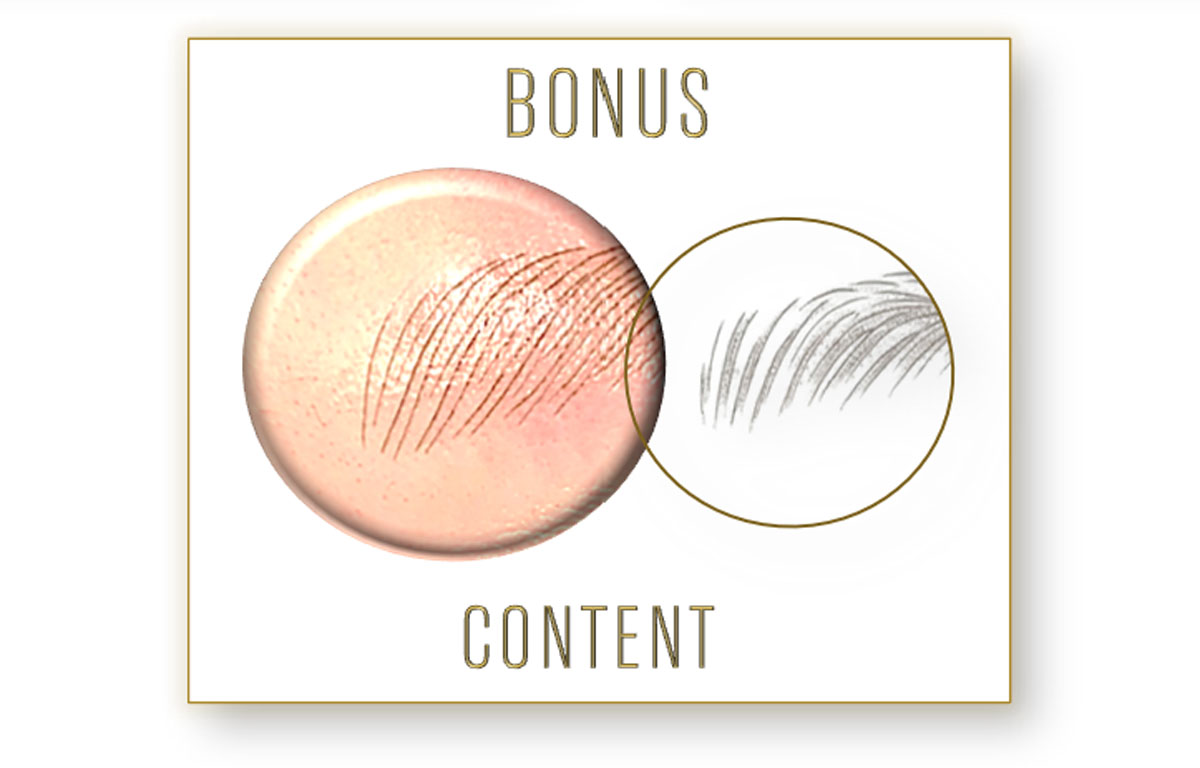
Too Many Strokes and Natural Merging Over Time
Another reality artists must keep in mind is how microblading heals and fades. On the day of treatment, you can see every single stroke. The lines are clear, the pattern is visible, and the detail is obvious in close-up photos. Over time, those strokes soften, blur slightly, and begin to blend with each other and the client’s natural skin tone. This is completely normal; it is part of what makes microbladed brows look softer as they age.
Because of this natural merging process, overly complex stroke patterns can sometimes lose their crispness long before the client is ready for new work. Too many strokes packed too tightly together have more opportunity to blend into each other, making the head look denser than intended. This is especially true on certain skin types or when the pressure is too heavy.
You can keep a positive outlook and still acknowledge these truths. Instead of feeling discouraged by merging, use it as a design consideration:
- Choose patterns that leave enough space between strokes.
- Focus on quality and flow rather than maximum stroke count.
- Remember that simplicity can age more gracefully than complexity.
- Consider adding shading later if the client desires more fullness.
Many artists eventually discover that a well-executed classic pattern, with good spacing and balanced flow, holds up better over time than an aggressively dense variation. That does not mean you should never explore creative patterns—it simply means that healed reality should guide which patterns you use most often on real clients.
Where Nano Brows Fit into Head Stroke Variations
Nano brows bring a machine into the mix. Instead of using a manual blade to carve channels for pigment, a machine with a fine needle creates lines or dots that resemble strokes. In theory, any head stroke pattern you use for microblading can be adapted for nano, because the pattern is really about stroke direction and placement, not the tool.
The question is whether you need to learn every nano stroke variation right away. For most artists, the answer is no. Just as with manual microblading, what matters most is understanding the basic flow of the head, how to transition into the rest of the brow, and how to adjust for different face shapes.
If you choose to add nano brows to your services later, you will already have a mental library of patterns from your microblading training. Your focus will be learning how the machine behaves, not learning completely new head structures from scratch. This is why a strong foundation in microblading, built through a course like the Microblading Certification program, is so valuable before jumping into more advanced machine work.
Learning Everything You Can Without Getting Lost in the Words
The semi-permanent makeup world loves terminology. Every few months, new labels appear for techniques that are often subtle variations of things artists have already been doing. Head stroke variations can come with their own vocabulary too, especially when nano, hybrid, or combo styles are involved. It is easy to feel like you must memorize every new term to stay relevant.
A more sustainable strategy is to focus on concepts and patterns, not just names. Learn everything you can that feels interesting and useful. Pay attention to how strokes support the overall brow design, how shading can enhance or soften the result, and how clients describe what they like. When a new term appears, you can simply ask yourself, “Where does this fit into what I already understand?” instead of feeling like you are starting over.
The more you base your learning on principles rather than buzzwords, the more resilient your skill set becomes. Trends come and go. Skills built on clear thinking and good technique stay with you for your entire career.
Using Head Stroke Variations for Practice and Social Media
One of the most practical uses for detailed head stroke variations is content creation. These patterns make excellent practice drills on paper, silicone, and simulation exercises. They also make visually satisfying close-up photos and videos, which are perfect for your Instagram, website, and training portfolio.
You can:
- Film short clips of yourself practicing different head patterns.
- Share side-by-side images of variations on silicone.
- Explain how small changes in angle or spacing change the look of the head.
- Use stroke maps to show your attention to detail and education background.
These posts help potential clients and students understand how much work goes into building your skills. They may not identify the patterns by name, but they will see your dedication and control. It is a great way to let head stroke variations shine without relying on them as the only measure of your skill.
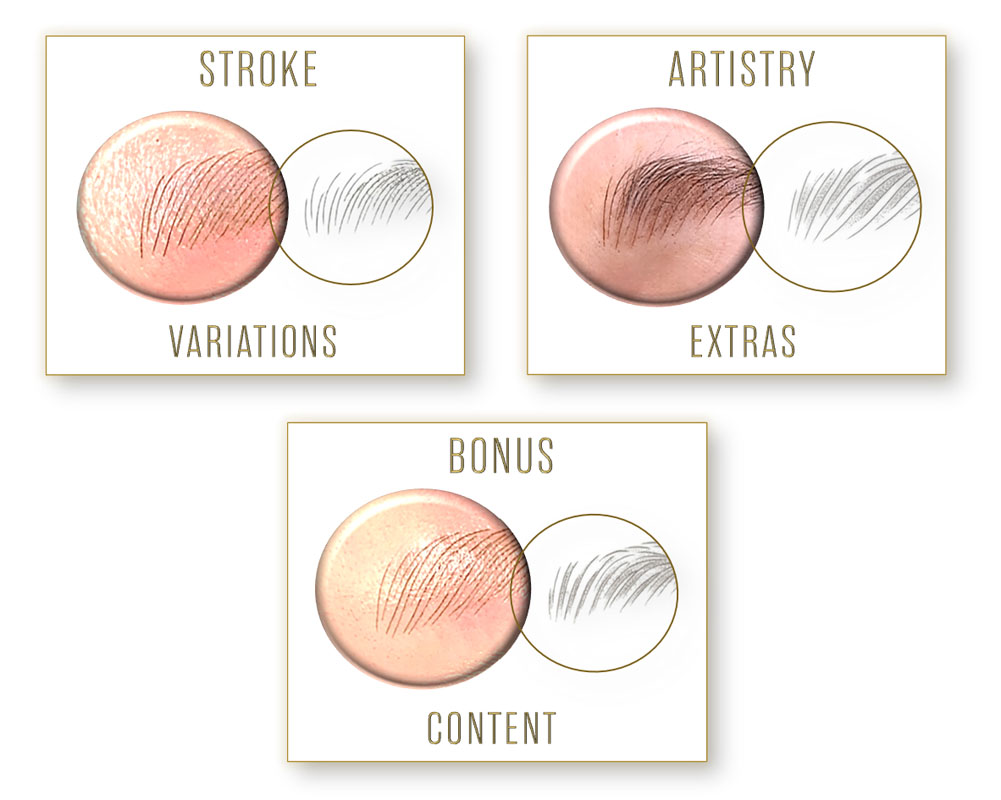
Balancing Stroke Variations with Shading and Modern Brow Trends
Modern brows are not only about hair strokes. Shading, ombré, and soft powder finishes have become a major part of the semi-permanent landscape. Clients often request a mix of strokes and shading, or they ask for very soft powder brows with no visible hairs at all.
In this environment, head stroke variations are one ingredient in a larger recipe. You might use a classic pattern for the head, then transition into microshading through the body and tail. You might choose a simpler pattern when you know you will be layering shading on top. Or you might decide to create a fully shaded front without visible strokes at all for a client who prefers a makeup-like look.
Understanding shading and machine work, through training like the Ombré Powder Brow Certification, allows you to think strategically about where detailed strokes add value and where shading carries most of the design. This balanced approach keeps you from overloading the head with strokes just because you know how to create them.
Tools That Support Your Practice with Variations
To explore head stroke variations in a way that feels productive rather than chaotic, it helps to have a reliable set of tools. A consistent hand tool, dependable blades, high-quality pigments, and structured practice materials allow you to focus on the feel of each stroke rather than fighting inconsistent equipment.
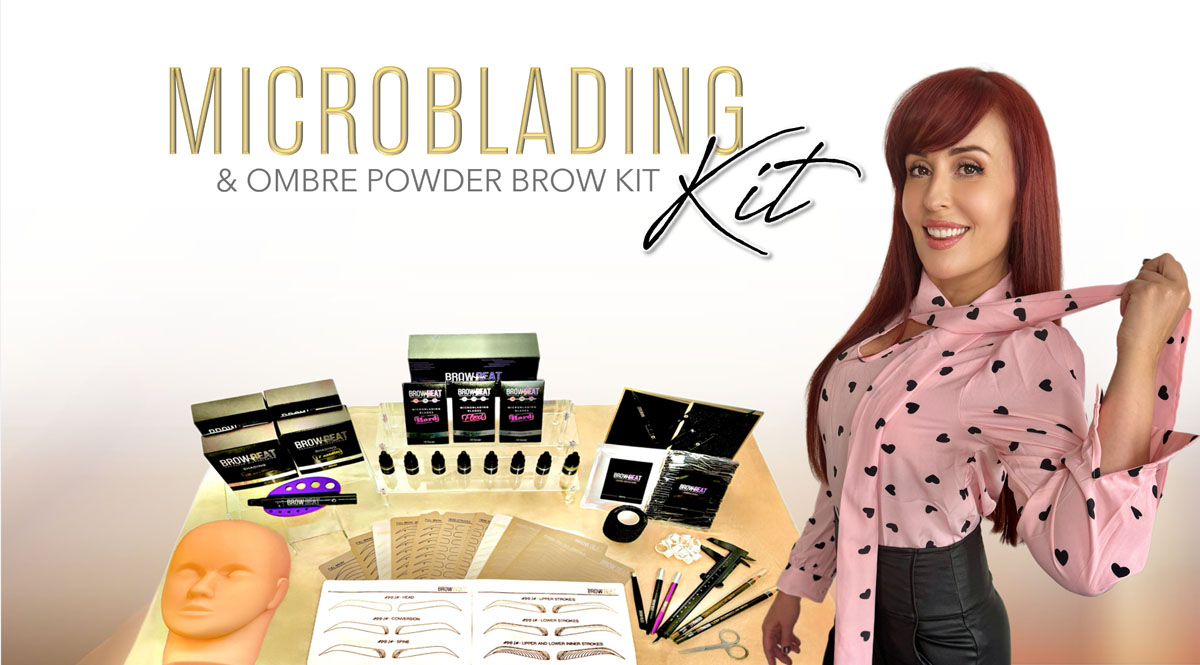
- Microblading tools for stroke practice.
- Pigments suitable for a variety of brow tones.
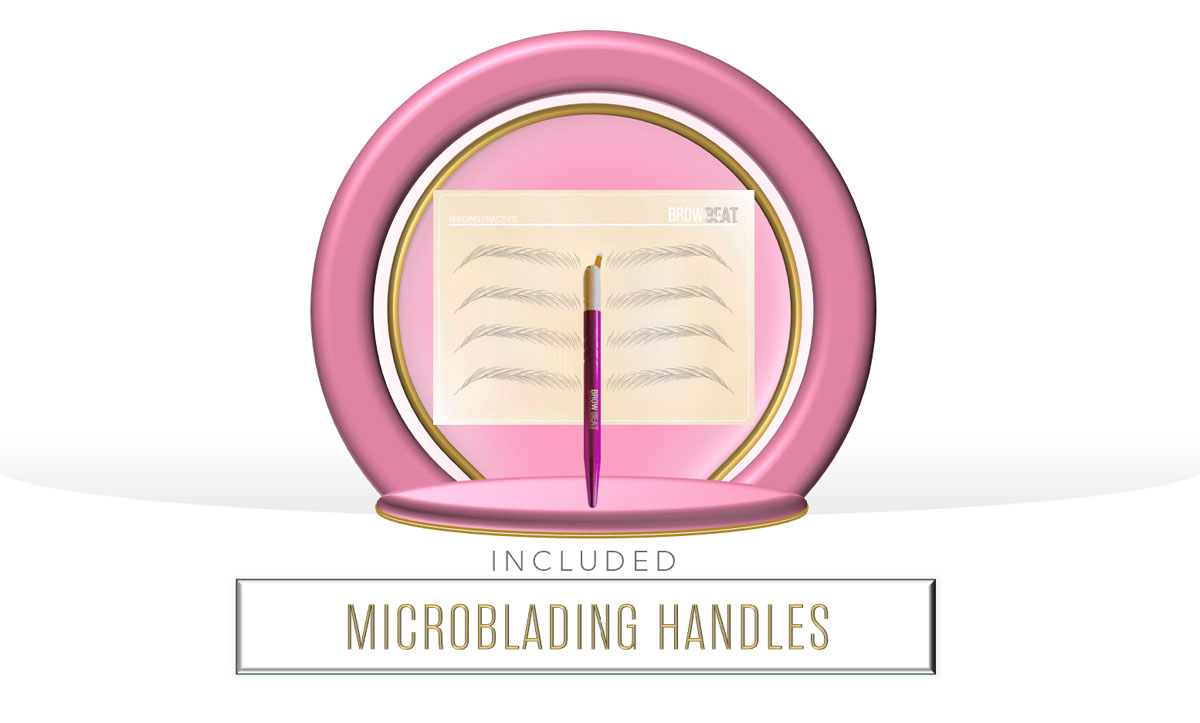
- Practice mediums, including silicone, for repetition and experimentation.
- Additional tools that support mapping and precise design.
With the right setup, you can dedicate time to stroke variation practice regularly. Over time, your hands will remember the movements, your eye will recognize balanced spacing, and your patterns will become second nature. This is when variations stop feeling like a mental burden and start feeling like a natural extension of your skills.
So, Should You Learn Microblading and Nano Brows Head Stroke Variations?
The answer is yes—if you approach them with the right mindset. Stroke variations can absolutely enrich your craft. They sharpen your technical abilities, keep your work interesting, and offer endless possibilities for practice and content creation. They can also give you flexibility when working with different hair patterns and brow goals.
At the same time, it is important to remember:
- Clients do not see strokes the way you do; they see the overall brow, the color, and how they were treated.
- More variations can mean more room for error if fundamentals are not strong.
- Microblading strokes naturally merge as they fade, so simplicity and spacing are your friends.
- Shading, ombré, and powder techniques often share the spotlight with strokes in modern brow design.
- Learning what genuinely interests you will sustain your career far more than chasing every buzzword and trend.