In corrective PMU, “patchy” usually doesn’t mean freshly healed brows — it means aged, uneven brow tattoos with inconsistent density, mixed undertones, and old work that’s long past due for a strategic plan. For students, learning patchy brow correction techniques is a turning point: it’s where you shift from “applying pigment” to diagnosing what pigment is already doing in the skin.
Across Texas—especially the Dallas–Fort Worth area—students will see many cases where older tattoo ink and newer microblading sit together in the same brow. That combination creates visible imbalance: dense sections beside lighter sections, warm areas beside cool areas, and shape patterns that no longer look cohesive.
In training, you’ll learn that patchiness is usually created by history—layers, time, and technique. Common causes include:
Pigment layered over previous pigment without correction Uneven depth from earlier work
Color shifts over time (grey, red, blue, or muted brown)
Gaps where microblading strokes have faded inconsistently
Multiple prior treatments with different pigments and methods
Students often think the solution is to simply add more strokes to fix patchy microblading. In corrective education, you learn why that can create more conflict. Because color does not cover color—it mixes—correcting uneven brow pigment starts with undertone identification, not immediate reapplication.
Strong uneven brow tattoo correction begins with a repeatable diagnostic framework:
Saturation mapping: Where is pigment dense vs. faded?
Undertone reading: What tones are present and why?
Layer history: Tattoo first, microblading later or rounds of both?
Skin integrity: The tissue reaction
From there, patchy brow correction techniques may include:
Targeted neutralization to address unwanted undertones
Shading to redistribute density avoiding saturated zones
Blending strategies for inconsistent patches and pigment “blobs”
Staged treatments spaced 4–8 weeks apart for stability.
handling the
correction
Inquiry
This course is designed for working artists who will inevitably face correction cases. Students learn how to handle a correction inquiry with clinical clarity — setting expectations, discussing pigment history, and explaining why uneven brow tattoo correction requires staged strategy. Professional language and realistic outcomes are foundational before any patchy brow correction techniques are applied.
correction rules for
all
Colors
Before technique begins, students master universal correction rules. Brown is composed of three color components, and misunderstanding this is why many corrections fail. Advanced patchy brow correction techniques begin with pigment analysis — not immediate application. This framework prevents compounding blue, red, gray, or uneven undertones in aged brows.
assesing blue, red &
gray
Brows
Uneven brows are rarely random. Students learn structured undertone evaluation, saturation level, and pigment history assessment before planning uneven brow tattoo correction. Proper patchy PMU brow repair begins with reading the skin accurately — a critical skill every correction-focused artist must develop to remain relevant in today’s industry.
the pointillism
correction
Method
This one-on-one course introduces the powder brow pointillism correction technique — distinct from standard application. Rather than layering over old work, students learn controlled density redistribution around existing pigment. These patchy brow correction techniques allow strategic blending without oversaturating compromised areas of the brow.
paper exercises: color &
layering
Protocol
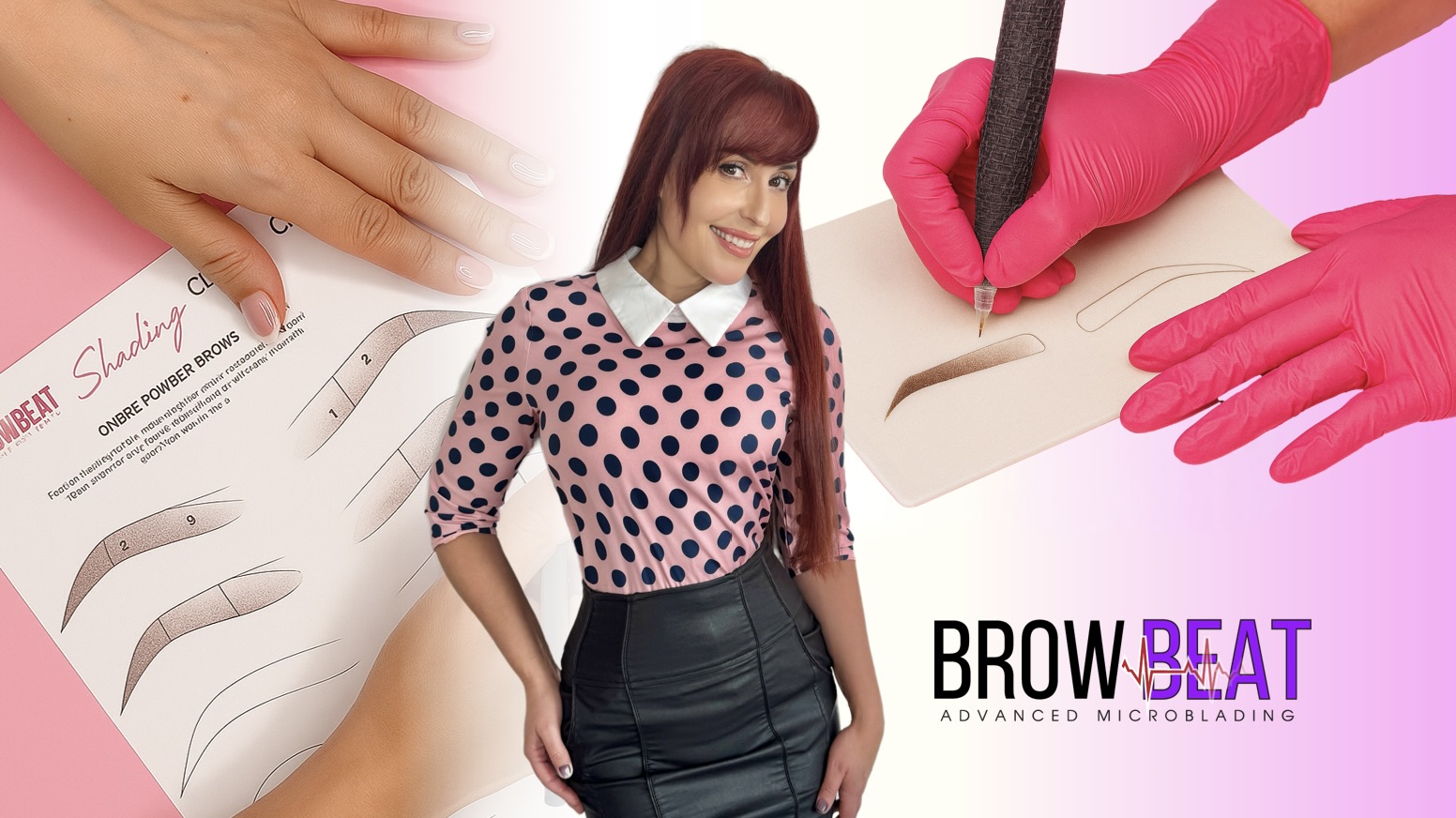
Working artists must be able to articulate their correction formula before performing it. Students outline their color neutralization strategy and layering sequence step by step. Understanding how to fix uneven brow pigment on paper reinforces precision before machine contact.
silicone skin
technical
Execution
Theory moves into disciplined machine control on silicone skin. Students practice controlled placement, spacing, and density management required for correcting uneven brow pigment. This bridges conceptual color correction training with the physical execution necessary for patchy microblading repair.
step - by - step patchy
microblading
Formula
Students follow a structured formula for fixing patchy microblading cases. This includes undertone adjustment, controlled shading placement, and staged treatments spaced 4–8 weeks apart. Uneven brow tattoo correction is performed methodically — never through repeated stroke layering.
one - one - one
advanced
Certification
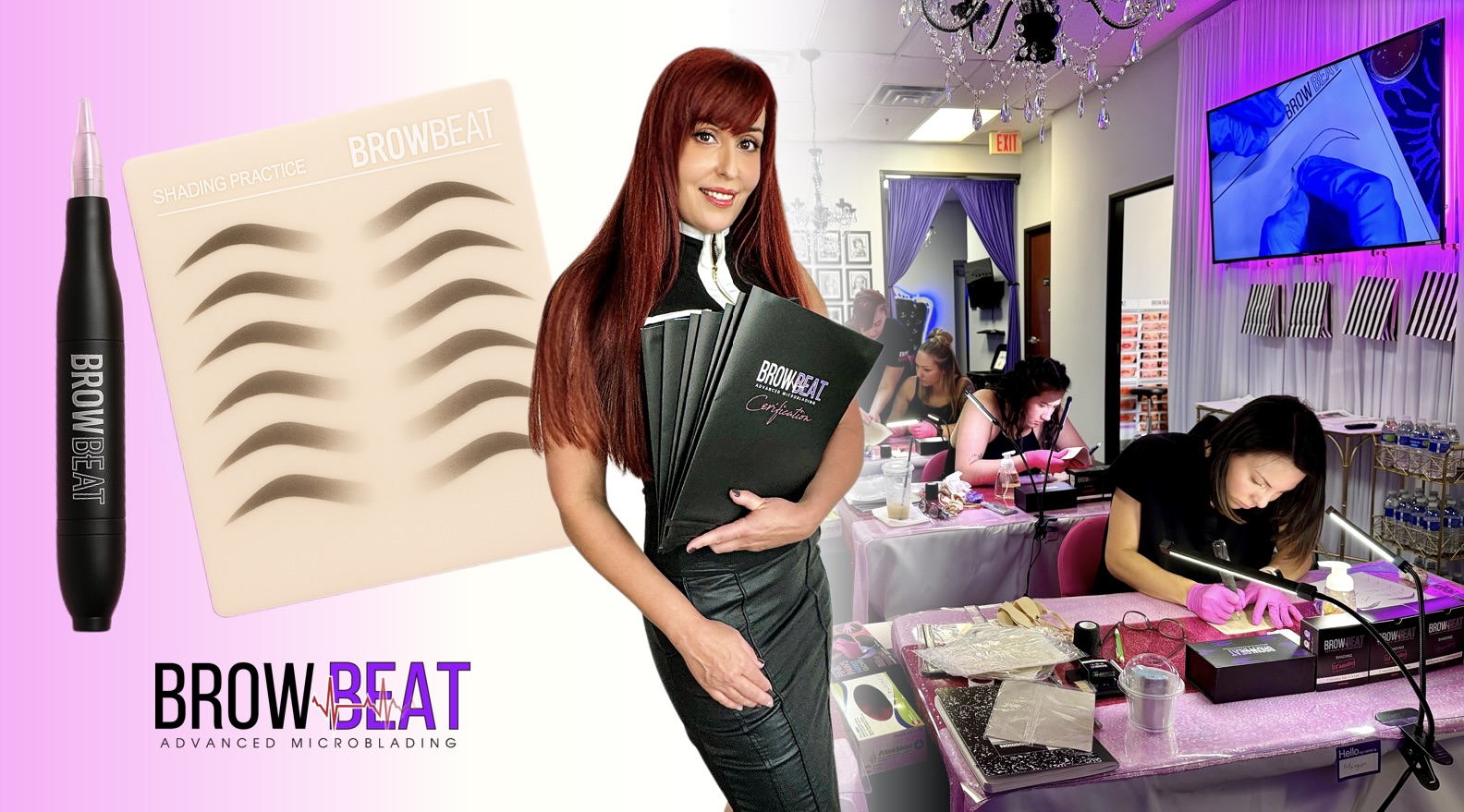
This is an intensive, one-day tattoo correction training Texas experience created specifically for established artists. Students leave with structured support documents, step-by-step color treatment formulas, and repeatable frameworks for uneven brow tattoo correction and long-term professional relevance.
blue microblading strokes
cool
Pigment
This example shows blue microblading strokes caused by aged previous pigment. These are not fresh errors — they are aged strokes that have shifted cool over time. Placing brown over blue will not correct it; it blends. Correction requires strategic neutralization before rebuilding warmth and balance.
red microblading strokes
warm
pigment
This red brow reflects aged microblading where warm base tones remain after years of fading. Simply applying a darker shade does not eliminate red — it intensifies it. Artists must understand correction rules for all colors and apply controlled neutralization before adjusting shape or density.
two previous techniques: red microblading over
gray
Tattoo
This case combines red microblading layered over an older gray tattoo. The result is conflicting undertones and uneven saturation. Correction cannot be approached as simple color replacement. Artists must assess both pigment histories and apply strategic balancing before reshaping or blending.
Correcting patchy PMU brows is not about forcing a brand-new brow on top of old pigment. It’s about restoring balance within an existing pigment structure.
In tattoo correction training Texas, students build the confidence to read aged work, understand why it became uneven, and apply patchy PMU brow repair strategies that respect the skin and the pigment already present.
When you master patchy brow correction techniques, you’re not just learning a fix—you’re learning how to think like a corrective artist.
We use cookies to ensure that we give you the best experience on our website. If you continue to use this site we will assume that you are happy with it.