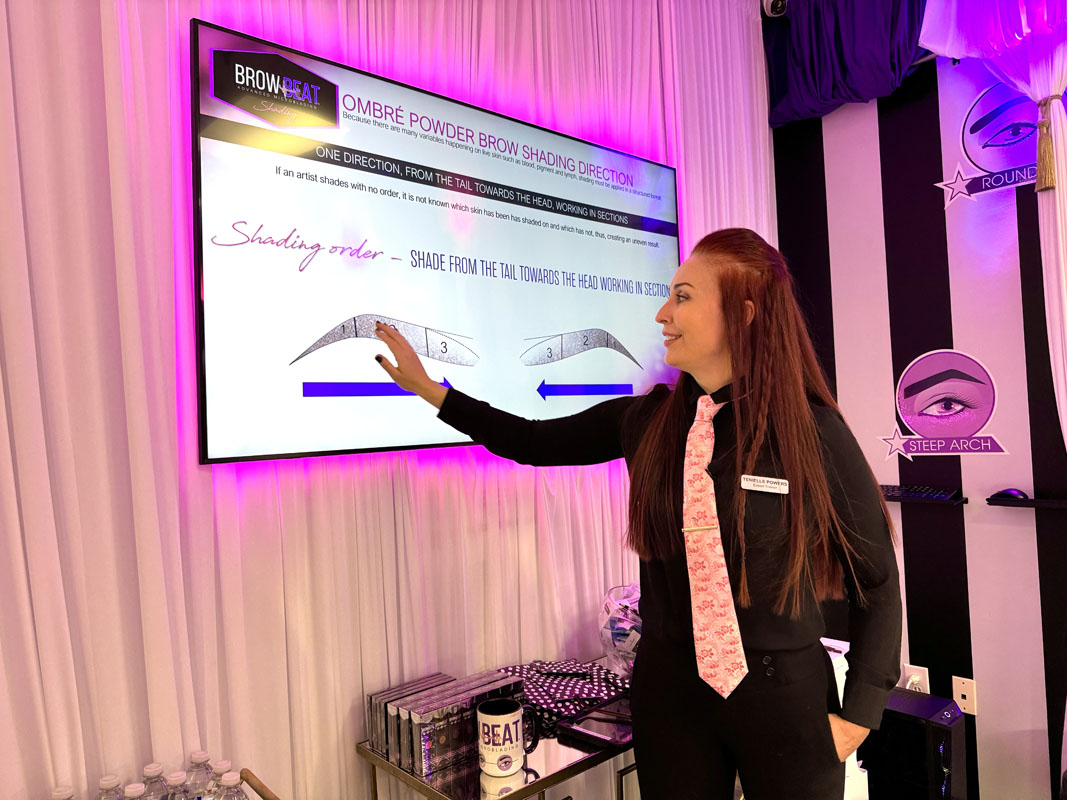
Understanding how microblading training works helps students choose a course that matches their learning style and goals. Professional education is typically structured as a progression—starting with foundational knowledge and moving into controlled technique development through repetition and guided feedback.
The microblading training process begins with essential fundamentals before students practice hand skills. This first phase includes sanitation and safety, skin and pigment basics, brow design concepts, and how a microblading appointment is organized from start to finish.
Once the foundation is clear, shifts into technique development. This is where students begin practicing core elements in stages rather than trying to master everything at once.
A strong microblading class structure breaks technique into smaller parts so students can build accuracy and consistency. Stroke patterns are taught section by section:
Brow head stroke direction and spacing
Upper stroke flow and curvature control
Lower stroke balance and spacing logic
Arch control and transition management
Tail tapering and clean finishing
From there, students move into simulation exercises that combine these components into a complete brow sequence. This is also where timing, order of operations, and error-correction habits become part of the learning process.
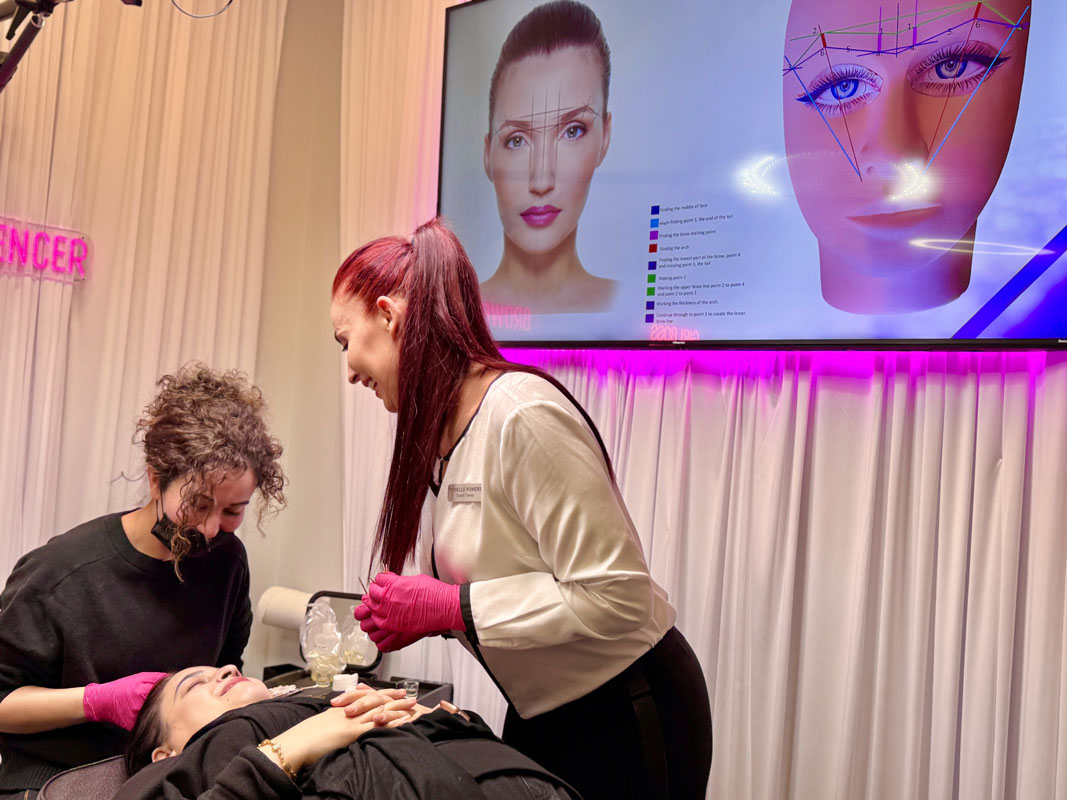
If you’re searching what to expect in microblading training, expect structured repetition. Students usually practice patterns, pressure control, and stroke rhythm through guided drills before combining skills into full-brow simulations. Many programs also include mapping demonstrations and partner-based exercises so students can understand symmetry and placement in real time.
People also ask: what happens in microblading school? In a well-organized program, students commonly experience a mix of education, guided practice, and step-by-step treatment workflow—so learning feels progressive rather than overwhelming.
classroom theory &
foundation
Building
Microblading training begins in the classroom, where students learn skin anatomy, pigment behavior, facial symmetry, and safety standards. Understanding how microblading training works starts with knowledge before execution. This structured foundation explains what to expect in microblading training and ensures students understand why technique must be built on theory rather than guesswork.
brow mapping &
STRUCTUral
Planning
Before strokes are placed, students are taught structured brow mapping to establish proportion and balance. This phase reflects true microblading class structure, where design accuracy comes before pigment. Mapping ensures symmetry across different face shapes and builds confidence in placement before advancing into the hands-on portion of the microblading training process.
stroke pattern development &
hand
Stability
Students practice stroke direction, spacing, and rhythm through repetition drills designed to build muscle memory. What happens in microblading school is controlled pattern development — not copying shapes randomly. This stage of how microblading training works focuses on hand stability and depth awareness to create clean, natural-looking results.
simulation exercises & Muscle
memory
Training
Simulation exercises allow students to refine pressure control and stroke sequencing before working through full treatment structure. Learning how long microblading training takes involves building consistency over time. These drills strengthen confidence and prevent rushed technique during real-world application.
instructor - guided
Technique
Corrections
Direct feedback is a defining part of the microblading training process. Instructors evaluate spacing, depth, and stroke alignment in real time. This refinement stage demonstrates what to expect in microblading training when structured oversight strengthens technique rather than leaving students to troubleshoot alone.
tool setup, sanitation &
workflow
Organization
Professional microblading training Dallas environments emphasize workflow organization and sanitation protocols before treatment begins. Students learn how preparation impacts efficiency and client safety. Understanding this structure reinforces how microblading training works beyond just stroke placement.
partner practice & real
faCE
Application
Partner practice introduces facial variation and real structural differences. This phase bridges theory and practical execution, reinforcing what happens in microblading school when mapping and stroke control are applied to diverse brow shapes and bone structures.
full treatment
sequencing
Walkthrough
Students complete a full treatment walkthrough from mapping through first-pass strokes and refinement. This stage makes the entire microblading training process visible, showing how each step connects into a structured system rather than isolated techniques.
how microblading training works on
fair
Skin
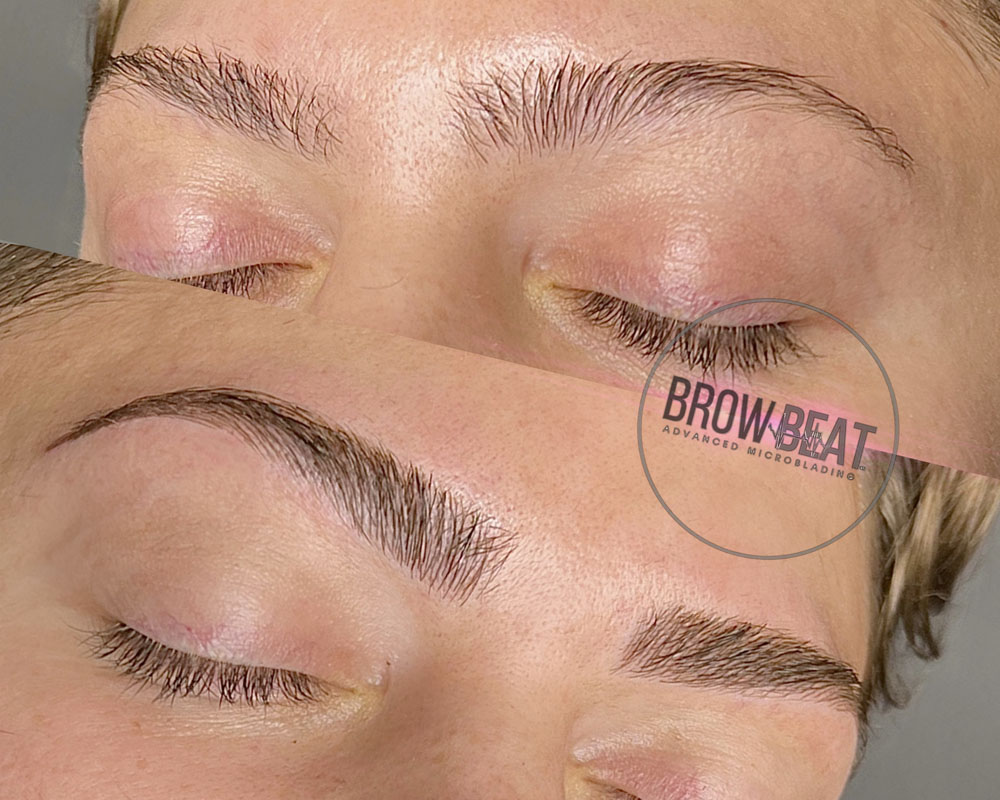
Understanding how microblading training works begins with adapting stroke placement to different undertones. On fair skin tones, students learn lighter pressure control to prevent oversaturation. This reflects the structured microblading training process taught in class, where stroke flow is intentional and progressive. What to expect in microblading training includes learning how pigment reacts differently across lighter skin types and adjusting technique accordingly.
teaching pigment selection for
brunette
Clientele
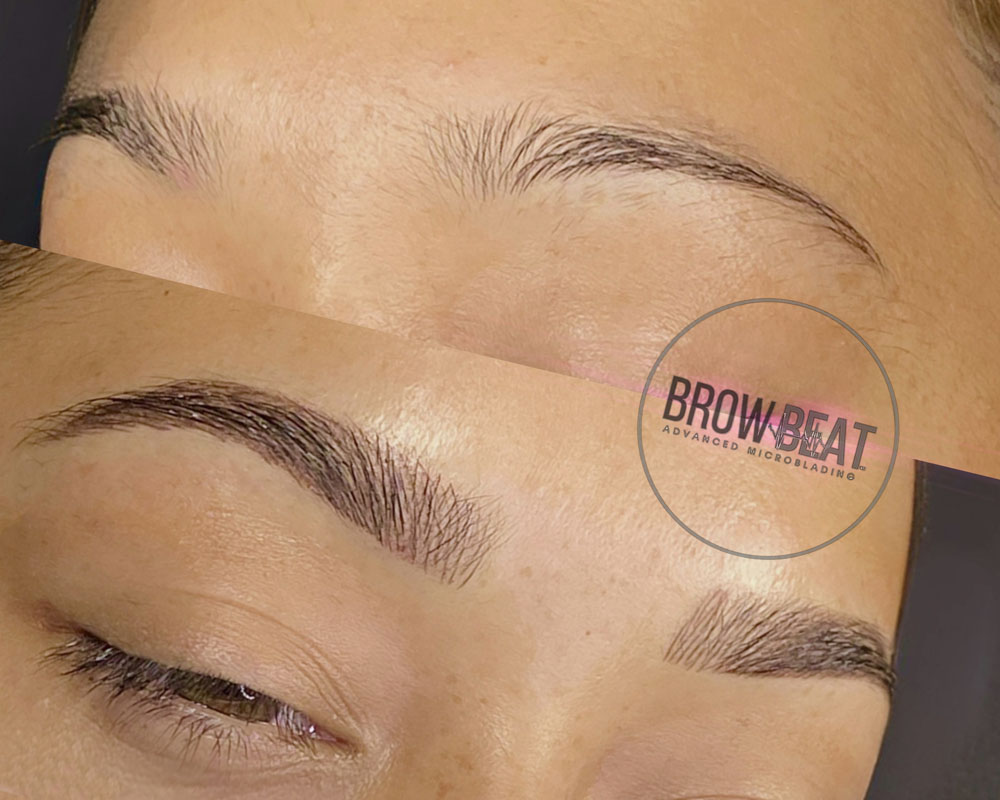
Students learn how microblading training works by layering strokes strategically. What happens in microblading school is not random filling — it is structured repetition and spacing drills. The microblading training process emphasizes balanced mid-body density and clean transitions from head to tail.
how microblading training works on
darker
Hair
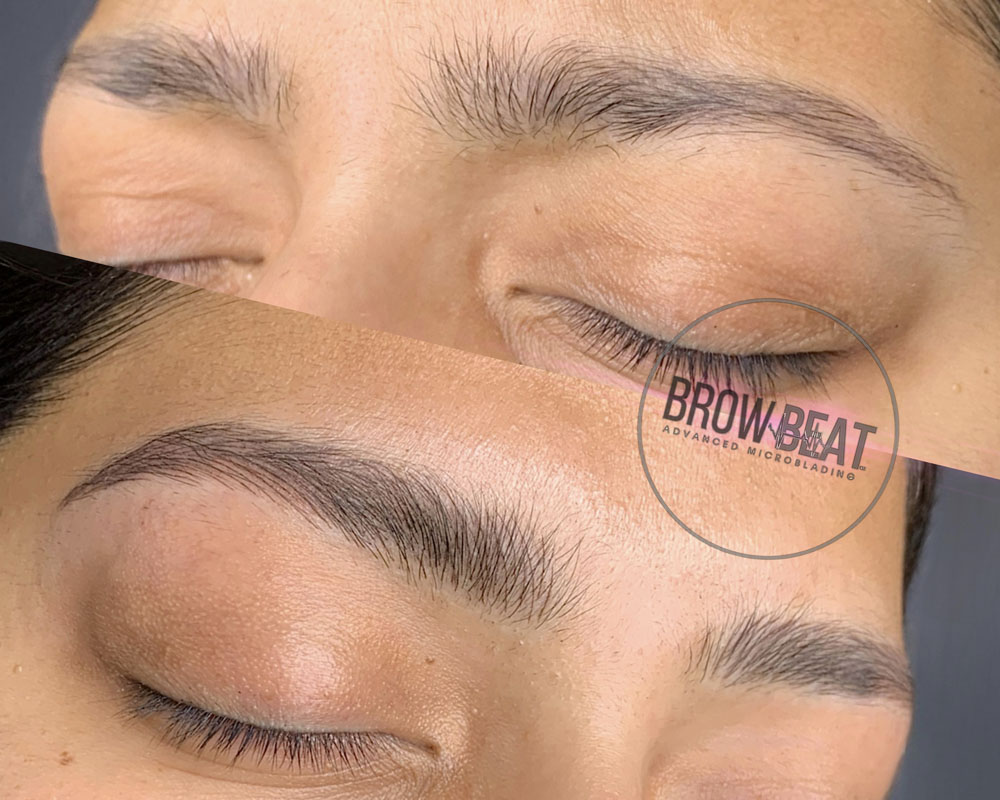
When working on darker hair tones, students are taught how microblading training works through controlled pigment depth and confident stroke structure. The microblading training process includes pressure calibration and spacing adjustments to maintain visibility.
pigment selection for high
melanin
Skin
Professional microblading training requires understanding how undertones influence pigment behavior. The microblading class structure builds awareness of stroke visibility. Learning how microblading training works across different skin tones ensures consistency and balanced results regardless of complexion.
How long microblading training takes depends on curriculum depth and how the program structures practice. Some trainings focus on condensed overviews, while others include multi-day instruction with deeper breakdowns of mapping, technique sequencing, and simulation-based repetition. When comparing courses, look closely at how clearly each stage builds on the last.
For the full overview and how this topic fits into the broader education pathway, start here: Microblading training Texas
This page outlines what structured training typically includes and how students progress from foundational learning into complete service simulation.
Ready to enroll in microblading training Texas? Review the complete course structure to understand how structured brow education supports long-term technical growth.
We use cookies to ensure that we give you the best experience on our website. If you continue to use this site we will assume that you are happy with it.