MICROBLADING TRAINING IN TEXAS
Microblading is a manual permanent makeup technique used to create fine, hair-like brow strokes with a hand tool rather than a PMU machine.
BrowBeat Certification teaches Microblading in person in Dallas, Texas as part of structured brow education designed to help students understand the technique, develop practical control and build a foundation they can continue strengthening after training.
Learning Microblading involves much more than learning how to make a line. Students need to understand brow design, stroke direction, spacing, placement, manual tool control, pigment considerations and the relationship between individual strokes and the finished brow. These skills develop through instruction, guided exercises and repetition rather than through a single demonstration or attempt.
BrowBeat’s training approach begins with controlled practice and gradually adds complexity. Students work through paper exercises, silicone practice and silicone brow-headband training so they can develop both the visual and physical aspects of Microblading before performing independent live-skin work after training. BrowBeat does not use student live-model PMU procedures during the course.
The goal of the training is to give students a clear process and a strong manual hair-stroke foundation. A BrowBeat training certificate documents the education completed through BrowBeat Certification, while continued practice and experience help students strengthen that foundation over time.
Learn Microblading as a Manual Hair-Stroke Technique
Microblading is defined by the way the strokes are created. The artist uses a manual Microblading hand tool and blade configuration to create individual hair-like lines that work together as part of a planned brow design.
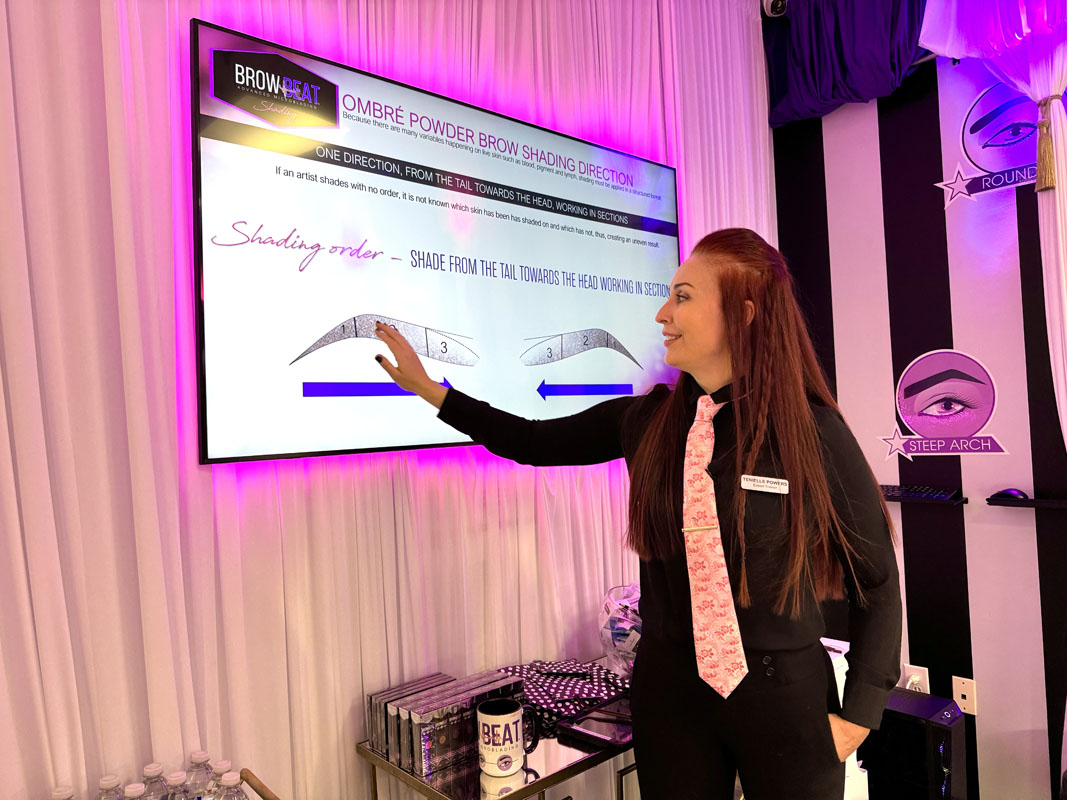
This makes Microblading different from machine-based brow techniques. Ombre Powder Brows rely on PMU machine shading rather than manual hair strokes. Combo or Hybrid Brows combine hair strokes and shading within one finished brow. Nano strokes are also hair-stroke work, but they are created with a PMU machine instead of a manual Microblading tool.
Those differences matter in training because each technique requires different physical control. A student learning Microblading needs to become comfortable with manual stroke placement, stroke direction, spacing and the relationship between the blade, the hand and the brow design. Machine-shading mechanics belong to a different technical discipline.
BrowBeat keeps that distinction clear so students understand what they are actually learning rather than treating every permanent brow technique as a variation of the same method.
What Is Microblading Certification?
Microblading certification refers to completing Microblading education through a training provider and receiving documentation associated with that training. At BrowBeat Certification, students receive a BrowBeat training certificate that records the Microblading education they completed.
The certificate is a training document issued by BrowBeat. It is not a Texas state license and should not be treated as government authorization to perform permanent makeup. Training and legal studio requirements are separate parts of becoming professionally established.
The value of the certificate comes from the education behind it. Students are learning how Microblading is planned, how manual hair-stroke work is approached, how practical control develops and how the technique fits within professional permanent makeup work.
The certificate marks completion of that BrowBeat training. Skill continues to improve as the student practices and applies what was learned.

mapping
Foundations
Students begin by learning how to map brows using measurement tools and proportional reference points. Mapping establishes symmetry and structure before pigment is introduced, forming the foundation of effective microblading training.
pattern
Development
Before full brow execution, students practice individual stroke patterns—head strokes, upper strokes, and lower strokes—separately. This controlled repetition builds consistency and precision inside structured microblading certification training.


planning &
Analysis
Design planning includes analyzing brow head placement, arch, and tail proportion. Students learn how design strategy supports predictable microblading outcomes.
FLOW
Training
Students are guided through the complete appointment structure—from mapping and first pass to refinement and aftercare explanation—so they understand how a professional microblading treatment is organized step-by-step.


Hand
Stability
Proper blade positioning and hand stability are reinforced through repetition exercises. Students learn how angle and depth influence healed results within professional microblading training Dallas classrooms.
SIMULATION
Exercises
To learn microblading safely and correctly, students complete simulation exercises that develop pressure control, stroke rhythm, and spacing accuracy before advancing to full-service simulations.


mapping
Practice
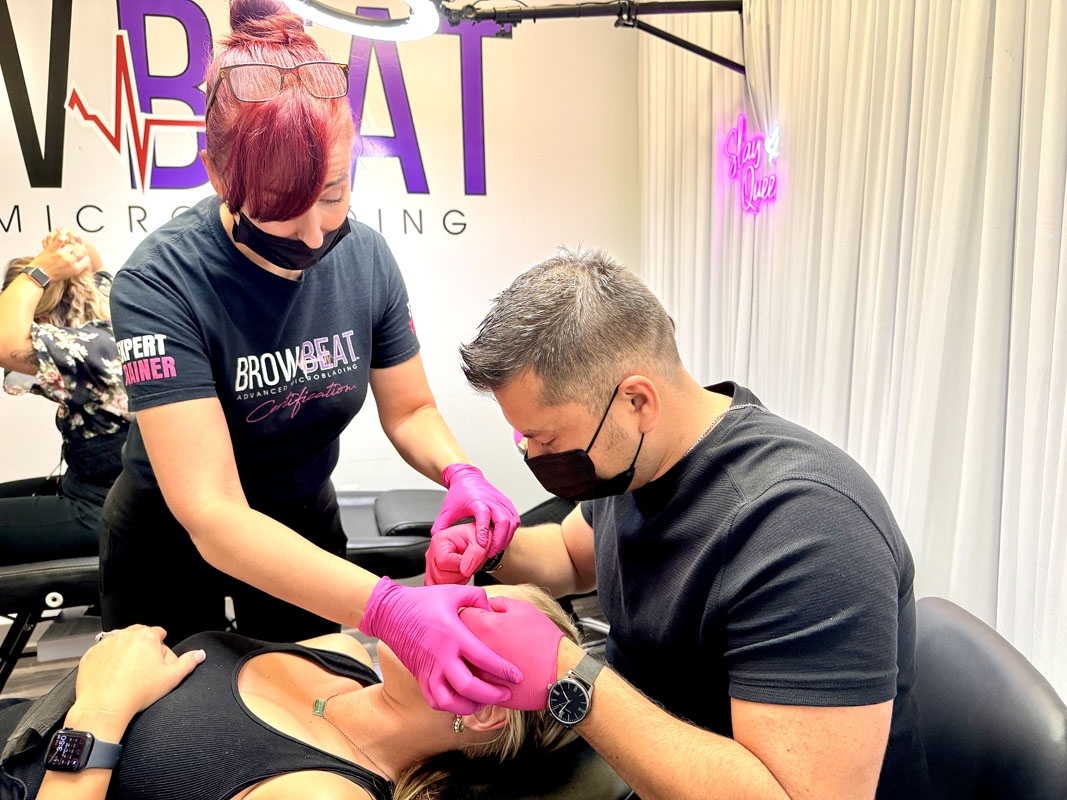
Mapping on live partners helps students adjust for facial asymmetry and bone structure variation. This stage strengthens real-world application of the mapping system often searched under microblading training classes near me.
technique
Refinement
Students receive direct correction on stroke spacing, depth control, and directional flow. Immediate feedback strengthens foundational technique before advancing further.


completion
Stage
By the final stage of microblading certification Texas, students demonstrate mapping, stroke sequencing control, and structured treatment flow within a full simulation format.
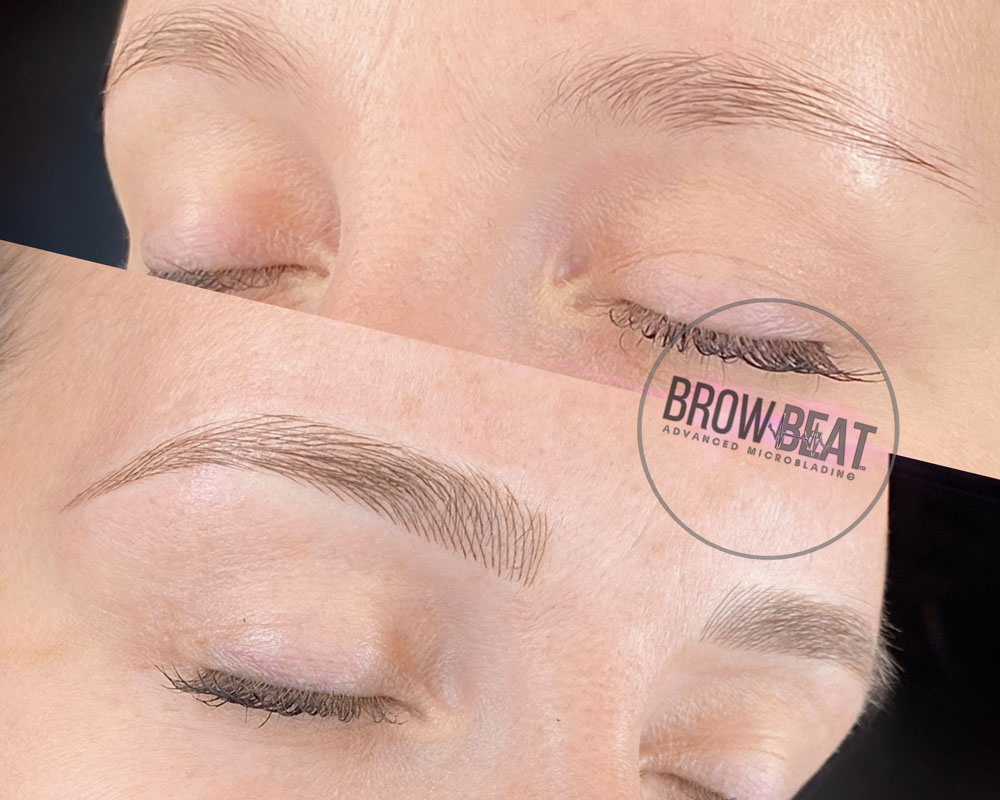
for fair
Skin
Microblading students learn to make controlled pigment and hair-stroke decisions for fair skin, where color choice, spacing and precision can strongly influence the finished brow. This microblading certification education connects pigment selection with the practical stroke skills developed throughout training.
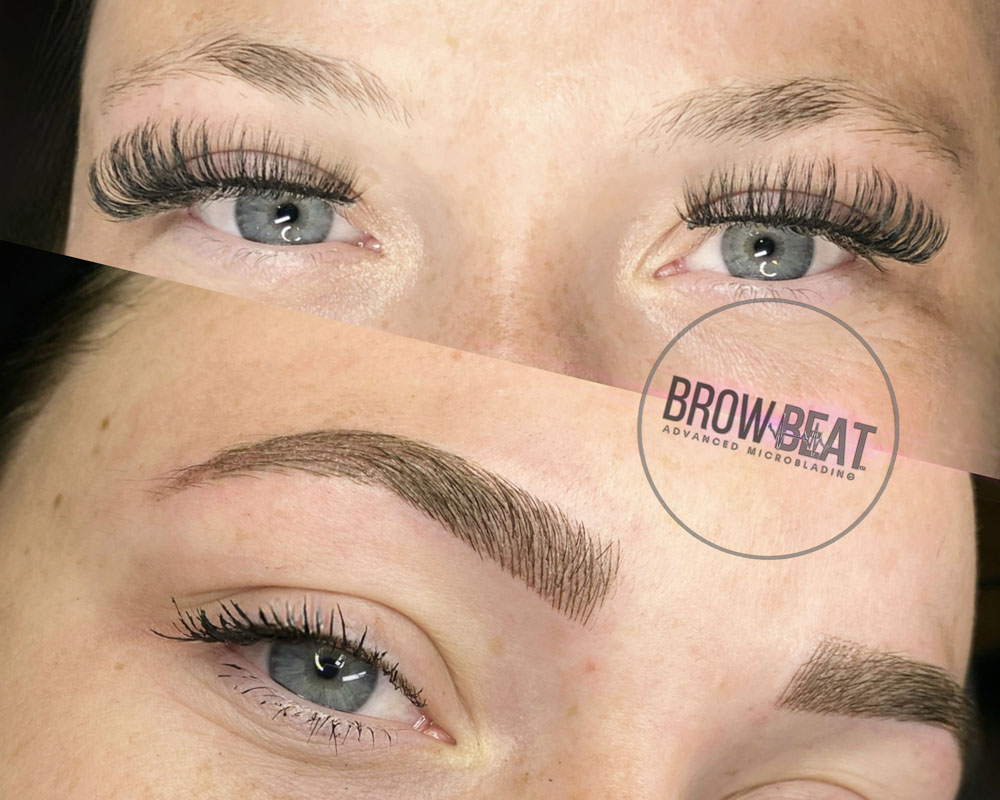
brunette
Clientele
By the final stage of microblading certification Texas, students demonstrate they understand the treatment flow of a microblading appointment.
Use
Pigment
Microblading training includes practical pigment education so students learn how brow colors are selected, matched and mixed rather than simply memorizing a pigment chart. During the microblading course, students develop a clearer understanding of how pigment decisions support natural-looking brow results.
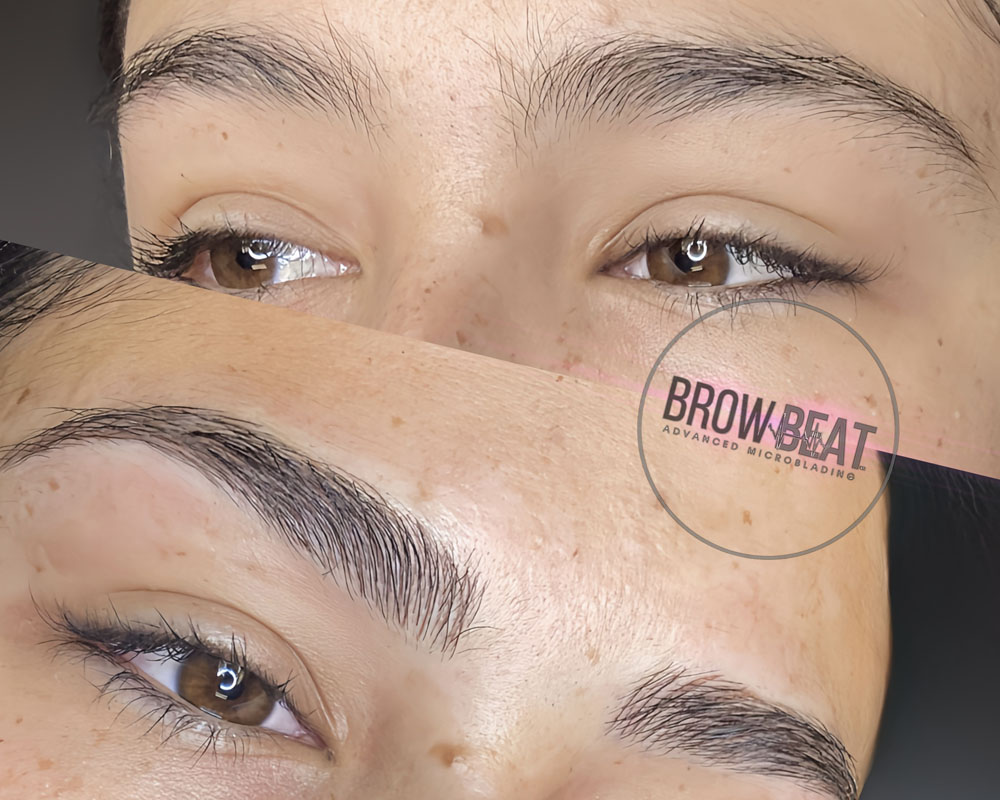

melanin
Skin
Microblading certification training teaches students to assess brow color, pigment selection and hair-stroke design across clients with higher melanin. This broader microblading education helps students develop more thoughtful visual judgment while learning the foundations of professional brow work.
Who Is Microblading Training For?
Microblading training is appropriate for students who want to learn a manual brow technique and understand how natural-looking hair-stroke patterns are created within a permanent makeup design.
Some students enroll as beginner microblading training students, others have had some online training experience. Others come from beauty, art or another hands-on field and already feel comfortable working with fine detail. Previous experience can make certain parts of the learning process feel more familiar, but it does not replace Microblading-specific education.
Students should expect to learn progressively. The first goal is not to imitate the speed or confidence of an experienced artist. It is to understand the process, develop more consistent control and learn how the individual parts of the technique work together.
Microblading requires patience, observation, hand-eye coordination and willingness to practice. Those qualities matter more than arriving with the expectation that the skill should feel effortless on the first day.
What Students Learn in Microblading Training
Microblading education brings together design, manual technique, practical exercises and professional process. Students need to understand what they are trying to create visually and how their physical movements affect the result.
Brow design provides the structure. Manual hair-stroke education develops the technical skill. Microblading pigment and color training help students understand that brow color decisions should be made thoughtfully. Needles and tool education gives context to the blades and hand tools used during practice. Treatment-process education connects the technical work to the larger professional appointment. These areas support one another.
A student who understands stroke technique without understanding the design can struggle with placement. A student who understands the design but lacks manual control still needs practice before the hand consistently produces what the eye intends. The training is designed to help those pieces begin working together rather than treating them as unrelated topics.
Many individuals searching for microblading training classes near me compare programs based on structure and depth. What separates strong education from surface-level instruction is repetition, correction, and clearly organized progression.
Brow Mapping Creates the Design Foundation
Microblading begins with planning the brow rather than immediately creating strokes. Brow mapping training for microblading students helps students establish the intended shape, placement and proportions before the manual technique begins.
Students learn to look at the face, identify useful reference points and think about where the brow should begin, develop and finish. The design should work with the person rather than being treated as a fixed stencil that looks identical on every face.
Mapping also gives the student a visual framework for stroke placement. Hair strokes need to belong inside a planned brow rather than simply being added wherever there appears to be space. That distinction is important because natural-looking Microblading depends on the relationship between the overall brow shape and the individual strokes used to build it.
Learning Manual Hair-Stroke Patterns
Individual strokes are only one part of Microblading. Students also need to understand how those strokes behave as a group.
Hair-stroke patterns involve direction, spacing, transition and flow. A natural-looking brow should not appear as a collection of identical lines placed side by side. The strokes need to work with the intended brow structure and create a coherent visual pattern.
Students begin developing this understanding through controlled exercises. They can concentrate on the pattern before adding every physical demand at once, then gradually move into practical work with the manual tool.
This progression allows students to recognize why a pattern works rather than memorizing a drawing without understanding the relationship between the strokes.

Stroke Direction, Spacing and Placement Matter
Small differences in Microblading strokes can change the appearance of the finished brow. Direction affects flow, spacing affects density and readability, and placement affects whether the strokes support the planned design.
Students therefore need to learn how to look at their own work critically. A stroke can be technically clean and still be poorly placed, while another can sit in the correct area but fail to follow the surrounding pattern.
Practical training helps students connect those visual observations with the hand movements that produced them. When an exercise does not look right, the useful question is not simply whether the student succeeded or failed. The useful question is what needs to change on the next attempt.
That approach turns practice into skill development rather than repetition for its own sake.
How Practical Microblading Skill Develops
BrowBeat uses a progressive practice structure so students can develop Microblading control without being asked to manage every variable at the beginning. The sequence moves from paper exercises to silicone practice and then to hands-on silicone brow-headband training, with each stage introducing another level of physical and visual demand.
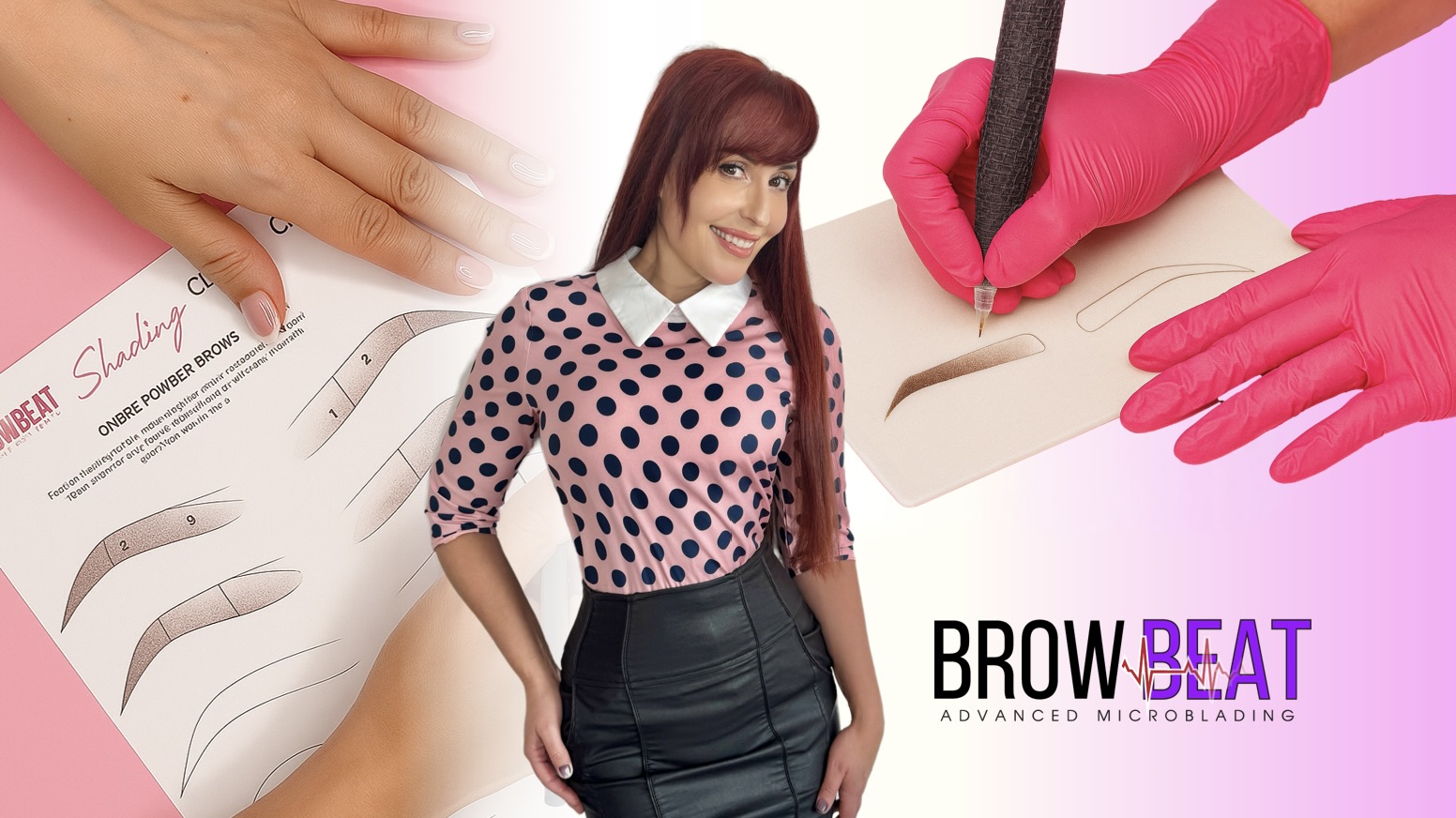
Paper helps students concentrate on stroke patterns, placement and design logic. Silicone introduces the manual tool and the physical relationship between hand movement and the line being created. The silicone headband places the practice brow in a more realistic facial position so students also have to think about body position, viewing angle and how they approach the brow.
This microblading practice method for beginner progression gives students room to repeat, receive feedback and make adjustments while the technique is still unfamiliar.
Paper Exercises Build Visual Understanding
Paper practice allows students to isolate important Microblading concepts before introducing the resistance and physical control of a practice surface. Students can focus on patterns, direction, spacing and the relationship between individual strokes while repeating the same design idea and beginning to notice where a pattern becomes inconsistent or visually disconnected.
This type of practice is valuable precisely because it reduces the number of variables the student has to manage at once. The student is not yet trying to coordinate the manual tool, pressure, angle and a curved working surface while simultaneously learning the visual pattern.
Once the visual idea becomes clearer, the student has a stronger reference point when the physical technique is added.
Silicone Practice Adds Manual Control
Silicone practice introduces the hand tool and gives students a controlled surface for developing manual technique. This is where the difference between understanding a stroke and physically creating it becomes obvious. A student can know exactly what the stroke should look like and still need repetition before the hand produces it consistently.
Silicone gives students space to work through that learning curve. They can examine their strokes, receive feedback and repeat the movement without pretending that one attempt should immediately look like the work of an experienced artist. Over time, the student begins connecting visual intention with hand control more reliably.
Silicone Brow Headbands Create More Realistic Positioning
BrowBeat’s silicone brow headbands move practice beyond the flat desk surface. The practice brow sits in a facial position on a curved surface, which changes how the student approaches the work.
The student now has to think about where they are sitting, how they view the brow, when they need to reposition themselves and how to keep the manual tool working comfortably around the treatment area. This helps students understand that technical control is connected to body position rather than existing only in the hand.
The headband exercise therefore adds a practical dimension that cannot be reproduced completely by flat paper or silicone sheets alone.
Why BrowBeat Does Not Use Student Live-Model Microblading Procedures
BrowBeat Certification does not place beginning students directly onto live-model Microblading procedures during training. The course uses paper, silicone and realistic brow-headband exercises so students can develop the fundamentals through repetition and instructor feedback before independent live-skin work.
This gives students room to make mistakes while they are still learning. A stroke that is too long, poorly placed or inconsistent on a practice surface becomes information about what to adjust next, and the student can repeat the exercise while developing greater control.
Partner work is used for mapping and design practice, but mapping another person is not the same thing as performing a live Microblading procedure.

Microblading Pigment and Color Foundations
Microblading also involves pigment and color decisions because the finished brow should make sense in relation to the person receiving the work. Students are introduced to the idea that pigment selection requires observation rather than simply choosing one familiar color repeatedly.
Skin color, brow characteristics and the intended result contribute to the decision. Students also need to understand that fresh pigment and healed pigment should not be assumed to look identical, and healed appearance becomes part of the artist’s color judgment as experience develops.
The broader brow curriculum contains shared pigment and color education, while Microblading students learn how those color foundations relate to manual hair-stroke work.
Microblading Uses Manual Tools, Not a PMU Shading Machine
The defining Microblading tool is manual. Students work with Microblading hand tools and blade configurations rather than learning machine shading as though it were part of the same technique.
The blade, hand position and manual movement affect the stroke. Students need to understand how the tool is held and controlled, how its angle relates to the work and how pressure influences what the hand is doing on the practice surface.
Those technical details become more meaningful once the student begins practicing because the tool is no longer an abstract piece of equipment. It becomes part of the relationship between the student’s hand and the stroke being created.
Machine-based techniques belong to different brow education. Keeping that distinction clear prevents Microblading training from drifting into a general PMU machine course.
Microblading, Ombre Powder Brows, Combo Brows and Nano Brows Are Different Techniques
Students entering permanent makeup often encounter several brow terms at once, and the differences can become confusing. Microblading, Ombre Powder Brows, Combo or Hybrid Brows and Nano Brows can all be used to create permanent brow enhancements, but they do not use the same technical method.
Microblading creates hair-like strokes manually with a Microblading hand tool.
Ombre Powder Brows use a PMU machine to create shading rather than manual hair strokes. Combo or Hybrid Brows combine hair strokes and machine shading within one finished brow. Nano Brows create hair-stroke effects with a PMU machine rather than a manual Microblading blade.
Understanding these distinctions helps students choose permanent makeup training and PMU education based on the skill they actually want to learn. Someone interested specifically in manual hair-stroke work is learning Microblading. Someone interested in machine shading is moving into Ombre Powder Brow education, while an artist interested in integrating strokes and shading is learning Combo or Hybrid Brows.
Nano is related to Microblading because both approaches can create hair-stroke effects, but the method of creating those strokes is different. Microblading remains the manual technique.
Microblading and Ombre Powder Brows Are Not the Same Skill
Microblading and Ombre Powder Brows can both create permanent brows, but the technical education is fundamentally different. Microblading students develop manual stroke control, while Ombre Powder Brow students develop machine-shading control. The visual result is also built differently: Microblading relies on individual hair-like strokes, while Ombre Powder Brows develop their appearance through shading.
For students who want to understand more than one approach to permanent brows, BrowBeat Certification’s 3-in-1 Brow Certification teaches Microblading, Ombre Powder Brows and Combo Brows as three separate techniques within one connected course. That broader course does not change what Microblading itself means. Microblading remains manual hair-stroke work.

Microblading and Combo Brows Are Not Interchangeable
Combo Brows begin with an important difference in intent. The finished technique intentionally combines hair strokes with machine shading.
Once shading is integrated with the hair strokes as part of the finished brow, the technique has moved beyond pure Microblading and into Combo or Hybrid Brow work. This distinction helps students understand why learning Microblading alone and learning Combo Brows are not identical educational goals.
Microblading develops the manual hair-stroke foundation. Combo education requires the artist to understand how hair strokes and shading work together as one finished technique.
Microblading and Nano Brows Create Hair Strokes in Different Ways
Nano Brows are particularly easy to confuse with Microblading because both techniques can be discussed in terms of fine, natural-looking hair strokes. The fundamental difference is how those strokes are created. Microblading strokes are created manually with a hand tool. Nano strokes are created with a PMU machine.
Understanding manual Microblading gives an artist useful hair-stroke foundations, including pattern, direction, spacing and placement. Machine-created Nano strokes require a different type of physical control because the artist is working with a powered PMU device rather than a manual blade.
BrowBeat covers Nano as an educational subject so students can understand the relationship between manual and machine-created hair strokes. BrowBeat does not offer a standalone Nano Brow certification course.
Natural-Looking Microblading Begins With Design and Stroke Logic
Natural-looking Microblading is not created simply by making every stroke as fine as possible. The overall brow needs to make visual sense, and each stroke needs to contribute to that design.
Direction, spacing, placement and flow work together. The strokes should support the intended brow rather than appearing as a collection of identical strokes placed beside one another.
This is why Microblading education develops the student’s ability to see and understand patterns rather than concentrating only on the physical act of making a stroke. A student who understands why and how microblading training works has a stronger foundation for improving their work than someone who is simply copying marks without understanding their placement.
What Happens When Previous Microblading Is Already Present?
Previous aged Microblading changes the situation. A student learning how to create new Microblading should not assume that the same process can simply be performed over old and aged strokes.
Existing pigment, previous color, density and the condition of the earlier work affect what an experienced artist needs to consider. BrowBeat’s foundational brow education teaches students to recognize previous permanent makeup as a reason to stop rather than treating it as an invitation to cover the work with additional strokes.
Working with previous aged PMU belongs to advanced Correction education. Learning to create new manual Microblading strokes does not automatically prepare an artist to assess or correct old work.
Microblading Training Is Different From PMU Correction Training
Microblading education begins with creating new manual hair-stroke work. PMU Correction begins with something already present in the skin, which changes the artist’s first question.
With new Microblading, the artist is thinking about design, stroke pattern, pigment and manual execution. With previous aged work, the artist first needs to assess what already exists and determine whether direct correction is appropriate.
Correction is advanced education and uses the PMU machine. It does not belong inside foundational Microblading training simply because the previous work happens to have been Microblading. Recognizing that a situation requires advanced assessment and being trained to perform that assessment are two different levels of knowledge.

In-Person Microblading Training in Dallas, Texas
BrowBeat Certification provides in-person Microblading education in Dallas, Texas for students who want to learn the manual hair-stroke technique within a structured classroom environment.
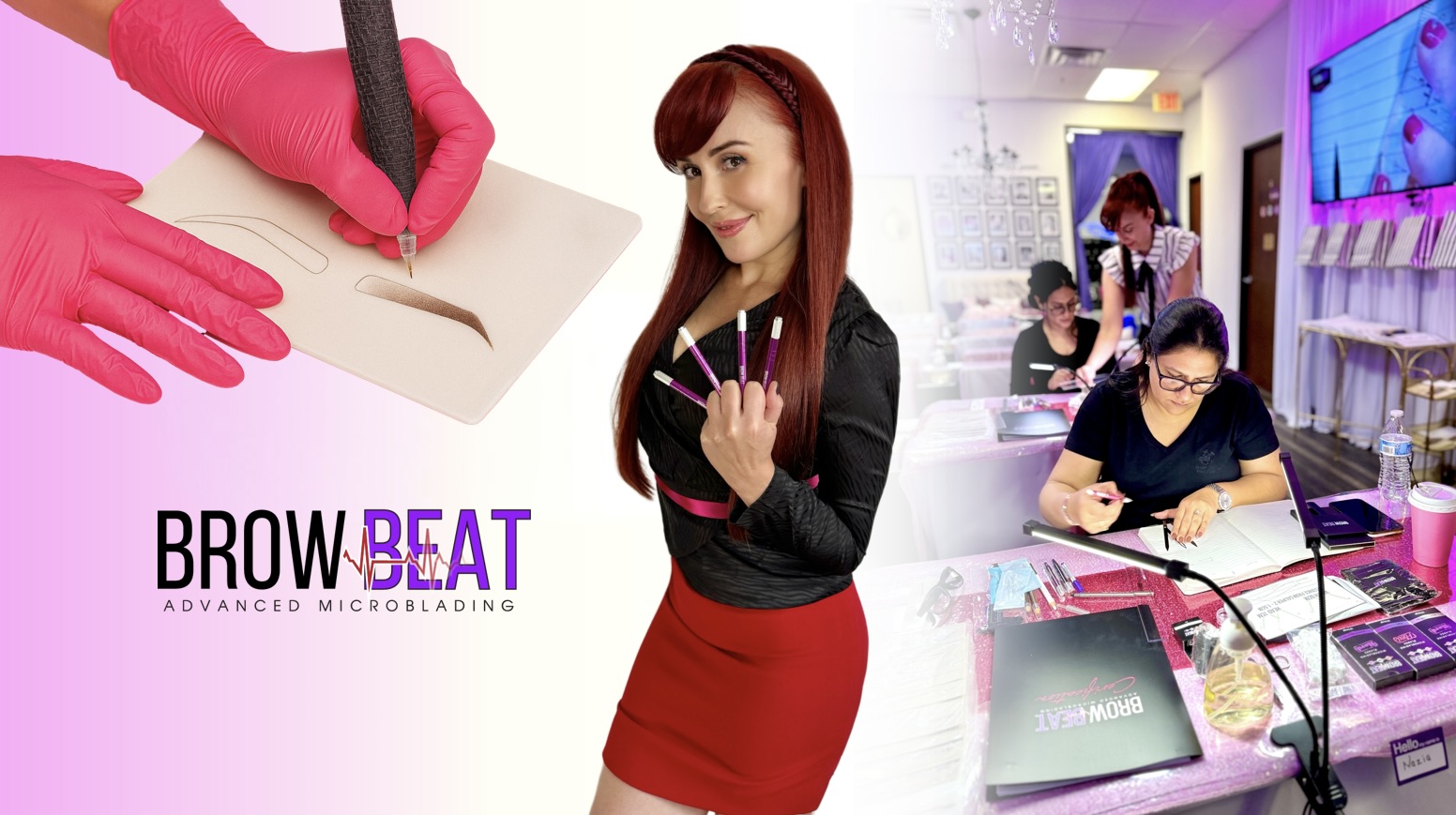
Students work through the visual and practical foundations of Microblading with instructors available to observe their exercises and provide feedback. Training moves from controlled paper work into silicone practice and then into realistic silicone brow-headband training, allowing students to add complexity as their understanding and manual control develop.
In-person education also gives students the opportunity to ask questions while they are working. When an instructor identifies an issue with positioning, stroke placement, hand control or another practical detail, the student can make an adjustment and repeat the exercise rather than continuing to practice the same mistake.
The purpose is not simply to attend a Microblading class in Dallas. The classroom time is used to begin building a manual skill that students continue strengthening through practice afterward.
Microblading Certification and Texas Licensing Are Different
BrowBeat Certification issues training certificates documenting the education students complete. Legal, licensing and microblading requirements in Texas are separate from the training certificate.
Texas regulates permanent cosmetics and Microblading through its tattoo-studio framework. The location where regulated permanent cosmetic procedures are performed must comply with the applicable state and local requirements.
A BrowBeat certificate documents Microblading education; it does not replace the Texas Tattoo Studio license associated with the regulated business location.
Students planning to work professionally need to understand both sides of the process: learning the technique and separately satisfying the current legal requirements for the location where they intend to perform it.
Microblading Course Pricing
The cost of Microblading education depends on the training being considered, what is included and whether the student is comparing focused Microblading education with broader multi-technique training.
BrowBeat keeps current tuition with the relevant course information rather than repeating prices throughout educational pages. This allows students to see the current price alongside the training they are actually considering.
Training cost should also be kept separate from later professional expenses such as Texas studio licensing, business setup and ongoing supplies. Those expenses are not the same thing as Microblading course cost and training pricing.
Microblading Training Gives Students a Foundation to Continue Practicing
A training course has a defined beginning and end, but developing a manual skill does not stop when the classroom portion finishes. Students leave with processes and exercises they can continue practicing so weaker areas can receive additional attention rather than being avoided.
Stroke patterns can be revisited, silicone work can be repeated and the physical positioning practiced on the silicone brow headband can continue becoming more familiar. This continued practice matters because Microblading consistency develops through repetition. The student is training both the eye and the hand: recognizing what the stroke should do and becoming increasingly capable of producing that intention manually.
The certificate documents completed education. Continued practice builds experience on top of that foundation.
Frequently Asked Questions About Microblading Certification
What is microblading certification?
Microblading certification refers to completing Microblading education through a training provider and receiving documentation associated with that training. BrowBeat Certification issues BrowBeat training certificates documenting the education students complete.
Is Microblading a manual or machine technique?
Microblading is a manual hair-stroke technique. The artist uses a Microblading hand tool and blade configuration rather than a PMU machine to create the strokes.
Can beginners learn Microblading?
Yes. BrowBeat’s foundational brow education teaches students without expecting them to arrive already able to Microblade. Beginners should expect to practice during and after training as they develop manual control and visual understanding.
Do I need previous beauty experience to learn Microblading?
Previous beauty or artistic experience can provide useful transferable skills, but it does not replace Microblading-specific education. Students learn the manual technique, brow design and practical process as part of their training.
What do students practice during Microblading training?
BrowBeat’s Microblading practice progression moves from paper exercises to silicone practice and then to hands-on silicone brow-headband training. Each stage adds another level of visual or physical demand.
Do Microblading students work on live models?
No. BrowBeat does not use student live-model PMU procedures during Microblading training. Partner work is used for mapping and design, while technical Microblading practice takes place through paper, silicone and realistic silicone headband exercises.
Does Microblading training include brow mapping?
Yes. Brow mapping provides the design structure for the manual hair-stroke work and helps students think about placement and proportions before technical execution begins.
Does Microblading use a PMU machine?
No. Microblading itself is performed manually. PMU machines are used for techniques such as Ombre Powder Brow shading and machine-created Nano strokes.
What is the difference between Microblading and Ombre Powder Brows?
Microblading creates manual hair-like strokes, while Ombre Powder Brows use a PMU machine to create shading. They are different techniques requiring different technical skills.
What is the difference between Microblading and Combo Brows?
Microblading is manual hair-stroke work. Combo or Hybrid Brows combine hair strokes with machine shading within one finished brow technique.
What is the difference between Microblading and Nano Brows?
Both techniques can create hair-stroke effects, but Microblading creates the strokes manually while Nano strokes are created with a PMU machine.
Does BrowBeat offer Nano Brow certification?
No. BrowBeat covers Nano as an educational topic explaining machine-created hair strokes and their relationship to Microblading, but it does not offer a standalone Nano certification course.
What tools are used for Microblading?
Microblading uses manual hand tools and blade configurations designed for creating hair-like strokes. Students also use mapping and practice materials as part of their education.
Is a Microblading certificate the same as a Texas license?
No. A BrowBeat training certificate documents BrowBeat education. Texas studio licensing and other legal requirements are separate from the training certificate.
Where can I learn Microblading in Dallas?
BrowBeat Certification provides in-person Microblading training in Dallas, Texas. Students learn the foundations of manual hair-stroke technique, brow mapping, stroke patterns, pigment selection and practical Microblading skills through structured instruction and hands-on practice. The training is designed for beginners as well as students looking to build a stronger foundation in professional Microblading.
Should I learn Microblading alone or take the 3-in-1 Brow Certification?
That depends on what you want to learn. Microblading focuses on the manual hair-stroke technique. BrowBeat’s 3-in-1 Brow Certification teaches Microblading, Ombre Powder Brows and Combo Brows as three separate brow techniques within one connected program.