HOW MICROBLADING TRAINING WORKS IN TEXAS
Microblading training works best when students are not asked to manage every part of the technique at once. BrowBeat Microblading Certification teaches the manual hair-stroke method in stages so students can first understand what they are trying to create, then begin developing the physical control needed to perform it more consistently.
The training experience moves between instruction, presentations, practical exercises and feedback. Students learn the logic behind the work, apply it in a controlled format, make adjustments and then progress to the next level of difficulty. The course is structured so the student is building on something they have already begun to understand rather than starting over with every new exercise.
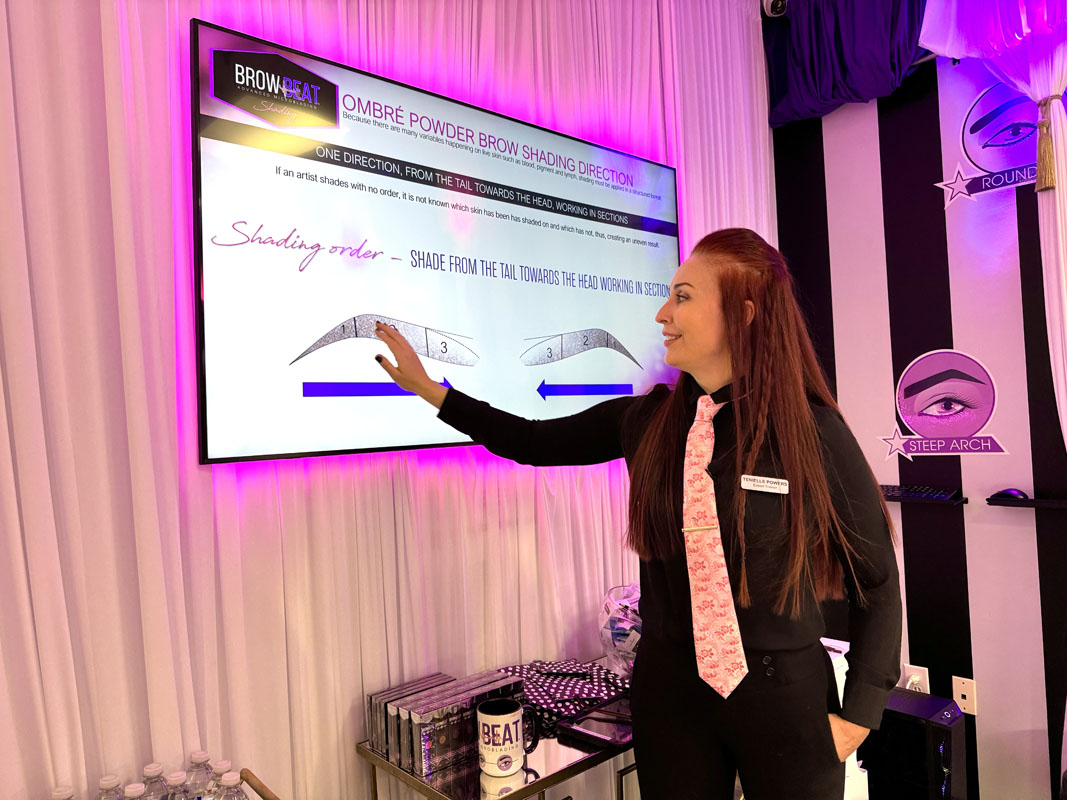
BrowBeat’s in-person training in Dallas, Texas also separates design practice from technical execution. Students learn the brow mapping training system and later map each other so they can apply the design process to a real face, while the Microblading treatment flow itself develops through paper exercises, silicone practice and silicone brow-headband training.
The goal is to create a clear learning sequence. Students are not simply shown a finished brow and expected to reproduce it. They are taught how the process develops, where each step fits and what they should be paying attention to as they practice.
What to Expect From In-Person Microblading Training
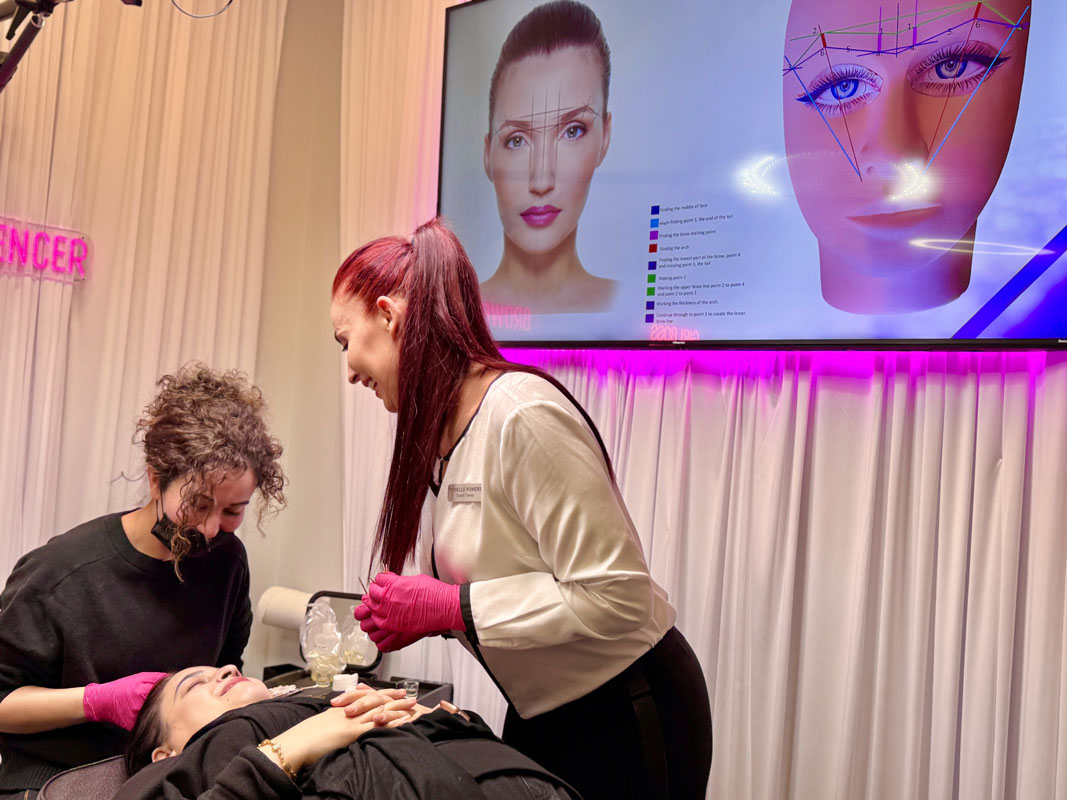
In-person Microblading training combines classroom explanation with practical work. Students are introduced to the concepts behind the technique, then given opportunities to apply those concepts while instructors are present to observe what is happening and help correct problems as they appear.
This matters because Microblading is a manual skill. Understanding an explanation does not automatically mean the hand can reproduce it immediately. Students need time to connect visual understanding with movement, and they benefit from being able to ask questions while they are actually working through the exercise
.
The training therefore moves back and forth between learning and application. A concept is explained, the student works with it, feedback is given and the student tries again with a clearer understanding of what needs to change.
Microblading Training Builds Skills in Stages
BrowBeat does not begin by placing every technical demand on the student at the same time. The course develops the skill progressively so students can concentrate on one layer of the process before adding another.
Early exercises help students understand the visual structure of the brow and the manual hair-stroke patterns they are trying to create. Once that becomes clearer, the practical work introduces more physical control. Later exercises add more realistic positioning and ask the student to work through the Microblading treatment flow in sequence.
This staged approach gives students a way to understand why an exercise comes next. Each part of the course has a purpose in the overall learning process rather than existing as an isolated activity.

foundation
Building
Microblading training begins in the classroom, where students learn skin anatomy, pigment behavior, facial symmetry, and safety standards. Understanding how microblading training works starts with knowledge before execution. This structured foundation explains what to expect in microblading training and ensures students understand why technique must be built on theory.
STRUCTUral
Planning
Before strokes are placed, students are taught structured brow mapping to establish proportion and balance. This phase reflects true microblading class structure, where design accuracy comes before pigment. Mapping ensures symmetry across different face shapes and builds confidence in placement before advancing into the hands-on portion of the microblading training process.

hand
Stability
Students practice stroke direction, spacing, and rhythm through repetition exercises designed to build muscle memory. What happens in microblading school is controlled pattern development — not copying shapes randomly. This stage of how microblading training works focuses on hand stability and depth awareness to create clean, natural-looking results.
memory
Training
Simulation exercises allow students to refine pressure control and stroke sequencing before working through full treatment structure. Learning how long microblading training takes involves building consistency over time. These exercises strengthen confidence and prevent rushed technique during real-world application.


Technique
Corrections
Direct feedback is a defining part of the microblading training process. Instructors evaluate spacing, depth, and stroke alignment in real time. This refinement stage demonstrates what to expect in microblading training when structured oversight strengthens technique rather than leaving students to troubleshoot alone.
workflow
Organization
Professional microblading training Dallas environments emphasize workflow organization and sanitation protocols before treatment begins. Students learn how preparation impacts efficiency and client safety. Understanding this structure reinforces how microblading training works beyond just stroke placement.


faCE
Application
Partner practice introduces facial variation and real structural differences. This phase bridges theory and practical execution, reinforcing what happens in microblading school when mapping and stroke control are applied to diverse brow shapes and bone structures.
sequencing
Walkthrough
Students complete a full treatment walkthrough from mapping through first-pass strokes and refinement. This stage makes the entire microblading training process visible, showing how each step connects into a structured system rather than isolated techniques.


fair
Skin
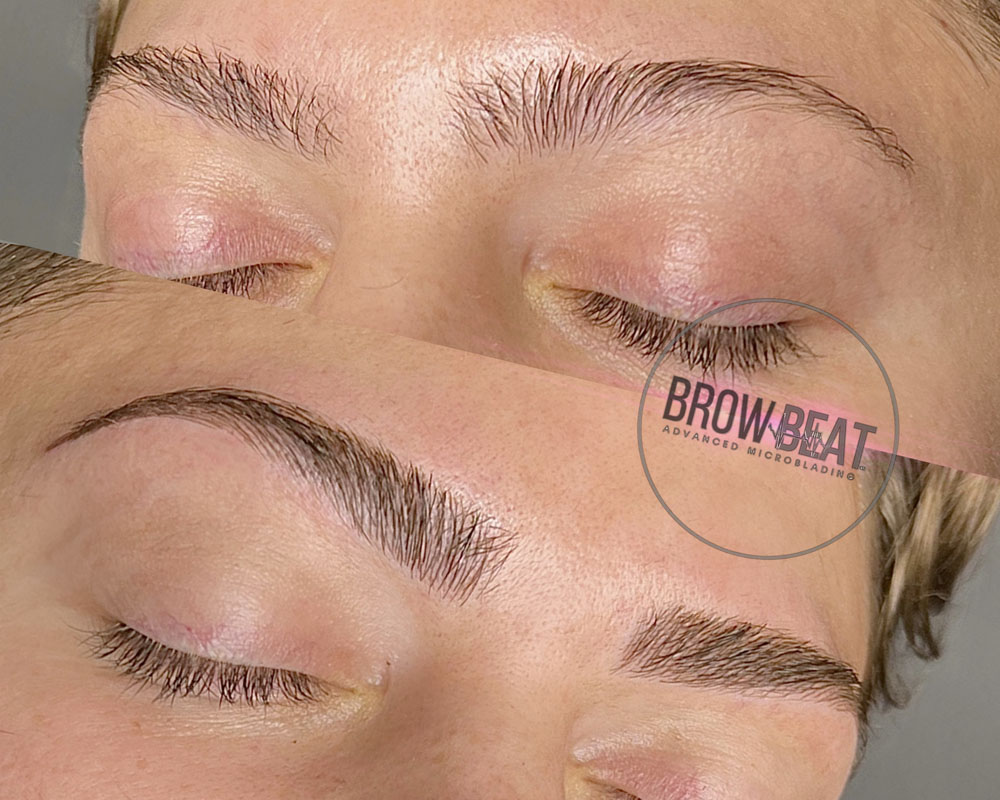
Understanding how microblading training works begins with adapting stroke placement to different undertones. On fair skin tones, students learn lighter pressure control to prevent oversaturation. This reflects the structured microblading training process taught in class, where stroke flow is intentional and progressive. What to expect in microblading training includes learning how pigment reacts differently across lighter skin types and adjusting technique accordingly.
brunette
Clientele
Students learn how microblading training works by applying strokes strategically. What happens in microblading school is not random filling — it is structured repetition and spacing exercises. The microblading training process emphasizes balanced mid-body density and clean transitions from head to tail.
darker
Hair
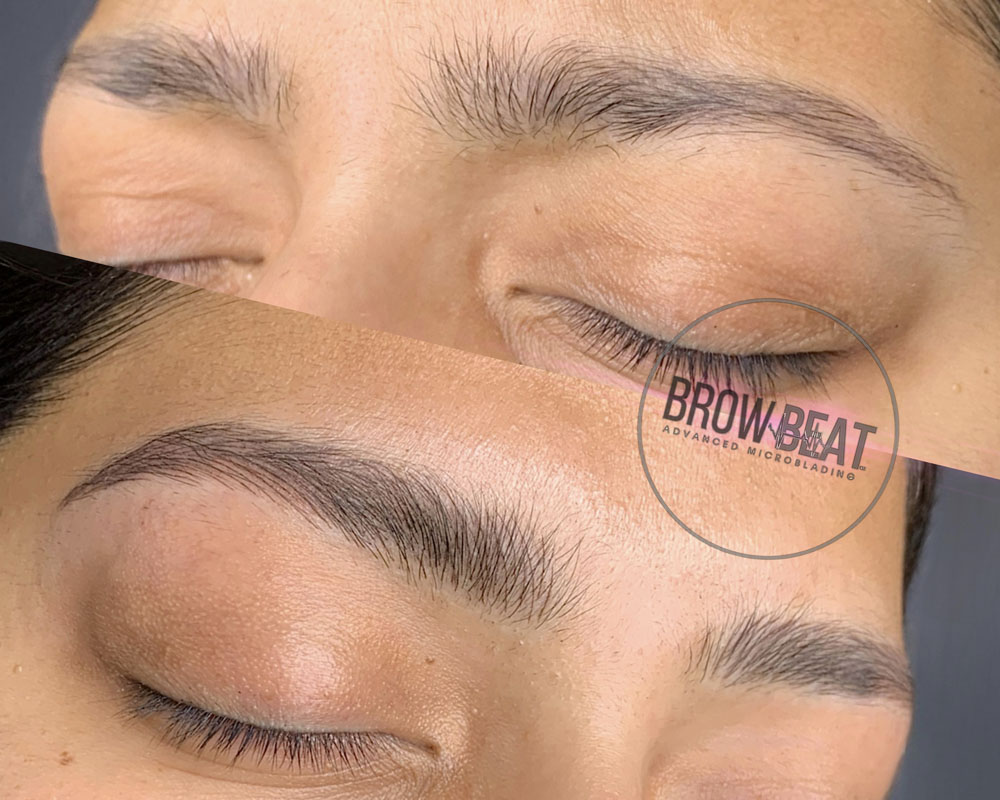
When working on darker hair, students are taught how microblading training works through controlled pigment depth and confident stroke structure. The microblading training process includes pressure calibration and spacing adjustments to maintain visibility.
melanin
Skin
Professional microblading training requires understanding how skin influence pigment behavior. The microblading class structure builds awareness of stroke visibility. Learning how microblading training works across different skin ensures consistency and balanced results regardless of complexion.
Understanding the Brow Before Using the Manual Tool
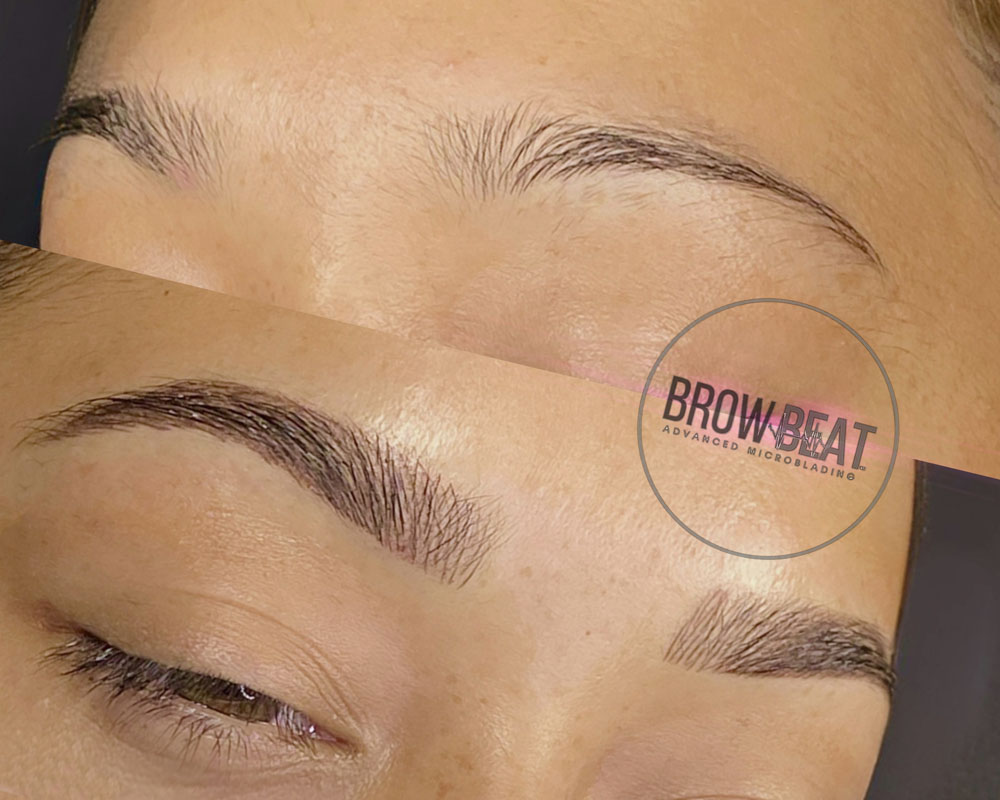
Before students concentrate on creating manual hair strokes, they need to understand the brow design those strokes will eventually support. Brow mapping gives the work a structure. Students learn BrowBeat’s step-by-step mapping system and the meaning of the reference points and mapping relationships used to construct the brow. The detailed formula belongs to the classroom lesson, but within the training process its role is clear: the student learns how to plan the brow before trying to execute the technical procedure.
This helps separate two different skills that beginners can easily blend together. Mapping decides where the brow should be and how the design is organized. Microblading execution determines how the manual hair strokes are created within that planned framework.
Learning Hair-Stroke Patterns Before Full Technical Execution
Microblading hair strokes need to work together as a pattern. Direction, spacing, placement and flow all affect whether the finished brow appears coherent. Students therefore begin by learning what the pattern should do before they are expected to manage every physical variable involved in the manual technique.
That gives them a visual reference for the practical work that follows. Once students understand the stroke logic, they can begin connecting it with the manual tool. The training then becomes less about copying strokes and more about learning how the hand produces the visual result they already understand.
Moving From Paper to Silicone
Paper exercises give students a controlled place to understand stroke patterns, placement and treatment sequence without adding the resistance and physical demands of a practice surface.
Once students are ready to move forward, silicone adds another level of learning. The student now has to coordinate the manual tool with the movement they are trying to create, which makes differences in control much easier to recognize.
The shift from paper to silicone is therefore not simply a change of material. It is a change in what the student is being asked to manage. The visual idea is already familiar, and the physical execution now becomes part of the exercise.
Moving From Silicone to the Brow Headband
After students have worked through the technique on silicone, the silicone brow headband introduces a more realistic working position. The brow is no longer lying flat on the desk. The student has to think about viewing angle, body position, how they approach the treatment area and how to move comfortably around a face-shaped surface.
This makes the headband exercise an important transition. Students are still working on silicone, but the environment begins to resemble the physical positioning of a real treatment much more closely.
The Brow Headband Exercise Completes the Day 1 Treatment Flow
The silicone brow-headband exercise is the final practical lesson of Day 1. By that stage, students have already been introduced to the Microblading practice methods for beginners steps they need to understand, worked through those ideas on paper and practiced the manual technique on silicone.
The headband then gives them an opportunity to work through the complete Microblading treatment flow in a more realistic position. Rather than practicing one isolated movement, students begin connecting the sequence of the procedure they have been learning throughout the day.
This helps the student see the difference between knowing individual parts of the technique and understanding how those parts fit together as a complete process.

Instructor Feedback Happens During Practical Work
Instructor feedback is part of the training process rather than something reserved for the end of the day. As students work through practical exercises, BrowBeat instructors circulate, observe what they are doing and help identify where an adjustment is needed. A student may understand what the stroke should look like but be unaware that their hand position, pressure, angle or working posture is contributing to the problem.
Receiving feedback while the exercise is happening allows the student to make the change and immediately try again. That is more useful than repeating the same mistake several times and only discovering it later.
Why Students Repeat Exercises During Training
Repetition is part of learning a manual skill because one successful attempt does not automatically create consistency. Students repeat exercises so they can begin recognizing patterns in their own work. One attempt may reveal a placement problem, another may show an issue with control and a later repetition may feel noticeably more stable because the student has already made several corrections.
The point of repetition is not to fill classroom time. It is to give the student enough opportunities to connect feedback with physical change.
How Brow Mapping Moves Onto a Real Face
Students first learn the mapping process in a controlled training environment and then progress to partner mapping, where they map each other. This changes the learning experience because real faces introduce individual proportions, natural brow growth, asymmetry and communication. The student has to apply the same structured mapping method while responding to features that are different from a mannequin.
The design process remains step by step, but the student now has to use that system while looking at an actual person rather than a standardized practice form.
Partner Mapping Is Separate From the Technical Procedure
Partner mapping is used to help students develop real-face design experience. It is not a Microblading procedure. The student works through the mapping system on a partner so they can practice assessing the natural brow, identifying reference points and constructing the design. The technical Microblading work remains on the confirmed paper, silicone and silicone brow-headband practice formats used during training.
Keeping those activities separate allows students to gain experience with real facial features without confusing design practice with performing the procedure itself.
Learning the Treatment Order
Microblading is easier to understand when students know where each part of the procedure belongs in the overall sequence. BrowBeat teaches treatment order so students can see how the design, preparation, technical steps and client-process responsibilities fit together. The procedure is not taught as a collection of disconnected tasks that students are expected to reorganize later on their own.
Understanding the treatment order also supports the brow-headband exercise because students can work through the complete sequence instead of practicing only isolated manual movements.

Client Education and Aftercare Are Part of the Training Experience
Students also learn that performing permanent makeup involves more than the technical procedure itself. Client communication and aftercare education are part of the professional process surrounding the treatment. BrowBeat includes this information within training so students begin understanding what clients need to know before and after the procedure, how expectations are discussed and why clear communication matters.
These subjects give the technical education professional context. The artist is learning not only how to create the brow but also how the procedure fits within a complete client experience.
Safety and Contamination-Prevention Concepts Are Included
Microblading training also includes safety and contamination-prevention education relevant to the treatment environment. Students are introduced to the importance of organized treatment setup, clean working practices and contamination awareness as part of understanding how professional PMU work is approached.
This classroom education supports the student’s professional understanding. Separate legal or regulatory compliance requirements are determined by the authorities that govern the location where the artist later works.

Students Learn to Recognize Previous or Aged PMU
Foundational Microblading training also teaches an important professional boundary: previous or aged permanent makeup changes the situation. If existing pigment is already present, the student should not assume that new Microblading can simply be added over it. Previous color, density and the condition of the existing work can require more advanced assessment.
At this level, the lesson is recognition. Students learn that previous or aged PMU is not a routine new-work situation and that they should not simply proceed as though the brow were untreated.
Actual PMU Correction is separate advanced education.
What a Microblading Training Day Feels Like
The rhythm of the training changes throughout the day, but the process remains connected. Students listen to an explanation, observe how the concept works, begin an exercise, receive feedback and then repeat or refine the work before moving forward.
Some periods require concentration on visual design. Others are more physical because the student is working with the manual tool. Mapping brings communication and facial assessment into the experience, while treatment-flow exercises ask students to think about how the individual skills fit together.
This variety helps prevent the training from becoming either a long lecture or a long period of unguided practice. Students move between understanding, doing and correcting.
Why In-Person Feedback Matters for a Manual Skill
Microblading is difficult to learn through information alone because the artist’s hand is part of the technique. A student can read about stroke direction, tool angle or positioning and still need help recognizing what their own hand is actually doing. In-person instruction gives the trainer an opportunity to observe that difference and help the student make a specific correction.
This is especially useful at the beginning, when the student has not yet developed enough experience to diagnose every problem independently.
What Happens After Classroom Training Ends
Completing classroom training gives the student a foundation, but continued practice remains important.
The exercises taught during class give students something structured to return to rather than leaving them to invent their own practice method afterward. They can repeat paper work, continue silicone exercises and revisit the treatment flow on the silicone brow headband as their control develops.
The certificate documents completed education. Skill continues developing through practice and experience after the course.
In-Person Microblading Education in Dallas, Texas
BrowBeat Certification teaches Microblading in person in Dallas, Texas within a structured classroom environment that combines instruction, practical exercises and ongoing feedback.
The student experience is progressive. Brow mapping provides the design foundation, paper exercises introduce the visual process, silicone adds manual execution and the silicone brow headband gives students a more realistic format for working through the complete Microblading treatment flow.
Students also partner map each other so they can apply the mapping system to real facial features while keeping the technical procedure on the confirmed practice formats used in class. The training is designed to help students understand how the skill develops, not simply to show them what the finished work looks like.
Frequently Asked Questions About How Microblading Training Works
What happens during Microblading training?
Students move through explanation, presentations, practical exercises and instructor feedback. BrowBeat teaches the skill progressively so students first understand the design and stroke concepts, then apply them through paper work, silicone practice, silicone brow-headband training and partner mapping.
How is Microblading taught at BrowBeat?
BrowBeat teaches Microblading in person through a structured sequence. Students learn the concepts behind the technique, apply them in controlled exercises, receive feedback and progressively work toward understanding the complete treatment flow rather than being expected to manage every part of the procedure immediately.
Is Microblading training hands-on?
Yes. Practical work is a substantial part of BrowBeat’s in-person Microblading education. Students work through paper exercises, silicone practice and silicone brow-headband training while instructors observe their work and provide feedback.
Do students practice Microblading on paper?
Yes. Paper exercises help students understand visual concepts such as stroke patterns, placement and treatment sequence before adding the physical demands of the manual Microblading tool.
Do students practice Microblading on silicone?
Yes. After paper exercises, students progress to silicone so they can begin connecting their visual understanding with manual tool control and physical execution.
What is the silicone brow headband used for?
The silicone brow headband places the practice brow in a more realistic facial position. Students use it to work through the Microblading treatment flow while also thinking about body position, viewing angle and how they approach the brow on a curved surface.
When do students use the silicone brow headband?
The brow-headband exercise is the final practical lesson of Day 1. By that point, students have already learned the relevant Microblading steps on paper and practiced the manual technique on silicone before bringing the treatment flow together on the headband.
Do students map each other during Microblading training?
Yes. Students partner map each other after learning the BrowBeat mapping system so they can apply the design process to real facial features, natural brow growth and individual proportions.
Does partner mapping include performing Microblading on another student?
No. Partner mapping is a design exercise. Students map each other, but the technical Microblading procedure is practiced on paper, silicone and the silicone brow headband.
How does instructor feedback work during training?
Instructors observe students while they are working through practical exercises and identify areas that need adjustment. This gives students the opportunity to correct issues with positioning, placement, hand control or another part of the exercise and then try again while the instruction is still fresh.
Why do students repeat Microblading exercises?
Repetition helps students develop consistency. One attempt can reveal a problem, instructor feedback can clarify what needs to change and the next attempt gives the student an opportunity to apply that adjustment..
Do students learn the complete Microblading treatment order?
Yes. BrowBeat teaches treatment order so students understand how the individual parts of the procedure fit together instead of learning isolated technical movements without a clear sequence.
Is client education included in Microblading training?
Yes. Students learn client-process information so they begin understanding how communication, expectations and the treatment experience fit around the technical work.
Does Microblading training cover aftercare?
Yes. Aftercare education is included as part of understanding the complete professional treatment process.
Does BrowBeat teach sanitation and contamination prevention?
Yes. BrowBeat includes safety and contamination-prevention education relevant to the PMU treatment environment. This training supports professional understanding but does not replace separate legal or regulatory requirements that apply where the artist later works.
Is Microblading training entirely classroom theory?
No. Classroom explanation is combined with practical exercises throughout the training. Students move between learning a concept, applying it, receiving feedback and refining their work.