MACHINE SHADING TRAINING FOR COMBO / HYBRID / 3D BROWS DALLAS
Machine shading in a Combo Brow is not a second Powder Brow lesson. By the time BrowBeat students reach the combined technique, they have already learned the PMU machine and the foundational shading skills used to build an Ombré Powder Brow.
The new challenge is applying those machine skills when fresh manual hair strokes are already part of the brow. The artist needs to watch where the strokes end, progressively bring shading into portions of those strokes and evaluate how much overlap is needed to create the intended transition. The strokes and shading are created during the same appointment as parts of one Combo Brow technique.
The machine technique is already learned. The new skill is knowing what you are looking at while you use it.
Combo Machine Shading Builds on Powder Brow Skills
BrowBeat does not ask students to learn a completely different machine-shading method when they reach Combo Brows. Students already understand the foundational machine technique from their Ombré Powder Brow education. They have learned how shading is progressively layered, how passes are counted and how the developing saturation needs to be evaluated.
Combo Brow Training takes that knowledge and changes its application.
Instead of building an entirely machine-shaded brow, the artist is now adding machine shading to a design that already contains fresh manual hair strokes.
The Machine Hasn’t Changed—Its Job in the Brow Has
This distinction simplifies Combo machine training. The PMU machine has not suddenly become a different tool. The student is not expected to forget the machine habits developed during Powder Brow training and replace them with an entirely new system. What changes is the machine’s job within the design.
In a pure Powder Brow, machine shading creates the brow’s shaded progression. In BrowBeat’s Combo technique training, the front hair-stroke component has already been established manually. The machine now needs to build fuller coverage through the body and tail while creating an intentional relationship with those strokes.
Combo Shading Is Different From Creating a Pure Powder Brow
A Powder Brow is a machine-shaded technique. The artist is responsible for building the shaded result throughout the design, including the progression toward the softer head.
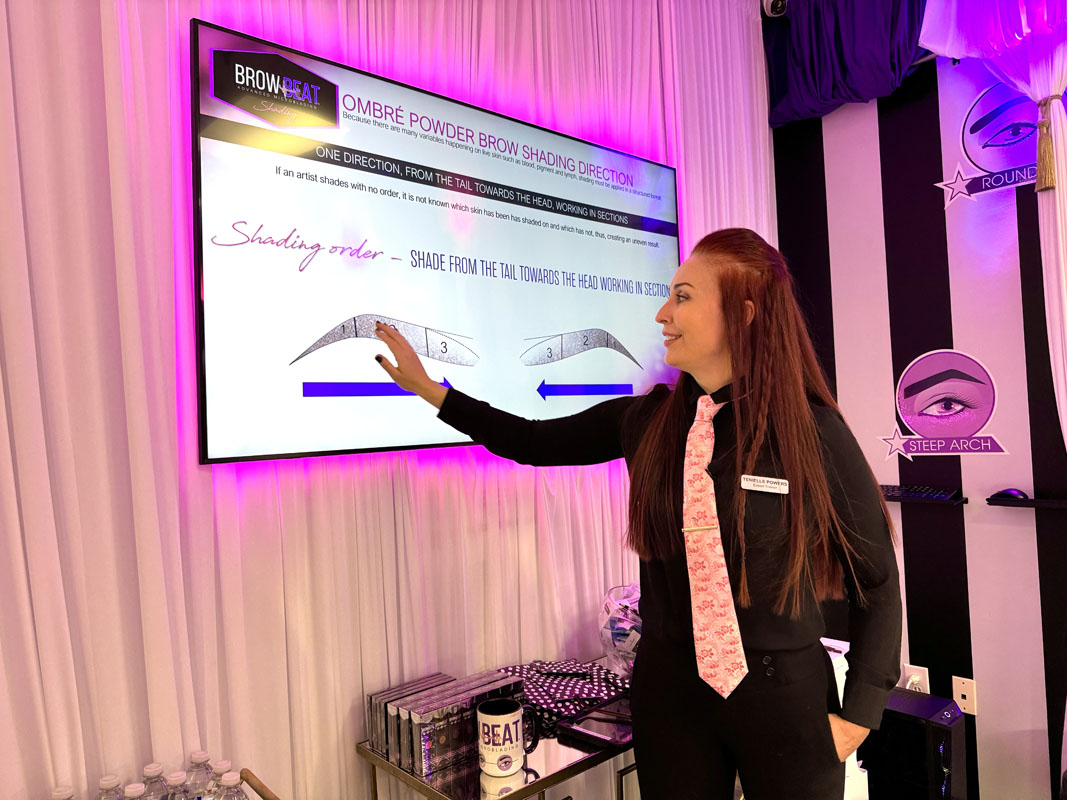
BrowBeat’s Combo method already has a hair-stroke head. That means the machine does not need to recreate the same front that would be constructed in a pure Powder Brow. Instead, shading begins from the tail and progresses toward the fresh stroke work.
As it reaches that transition area, the artist needs to think about something that does not exist in a pure Powder Brow: How much shading should overlap the hair strokes?
The Hair Strokes and Machine Shading Are Created in the Same Appointment
When BrowBeat discusses machine shading over hair strokes in Combo training, those strokes are fresh strokes created as part of the same Combo Brow appointment.
This is not machine shading over old Microblading. It is not work over previous healed PMU, and it is not a correction technique. The manual and machine components belong to the same new brow procedure.
That distinction matters because previous or healed permanent makeup requires a different type of assessment. Combo training is concerned with intentionally creating the stroke and shading relationship from the beginning.
Start the Machine-Shading Portion From the Tail
After the manual component has been established, BrowBeat students begin the machine-shading portion from the tail and work towards the head. This uses the directional understanding students already developed during Powder Brow training.
The difference becomes increasingly important as the machine approaches the stroke area. The artist is no longer simply progressing toward a soft machine-shaded head. They are progressing toward a head that already contains visible manual stroke information. The shading therefore needs to meet that information intentionally.
Use the Layering System You Already Know
BrowBeat students already understand that machine shading is built progressively. That same layering logic applies during Combo work. The artist does not need a completely separate pass system simply because hair strokes are present.
Students continue to work in an organized way, using counted passes to keep track of the shading they have performed while looking at what those passes are actually producing. The familiar system provides structure. The fresh hair strokes provide the new visual information the artist must respond to.

stroke
Control
Combo brow training begins with the hair-stroke foundation students will later combine with machine shading. Students first develop stroke direction, spacing, pattern flow, and manual control so the microblading portion of a combo, hybrid, or 3D brow can be integrated with shading intentionally.
brow
Techniques
Mapping serves as the structural bridge connecting strokes, shading, and hybrid execution. Students observe how consistent design principles support professional combo brow techniques. This stage reinforces that advanced combo brow training is rooted in shared structural planning.


hybrid
Design
Machine shading follows stroke education, allowing students to explore gradient building, pixel placement and transitions independently. Establishing shading confidence early strengthens advanced combo brow methods by giving learners the ability to layer softness and strokes without compromising texture or visual hierarchy.
decisions
Explained
Trainer-supported explanations provide immediate context during integration practice, allowing students to understand why placement and transition choices matter. This real-time guidance accelerates advanced hybrid brow skills development while reinforcing the intentional thinking behind professional combo brow techniques.


shading
Begins?
Instructor-led visual sessions explore one of the most important hybrid questions: placement boundaries between strokes and shading. These guided discussions strengthen advanced combo brow methods by helping students interpret visual hierarchy and understand how professional combo brow shading enhances, rather than overwhelms, hairstroke detail.
become
One
Advanced combo brow training culminates as strokes and shading merge into cohesive brow designs. Students experience how improving hybrid brow technique transforms independent competencies into unified artistic expression, illustrating the defining purpose of advanced combo brow methods within comprehensive brow education.


hybrid
Confidence
By reaching the integration stage, students move beyond single-technique proficiency toward multidimensional brow capability. Exposure to strokes, shading, and hybrid execution supports professional combo brow techniques readiness while positioning learners with the versatility.
one
Course
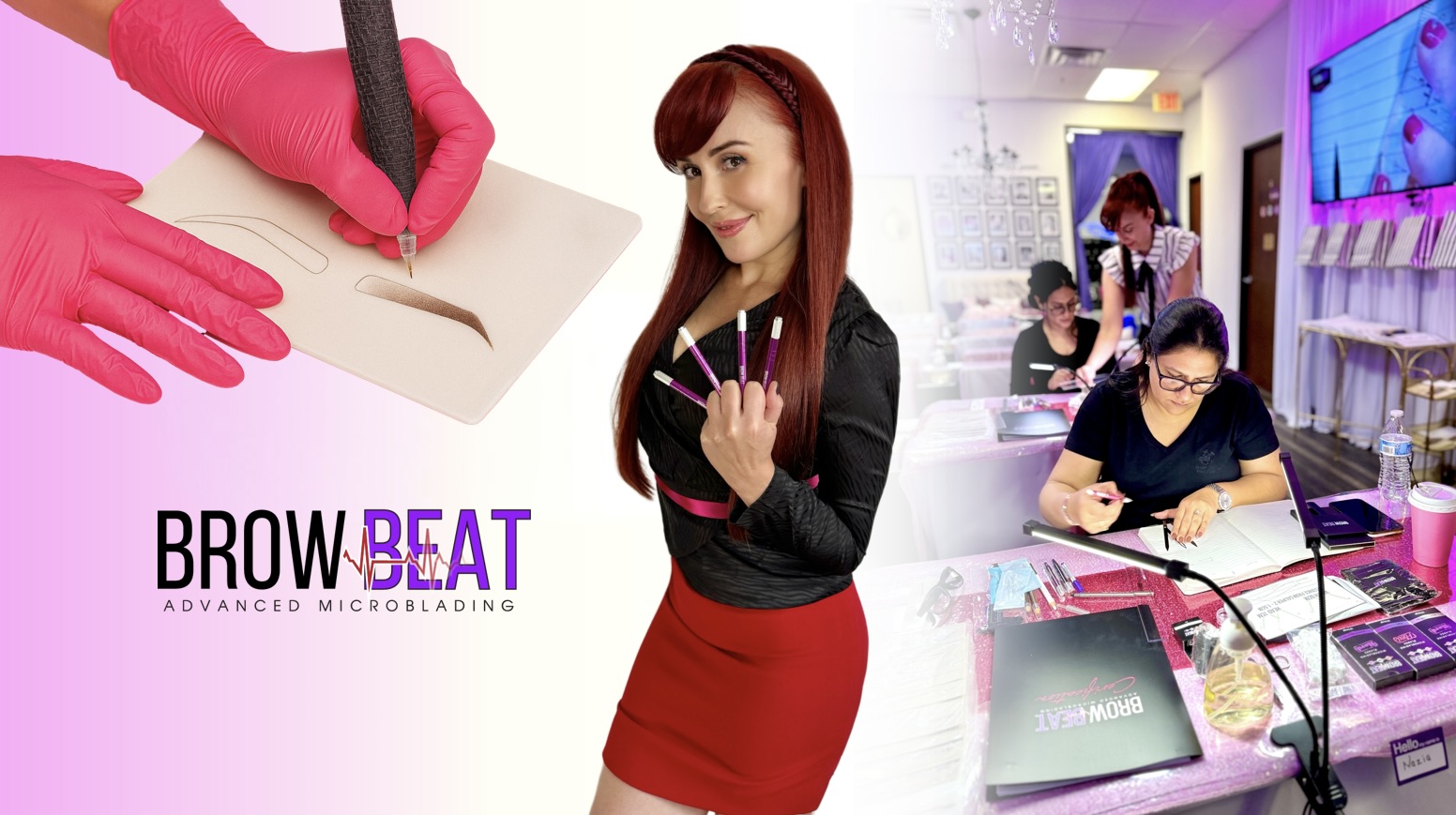
The progression brings all three brow applications together: microblading, ombré powder brow shading, and the combination of strokes and shading used for combo brows. Students build each skill separately before learning how machine shading can be adapted to create the added depth and dimension of combo, hybrid, and 3D brow designs.


hair
Strokes
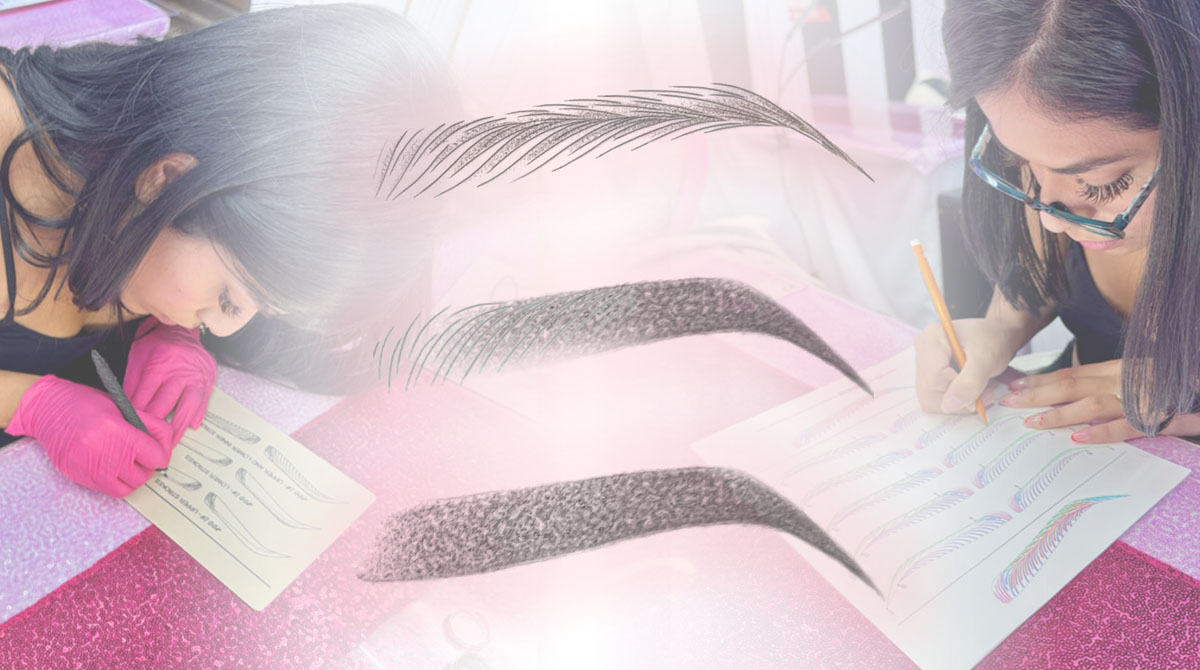
Students develop microblading hair strokes before the two techniques are combined. Learning consistent placement, spacing, and pattern flow creates the defined hair-like structure that machine shading will later support with added depth and density.
controlled
Shading
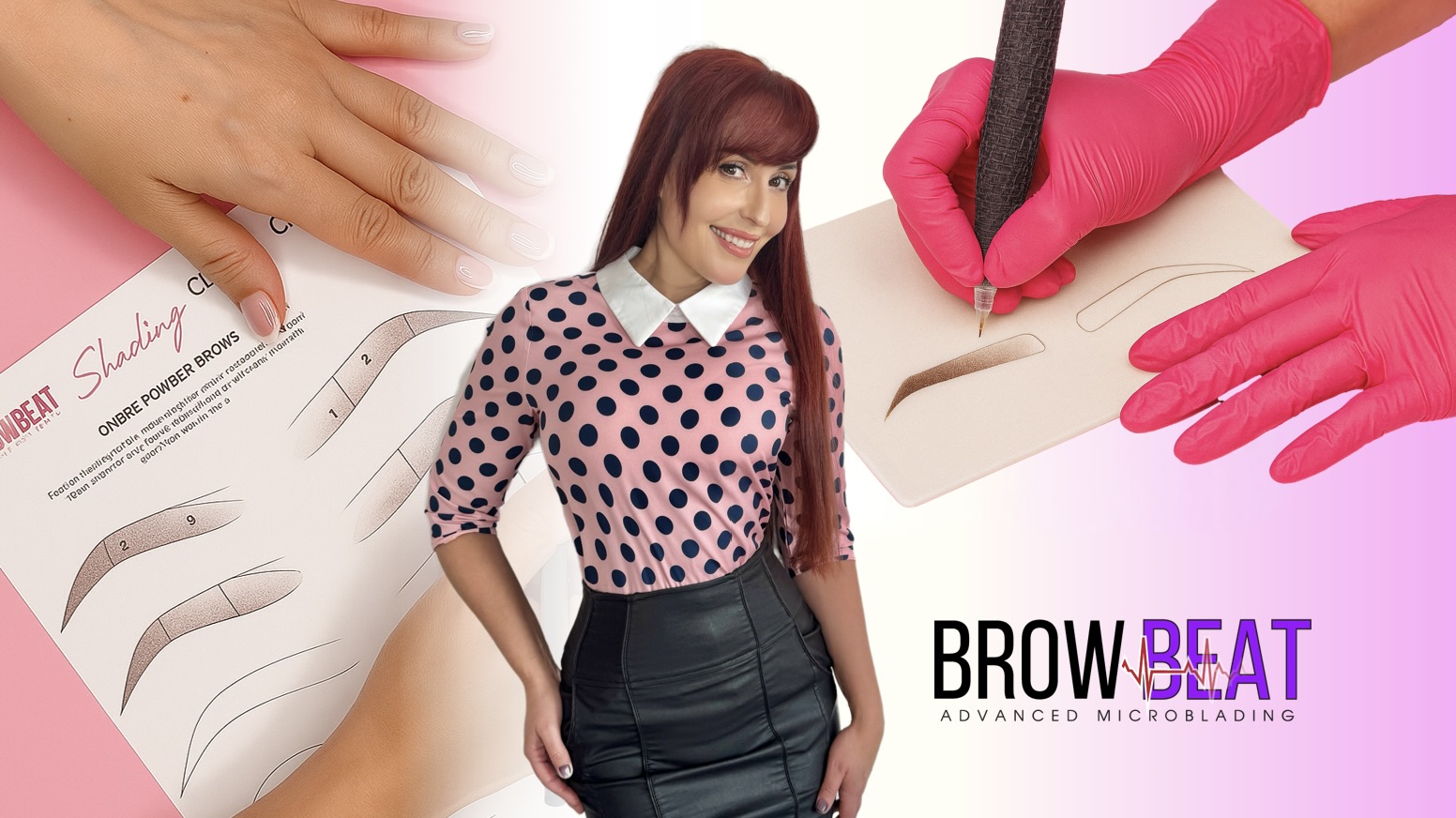
Machine shading introduces students to the second technique used to build combo, hybrid, and 3D brows. Students learn controlled pigment placement, soft transitions, and gradual density through ombré powder brow shading before applying those machine skills alongside microblading hair strokes.


dimensional
Brows
Once students have developed both hair-stroke and machine-shading skills, the techniques come together. Students learn how to place shading around and between microblading strokes to add depth and density while preserving visible hair-stroke texture—the foundation of combo, hybrid, and 3D brows.
You Are Not Creating Another Powder Brow Head
This is one of the easiest ways to understand the difference between pure Powder Brow shading and Combo machine shading.
In BrowBeat’s Combo workflow, the front of the brow already has a job. It contains the manual hair-stroke detail. If the artist simply continues building machine shading forward as though those strokes do not exist, the combined design can begin losing the distinction that made it a Combo Brow in the first place.
The artist therefore needs to recognize where the shading should become less dominant and how it should merge into the stroke work. This begins by understanding what a Combo / Hybrid / 3D Brow actually is.
Bring Machine Shading Toward the Fresh Hair Strokes
As the machine work progresses forward, the artist continually watches the relationship between shaded coverage and the fresh stroke pattern. BrowBeat does not teach students to stop the machine at an arbitrary invisible wall before the strokes.
The shading is intentionally brought into portions of the stroke work. The artist looks at where the strokes end and uses that information while deciding how far the shading needs to travel into them. This is an active visual decision during the machine application.
Machine Shading Can Intentionally Overlap the Ends of Fresh Strokes
Within BrowBeat’s Combo method, some overlap is intentional. The machine shading can come over the ends of selected fresh hair strokes. The objective is not to erase the stroke but to create an area where the two components begin visually merging.
The beginning of the stroke remains visible where BrowBeat wants the hair-stroke effect to read clearly. As that stroke travels toward the body, its end can become increasingly integrated with the shaded coverage. That overlap helps create the visual connection between the manual and machine portions of the finished brow.
Preserve the Visible Beginning of the Hair Stroke
The fact that shading can overlap a stroke does not mean the entire stroke should disappear beneath machine work. The visible beginning of the hair stroke still has a purpose. It establishes the hair-like detail that distinguishes the front of BrowBeat’s Combo design from a fully machine-shaded brow.
The artist therefore needs to keep evaluating what remains visible as the shading approaches. The goal is not simply to add more density. The goal is to build enough density to create the intended transition while preserving the part of the stroke effect that needs to remain readable.
Why the Stroke Ends and Shading Are Allowed to Merge
BrowBeat teaches the transition with the healed result in mind. Fresh machine shading does not represent exactly how the shading will ultimately appear after healing. Shading softens as it heals, which is one reason the artist needs to understand the intended relationship between the two components rather than judging only the immediate appearance.
The visible beginning of the stroke can remain readable while the end transitions into shaded coverage through the body. The objective is a connected healed result rather than a hard division between “the Microblading part” and “the shading part.”
How Much Shading Should Be Brought Into the Strokes?
There is not one amount that belongs in every Combo Brow. The client’s desired finished appearance matters. Some clients may want the hair-stroke effect to remain more visually prominent, while others may prefer a fuller shaded appearance.
The artist needs to understand that preference before deciding how dominant the machine-shaded component should become.
At the same time, there is a practical distinction between Combo Brows and Powder Brows. If machine shading becomes so dominant that the stroke component contributes very little to the finished appearance, the artist needs to consider whether the desired result is moving closer to a Powder Brow than a meaningful combination of the two techniques.

Client Preference Helps Determine the Shading Endpoint
Technical execution does not exist separately from the desired result. A client who values visible hair-stroke detail may call for a different balance from a client who prefers fuller coverage.
BrowBeat teaches students to listen to that preference and then use their technical understanding to interpret it within the Combo design. The client does not need to dictate a pass count. The artist translates the desired appearance into technical decisions about how much shaded coverage is appropriate.
Pass Counting Gives the Artist a Framework
BrowBeat’s existing Powder Brow education gives students a structured way to keep track of machine shading. That knowledge remains useful in Combo work.
The artist knows approximately how much machine work has been performed because the passes are counted rather than applied without structure. That information helps the artist make sense of the developing saturation. But the number is not the finished decision.
Count the Passes, Then Evaluate the Integration
A pass count tells the artist how much work has been performed. It does not automatically tell the artist whether the strokes and shading are sufficiently integrated.
For example, a very small amount of shading may not create enough visual relationship between the fuller body and the stroke-transition area. The artist therefore uses prior knowledge of layering and pass counts while also looking at the brow itself.
How much shading is present? Where do the strokes end? Is the shading reaching those ends? Does the transition still look divided? Are the strokes becoming overwhelmed? Those observations guide the next decision.
Combo Machine Shading Requires Attention and Adjustment
Machine shading in a combined brow is not something the artist performs without looking up from the formula. The formula creates organization, but the artist still needs to pay attention to what is developing.
As each layer is added, the relationship between the fresh strokes and the shaded area becomes clearer. The artist can then adjust how far the shading is brought towards the head and how much additional density is appropriate.
This is where BrowBeat’s broader philosophy of understanding becomes important. Students know what they are trying to create, so they have a reason for the adjustments they make.

Control Density as You Approach the Stroke Area
The shading through the fuller body of the brow and the shading entering the stroke area do not need to be treated as though they have identical visual jobs. As the machine work approaches the hair-stroke component, the artist becomes increasingly concerned with integration.
The artist needs enough machine shading for the stroke ends to belong to the fuller brow, but enough restraint for the visible hair-stroke effect to remain meaningful. That balance is specific to Combo machine shading.
More Shading Is Not Automatically Better
The fact that the machine can continue adding density does not mean the artist should continue indefinitely. Every additional layer changes the relationship between the shaded coverage and the hair strokes.
At some point, adding more shading can begin reducing the visual importance of the stroke component. The artist therefore needs to evaluate the combined result rather than treating maximum saturation as the objective.
Too Little Shading Can Also Weaken the Transition
Restraint does not mean avoiding the stroke area completely. If the artist applies very little shading near the transition, the manual and machine components may remain visually separated instead of merging into one design.
BrowBeat’s approach is to use enough controlled overlap to establish the relationship while continually evaluating how the developing density affects the visible strokes. The artist is balancing two risks: too little integration and too much shading.
Keep the Hair-Stroke Component Meaningful
A Combo Brow should still have a reason for containing manual hair strokes. If those strokes are completely overwhelmed by machine shading, the visual distinction between the combined technique and a Powder Brow can become less meaningful.
BrowBeat therefore teaches students to evaluate the hair-stroke effect while they shade, not only after the machine portion is complete. The strokes are part of the design information the artist uses throughout the machine application.
Do Not Treat the Hair Strokes as Decoration
In BrowBeat’s method, the strokes are not simply a few lines added to the front of an otherwise unrelated Powder Brow. They establish the front detail and participate in the transition into the shaded body.
The machine shading then responds to those strokes by overlapping their ends where the two components are intended to merge. That relationship gives the stroke component a structural role within the Combo design.
Pixel Shading Still Serves the Combined Design
Students bring their existing pixel-shading knowledge into Combo Brows. The machine movement is not being reinvented simply because manual strokes are present. Instead, students apply the machine skills they have already learned within a more complex visual environment.
The important question becomes where those pixels are being built and what they are doing to the relationship between the stroke and shaded portions. Machine technique serves the combined design rather than becoming the design by itself.

BrowBeat Maintains the 90-Degree Machine Position
BrowBeat students continue using the 90-degree machine position taught during their Powder Brow education. Combo training does not introduce a new machine angle simply because the shading is approaching fresh hair strokes.
The physical foundation remains familiar so the student can concentrate on the new problem: controlling where and how much shading is being integrated with the stroke work.
Use the Whip-Shading Movement You Already Learned
The same principle applies to BrowBeat’s wrist-driven whip-shading movement. Students have already learned the movement used to create the pixelated machine-shading effect. Combo does not require them to abandon that foundation.
Instead, they use that familiar machine movement while paying closer attention to placement, overlap and developing density around the fresh strokes. The execution stays grounded in previously learned machine control while the visual decision-making becomes Combo-specific.
Machine Consistency Supports a Better Transition
The stroke-to-shading transition becomes harder to evaluate if the student’s machine technique changes unpredictably as they approach the strokes. Maintaining the machine fundamentals they already learned gives the student a more consistent physical foundation.
That allows them to concentrate on the variable that actually needs to change: How much shaded coverage is being brought into the combined area. Consistency in execution makes visual decision-making easier.
Evaluate the Combo Brow, Not the Shading in Isolation
One of the most important shifts in Combo machine work is learning not to judge the shading as though it were a standalone Powder Brow.
The machine-shaded portion may look technically controlled by itself, but the more important question is whether it belongs with the stroke portion.
The artist needs to step back mentally and evaluate the complete combined design.
Are the strokes still meaningful? Is the body sufficiently full? Does the overlap connect the components? Does the result match the client’s desired balance between visible stroke detail and shaded coverage? Those questions are more useful than asking whether the machine shading looks impressive on its own.
What If the Shading Starts Overpowering the Strokes?
If the fresh stroke detail is becoming less visible than intended, the artist needs to recognize that additional machine shading will continue changing the balance.
The answer is not automatically another pass.
The artist evaluates the client’s desired result, the visible stroke information and the density already present before deciding whether more machine work is appropriate.
This is one reason BrowBeat teaches progressive layering rather than trying to create all of the saturation in one pass.
What If the Stroke and Shading Areas Still Look Too Separate?
The opposite problem can also occur. If the stroke component appears to stop and the shaded component appears to begin with little visual relationship between them, the artist evaluates the transition area.
The question becomes whether enough controlled shading has been brought into the ends of the strokes to create the intended overlap. Because the student understands the purpose of that overlap, they can evaluate the developing work rather than simply adding machine shading everywhere.

Why Combo Machine Training Is Application
BrowBeat’s Combo machine education is intentionally focused because students have already spent substantial time learning the PMU machine during the Powder Brow portion of the three-day certification.
There is no reason to pretend the machine becomes completely new simply because the brow now contains hair strokes. The deeper lesson is application.
Students take machine skills they already understand and use them in a design where fresh manual strokes create new visual information. They count, layer, observe and adjust while deciding how much machine shading should merge into that stroke work.
That is what makes the machine component specifically Combo Brow education.
Machine Shading Within BrowBeat’s Combo Brow Training
Combo/Hybrid/3D Brow education is taught within BrowBeat’s three-day brow certification rather than as a separate standalone course. Students reach this application after learning the foundational Microblading and Ombré Powder Brow skills that the combined technique requires.
The machine portion therefore builds on knowledge they already have: controlled shading, progressive layering, pass awareness and visual evaluation. The new responsibility is integrating that shading with fresh hair strokes created during the same appointment so the two components can heal as one connected brow.
Use the Machine Skills You Know, Then Read the Brow in Front of You
Combo machine shading does not require BrowBeat students to start their machine education over again. They already know the foundational machine technique. They understand BrowBeat’s 90-degree position, wrist-driven whip shading, progressive layering, counted passes and the need to evaluate developing saturation.
Combo gives those skills a different job.
The artist begins the machine-shading portion from the tail and layers towards the head. As the shading approaches the fresh hair-stroke component, the artist pays attention to where those strokes end and intentionally brings machine shading over selected stroke ends.
The amount is not decided by a single universal pass count. The artist uses the structure of counted passes together with what the developing brow is showing them and what the client wants from the finished result.
Too little integration can leave strokes and shading looking separate. Too much shading can reduce the visual purpose of the strokes. The skill is understanding that relationship and adjusting the machine application accordingly.
The strokes and shading are created during the same appointment, with the intention that the visible stroke detail and fuller shaded coverage will soften and merge into one connected healed Combo Brow.
Frequently Asked Questions About Machine Shading for Combo Brows
Is Combo Brow machine shading different from Powder Brow machine shading?
The foundational machine skills are the same skills BrowBeat students learn during Powder Brow training. What changes is how those skills are applied. In a Combo Brow, the artist is shading within a design that already contains fresh manual hair strokes, so the relationship between the shading and those strokes becomes part of the decision-making.
Do students learn a new PMU machine technique for Combo Brows?
No. BrowBeat builds on the PMU machine foundation students have already learned. Combo training focuses on applying that existing machine control within a combined hair-stroke and shading design.
Are the hair strokes fresh when Combo Brow shading is performed?
Yes. In BrowBeat’s Combo technique, the manual hair strokes and machine shading are created during the same appointment as parts of one new Combo Brow.
Is shading over old Microblading considered Combo Brow technique?
No. Combo training concerns fresh hair strokes and machine shading created as one new technique during the same appointment. Machine work involving previous or healed Microblading belongs to PMU Correction assessment and education.
Where does machine shading begin in BrowBeat's Combo technique?
The machine-shading portion begins from the tail and progresses towards the head using the layering knowledge students developed during Powder Brow training.
Does a Combo Brow need a machine-shaded head?
Not in BrowBeat’s Combo method. The head has already been established with manual hair strokes, so the artist is not constructing the same machine-shaded head used in a pure Powder Brow.
Does BrowBeat shade over the fresh hair strokes?
Yes. Machine shading is intentionally brought over the ends of selected fresh strokes where the stroke and shaded components are intended to merge.
Why does the shading go over the ends of the strokes?
The overlap helps create the transition between visible hair-stroke detail and fuller shaded coverage. The beginning of the stroke remains readable while its end can visually merge into the shaded body as the work heals.
Does the machine shading cover the entire hair stroke?
Not in BrowBeat’s method. The goal is to preserve meaningful visible stroke detail while allowing shading to overlap the ends of selected strokes in the transition area.
How much shading should overlap the hair strokes?
There is no single amount for every brow. The artist considers the client’s desired appearance, the amount of visible stroke detail, the developing shaded coverage and how effectively the two components are integrating.
Does the client influence how much shading is used?
Yes. A client who wants more visible hair-stroke detail may call for a different balance from someone who prefers a fuller shaded appearance. The artist uses that preference alongside technical judgment when determining the shading endpoint.
Can you add a lot of shading and still call it a Combo Brow?
The balance matters. If shading becomes so dominant that the hair-stroke component contributes very little to the intended finished appearance, the desired result may be moving closer to a Powder Brow. BrowBeat teaches students to preserve a meaningful relationship between the two components.
How do pass counts work in Combo Brow shading?
Students use the structured pass-counting knowledge they already learned during Powder Brow education. The count helps track how much machine work has been performed, while visual evaluation determines how well the shading and strokes are integrating.
Is there a required number of passes for Combo Brow shading?
No. Passes provide structure rather than a universal finishing number. The artist evaluates the developing density, the visible strokes and the intended result while deciding whether additional shading is appropriate.
Can too little shading make a Combo Brow look disconnected?
It can. If insufficient shading reaches the stroke-transition area, the manual and machine portions can remain visually separated. BrowBeat teaches students to evaluate whether enough controlled overlap has been created to connect them.
Can too much shading overpower the hair strokes?
Yes. Additional machine shading changes the balance between the two components. The artist needs to evaluate whether the intended hair-stroke detail remains meaningful before continuing to add density.
Does Combo Brow shading heal softer?
Machine shading softens as it heals, so BrowBeat teaches students to consider the intended healed relationship between the stroke detail and shaded coverage rather than judging the transition only by its fresh appearance. Individual healed results can vary.
Does BrowBeat promise that shading fades by an exact percentage?
No. BrowBeat teaches students that machine shading will soften through healing, but an exact percentage should not be treated as a guaranteed outcome for every client.
What machine angle does BrowBeat use for Combo Brow shading?
BrowBeat students continue using the 90-degree machine position taught during Powder Brow training. The presence of fresh hair strokes does not require a new machine angle.
Does the whip-shading movement change for Combo Brows?
BrowBeat students apply the wrist-driven whip-shading foundation they already learned. The Combo-specific challenge is controlling where that shading is applied and evaluating its relationship with the fresh hair strokes.
Do Combo students relearn machine speed, pressure and depth?
The foundational machine mechanics are taught during BrowBeat’s Powder Brow education. Combo training applies those established skills to the combined technique rather than duplicating the complete machine lesson.
How do you preserve hair-stroke definition while machine shading?
The artist continually evaluates the visible stroke information as shading is layered forward. BrowBeat’s objective is to overlap the intended stroke ends enough to create integration without allowing the machine-shaded component to eliminate the purpose of the visible hair-stroke detail.
What should an artist look at while shading a Combo Brow?
The artist looks at the complete developing relationship: where the fresh strokes end, how much shading has been built, whether the overlap is connecting the components, whether the stroke detail remains meaningful and whether the result is moving toward the client’s desired balance.
Is Combo machine shading mainly about following a formula?
The formula provides structure, but the artist still has to observe and make decisions. BrowBeat teaches students to count and layer while also paying attention to what the developing brow is showing them.
What is the difference between Combo machine shading and Combo technique training?
Combo technique training focuses on the overall sequence and integration of manual hair strokes with machine shading. Combo machine-shading education focuses specifically on applying machine control while building shading into and around the fresh stroke component.
Is Combo machine shading taught as a separate course?
No. It is part of BrowBeat’s Combo education within the three-day brow certification. Students reach it after learning the foundational machine skills during Powder Brow training.
Is machine shading over previous Microblading taught here?
No. Previous or healed Microblading changes the intent to corrective work. This page concerns machine shading integrated with fresh hair strokes created during the same Combo Brow appointment.