WHAT ARE COMBO / HYBRID/ 3D BROWS?
Combo Brows combine two different permanent makeup skills within one finished brow: manual hair strokes and machine shading. You may also hear this style described as Hybrid Brows or 3D Brows. Within BrowBeat’s training, those terms belong to the same combined-technique family.
Understanding that definition is important because Combo Brows are not simply another name for Microblading or Ombré Powder Brows. Microblading creates manual hair strokes. Powder Brows create machine-shaded coverage. Combo Brows intentionally bring those two components together.
At BrowBeat, students do not begin by trying to learn both skills simultaneously. The foundations are taught separately first. By the time students reach the Combo portion of the three-day brow certification, they already understand the basic language and physical skills behind manual strokes and machine shading.
The new lesson is how those skills can work together.
Combo Brows Combine Hair Strokes and Machine Shading
The defining feature of a Combo Brow is the presence of both hair-stroke work and machine shading within one completed brow design.
The hair-stroke component creates individual stroke detail. The machine component adds shaded coverage and density. The important word is combined. The artist is not treating the two components as unrelated procedures. Stroke placement and shading placement need to make sense together so the finished result reads as one brow.
That relationship is what separates Combo technique from simply knowing how to Microblade and knowing how to create Powder Brows as two independent skills.
Why Are They Called Combo, Hybrid and 3D Brows?
Permanent makeup terminology is not always standardized. Different artists, educators and clients can use different names for similar techniques.
Within BrowBeat’s curriculum, Combo Brows, Hybrid Brows and 3D Brows refer to the same fundamental idea: manual hair strokes combined with machine shading. Rather than asking students to memorize every buzzword they may encounter, BrowBeat teaches them to look at what the technique actually contains.
If manual hair strokes and machine shading are intentionally being brought together within one finished brow, that is the combined technique we are discussing here.
Are Combo Brows and Hybrid Brows the Same Thing?
Within BrowBeat’s training terminology, yes. Both names describe the combination of hair-stroke detail and shaded coverage within one brow.
An artist elsewhere may use the terminology somewhat differently, which is why understanding the actual technique is more useful than assuming every industry term has one universal definition.
BrowBeat gives students that context so encountering another name later does not make the underlying concept feel unfamiliar.
What Does 3D Brow Mean?
Within BrowBeat’s Combo Brow training program, 3D Brow is another term for the combined hair-stroke and shading technique.
The name reflects the visual relationship created when stroke detail and shaded density are used together.

training
In Dallas?
What are combo brows training programs designed to teach? At BrowBeat in Dallas, this training explains how hairstrokes and shading integrate into one structured system. This combo brows technique overview breaks down stroke placement, shading density, and sequencing so artists understand how combo brows are done properly. The hybrid brows training focuses on control, balance, and repeatable structure inside a professional certification curriculum.
combo
Brows
What students learn in combo brow training begins with foundations. In Dallas, BrowBeat structures its 3-in-1 certification by teaching microblading first, machine shading second, and hybrid integration last. This combo brows method ensures artists understand each skill independently before blending them. The result is a true hybrid brows training explanation rooted in sequencing, discipline, and technical layering.


the
Structure
Before hybrid techniques begin, artists master hairstroke structure. What are combo brows training programs without foundation? In this Dallas-based combo brows technique overview, students refine stroke direction, spacing, and head-to-tail flow. Understanding how combo brows are done starts with microblading placement. BrowBeat’s structured approach ensures stroke architecture is controlled before shading is introduced.
then
Blend
The second phase of what are combo brows training focuses on controlled machine shading. This hybrid brows training explanation teaches gradient and pixel layering. In Dallas, BrowBeat’s combo brow technique ensures artists understand shading independently before merging it with strokes.


before
Skin
What students learn in combo brow training includes disciplined repetition. Before working on skin, artists map stroke flow and shading density on structured paper exercises. This combo brows method reinforces sequencing and muscle memory. BrowBeat’s Dallas classroom environment emphasizes repetition first so hybrid brows training remains consistent and methodical.
pixels
Second
How combo brows are done correctly follows a formula. Hairstrokes establish framework, shading pixels build density. This combo brows technique overview demonstrates controlled layering. In Dallas, BrowBeat’s hybrid brows training teaches artists to blend skills.


treatment
Room
Mapping simulation is central to combo brows training programs. Artists practice brow mapping before integrating strokes and shading. BrowBeat’s Dallas-based hybrid brows training emphasizes mapping as the blueprint for consistent hybrid results.
instructor led
Systems
What are combo brows training programs without structure? In Dallas, BrowBeat delivers instructor-led systems that break hybrid techniques into repeatable steps. This combo brows technique simplifies combo brows workflow.

fair
Skin
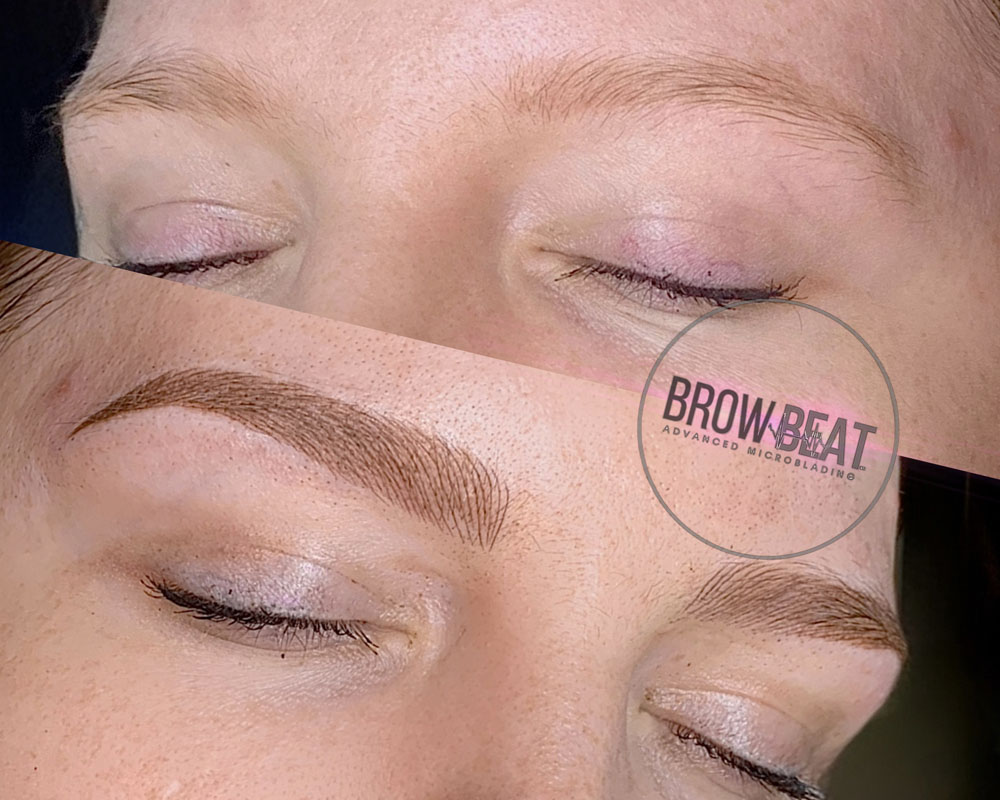
This fair hybrid before and after example demonstrates strokes and shading together. The combo brows technique shows controlled hairstrokes paired with light pixel shading for natural lift. Featured within BrowBeat’s Dallas-based hybrid brows training explanation, this result reflects the strokes and shading relationship.
defined &
Natural
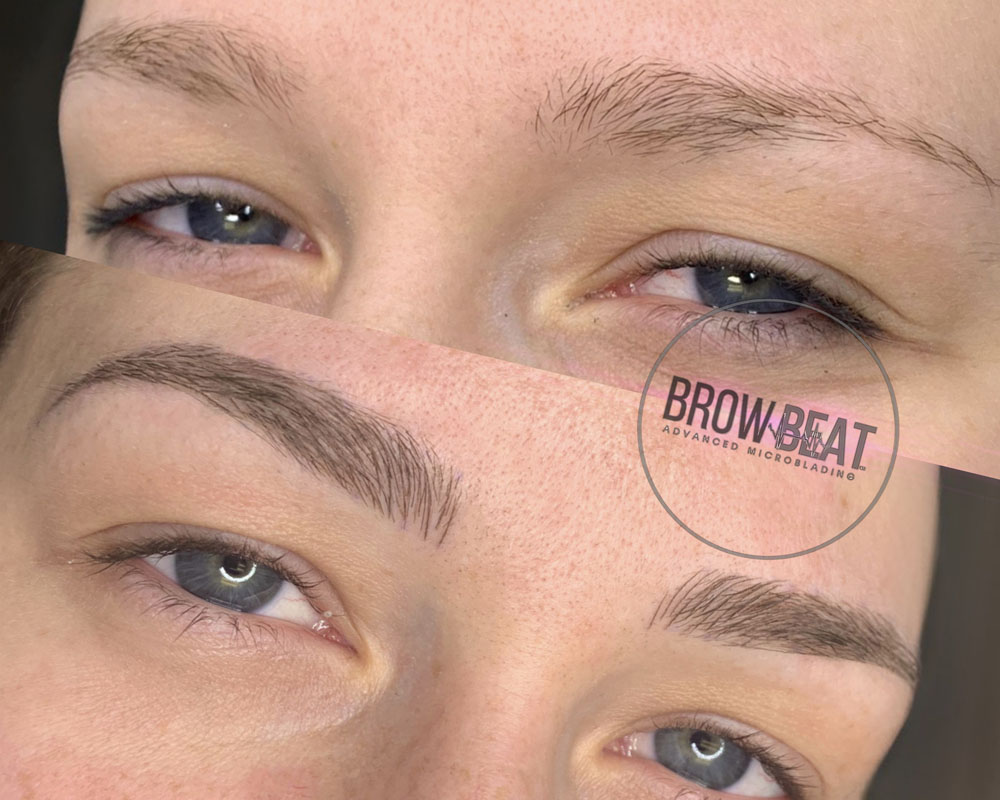
This brunette hybrid brow before and after shows how hair strokes and shading work together to create a defined yet natural result. Hair strokes build the brow’s structure, while machine shading adds depth and density. Together, the two techniques create the dimensional finish taught in BrowBeat’s combo brow training.
dark
Hair
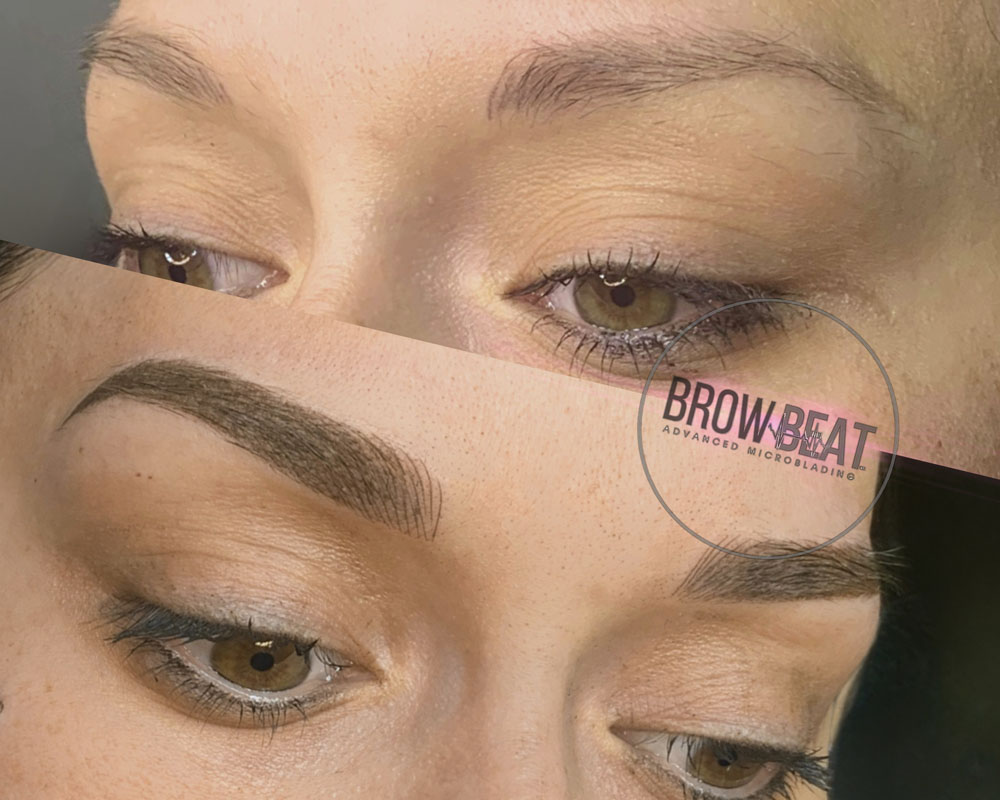
This dark brown hybrid result highlights how combo brows are done. Clean stroke placement anchors the brow, while controlled shading enhances fullness. The combo brows technique here reflects sequencing central to hybrid brows training. As showcased in BrowBeat’s Dallas portfolio, these before and after examples demonstrate the technical precision behind the combo brows training standards.
high melanin
Hybrid
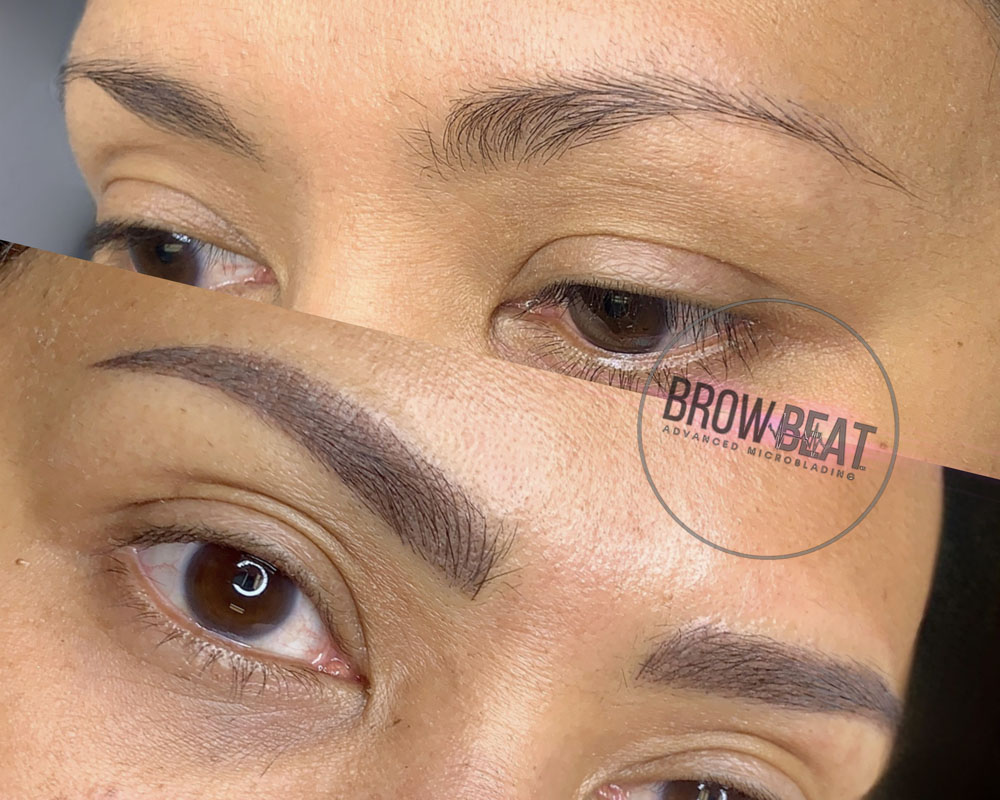
This high melanin hybrid example demonstrates controlled saturation and thoughtful shading layering. Understanding how combo brows are done on deeper skin tones requires pigment depth awareness, and measured pixel placement. The combo brows method explained within BrowBeat’s Dallas-based hybrid brows training program emphasizes clarity. These portfolio results reinforce the professional execution behind combo brows training.
3D Brows Are Not the 3-in-1 Brow Certification
A 3D Brow is one finished brow technique combining hair strokes and shading.
BrowBeat’s 3-in-1 Brow Certification describes the broader educational program in which students learn three distinct techniques:
- Microblading
- Ombré/Powder Brows
- Combo Brows
Combo or 3D Brows are therefore one of those three techniques. They are not another name for the complete three-technique certification.
Manual and Machine Skills Meet in Combo Brows
Combo Brows bring together two different ways of working. The manual component comes from Microblading. The artist controls a hand tool to create individual hair strokes and thinks about direction, spacing and the relationship between strokes.
The machine component comes from Powder Brow shading. The artist controls a PMU machine to create shaded coverage and thinks about density, softness and transitions. Combo technique asks the artist to understand how those different visual elements can coexist without either component losing its purpose.
Why Students Learn the Two Components Before Combo Brows
BrowBeat’s course progression is deliberate. If a completely new student were asked to learn manual hair strokes, PMU machine control, shading and the integration of both techniques at the same time, they would be trying to solve several different problems simultaneously.
Instead, students first learn the component skills in their own context. When they reach Combo, a hair stroke is no longer an abstract idea. Machine shading is no longer an unfamiliar concept. Students can concentrate on the new question: where and how should these two skills meet?
There Is More Than One Way to Create a Combo Brow
One of the first things BrowBeat wants students to understand is that Combo Brows can be constructed in different ways. Hair strokes and shading do not have to occupy exactly the same areas in every version of the technique. Artists can change where strokes appear, where shading begins, how much of the stroke pattern remains visible and how much shaded coverage is incorporated into the finished brow.
BrowBeat introduces students to these possibilities so they do not leave class believing that one configuration is the only definition of a Combo Brow. Then students are given one clear BrowBeat workflow to learn and practice.
How Stroke and Shading Placement Can Change a Combo Brow
Changing the relationship between strokes and shading changes the visual character of the finished brow. For example, shading can be incorporated across a broader stroke pattern, concentrated more heavily through particular areas, placed between visible strokes or developed more fully through the body of the brow while stroke detail remains concentrated toward the front.
These are not separate certifications. They are different ways an artist can think about the same fundamental combined technique. The important lesson is that Combo Brow design is flexible because the relationship between strokes and shading can change.

BrowBeat Shows Students Different Combo Brow Approaches
BrowBeat’s Combo education is informed by approximately ten years of practical experience performing combined brow work. During training, students are shown a visual reference card illustrating different ways hair strokes and shading can be arranged within a Combo Brow. The examples are supported with photographs showing how those approaches can appear in finished work.
This gives students context before they are taught the BrowBeat workflow. They can see that the technique has variations rather than assuming every Combo Brow everywhere must be constructed according to one identical formula.
Why BrowBeat Shows More Than One Method
Showing students alternatives is not the same thing as asking beginners to master every possible Combo Brow variation during one class. The purpose is understanding.
A student who has seen several legitimate approaches is less likely to become confused later when another artist uses strokes and shading differently. They understand that technique can evolve with experience, client preferences and the artist’s own developing style.
BrowBeat then narrows that broader understanding into a clear starting method the student can actually learn.
BrowBeat Teaches One Clear Combo Brow Workflow
After students understand that Combo Brows can be constructed in different ways, BrowBeat gives them a defined method to begin with. The method reflects years of performing different Combo Brow variations, observing finished results and listening to client preferences.
Over time, BrowBeat’s approach moved toward a fuller finished brow with hair-stroke detail concentrated toward the front and greater shaded coverage through the remaining brow.
This is presented as BrowBeat’s professional approach—not as a declaration that every PMU artist must construct every Combo Brow in exactly the same way.
Why BrowBeat’s Combo Approach Has Evolved
An artist’s technique can change through years of practical work. BrowBeat’s Combo method has evolved through repeated experience with different ways of arranging strokes and shading and through ongoing conversations with clients about the finished brow appearance they prefer.
Over time, the preference observed through that experience moved toward a fuller brow rather than designs containing larger amounts of open space. That experience helped shape the method BrowBeat now gives beginning students as their starting workflow.
A Fuller Combo Brow Can Still Preserve Hair-Stroke Detail
Fuller shading does not mean the hair-stroke component has no purpose. The strokes provide visible detail where BrowBeat’s method calls for it, while the machine shading develops greater coverage through the rest of the design.
The objective is for the components to support one another.

Why BrowBeat Gives Beginners a Defined Starting Method
Knowing that several approaches exist is useful. Trying to learn all of them simultaneously is not necessarily useful for a beginner. A first-time student needs something repeatable enough to practice.
BrowBeat therefore separates awareness from execution. Students see different possibilities so they understand the broader technique, then receive one defined workflow to begin developing physically. As their experience grows, they have context for understanding why their own preferences or technique may eventually evolve.
An Instructor’s Method Is a Starting Point, Not the Entire PMU Industry
BrowBeat is deliberate about giving students professional guidance without pretending one artist’s preference represents every artist everywhere. Training inevitably includes an instructor’s experience. That experience is valuable precisely because students can learn from decisions that have already been tested repeatedly in practice.
What Do Students Learn in Combo Brow Training?
At a high level, students learn what makes Combo Brows different from pure Microblading and pure Powder Brows and how the two component skills relate within one finished technique.
They are introduced to different ways strokes and shading can be arranged, shown the BrowBeat approach and taught the workflow used to bring the components together.
Because the underlying manual and machine foundations have already been taught earlier in the three-day certification, the Combo portion can focus on integration rather than beginning those skills again.
Mapping Comes Before Combo Brow Execution
Before strokes and shading can be combined, the brow needs a planned design. Combo mapping considers the overall shape as well as how the design will support both the manual and machine components. The distinction is simple: mapping plans the brow; technique creates it.

Learning to Integrate Hair Strokes and Shading
Understanding what Combo Brows are is different from knowing how to perform the technique. The actual integration requires a workflow. Students need to know where the stroke component belongs, where the shading component begins and how the two are sequenced through the treatment.
BrowBeat’s Combo Brow technique education goes deeper into that execution process. This overview establishes the concept; the technique lesson teaches the formula.
Machine Shading Within Combo Brows
The shading portion of a Combo Brow is performed with the PMU machine. That machine work needs to support the combined design rather than overpower the hair-stroke detail the artist intends to preserve.
Detailed machine movement, speed, pressure, depth, pixelation and saturation control belong to the dedicated Combo machine-shading education. Here, the important concept is simply that Combo requires both manual and machine understanding.
Combo Brow Training Builds on Previous Learning
Within BrowBeat’s three-day certification, students reach Combo after learning the foundations behind Microblading and Ombré Powder Brows. That means the dedicated Combo section does not need to become another full course inside the course.
The student already understands the two ingredients. The Combo lesson explains how they are put together. This is why the dedicated Combo portion can remain focused while still completing an important part of the student’s overall brow education.
Combo Brow Education Within BrowBeat’s Three-Day Certification
BrowBeat does not sell Combo/Hybrid/3D Brow training as an isolated standalone course. It is taught within the three-day brow certification after students have been introduced to the manual and machine foundations needed to understand it.
The dedicated Combo portion’s primary purpose is integration rather than repetition of the earlier Microblading and Powder Brow lessons. Students receive certification acknowledging the education and steps taught through the broader course.
Combo Brow Knowledge Gives Artists Another Technical Option
Learning a combined technique gives developing artists another way to think about brow work. They can understand manual hair-stroke work as one approach, machine-shaded Powder Brows as another and Combo Brows as an option that intentionally brings those visual elements together.
That does not mean every client needs a Combo Brow. It means the artist has a broader understanding of what different brow techniques are designed to accomplish.
As experience develops, having more than one technical approach can help an artist avoid treating a single technique as the answer to every brow.
Understand the Technique Before Learning the Formula
Combo Brows become much easier to understand once the student stops thinking of them as a mysterious third technique.
The ingredients are already familiar. Manual hair strokes come from the Microblading foundation. Machine shading comes from the Ombré Powder Brow foundation. Combo education teaches the student what changes when those skills are intentionally brought together.
BrowBeat also gives students a broader view before narrowing the lesson. They see that strokes and shading can be arranged in several ways, understand that different artists may develop different preferences and then learn one defined BrowBeat method built from years of practical experience and client feedback.
The overview creates context. The next step is execution: learning the actual workflow for where the hair strokes begin and end, where the shading begins and how the two components are sequenced into one finished Combo Brow.
Frequently Asked Questions About Combo / Hybrid / 3D Brow
What are Combo Brows?
Combo Brows are a permanent makeup brow technique that intentionally combines manual hair strokes with machine shading within one finished brow. The stroke component provides hair-like detail, while the machine-shading component adds coverage and density.
What are Hybrid Brows?
Within BrowBeat’s curriculum, Hybrid Brows belong to the same combined-technique family as Combo Brows. They use manual hair strokes together with machine shading rather than relying entirely on one technique.
What are 3D Brows?
Within BrowBeat’s training terminology, 3D Brows describe the same fundamental combination of hair strokes and machine shading. Terminology can vary elsewhere in the PMU industry, which is why BrowBeat teaches students to understand what a technique actually contains rather than relying on its name alone.
Are Combo Brows and Hybrid Brows the same?
Within BrowBeat’s curriculum, yes. Both describe a combined brow technique using manual hair strokes and machine shading.
Are Combo Brows and 3D Brows the same?
p>Within BrowBeat’s curriculum, they belong to the same combined-technique family. A 3D Brow should not, however, be confused with a 3-in-1 Brow Certification.
What is the difference between a 3D Brow and a 3-in-1 Brow Certification?
A 3D Brow is one combined technique using hair strokes and shading. BrowBeat’s 3-in-1 Brow Certification is the broader course structure teaching three distinct techniques: Microblading, Ombré/Powder Brows and Combo Brows.
Are Combo Brows the same as Microblading?
No. Microblading alone is a manual hair-stroke technique. Combo Brows use manual hair strokes together with machine shading.
Are Combo Brows the same as Powder Brows?
No. Powder Brows are created through machine shading without the manual hair-stroke component that defines Combo Brows. Combo intentionally uses both techniques within one finished brow.
How are Combo Brows created?
At a high level, the artist combines planned manual hair-stroke detail with machine-shaded coverage. The exact placement, sequencing and transition between those components are part of BrowBeat’s dedicated Combo technique education.
Can Combo Brows be created in different ways?
Yes. The relationship between hair strokes and shading can be arranged in different ways. BrowBeat shows students several approaches so they understand that Combo Brow technique is not limited to one universal configuration, but trains the most popular combination.
What different Combo Brow approaches does BrowBeat show students?
Students are shown visual examples demonstrating different relationships between strokes and shading.
These include approaches with broader shading across a stroke pattern, shading concentrated through particular areas, shading between strokes and fuller shaded designs that retain stroke detail toward the front.
Does BrowBeat teach every Combo Brow variation?
No. Students are introduced to different possibilities for understanding and context, then BrowBeat gives them one clear workflow to begin learning and practicing.
Why does BrowBeat show different Combo Brow methods if students learn one method?
Seeing the alternatives helps students understand that an instructor’s preferred method is not the only way Combo Brows can exist. They receive a defined starting workflow while also developing enough context to understand other approaches they may encounter later.
What type of Combo Brow does BrowBeat teach?
BrowBeat teaches a fuller combined-brow approach with hair-stroke detail concentrated toward the front and greater shaded coverage through the remaining brow. The method developed through years of practical Combo Brow experience and repeated client feedback.
Why does BrowBeat teach a fuller Combo Brow?
Over years of performing different Combo Brow variations, BrowBeat’s approach evolved toward fuller coverage based on practical experience, client conversations and the finished appearances clients repeatedly preferred. That experience now informs the starting method taught to students.
Does BrowBeat claim its Combo Brow method is the only correct method?
No. Students are deliberately shown multiple ways of arranging hair strokes and shading before learning BrowBeat’s preferred workflow. The objective is to provide a strong starting method without pretending that one artist’s approach represents every Combo Brow technique used throughout the PMU industry.
Why learn the Microblading and Powder Brow foundations before Combo?
Combo requires both skills. Learning the foundations separately means students already understand manual hair strokes and machine shading before they are asked to concentrate on integrating them.
Do Combo Brows use a manual tool and a PMU machine?
Yes. The hair-stroke component is created manually, while the shading component uses the PMU machine. Combo therefore brings manual and machine-based brow skills together.
What do students learn in Combo Brow training?
Students learn what defines the combined technique, see different ways strokes and shading can relate and learn BrowBeat’s workflow for bringing those components together. Detailed execution is taught after the underlying Microblading and Powder Brow foundations have already been established.
Does Combo Brow training include mapping?
Combo Brows require a planned design that supports both hair strokes and shading. Mapping is taught during the three-in-one certification
Does Combo Brow training include machine shading?
Yes. Machine shading is one component of Combo technique.
How do students learn to combine the hair strokes and shading?
BrowBeat teaches a defined workflow for integrating the components after students understand them separately.
Is Combo Brow training a standalone BrowBeat course?
No. BrowBeat teaches Combo/Hybrid/3D Brows within its three-day brow certification rather than as an isolated standalone course.
Can beginners learn Combo Brows?
Yes. BrowBeat’s foundational three-day brow certification has no previous PMU prerequisite. Beginners learn the component foundations before reaching the combined technique rather than being expected to perform Combo Brows immediately.
Do I need previous Microblading experience?
No previous Microblading experience is required before entering BrowBeat’s foundational certification. The manual hair-stroke foundation is taught during the broader course before students reach Combo.
Does learning Combo Brows mean I should use Combo on every client?
No. Learning a combined technique gives an artist another option. It does not mean every brow should receive both strokes and shading. Microblading, Ombré Powder Brows and Combo Brows remain distinct approaches.
Does BrowBeat provide certification for Combo Brow education?
Combo Brow education is included within BrowBeat’s three-day brow certification. Students receive certification acknowledging the education and steps taught through the broader course rather than enrolling in a separate standalone Combo certification.