COMBO BROW MAPPING AND DESIGN TRAINING IN TEXAS
Combo Brow mapping does not require BrowBeat students to learn an entirely new mapping system. By the time students reach Combo/Hybrid/3D Brows, they have already spent substantial time learning BrowBeat’s foundational brow-mapping process.
The same conservative mapping principles still apply. What changes is what the artist intends to create inside that mapped brow.
For Combo Brows, the finished design needs to support two components: manual hair strokes and machine shading. BrowBeat’s Combo Brow training teaches one defined Combo method, so students already know where the hair-stroke portion begins, how it transitions and where fuller shading will become part of the finished brow.
The mapping establishes the brow first. The Combo design then determines how BrowBeat’s combo brow blending technique will be executed within it.
Combo Mapping Builds on Skills Students Already Learned
BrowBeat teaches foundational mapping before students reach Combo Brow technique. Students spend a significant portion of the earlier training learning the mapping process step by step and applying those principles through practical exercises. Combo training therefore does not start over with another mapping curriculum.
Instead, students take the mapping system they already understand and apply it to a brow that will ultimately contain both hair strokes and machine shading.
Mapping Comes First, Then the Combo Brow Design
At BrowBeat, the sequence is important.
First, map the brow. Then, create the Combo Brow design within that mapped structure.
The artist does not begin by drawing a collection of strokes and then attempt to build a brow shape around them. Nor does the artist begin shading and decide afterward where the brow should have been.
The mapping establishes the boundaries and proportions of the brow. The Combo technique is then designed to work within that established shape.
The Same Conservative Mapping Rules Still Apply
Changing from Microblading to Combo Brows does not give the artist permission to abandon the mapping principles already learned.
BrowBeat teaches conservative brow design. The artist works with the client’s natural brow rather than attempting to force the natural hair into an unrelated shape simply because a particular design looks attractive on paper.
The combined technique still needs to belong to the client’s brow.
Adding machine shading does not change that responsibility.

combo
Brows
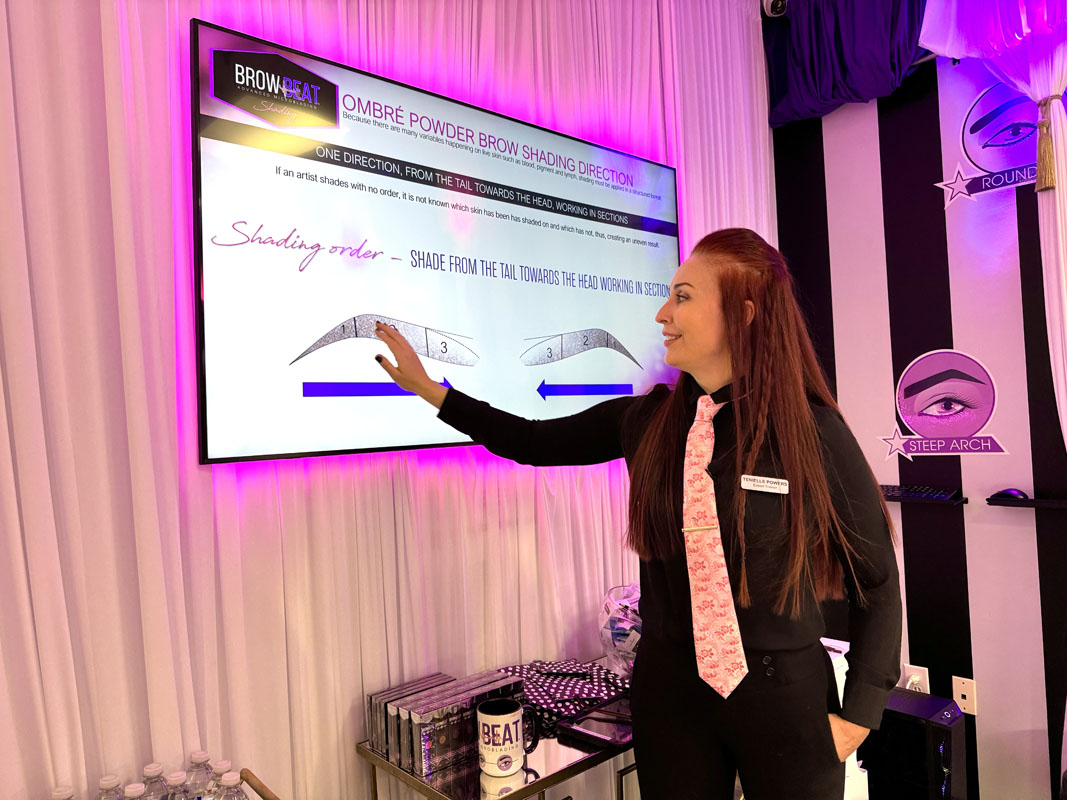
Combo brow mapping training starts with the same step-by-step mapping system taught on Day 2—because mapping applies to microblading, ombré, and combo. Once the blueprint is in place, students can build any brow style with structure.
one
Map
Hybrid brow design training is where students put the two skills they just learned together—strokes + shading—using one mapped plan. That’s what makes combo brow shaping technique feel intentional.


every
Time
Combo brow design steps follow a repeatable system: map → plan → place strokes → blend shading. Students aren’t guessing. They’re repeating a framework they can use again and again.
strokes
Go
In combo brow mapping training, the map isn’t just lines—it’s placement guidance. Students learn how the mapped structure supports hairstroke flow and prevents “floating” strokes that don’t belong.


has
Purpose
In combo brow mapping training, stroke quantity is discussed through design logic — why some brows require minimal strokes while others benefit from more. Students begin thinking like designers.
strokes
End?
One of the biggest combo brow questions students ask is how many strokes to place. In hybrid brow design training, students learn that stroke count is not random — it’s guided.


shading
Lives
Hybrid brow mapping process becomes exciting when students see this: the same map also shows where soft shading should sit. The combo brow shaping technique starts feeling like a design plan.
Stroke
Blending
This Day 3 segment introduces how machine + stroke blending techniques for combo brows fit into the mapped design. Students see how to connect both methods without breaking the brow’s structure.


priority
Design
In combo brow mapping training, students learn how stroke density alone can create fullness without relying heavily on shading. This hybrid brow design training example demonstrates hairstroke layering strategies that build volume while preserving movement and realism. Understanding how to map combo brows for stroke-dominant results supports flexible combo brow design steps across different brow patterns.
more
Shading
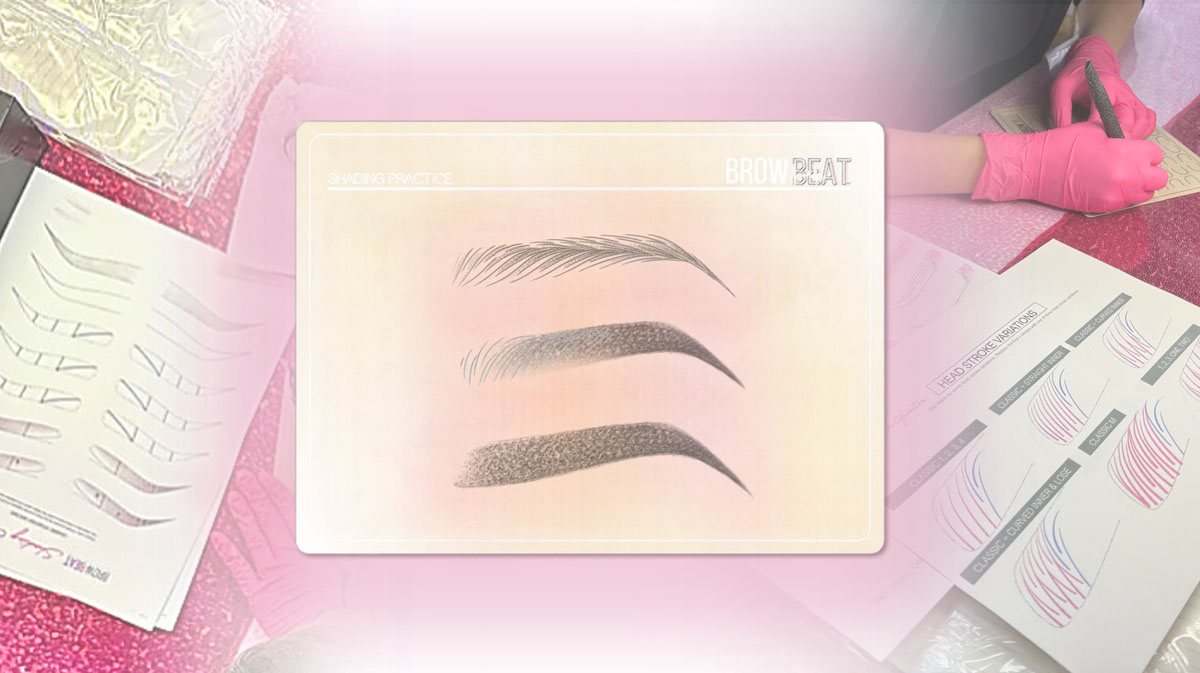
Combo brow shaping technique includes learning when shading becomes the primary density tool. This hybrid brow mapping process shows how controlled pixel shading can replace excessive strokes while maintaining definition. Students studying combo brow mapping training explore shading-forward design approaches that support clients seeking soft fullness without heavy hairstroke concentration.


combo
Brows
Hybrid brow design training introduces multiple hairstroke head patterns that influence final brow character. This combo brow mapping training slide illustrates how different stroke angles, spacing, and curvature support customized combo brow shaping technique. Students studying hybrid brow mapping process gain awareness of how subtle head stroke variations affect overall combo brow design flow.
structured
Design
Combo brow design steps allow artists to transform undefined brow growth into structured shapes through coordinated strokes and shading. Learning how to map combo brows helps students achieve definition while maintaining proportional brow harmony.

Work With the Natural Brow Rather Than Against It
BrowBeat’s mapping philosophy starts with what is actually present. The natural brow provides important information about appropriate width, direction and overall shape. Permanent makeup should be planned with that information rather than treating the existing brow as something that needs to be ignored.
This becomes especially important in Combo work because the finished design contains both visible stroke detail and fuller shaded coverage. A poorly planned foundation cannot be repaired simply by adding another technique. The combined brow still begins with appropriate mapping.
BrowBeat Teaches Conservative Size Changes
BrowBeat teaches students not to dramatically enlarge a permanent makeup brow beyond the client’s natural hair. As a working guideline within the BrowBeat mapping system, students are taught not to make the mapped brow more than approximately one-third larger than the natural brow.
The philosophy behind the guideline matters as much as the number: be conservative.
Permanent makeup design is not the place to make unnecessarily extreme changes simply because pigment can technically be placed there.
Think Goldilocks: Not Too Much, Not Too Little
BrowBeat encourages students to develop balanced judgment rather than chase extremes. A mapped brow should not be made dramatically larger simply to create more room for strokes and shading. It also should not be unnecessarily restricted when an appropriate design can support the client’s brow.
The goal is the “Goldilocks” relationship: enough design to create the intended brow without making choices that are unnecessarily aggressive. That conservative thinking carries directly into Combo Brow planning.
Do Not Change the Natural Direction of the Brow Tail
BrowBeat teaches students to respect the natural direction of the client’s tail rather than redirecting it simply to force a preferred template onto the face. The tail is part of the client’s existing brow structure. Combo technique does not change that.
The artist maps appropriately first and then allows the combined stroke-and-shading design to work within that direction.
The technique follows the mapped brow. The mapped brow should not be distorted merely to accommodate the technique.
BrowBeat Does Not Teach Shaving Off the Brow to Create the Shape
The goal of mapping is not to remove the client’s natural brow so an unrelated permanent makeup shape can be placed in its position.
BrowBeat teaches students to work with the natural brow and make conservative design decisions. The presence of Combo shading does not create a reason to disregard that principle. The natural hair remains important visual information during planning.
Combo Brow Mapping Is Not Stencil-Driven Design
BrowBeat does not teach students to force a client’s brow into a stencil simply to make Combo technique fit. The mapping process is used to develop the brow appropriately for the individual client.
This matters because a predetermined stencil cannot make the artistic decisions required for the relationship between natural hair, mapped shape and the combined technique.
BrowBeat teaches students to follow the mapping steps and make the design appropriate for the brow in front of them.

What Changes When You Plan a Combo Brow?
The foundational mapping rules remain the same. The difference comes after the map has been established. Now the artist knows the finished technique will contain visible manual hair strokes toward the front and fuller machine shading through the remaining design.
BrowBeat’s defined Combo workflow already establishes how those components will relate. The student is therefore not inventing arbitrary “stroke zones” and “shading zones” on the client. They are applying a learned Combo design inside an appropriately mapped brow.
The Combo Design Has a Defined Stroke Progression
BrowBeat teaches one starting Combo method rather than asking beginners to invent their own relationship between strokes and shading. The hair-stroke portion begins at the head of the brow and follows the stroke knowledge students learned earlier in the certification.
Approximately five to eight lower conversion strokes then help move the design toward the combined area. Because that progression is already part of the BrowBeat Combo formula, the student knows what the manual portion of the design is intended to accomplish before machine shading begins.
The Final Conversion Strokes Help Set Up the Shaded Design
The conversion area gives the student visual information for what happens next.
Within BrowBeat’s workflow, the conversion helps establish where the shaded structure will meet the stroke work.
The student is not guessing where Microblading suddenly ends and Powder Brow shading suddenly starts. The design has been built to create a transition between them. That setup is one reason the Combo formula is taught as a sequence rather than as two independent techniques.
Planning the Transition Does Not Mean Drawing a Hard Dividing Line
Combo Brows should not be planned as two disconnected blocks. The student is not mapping one rectangle for Microblading and another rectangle for Powder Brow shading.
BrowBeat’s technique deliberately allows the components to overlap. Machine shading will later be brought over the ends of selected fresh strokes so the visible hair-stroke effect can transition into fuller shaded coverage. The plan therefore needs to support a merge rather than a hard boundary.
The Head of BrowBeat’s Combo Design Has a Specific Job
Within BrowBeat’s preferred Combo method, the head provides the strongest visible hair-stroke effect. That means the mapped brow needs to support a natural-looking head where the manual component can perform its intended role.
The artist does not need to create a separate machine-shaded Powder Brow head because the Combo design already gives the head its identity through strokes. The head of the brow is therefore planned as part of the complete brow while still serving a different technical purpose from the fuller body and tail.
The Body Supports the Stroke-to-Shading Transition
As the design moves away from the head, the relationship between the two techniques begins changing. The visible stroke effect transitions toward greater shaded coverage. The body is where that relationship becomes especially important.
BrowBeat’s Combo brow formula gives students a predictable way to approach this area rather than asking them to improvise the transition after the treatment has already begun. The design anticipates the transition before the machine is used.
The Tail Supports the Fuller Shaded Portion
BrowBeat’s current Combo approach develops fuller machine-shaded coverage through the body and tail. The tail is therefore not treated as another large hair-stroke area within this particular method.
Students already understand the machine-shading foundation from Powder Brow education. Combo design gives that skill a defined role within the mapped brow. The detailed physical shading remains technique execution. The design simply establishes what the finished brow is intended to become.

Symmetry Comes Before Stroke and Shading Execution
Hair strokes and machine shading cannot solve an underlying mapping problem. If the foundational brow design has not been appropriately established, adding more technical complexity does not make the shape more correct.
BrowBeat therefore teaches students to complete the mapping process before concentrating on the Combo execution. The combined technique belongs inside the mapped brow—not the other way around.
Proportion Still Matters in Combo Brow Design
Combo Brows do not require a separate set of facial proportions simply because two techniques are being used. The foundational proportion and measurement principles students have already learned still establish the brow. Combo-specific planning begins after that foundation exists.
BrowBeat is not teaching general brow mapping twice. Students are learning how an established mapping foundation supports a different finished technique.
Client Preference Can Influence the Combined Design
Clients can prefer different relationships between visible hair-stroke detail and fuller shaded coverage.
BrowBeat teaches one defined Combo workflow as the student’s starting method, but the artist still needs to understand what the client wants from the finished appearance. If the desired result is increasingly dominated by machine shading with very little meaningful stroke effect, the artist should recognize that the client’s goal may be moving closer to a Powder Brow.
Understanding the distinction between techniques helps the artist plan rather than simply forcing Combo onto every request.
Mapping Helps Prevent Two Techniques From Looking Like Two Separate Brows
A combined technique should still read as one brow. If the artist mentally designs the stroke section and shaded section as completely unrelated areas, that separation can carry into execution.
BrowBeat’s combo brow workflow instead establishes a mapped brow first and then applies a Combo design in which the manual and machine components are expected to meet. The artist plans one brow with two technical components—not two smaller brows placed next to each other.
Plan the Transition Before You Execute It
Once the mapped brow and Combo design are understood, execution has a clear direction. The student knows the role of the head strokes, understands the conversion area and knows that fuller machine shading will develop through the body and tail.
That does not mean the artist can predict every pass before beginning. Machine shading still requires evaluation as it develops. But the overall relationship has already been planned, so the artist is not inventing the structure halfway through the procedure.
Mapping Is Planning; Combo Technique Is Execution
This boundary is important within BrowBeat’s training. Mapping establishes the brow’s shape and gives the Combo design an appropriate structure. Technique is what happens when the student begins physically creating the hair strokes, conversion area and machine-shaded portion within that design.

Machine Shading Follows the Combo Plan
Once the design has been established, the PMU machine is used to create the shaded component. The machine does not determine the shape. It executes part of the plan.
Detailed control of the machine—including applying previously learned shading skills around and over fresh stroke ends—belongs to BrowBeat’s Combo Machine Shading training guide. Keeping planning and execution separate helps students understand what problem they are solving at each stage.
Combo Mapping Within BrowBeat’s Three-Day Certification
BrowBeat does not teach a second complete mapping system solely for Combo Brows. Students first develop the foundational mapping skills used throughout their brow education. When they reach Combo, they apply those skills to the combined technique BrowBeat teaches.
The mapped brow establishes the structure. The Combo design establishes how the manual hair-stroke component will transition into fuller machine shading. That progression allows the student to build on previous learning instead of starting over each time the technique changes.
Map the Brow First, Then Apply the Combo Design
Combo Brow mapping is not about replacing a mapping system students have already learned. It is about applying that foundation correctly before creating a combined technique.
BrowBeat students first map the brow using the established principles taught earlier in the certification. They work conservatively with the natural brow, respect the natural tail direction and avoid forcing the client into a predetermined stencil or unnecessarily oversized shape. Once that map is established, the Combo design has somewhere appropriate to live.
The head supports visible hair-stroke detail. The conversion strokes help establish the progression toward the combined area. The body and tail support fuller machine shading, with the technique later allowing shading to overlap selected stroke ends rather than creating a rigid division between the two components.
That distinction keeps the process clear: mapping establishes the brow; Combo design organizes the technique; execution creates it.
Frequently Asked Questions About Combo Brow Mapping & Design
Is Combo Brow mapping different from regular brow mapping?
BrowBeat does not teach an entirely separate foundational mapping system for Combo Brows. Students use the mapping principles they have already learned and then apply a Combo-specific design within that mapped brow.
Does BrowBeat teach mapping before Combo Brows?
Yes. Foundational brow mapping is taught earlier in the three-day certification. By the time students reach Combo, they are applying previously learned mapping skills rather than starting the subject again.
What comes first: mapping or Combo Brow design?
Mapping comes first. Once the brow has been appropriately mapped, the student applies BrowBeat’s Combo design within that established structure.
What changes when mapping a Combo Brow?
The foundational mapping rules remain consistent. What changes is the technique being planned inside the map. The student knows the finished brow will contain visible manual hair strokes toward the front and fuller machine shading through the body and tail.
Does BrowBeat draw separate stroke and shading zones on the brow?
No. BrowBeat does not teach students to divide the brow into rigid blocks for Microblading and shading. The mapped brow establishes the overall structure, and the learned Combo workflow determines how the hair-stroke component transitions into fuller shading.
How do students know where the hair strokes belong?
BrowBeat teaches a defined Combo design. Hair-stroke detail begins at the front, followed by approximately five to eight lower conversion strokes that help establish the progression toward the combined area.
What are conversion strokes used for in Combo Brow design?
The conversion strokes help the manual hair-stroke component progress toward the area where fuller machine shading will become more dominant. They support a transition rather than creating a hard dividing line between the two techniques.
Does the shading area start where the last stroke ends?
BrowBeat’s design is not based on creating a hard stop between strokes and shading. The workflow is planned so machine shading can later overlap the ends of selected fresh strokes, allowing the components to transition into one another.
Why shouldn't the stroke and shading areas be planned as separate blocks?
Combo Brows are intended to become one connected technique. Planning two isolated areas can encourage an abrupt visual division. BrowBeat’s method anticipates overlap between the components instead.
What is planned at the head of a Combo Brow?
Within BrowBeat’s method, the head of the brow is designed to support visible manual hair-stroke detail. The head therefore has a different technical role from the fuller machine-shaded body and tail while remaining part of the same mapped brow.
Does BrowBeat change the direction of a client's natural brow tail?
No. BrowBeat teaches students to respect the natural direction of the brow tail rather than redirecting it simply to force a preferred shape onto the client.
Does BrowBeat shave off the natural eyebrow before mapping?
No. BrowBeat teaches students to work with the client’s natural brow rather than removing it in order to create an unrelated permanent makeup shape.
Does BrowBeat use brow stencils for Combo Brow mapping?
BrowBeat does not teach students to force the client’s brow into a predetermined stencil. Students follow BrowBeat’s mapping process and make conservative design decisions based on the individual brow.
Why does the natural brow matter when planning Combo Brows?
The natural hair provides important information about the client’s existing width, direction and overall brow structure. BrowBeat teaches students to use that information rather than treating permanent makeup design as independent of the natural brow.
Can client preference change the Combo Brow design?
Client preference matters when considering the intended balance between visible hair-stroke detail and fuller shaded coverage. BrowBeat still gives students a defined starting method, but the artist needs to understand the result the client is asking for.
What if the client wants very little visible hair-stroke detail?
The artist should consider whether the desired result is still meaningfully a Combo Brow. If machine shading is intended to dominate almost the entire appearance, a Powder Brow may more accurately describe the client’s goal.
Does mapping determine how many shading passes to perform?
No. Mapping plans the brow and supports the combined design. Pass counts and developing saturation are part of machine execution and are evaluated while the shading is being performed.
Does mapping teach students how to create the hair strokes?
No. Mapping determines the structure in which the technique will be performed. Physical creation of the strokes belongs to technique execution and builds on the Microblading skills taught earlier in the certification.
Does Combo mapping teach PMU machine control?
No. The machine executes the shaded portion after the design has been established. Detailed machine control belongs to BrowBeat’s Combo Machine Shading education.
What is the difference between Combo Brow mapping and Combo Brow technique?
Mapping plans the brow. Combo technique physically creates the manual hair-stroke component, transition and machine-shaded coverage inside that plan.
Do beginners learn Combo Brow mapping from scratch?
BrowBeat’s three-day certification has no previous PMU prerequisite, but students learn foundational brow mapping earlier in the course. By the time they reach Combo, they are applying those established skills to the combined technique.
Is Combo Brow mapping taught as a separate course?
No. Combo-specific design is part of BrowBeat’s broader three-day brow certification rather than a standalone mapping course.
Are Hybrid Brow and 3D Brow mapping the same as Combo Brow mapping?
Within BrowBeat’s curriculum, Combo, Hybrid and 3D Brows belong to the same combined-technique family, so the same planning principles apply.
Is 3D Brow mapping the same as mapping for the 3-in-1 Brow Certification?
No. A 3D Brow is one Combo/Hybrid technique using hair strokes and shading. BrowBeat’s 3-in-1 Brow Certification is the broader program teaching Microblading, Ombré/Powder Brows and Combo Brows as three distinct techniques.
How is the body of a Combo Brow planned?
The body supports the transition from visible stroke detail into greater shaded coverage. BrowBeat’s defined workflow gives students a planned progression rather than requiring them to invent that transition during execution.
How is the tail of a Combo Brow planned?
BrowBeat’s current Combo method uses fuller machine-shaded coverage through the body and tail. The tail therefore supports the shaded portion of the combined design rather than becoming another large hair-stroke area.
Does Combo Brow mapping use different symmetry rules?
No. The foundational symmetry principles students have already learned still apply. Combo technique does not change the need to establish an appropriate mapped brow before execution begins.
Does Combo Brow mapping use different facial proportions?
No separate set of facial proportions is created simply because the brow will contain two techniques. BrowBeat students apply their existing mapping and proportion knowledge before planning the Combo design within it.