LIP PIGMENT & COLOR TRAINING FOR LIP BLUSHING
The first color decision in Lip Blushing happens before you open a pigment bottle. It starts with the person.
Some clients want the softest possible enhancement. They want their lips to look healthy, balanced and naturally colored without looking as though they are wearing lipstick. The goal is essentially, “I woke up like this.”
Other clients have a color they identify with. They know the pink, rose or warmer shade they reach for again and again. Sometimes they walk into an appointment carrying the lipstick itself. Those clients are telling the artist something about their personal style. A professional Lip Blush artist needs to know what to do with that information.
At BrowBeat Certification, we do not want students to learn color by being shown a pigment line and told which bottle to choose. We want them to understand color well enough to look at a shade, break down what they are seeing and begin thinking about how that color is constructed.
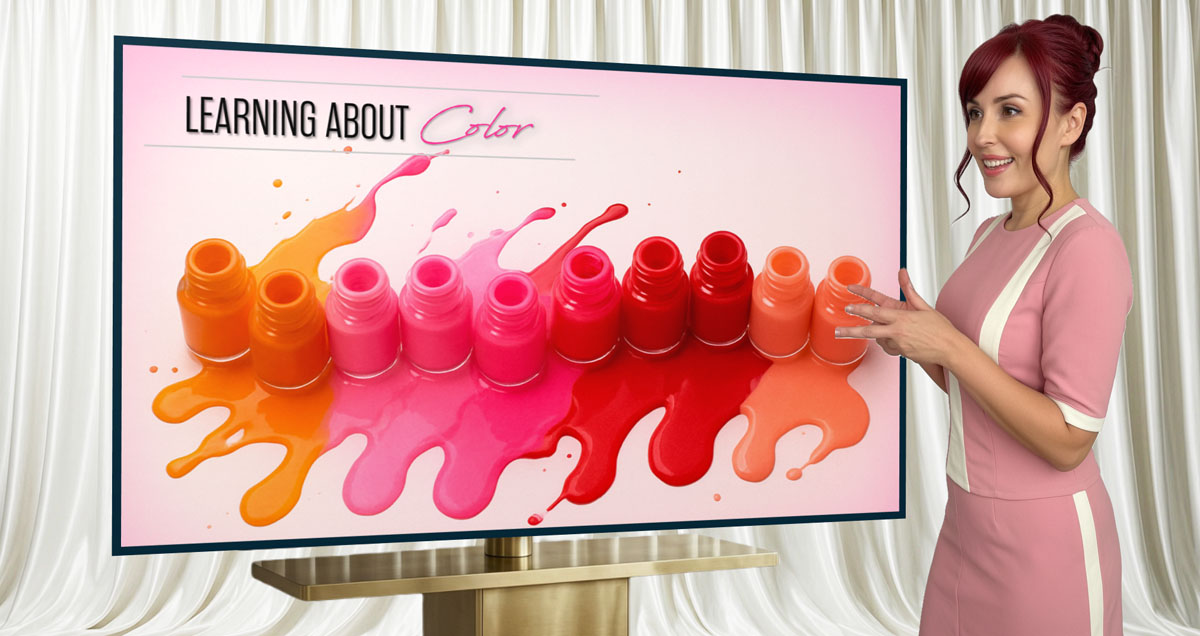
That is why color education starts with fundamentals. Before students start thinking about a favorite Lip Blush pigment, they learn to understand tint, tone and shade.
They begin learning what changes a color, what softens it, what deepens it and what creates the visual differences between colors that initially appear similar. Then we build from there. Because when a client says, “I love this color,” the artist needs more than a swatch. They need a way to think.
This guide focuses specifically on general Lip Blush pigment and color education. For the complete program connecting color with mapping, machine technique, Lip Blushing and Dark Lip Neutralization, explore our Lip Blushing Certification & Training in Texas.
Lip Color Is Personal
There is a technical side to Lip Blush color, but there is also a human side. Color is personal. People have colors they feel comfortable wearing. They have colors they avoid. They have ideas about whether they want to look warm, rosy, neutral, soft or polished. Some people have worn essentially the same lipstick family for years because it feels like them.
Other clients do not want a lipstick effect at all. They want their lips to look naturally better without the color becoming the first thing anyone notices. That difference matters during color selection. The artist is not simply choosing the “best Lip Blush color.” There is no universal best color.
The artist is interpreting a person’s desired result while also looking at the natural lip color that already exists. Those two pieces of information need to meet. What does the client want? What color are we actually starting with? Professional color selection happens between those two questions.
Understanding Color Instead of Memorizing a Pigment Line
A pigment line is a tool. It is not a substitute for understanding color.
If students learn only that one bottle is used for one type of result and another bottle is used for something else, their knowledge remains dependent on those bottles.
Change the pigment line and the student can feel lost. Change the client’s starting color and the memorized formula can stop making sense.
Give the student a color that is not represented perfectly by one bottle and they need to know what to do next. That is why we teach the structure underneath the pigment choice. Students begin learning how colors are related, how they change and how to recognize what they are actually seeing rather than relying entirely on a name printed on a label.
A color called “rose,” “peach” or “pink” tells the artist very little by itself.
Two colors can both be called rose and look completely different.
The useful questions are more specific. How light or deep is it? How bright or muted is it? What direction does the color lean? What has changed between this color and another color sitting beside it?
Once students begin asking those questions, color stops being a collection of names and starts becoming something they can analyze.

dallas
Texas
This lip pigmentation training in Dallas, Texas is structured to build skill in stages. Artists begin with lip anatomy, color recognition, and pigment behavior before progressing into controlled layering and shading. The goal is consistency, balance, and clean healed results. Each step is discussed so lip color balancing techniques are understood before real application begins.
elevated
Foundations
Lip blushing color theory is taught as a working system, not just a chart. Artists learn how the original lip resting starting point interacts with pigment. This foundation strengthens lip pigment selection training and supports confident decisions when determining how to choose lip blushing pigment for various clients.

lip blushing
Pigment
Understanding how to choose lip blushing pigment is central to this training. Artists evaluate natural lips and existing coloration before selecting shades. Lip pigment selection training includes discussion on warmth, neutralization, and layering logic so results appear balanced and refined.
structured
Approach
Lip pigment color training for lip blushing focuses on intentional choices. Rather than guessing, artists learn color anatomy, what a tint, tone and shade is, breaking down color into three understandable columns. This structured approach helps artists understand the true nature of color and how to break it down.


lip
Simulations
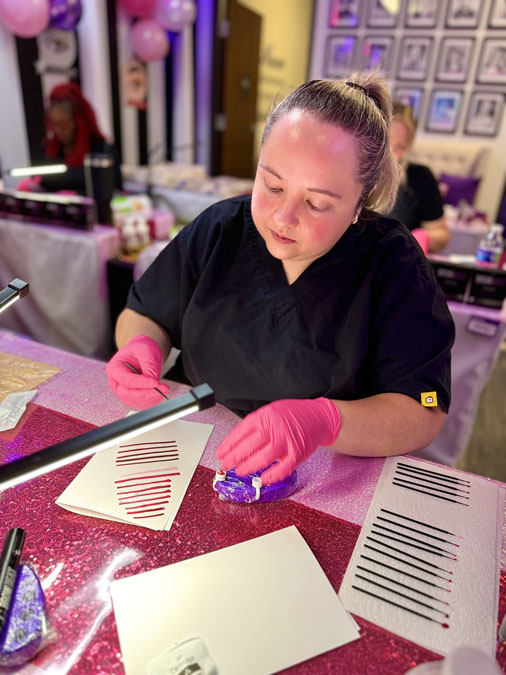
3D silicone lip simulations allow artists to practice drafting, layering, and pigment density without pressure. These simulation exercises support lip pigment selection training and reinforce lip blushing color theory before transitioning to advanced application stages inside this Texas course.
lip draft
Exercise
Partner drafting exercises focus on lip shape analysis. Artists learn how structure influences final outcomes and how mapping supports lip color application. This stage strengthens understanding of how to choose lip blushing pigment based on natural lip characteristics.


in lip
Blushing
Tint, shade, and tone are broken down clearly inside this lip blushing color theory module. Artists learn how these variables influence lip pigment color selection for lip blushing, and how lip color balancing techniques adjust depending on original lip depth and existing color.
pigments
Included
Twelve curated pigments support hands-on lip pigment and color training for lip blushing. Artists explore how to choose lip blushing pigment based on original lips and client preference. This practical exposure reinforces lip blushing color theory inside structured lip pigmentation training in Texas.

cupid's bow
Definition
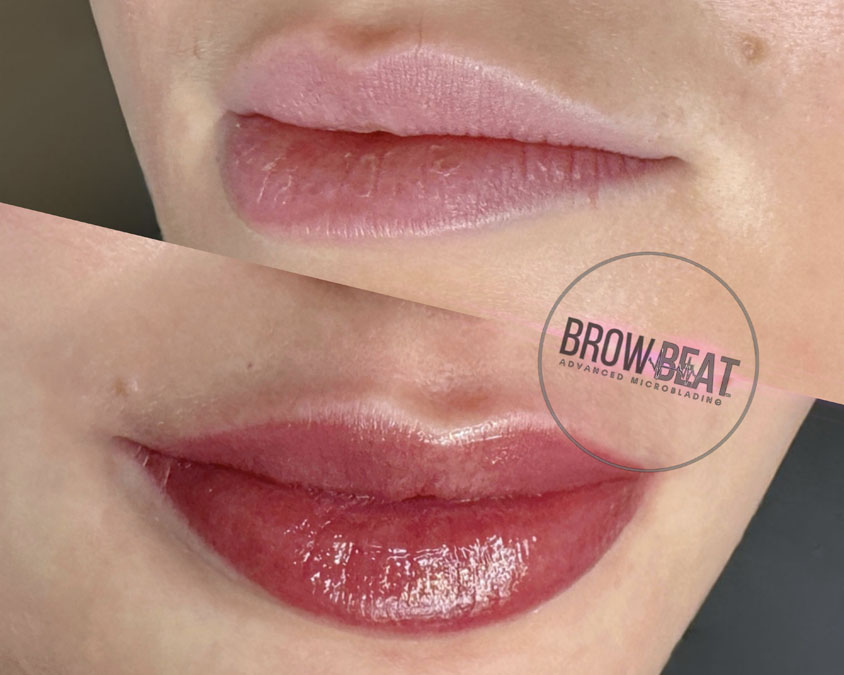
This before and after reflects the structured standards taught in lip pigment and color training for lip blushing, including vermilion border control and cupids bow shaping. Guided by lip blushing color theory and lip pigment selection training principles, the work demonstrates balanced contour and controlled application. These foundational lip color balancing techniques are part of advanced lip tattoo color basics taught in Dallas, Texas.
mature
Lips
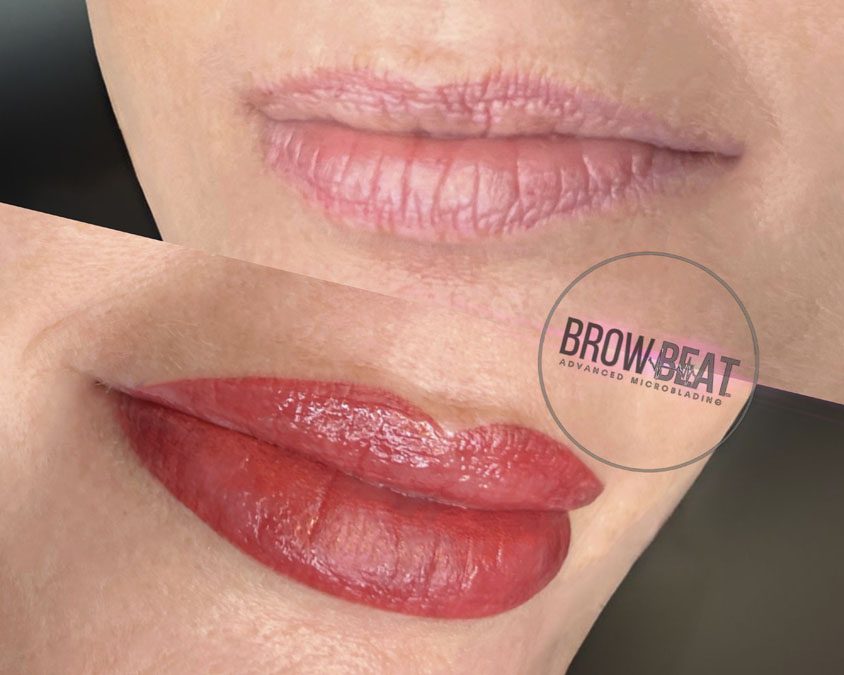
Working on mature lips requires awareness and controlled pigment layering. This example reflects lip pigmentation training principles including lip tattoo color basics and lip blushing color theory. Lip color application techniques are used to maintain smooth visual flow across natural vertical lip lines while preserving the integrity of the vermilion border.
medium melanin
Lips
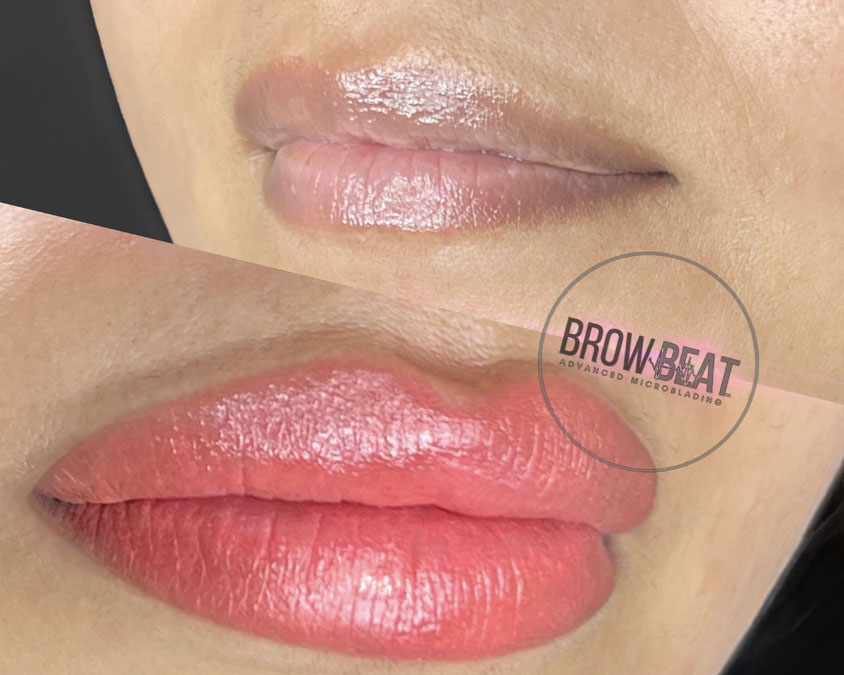
This medium melanin example demonstrates the pigment placement standards used in lip pigment and color training. Guided by lip pigment selection training and lip blushing color theory, the result reflects balanced color and structural harmony. Dark lip neutralization techniques ensure undertones are respected and neutralized using color theory while maintaining clarity across the lip surface.
cool lip
Undertones
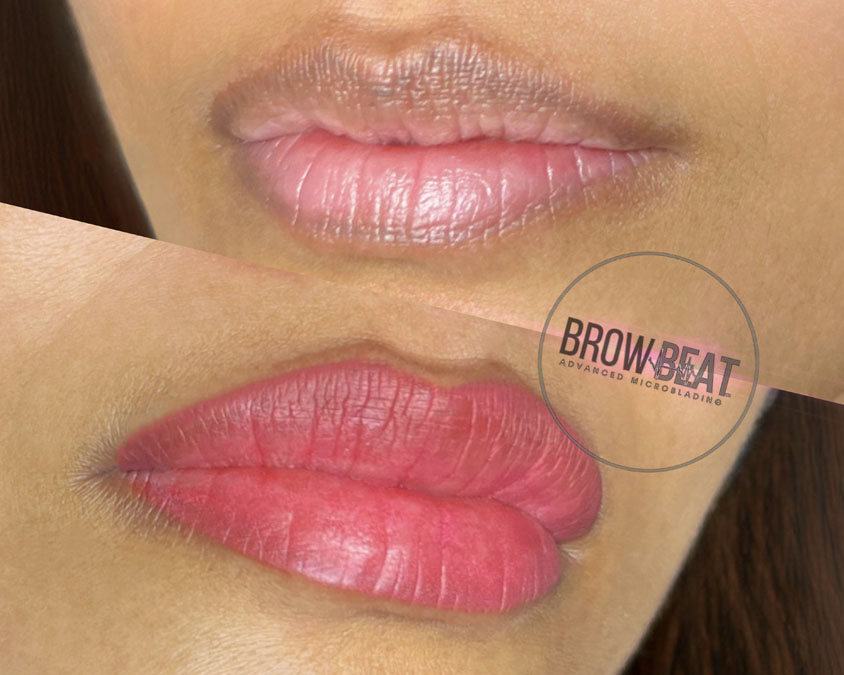
This case highlights lip color balancing techniques applied to cool outer lip color. As part of professional lip blushing certification, lip pigment selection training focuses on how to choose lip blushing pigment that harmonizes.
Lip Blush Color Theory for Beginners
Beginners do not need to memorize dozens of pigment formulas before they can begin understanding Lip Blush color. They need a framework. That is why BrowBeat begins with color fundamentals.
Tint.
Tone.
Shade.
Warmth.
Coolness.
Brightness.
Depth.
These concepts give a new PMU student language for describing what they see.
Instead of looking at two pink pigments and thinking they are simply different, the student begins learning to identify how they are different.
Is one warmer?
Is one more muted?
Is one deeper?
Is one brighter?
What changed?
That ability becomes the foundation for beginner lip blushing training and lip pigment and color selection and mixing. The student does not need every answer memorized. They need to know which questions to ask.
Learning to Tear a Color Down and Build It Back Up
This is where color theory becomes practical. Students to be able to look at a color and stop seeing it as one mysterious finished shade. Instead, they begin breaking it apart mentally.
What color family am I looking at?
What direction does it lean?
Is it light or deep?
Is it bright or muted?
What gives it the quality I am seeing?
Then comes the second half of the skill:
How would I build my way toward it?
This is fundamentally different from holding up bottles until one looks close.
Students begin developing a structured thought process that allows them to understand why they are choosing or mixing particular colors. That ability becomes increasingly valuable when a desired color does not exist perfectly inside one bottle.
The student is no longer limited to asking, “Which pigment is closest?” They can begin asking, “What does this color need?”
When a Client Brings in Their Favorite Lipstick
A favorite lipstick can tell an artist a lot. It can show the color family a client naturally gravitates toward. It can reveal whether they prefer something soft, warm, cool, muted, bright or deeper. It can also give the artist a much clearer visual reference than a client trying to describe a color from memory.
But a lipstick is a reference point, not a pigment recipe. The student’s job is not to look through the pigment bottles until they find one that resembles the lipstick tube.
The useful exercise is to look at the actual color and analyze it. What are you seeing? What gives that lipstick its character? What would need to be lighter, deeper, warmer, cooler, brighter or more muted to move another color toward it?
This is where understanding tint, tone and shade stops being theoretical.
The student begins using color knowledge to dismantle a finished shade inside their head and understand how they would put it back together in a structured way.
That does not mean the final Lip Blush should look like an opaque layer of lipstick.
The lipstick tells us something about the person’s preference. Lip Blushing still has its own visual character, and many clients ultimately want a result that reads as natural lip color rather than visible makeup. The artist needs to understand both.
The “I Woke Up Like This” Lip Blush
Many clients are not searching for a dramatic color transformation. They want to look fresher without looking obviously made up. The lips have color, but the color belongs to the face. It does not announce itself before the person does. Creating that kind of result still requires color decisions.
Subtle results require the artist to understand what is naturally present rather than simply reaching for stronger color. Perhaps the goal is slightly rosier. Perhaps it is warmer.
Perhaps the client likes the natural family already present but wants the overall appearance to feel more consistent. The artist’s job is not to automatically make the color stronger. The job is to understand the requested result and choose a color direction that makes sense from the starting point.
The Pigment Bottle Is Not the Starting Color
Every Lip Blush color decision contains at least two pieces of color information. There is the pigment the artist intends to introduce. And there is the natural lip color already present.
The second one is easy for new students to underestimate. A pigment does not exist visually in isolation once it is implanted into lip tissue. The artist needs to consider the starting color when thinking about the direction of the result.
This is why two people requesting a similar finished look do not automatically require identical pigment decisions. Their natural lips are not identical starting points.
One can begin with a naturally pale pink lip. Another can have more warmth. Another can have a cooler natural appearance. Even within lighter lip presentations, the starting color varies considerably. So before students ask: Which pigment should I use? We want them to learn to ask: What color am I starting with.

Assessing Natural Lip Color Before Choosing Pigment
Natural lip color assessment teaches students to observe before selecting. The artist looks at the existing color across the lips rather than making a decision based only on a desired swatch.
- Is the natural lip predominantly warm or cool?
- Is the color light or deeper?
- Is it relatively consistent across the lip?
- Are there visible differences between areas?
- How does that starting color relate to what the client is asking for?
These observations help the artist build a reasoned pigment direction. They also help prevent one of the most limiting habits in beginner color work: choosing a pigment because the bottle itself looks like the desired result. The bottle is not the client’s lip. The starting color matters.
Desired Lip Color and Starting Lip Color Are Not the Same Thing
A client can show the artist exactly where they want to go without telling the artist how to get there. That is the professional part of color selection. If a client wants a soft rosy result, the words “soft rose” describe the destination. They do not describe the starting point. The artist has to connect the two.
This is why color discussions are more useful when the artist listens to the client’s preference and simultaneously assesses the natural lip. One piece tells you about the person. The other tells you about the color problem in front of you. Neither should be ignored.
Why the Same Lip Blush Pigment Does Not Look Identical on Everyone
The same pigment choice does not create an identical visual result on every person because every person does not begin with the same natural lip color.
This is one of the most important shifts for students moving from pigment swatches into actual color reasoning. A swatch shows the pigment under one set of conditions.
A real Lip Blush procedure introduces that pigment into individual lip tissue with its own existing color. The artist therefore needs to stop thinking of the pigment bottle as a guaranteed finished color. It is one part of the color equation. Once students understand that, pigment selection becomes less about memorizing “best colors” and more about learning how to evaluate relationships between colors.
Choosing Lip Blush Pigment With a Reason
A professional pigment choice should have an explanation behind it.
Not:
“I always use this one.”
Not:
“This is our most popular pink.”
Not:
“The bottle looked closest.”
The student should be able to explain what they saw in the natural lip, what the client requested and why the selected pigment direction connects those two things.
That reasoning is more valuable than memorizing a list of favorite colors because it can be applied again when the next client looks completely different. It also gives the artist a foundation for pigment mixing. Once you understand why a color is close but not quite right, you can begin thinking about what needs to change.
Mixing Lip Blush Pigments With Intention
Pigment mixing becomes useful when students understand what they are trying to change. The goal is not to combine colors randomly until the mixture looks attractive. The student should have a direction.
If the color needs to move lighter, deeper, warmer, cooler, brighter or more muted, the artist needs to understand which part of the mixture is responsible for that change. This brings the student back to the same color foundation introduced at the beginning of training.
What am I looking at?
What needs to change?
What am I adding?
Why am I adding it?
What did that addition do to the mixture?
This is why pigment mixing is not separate from color theory. Mixing is where the theory becomes physical. Students begin seeing how a small change can shift the character of a color and why adding more of something does not simply make a mixture “better.” It makes it different. The artist needs to understand what that difference is.

Creating a Custom Lip Color Is Not Guesswork
Custom color does not mean inventing something from nothing. It means using color knowledge to move deliberately toward a result. A student can begin with a pigment that is close to the desired direction and then evaluate what separates it from the target color.
- Does it need more warmth?
- Does it need to become softer?
- Is it too bright?
- Is it too deep?
- What happens when another color is introduced?
Those questions create structure. Without that structure, mixing becomes trial and error. With it, students begin learning how to predict the direction of a mixture before they make it. That is a much more transferable skill than memorizing one formula.
Color Names Are Useful—But They Are Not Color Theory
Permanent makeup pigments have names because artists need a practical way to identify them. But the name on a bottle does not explain the complete color.
“Pink” covers an enormous range. One pink can appear warm and peachy. Another can feel muted or rosy. One pink can be bright and cool. Another can be soft and warm.
If students rely too heavily on names, they can begin to assume colors behave in a predictable way, when in fact pigment behavior is shaped by undertone, concentration, and how it settles in the skin over time. That’s why color theory matters more than the label.
Understanding Lip Pigment Lines, Types and Brands
Permanent makeup artists work with professional pigment lines, and each line has its own collection of colors, naming system and product information. Students need to become familiar with the pigments they are actually working with.
At BrowBeat Certification, students work with the BrowBeat color line during training. Students are taught to understand the pigments in front of them without making their color knowledge dependent on one fixed set of names or formulas. That matters because professional products can change over time. Color theory does not. A rose pigment still needs to be looked at.
Is it warm or cool?
Bright or muted?
How does it compare with the other pigments beside it?
What happens when another color is introduced?
The pigment line gives the artist the products. The artist still needs the ability to interpret the color. Professional pigment education therefore includes learning the products being used while developing color knowledge that remains useful even when pigment collections, names or formulas change.
Learning to Compare Lip Pigments
One of the fastest ways to improve the eye is to compare colors rather than study each color in isolation. Place two colors beside each other and differences become easier to see.
Which is warmer?
Which is cooler?
Which is brighter?
Which feels more muted?
Which is lighter?
Which is deeper?
Then add a third color. The student’s understanding becomes more precise because color is being evaluated relationally. Instead of saying, “This is pink,” the student begins to say, “This pink is softer and warmer than that one.” That language reflects better observation. And better observation leads to better decisions.

Learning Lip Color Through Hands-On Mixing
Color becomes easier to understand when students can physically work with it. Looking at a finished pigment tells you what that color looks like. Changing it teaches you something different.
During practical color exercises, students can see what happens when a mixture becomes lighter, deeper, warmer, cooler or more muted. They can compare one mixture with another and identify what changed. They can take a color that is close to the intended direction and begin reasoning through what it still needs.
This makes instructor-led color training valuable because the conversation is happening while the student is actually looking at the color. Instead of simply being told that two pigments are different, the student learns to describe the difference.
Instead of being handed a formula, they begin understanding why the mixture is moving in a particular direction. Hands-on pigment mixing turns abstract color theory into something visible. The student sees the decision happen in front of them.
Understanding Soft, Sheer and More Saturated Lip Color
Color selection is not only about hue. The visual intensity of the desired result matters too. Two clients can choose colors from a similar family and still want very different finished effects. One wants a whisper of color. Another wants the lip color to be more noticeable.
The artist needs to hear that difference during the color discussion. This is where personal style returns to the color conversation. A person who rarely wears visible makeup can feel completely different about color than someone who wears a defined lip every day.
The same shade family does not automatically mean the same visual goal. Students therefore need to understand both color direction and color intensity.
What color family does the client like? And how present do they want that color to feel? Those are two separate questions.
Color Intensity and Machine Saturation Are Related—but Not the Same Skill
Color education helps the artist understand the visual direction and intended intensity of the result. Machine technique determines how pigment is physically implanted.
The two meet during a Lip Blushing procedure, but they should not be confused.
A student can understand that a client wants a soft result without yet having the machine control to create consistent soft saturation. Likewise, an artist can have strong machine control and still make a poor color decision.
Color answers:
What are we trying to create?
Machine technique answers:
How are we physically building it?
For detailed education on movement, speed, pressure, depth, passes, cartridges and pigment implantation, continue to our Machine Technique Training for Lip Blushing guide.

Fresh Lip Blush Color Is Not Healed Lip Blush Color
Students need to learn to think beyond the moment the procedure is finished. Fresh color is not the final color. Immediately after Lip Blushing, the lips are showing the effects of a procedure as well as freshly implanted pigment. That appearance is not the endpoint the artist is planning for. The meaningful question is what the color becomes after healing. This changes the way students need to think about pigment selection.
If the artist evaluates success only by how the color looks immediately after implantation, they are judging too early. Professional color planning looks forward. The student needs to understand that the visible color changes through the healing process and that pigment decisions should be made with the healed result in mind.
Learning to Think Backward From the Healed Result
One of the most useful changes in a student’s color thinking happens when they stop planning only from the pigment bottle forward. Instead, they begin with the intended healed result and think backward.
- What does the client want their lips to look like?
- What natural color are they starting with?
- What color direction connects those two points?
- What level of intensity fits the desired result?
- Which pigment or mixture supports that direction?
This creates a chain of reasoning.
Starting color → desired healed appearance → pigment direction.
The pigment choice now has context. This is much stronger than choosing a color first and hoping the final result moves in the right direction.
Healed Results Become Part of the Artist’s Color Education
Color education does not end when the initial procedure ends. Healed results give the artist information. The artist can compare what they expected with what actually happened.
- Was the healed color consistent with the direction they anticipated?
- Did the color read warmer or cooler than expected?
- Was the visual intensity aligned with the intended result?
- How did the natural lip influence what ultimately became visible?
That evaluation develops judgment. Students need to understand that professional color knowledge grows through observation, prediction and review. The goal is not to pretend that color becomes completely predictable after one class. The goal is to give the student a structured way to evaluate what they see so experience continues teaching them after formal training ends.
Common Lip Pigment and Color Mistakes Students Make
Early color mistakes often come from simplifying the decision too much. The student sees a desired color and immediately searches for a matching bottle.
Professional color work requires another layer of thought.
Choosing Pigment From the Bottle Alone
A pigment bottle is not a finished Lip Blush result. Students need to consider the natural lip color and intended healed direction rather than choosing solely because the pigment itself looks attractive.
Ignoring the Client’s Natural Lip Color
The starting color is part of the color equation. Two clients can request similar results while requiring different pigment reasoning because their natural lips begin in different places.
Using the Same Favorite Pigment on Everyone
Having favorite pigments is normal. Using them without reassessing the person is not a color strategy. Students need to understand why a pigment fits the lip in front of them rather than relying on habit.
Confusing the Client’s Lipstick With a Pigment Formula
A favorite lipstick is valuable information about the client’s taste. It is not an instruction to reproduce an opaque cosmetic product inside the lips. The artist uses the color as a reference, analyzes what the client likes about it and translates that preference into an appropriate Lip Blush direction.
Memorizing Mixtures Without Understanding Them
A formula can produce a useful color, but memorizing it does not teach the student why it works. If the starting color changes or the desired result changes, the student needs enough color understanding to adjust rather than search for another memorized recipe.
Making Every Natural Result Too Strong
Not every client wants visible lipstick color. Many want a subtle enhancement that looks like naturally healthy lip color. The discussion part of the appointment needs to establish the client’s preferred level of color presence rather than assuming more visible color means a better result.
Judging Color Only When It Is Fresh
Freshly implanted pigment is not the final healed color. Students need to think about the intended healed appearance and use healed results as part of their ongoing color education.
General Lip Blush Color and Dark Lip Neutralization Are Different Color Problems
This is one of the most important boundaries in professional lip color education. General Lip Blush pigment selection focuses on the desired color in relation to the natural lip base. Dark Lip Neutralization begins with a corrective color problem.
When a dark or melanin-rich lip requires neutralization, the artist needs to evaluate the existing melanin-rich color and determine an appropriate corrective direction before thinking about the eventual Lip Blush color.
That is specialized color education. It should not be reduced to ordinary shade selection. We deliberately separate these subjects because students need to understand when the reasoning changes.
Desired Lip Blush color belongs to general pigment education.
Corrective color for a dark or melanin-rich lip belongs to Dark Lip Neutralization.
For detailed training on melanin-color assessment, Fitzpatrick 4–6 and corrective pigment selection, explore our Dark Lip Neutralization Training guide.

How Students Develop a Better Eye for Lip Color
A better color eye develops through active comparison, not passive memorization. Students need to look at colors and describe what is different about them. They need to mix and observe what changes.
They need to look at natural lip colors instead of only pigment swatches. They need to compare a client’s desired color with the color already present. And they need to connect those observations back to the fundamentals.
Tint.
Tone.
Shade.
Warmth.
Coolness.
Brightness.
Depth.
Intensity.
The vocabulary gives students a way to describe what their eyes are beginning to recognize. Over time, the process becomes faster. But the reasoning underneath it remains.
See the color.
Break it down.
Understand what needs to change.
Then build deliberately.
Lip Pigment & Color Training Within BrowBeat Certification
BrowBeat Certification teaches color so students understand more than the names printed on a pigment line. Students work with the BrowBeat color line during training, while the education itself focuses on color principles that can be carried forward even if products or pigment collections change later.
The first exercises establish how color itself works. Students learn tint, tone and shade and begin developing the ability to recognize how one-color changes into another.
From there, pigment selection and mixing have a foundation. A client can ask for an extremely natural result. Another can arrive with a favorite lipstick.
The student’s job in both situations is the same at its core:
Understand what the person wants, understand the color already present and make a reasoned decision about how to connect the two.
That way of thinking remains useful long after a student has forgotten the name of a particular pigment bottle.
Related Lip Blushing Training
Color is one part of the Lip Blushing process. The artist still needs a clear design,
So, if your next question is about shape, symmetry, proportions, the Cupid’s bow, vermilion-border planning or pre-draw, continue to our Lip Mapping Training guide.
Learn to Understand Color, Not Just Choose It
Learning Lip Blush color is not about memorizing which bottle goes with which client. It is about developing an eye.
- Look at the person.
- Listen to what they want.
- Look at the natural lip color already present.
- Then look at the desired color and begin taking it apart.
- Is it lighter or deeper?
- Bright or muted?
- Warm or cool?
- Soft and natural or more visually present?
- What needs to happen to move from the starting color toward that direction?
That is the thinking we want students to develop. A pigment line gives an artist colors to work with. Color education gives the artist the ability to understand what those colors are doing.
And when a client sits down with a favorite lipstick in her hand—or simply says, “I want my lips to look like this, only natural”—the student has more than a collection of swatches to offer. They have a process for understanding the request.
Lip Pigment & Color Training FAQS
What is Lip Blush pigment and color training?
Lip Blush pigment and color training teaches PMU students how to assess natural lip color, understand color theory, select pigments, mix colors and plan toward a desired healed Lip Blush result. The goal is to understand why a color is selected rather than simply memorize pigment names.
Why does Lip Blush color selection start with the natural lip?
The natural lip is the starting color of every Lip Blush procedure. Pigment is introduced into tissue that already has color, so the artist needs to evaluate the existing lip before deciding which pigment direction supports the desired result.
What are tint, tone and shade in Lip Blush color theory?
A tint is a color lightened with white, a shade is a color darkened with black, and a tone is a color muted with gray. BrowBeat uses tint, tone and shade as foundational color concepts so students learn how colors change rather than relying only on pigment labels.
Why does BrowBeat teach tint, tone and shade before pigment selection?
Tint, tone and shade give students a framework for analyzing color. Once students understand how a color becomes lighter, deeper or more muted, they can begin breaking down pigments, lipstick references and desired lip colors in a structured way.
Can beginners learn Lip Blush color theory?
Yes. Beginner Lip Blush color education starts with learning how to describe and compare color before expecting the student to make complex pigment decisions. BrowBeat begins with fundamentals such as tint, tone, shade, warmth, coolness, brightness and depth.
Does BrowBeat teach students to mix Lip Blush pigments?
Yes. Color mixing is part of BrowBeat’s Lip Blushing color education. Students learn to approach mixing with a purpose by identifying what needs to change in a color and understanding why another color is being added.
Do students practice mixing Lip Blush pigments?
Yes. BrowBeat uses practical color exercises so students can see how pigments change when colors are mixed. The purpose is to understand what each change does rather than memorize mixtures without understanding them.
Why learn pigment mixing instead of choosing a premixed color?
Pigment mixing gives the artist greater control when one premixed color does not match the intended direction. Understanding mixing also teaches students how colors relate, which remains useful even when pigment brands or color collections change.
Can a client bring a favorite lipstick to a Lip Blush appointment?
Yes. A favorite lipstick is a useful visual reference for understanding a client’s color preferences and personal style. The artist analyzes the color rather than treating the lipstick as a direct pigment formula.
Can Lip Blushing exactly copy a lipstick color?
A lipstick should be treated as a color reference, not as a promise of an identical Lip Blush result. Lipstick is a cosmetic product applied over the surface, while Lip Blush pigment interacts visually with the client’s natural lip color and heals within the tissue.
How does an artist break down a lipstick color?
The artist analyzes the color family, depth, brightness, warmth or coolness, and whether the color appears muted. Those observations help the artist understand how the reference color is constructed instead of searching for a bottle with the closest name.
What if a client wants a very natural Lip Blush color?
A natural Lip Blush color is planned around the client’s existing lip color and the direction they want to enhance it. Many clients want a subtle “I woke up like this” result rather than an obvious lipstick effect, so color intensity is part of the discussion.
Why doesn’t the same Lip Blush pigment look identical on everyone?
The same pigment does not look identical on everyone because natural lip colors differ. The pigment is only one part of the final color equation; the starting lip color also influences the visual result.
How do you choose a Lip Blush pigment?
Lip Blush pigment selection begins by assessing the natural lip color and identifying the client’s desired healed direction. The artist then chooses or mixes pigment with a clear reason for how that color connects the starting point with the intended result.
Is choosing a Lip Blush pigment by its color name enough?
No. Names such as pink, rose and peach describe broad color families but do not explain the complete color. Artists need to evaluate qualities such as warmth, coolness, brightness, depth and how muted or clear the pigment appears.
Do Lip Blush pigment brands use the same color names?
No. Professional pigment lines use their own color collections and naming systems. That is why artists need both familiarity with the products they use and broader color-theory skills that remain useful when pigment brands or names change.
How do students learn to compare Lip Blush pigments?
Students compare pigments by looking at qualities such as warmth, coolness, brightness, depth and how muted or clear each color appears. Side-by-side comparison develops a more precise color eye than studying pigment names in isolation.
What is a custom Lip Blush color?
A custom Lip Blush color is a pigment direction selected or mixed for the individual client rather than chosen solely from a standard name or formula. It considers the natural lip color, the client’s preferences and the intended healed appearance.
What is the difference between Lip Blush color and Lip Blush saturation?
Color describes the visual direction of the pigment, while saturation describes how much color presence is created. A client can choose a similar color family but prefer either a softer, more sheer appearance or a more noticeable result.
Is pigment selection the same as machine saturation technique?
No. Pigment selection determines the color direction; machine technique controls how pigment is physically implanted.
Why is fresh Lip Blush color different from healed color?
Fresh Lip Blush is not the final visual result because the lips have just undergone pigment implantation and must complete the healing process. Professional color planning therefore focuses on the intended healed appearance rather than judging pigment only by how it looks immediately after the procedure.
What is the difference between Lip Blush pigment selection and Dark Lip Neutralization color selection?
General Lip Blush pigment selection focuses on choosing a desired color in relation to the natural lip base. Dark Lip Neutralization uses corrective color reasoning for darker and melanin-rich lips.
How do PMU students get better at understanding lip color?
Students improve by comparing colors, mixing pigments, assessing different natural lip colors and explaining what they see. Repeated analysis develops the ability to recognize color relationships instead of depending on memorized formulas.
Does Lip Blush color theory depend on one pigment brand?
No. Color theory is broader than a single pigment brand. Understanding tint, tone, shade, color relationships, natural lip color and mixing gives artists knowledge they can apply even when pigment names or product lines change.