What Is a Microblading Blade?
The word “blade” can be confusing because a Microblading blade is not one solid cutting edge. It is made from multiple fine needles arranged and bound together so they function as one working configuration within a manual Microblading handle.
This is why students encounter both needle and blade terminology when learning Microblading. The individual components are needles, while the grouped configuration used for the manual technique is commonly called the blade.
Once students understand that construction, the specifications begin making more sense. Needle count tells them how many needles are grouped together. The 0.18 mm specification describes the diameter of the individual needles BrowBeat uses. U blade describes how those needles are arranged, while hard and flexi describe differences in how the needle grouping is bound.
Instead of seeing a collection of unrelated numbers and names, students begin understanding what those specifications tell them about the tool.
Why Microblading Blade Education Matters
A beginner does not need to own every Microblading blade available, but they do need to understand the blades they are learning to use.
Without that education, blade selection can become a confusing collection of numbers, shapes and product names. A student may know that an instructor handed them a particular blade without understanding why it was selected or what would change if they used something different.
BrowBeat teaches the reasoning behind the tools used during training. Students learn what needle count means, what the needle diameter represents, how U blades are configured and why hard and flexi construction create different working characteristics.
The objective is not to turn a beginner into a collector of Microblading tools. It is to give them enough understanding to know what they are working with and why.

Understanding Microblading Needle Count
The number associated with a Microblading blade tells the artist how many individual needles are grouped within that blade.
BrowBeat students train with 16- and 18-needle blades. This gives them practical experience with the blade counts used within BrowBeat’s own Microblading work while also giving instructors a clear way to explain what needle count means.
Needle count should not be interpreted as a quality ranking. An 18-needle blade is not automatically “better” than a 16 simply because the number is larger. The count describes a characteristic of the tool, and that characteristic needs to be considered alongside the rest of the blade construction and the artist’s control.
Why More Needles Do Not Automatically Mean a Better Blade
Beginners can reasonably assume that a larger Microblading blade must be more advanced or more effective. BrowBeat teaches students to move away from that way of thinking.
Changing the number of needles changes the working configuration. Different sizes have advantages and disadvantages, and the artist needs to understand what those differences mean rather than choosing a blade because the number sounds more impressive.
This is part of BrowBeat’s broader approach to tool education: every choice should have a reason. Students learn the characteristics of the tools they are using so they can make informed decisions as their experience develops.
Understanding the 0.18 mm Microblading Needle Diameter
BrowBeat uses Microblading blades made with 0.18 mm needles. This measurement refers to the diameter of the individual needles that make up the blade.
Needle diameter and needle count describe different things. A 16-needle blade tells the student how many needles are grouped together, while 0.18 mm tells them the diameter of each individual needle within the BrowBeat blade configuration.
Students learn this distinction so they can read Microblading blade specifications intelligently rather than treating every number on the packaging as though it refers to the same characteristic.
BrowBeat Students Train With U Blades
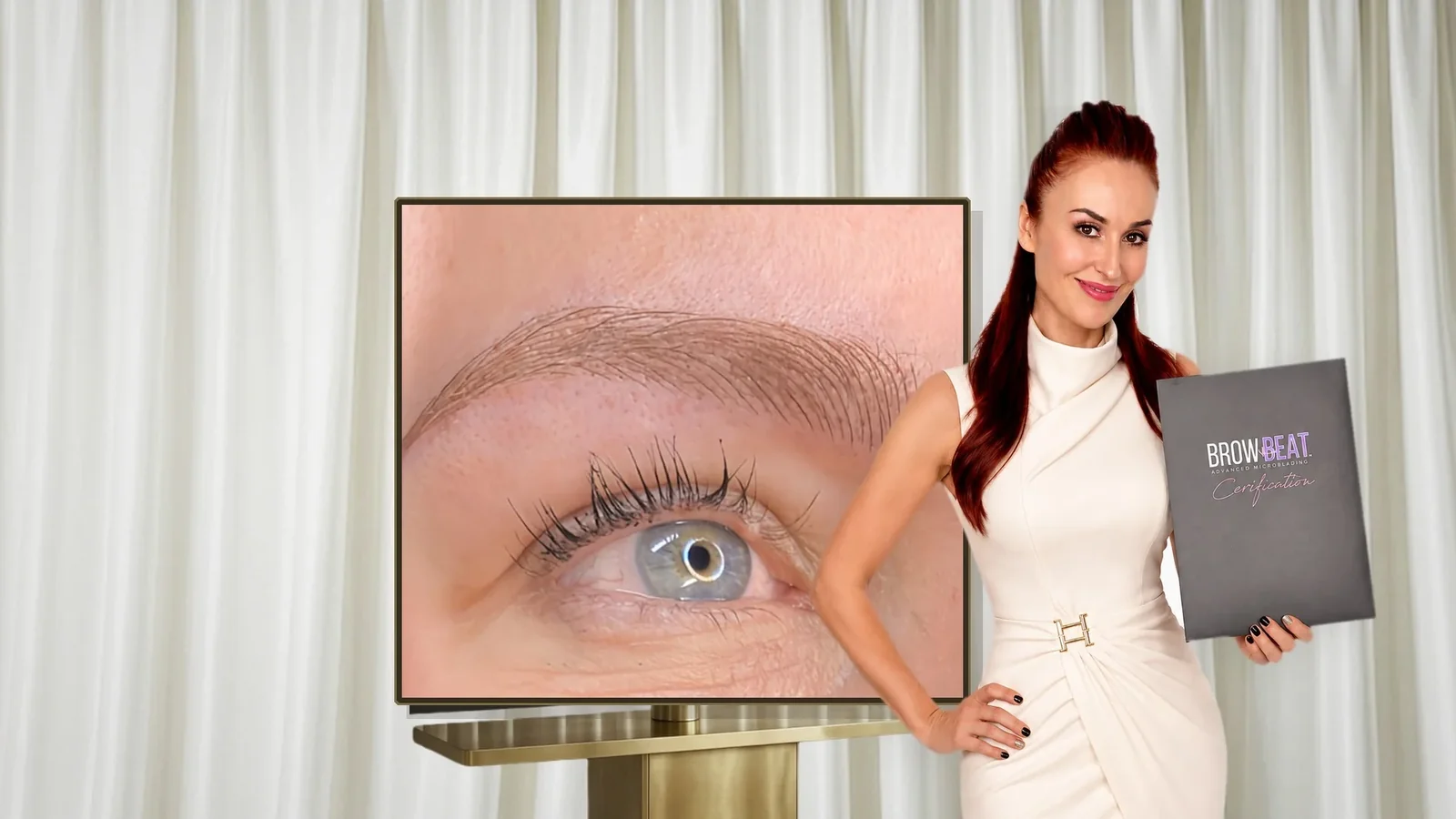
BrowBeat uses U blades for Microblading training. In a U blade, the grouped needles are arranged in a U-shaped row, creating the working configuration used within the BrowBeat manual hair-stroke technique.
Students learn what the U designation means so they understand the tool rather than simply memorizing the name of the blade they receive.
Keeping the training focused on U blades also means beginners can spend their attention learning the characteristics of the configuration they are actually using instead of trying to compare multiple blade shapes before they have developed basic manual control.
Understanding Hard and Flexi Microblading Blades
BrowBeat students work with both hard and flexi Microblading blades. The distinction comes from the way the group of needles is bound together.
In the flexi blades BrowBeat teaches, the needles are held together with plastic binding. That construction provides more flexibility and allows some of the physical force to be absorbed through the binding.
A hard blade uses metal binding around the grouped needles. The metal construction provides less give, creating a more rigid working blade.
Students learn the construction first because it explains the terminology. “Hard” and “flexi” are not simply labels placed on two products. They describe a physical difference in the blade that changes how the tool responds in the artist’s hand.
How a Flexi Microblading Blade Behaves
The plastic binding of a flexi blade allows more give within the working configuration. That flexibility changes how the blade responds to the artist’s manual input.
BrowBeat teaches students to understand that characteristic rather than reducing the lesson to a rule that flexi is automatically better or easier. A tool characteristic can provide an advantage in one respect while creating a different consideration in another.
Students experience flexi construction during practical training so the explanation is connected to something they can actually feel and observe rather than remaining an abstract piece of tool terminology.
How a Hard Microblading Blade Behaves
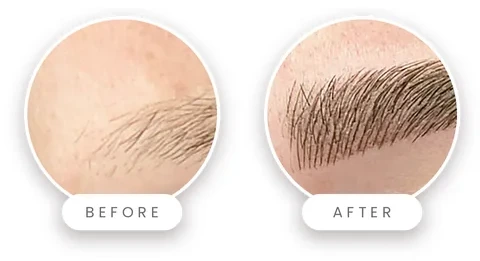
A hard blade uses metal binding, creating a more rigid grouping of needles with less give than the flexi construction.
That means the blade does not absorb the artist’s physical input in the same way. The student’s manual control therefore becomes particularly important when working with the tool.
BrowBeat teaches the characteristics, positives and negatives of hard-blade construction so students understand what the rigidity changes rather than assuming hard blades are simply another version of the same tool.
Why BrowBeat Teaches Both Hard and Flexi Blades
Working with both constructions gives students a practical way to understand what flexibility changes.
If a student learned with only one construction and was never taught what made it behave the way it did, encountering another blade later could be confusing. By understanding both hard and flexi blades, students learn to connect the feel of the tool with the way the needle grouping is constructed.
The lesson is not that one construction is universally superior. The student learns what each construction changes, what advantages and disadvantages need to be considered and why manual control matters when choosing and using a blade.
Blade Selection Should Have a Reason
Microblading blade selection should not be based on choosing the largest count, the most unusual configuration or the tool marketed as the most advanced.
BrowBeat teaches students to consider the characteristics of the blade and the level of control required to use it. Needle count, needle diameter, U-blade configuration and hard-versus-flexi construction all provide information about the tool.
As an artist’s manual control develops, their understanding of those characteristics becomes more useful. The goal is not to graduate from one blade simply because another sounds more advanced. It is to understand why a particular tool is appropriate for the work being performed.
Microblading Hand Tools and Handles
The Microblading handle holds the blade and gives the artist direct manual control over the movement. There is no powered needle movement creating the Microblading stroke.
This distinguishes the Microblading hand tool from a PMU machine. The artist is directly controlling the blade through the movement of the hand, which makes familiarity with the assembled tool an important part of practical training.
BrowBeat students work with manual Microblading handles during their exercises so they can learn how the blade and handle function together rather than studying the components only in theory.
The Blade and Handle Work as One Manual Tool
Once the blade is placed into the handle, the student is no longer working with two separate pieces of equipment. They are controlling one assembled manual tool.
The relationship between the blade position, the handle and the student’s hand affects how the tool can be approached and controlled during practice. This is why BrowBeat connects equipment education with practical exercises rather than teaching blade terminology as a stand-alone product lesson.
Students learn what the components mean and then experience those characteristics while developing the manual technique.
Blade Positioning Matters in Microblading
The way the blade is positioned within the working tool matters because it affects how the U-shaped needle configuration approaches the practice surface.
BrowBeat teaches students how blade positioning relates to manual control and why positioning needs to be intentional rather than treated as an unimportant setup detail.
This is also an area where in-person training matters. An instructor can see how the student has positioned and is approaching the tool, then help them make an adjustment while they are practicing.
Learning to Hold and Control the Manual Microblading Tool
Understanding a Microblading blade on paper does not automatically create control of the assembled tool. Students need practical experience holding the handle, working with the blade and connecting the movement of the hand with the stroke they intend to create.
That control develops progressively. Students practice, receive feedback, make adjustments and repeat the movement rather than expecting the tool to feel completely natural on the first attempt.
The objective is controlled, repeatable work. Speed develops later as the manual movement and treatment process become more familiar.
Pigment Loading Is Part of Microblading Tool Education
The Microblading blade also needs to carry pigment during the procedure, so BrowBeat teaches pigment dipping and loading as part of understanding the working tool.
Students learn how the blade is dipped, how much pigment is appropriate within the BrowBeat method and how often the tool needs to be reloaded as they work. They also learn the positives and negatives associated with pigment loading rather than assuming that putting more pigment on the blade automatically improves the procedure.
This gives beginners another repeatable process. Instead of guessing how much pigment to use or dipping randomly, they learn a method and understand the reasoning behind it.
More Pigment on the Blade Is Not Automatically Better
A beginner can reasonably assume that loading more pigment onto the Microblading blade will make pigment implantation easier. BrowBeat teaches students to think more carefully about that relationship.
The amount of pigment carried by the tool affects the working experience, so loading needs to be intentional. Students learn how much to dip, when to reload and what changes when the blade carries more or less pigment.
The detailed method is demonstrated and practiced during training, allowing students to connect the explanation with what they see and experience during the exercise.
Students Learn the Tool System, Not Just a Product Name
BrowBeat uses a focused set of 16- and 18-needle, 0.18 mm U blades during training, including hard and flexi construction. Students learn those tools because they are the Microblading blades used within BrowBeat’s own system.
The education, however, goes beyond memorizing those specifications. Students learn what needle count means, what the 0.18 mm diameter describes, how the U configuration is arranged and why metal versus plastic binding changes the blade.
That understanding allows the student to evaluate Microblading tools more intelligently even if they eventually encounter products from another supplier. Product names can change. The underlying concepts give the artist a way to understand what they are looking at.
Microblading Blades and PMU Machine Cartridges Are Different Tools
Microblading blades belong to the manual hair-stroke technique. PMU machine cartridges belong to machine-based permanent makeup work.
Both involve needles, but they operate differently. A Microblading blade is held within a manual handle and moved directly by the artist. A machine cartridge works within a powered PMU machine.
BrowBeat’s broader brow education includes machine-based techniques, but cartridge selection, needle setting and machine-shading mechanics are separate from the manual Microblading tool education covered here.
What Should Students Look at When Evaluating a Microblading Blade?
Students can begin evaluating a Microblading blade by understanding the specifications rather than relying on packaging or marketing language alone.
Needle count tells them how many individual needles are grouped within the blade. Needle diameter tells them the thickness of those individual needles. Configuration describes how the needles are arranged, while hard or flexi construction explains how the grouping is bound and how much give the blade provides.
The intended use and the artist’s level of manual control also matter. A blade should be selected because its characteristics make sense for the work and the artist using it, not simply because it is available.
Microblading Tool Education at BrowBeat Certification
BrowBeat Certification teaches Microblading equipment as part of understanding the manual technique itself. Students train with 16- and 18-needle U blades made with 0.18 mm needles and learn both hard and flexi construction.
They learn what the specifications mean, how the grouped needles are constructed, how the blade works with the manual handle and why blade positioning matters. Pigment loading and dipping are also taught so students understand how the tool functions during the complete Microblading process.
The goal is not to overwhelm beginners with every blade available in the industry. It is to give them a focused tool system, explain it thoroughly and develop the knowledge they need to understand why a Microblading blade behaves the way it does.