WHAT'S INCLUDED IN PMU TRAINING PROGRAMS
Permanent makeup training can include a wide range of subjects, but a useful curriculum should do more than present students with a long list of topics. The content needs to support the skill being taught.
That distinction matters because permanent makeup training and PMU education is not one universal course. Brow training, Lip Blushing and advanced Correction require different knowledge, different practical exercises and different technical decisions. Some concepts are shared across several areas of permanent makeup, while others belong very specifically to one technique.
At BrowBeat Certification, the curriculum is built around practical learning, technical understanding and clear processes students can continue using after class. Training can include design and mapping, tool education, machine and cartridge fundamentals where applicable, pigment and color education, practical exercises, realistic practice formats, client-process education and treatment workflow.
The exact content depends on the course. A student learning manual Microblading should not expect the same technical curriculum as someone learning machine-shaded brows.
Lip Blushing needs lip-specific mapping, color and machine education. Advanced PMU Correction starts with previous healed permanent makeup and requires a different level of assessment and decision-making.
So when someone asks, “What is included in permanent makeup training?” the most accurate answer is not a generic checklist. It is a structured set of subjects and exercises designed around the technique being learned.
What Do Students Learn in Permanent Makeup Training?
Permanent makeup education brings together several types of learning. There is theoretical knowledge: understanding the procedure, terminology, structure and reasoning behind the work.
There is visual education: learning how to assess shape, placement, balance, color and the intended finished result. There is technical education: understanding the tools used for a particular technique and how physical movement affects the work.
There is practical education: repeating exercises until the student begins connecting what they understand intellectually with what their hands can reproduce.
There is also process education. Students need to understand the order in which a treatment is approached, how the different parts of that process relate to one another and what should be considered before moving forward. Good PMU curriculum connects these areas instead of teaching them as unrelated facts.
Permanent Makeup Curriculum Should Match the Technique
One of the easiest mistakes in PMU education is assuming that every course should contain the same curriculum because all of the procedures involve cosmetic tattooing. They should not.
Microblading is a manual hair-stroke discipline. Ombré/Powder Brows are machine-shading techniques.
Combo/Hybrid Brows integrate strokes and shading into one finished brow. Lip Blushing involves a different treatment area and different design and color considerations. Correction begins with previous healed pigment already present in the skin. Those differences should be reflected in the training.
A strong curriculum therefore has two layers: shared permanent makeup foundations where they genuinely apply, and technique-specific education where the procedure requires it.
This keeps the training relevant instead of forcing every subject into every course simply because it belongs somewhere within PMU.

makeup
Tools
New PMU students encounter unfamiliar tools, materials, terminology, and equipment as they progress through professional training. Simply becoming comfortable identifying and working with these items is part of developing familiarity with the permanent makeup environment.
looks like
In Practice
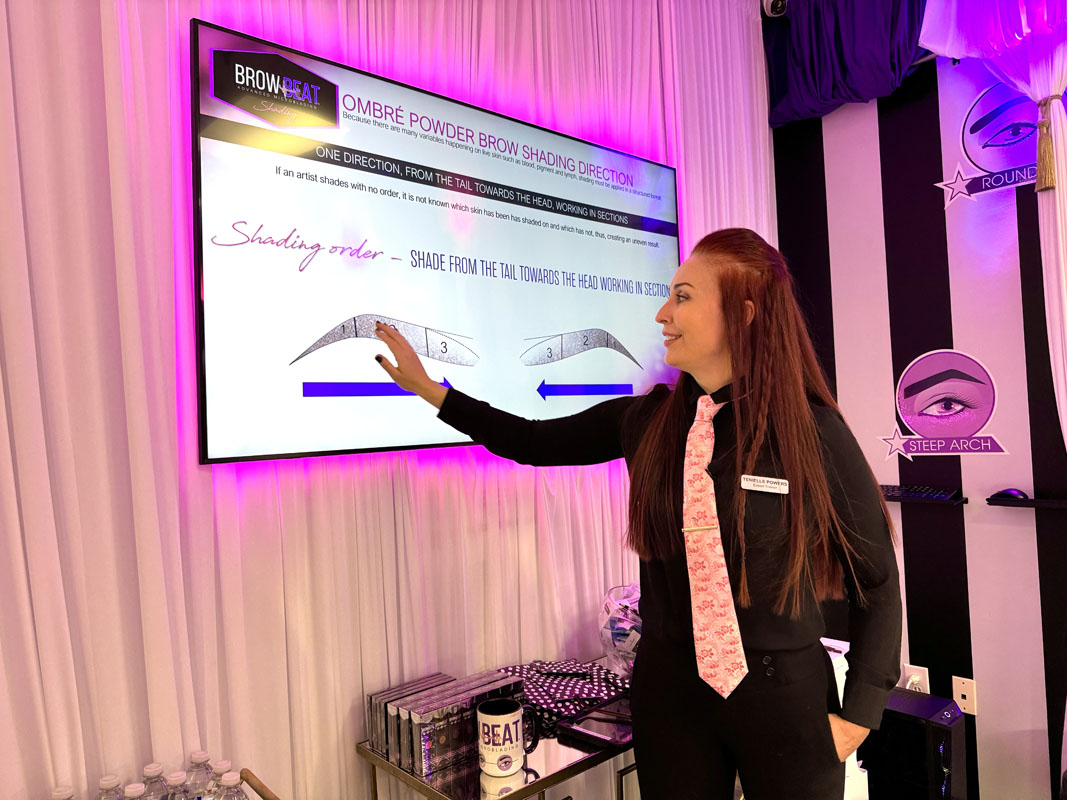
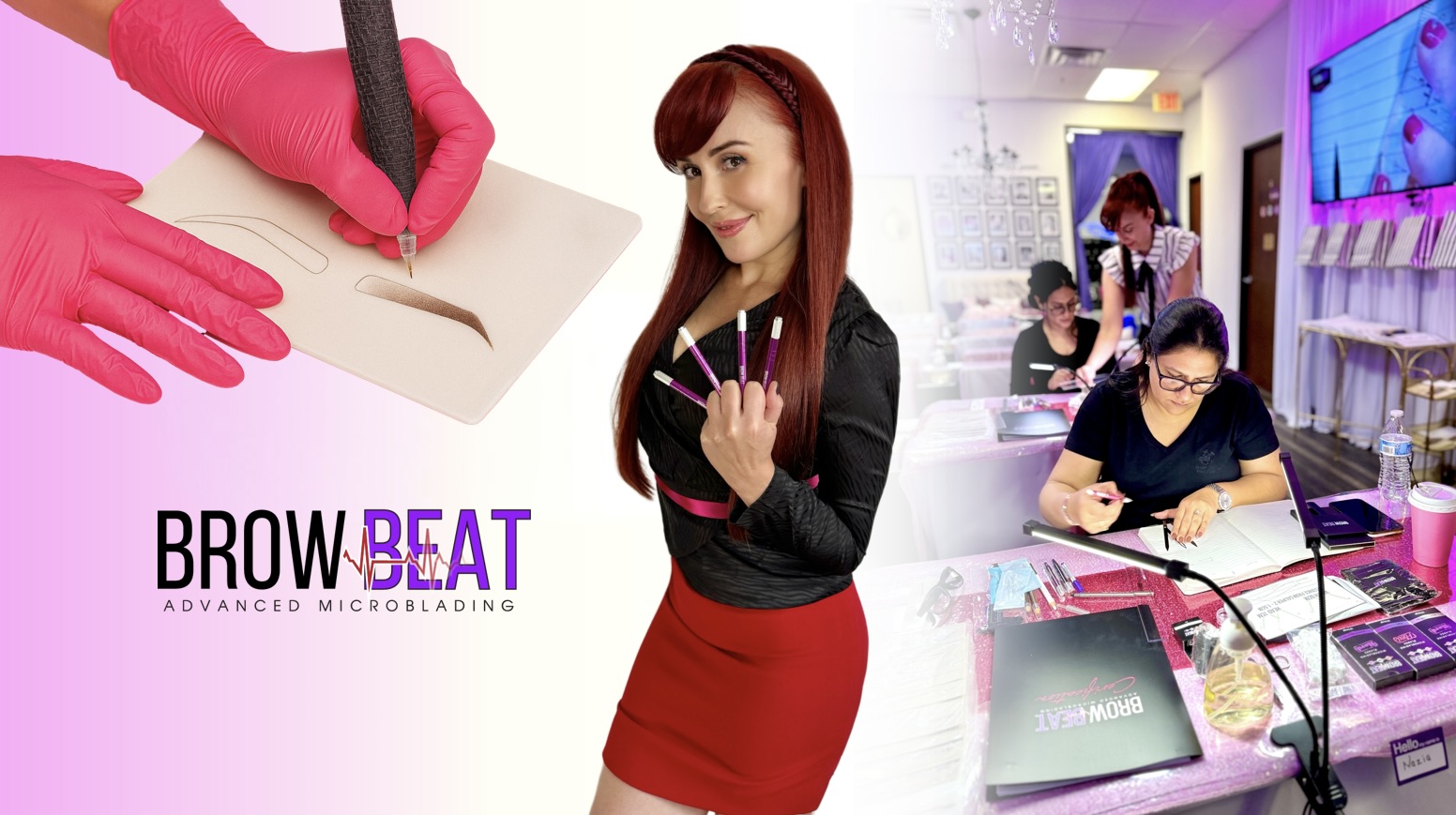
The phrase “hands-on curriculum” becomes much clearer when you can actually see students working. Permanent makeup students may spend time at individual training stations completing exercises, using course materials, interacting with equipment, and applying what has been introduced through instruction.


active
Participation
Permanent makeup curriculum isn’t simply a collection of topics to cover. Students need opportunities to actively engage with those topics if they are going to begin developing practical understanding.
At BrowBeat Certification in Dallas, students participate in PMU education through instruction, exercises, equipment familiarity, course materials, questions, and instructor feedback. Each element contributes differently to the overall training experience. Practical participation gives students an opportunity to apply professional concepts and discover which areas require additional attention. For prospective students comparing permanent makeup training programs in Texas, seeing this active learning can help explain what a professional PMU curriculum looks like beyond a written list of modules.
and
Exercises
Permanent makeup students don’t develop practical familiarity through one exercise alone. Training can incorporate different practice methods that allow students to focus on specific concepts, repeat movements, and apply information introduced during professional instruction.
At BrowBeat Certification in Dallas, practical PMU exercises give students opportunities to actively participate throughout their permanent makeup education. Some exercises may require careful concentration, while others create opportunities for instructor feedback or additional demonstrations. Together, these experiences help connect technical information with practical application. When students research what’s included in PMU training, practice methods matter because they show how the curriculum moves beyond information and gives students opportunities to work with what they are learning.


makeup
Training
The PMU machine is an important piece of professional permanent makeup equipment, making foundational machine education a useful part of a broader training curriculum. Students can begin learning how the machine fits into PMU work before progressing into deeper technique-specific applications.
At BrowBeat Certification in Dallas, students can combine professional instruction with practical learning as they become more familiar with PMU equipment. Training can introduce foundational concepts while giving students opportunities to work with the equipment themselves and receive instructor feedback. For prospective students researching what’s included in permanent makeup training programs, machine education is one component of a larger curriculum that also includes professional knowledge, practical exercises, tools, materials, and skill development.
In-person
Presentations
Practical skill development is one of the most visible parts of permanent makeup training. Students can work through structured exercises while applying professional concepts they have already encountered during classroom instruction.
At BrowBeat Certification in Dallas, students participate in guided PMU practice with instructor feedback available throughout the learning process. These exercises allow students to identify areas that require more attention and continue developing through repetition. For prospective students researching permanent makeup course content, seeing students actively practicing helps demonstrate how practical learning fits into the curriculum. Professional PMU education is not simply information delivered to students; it also includes opportunities for students to work with that information themselves.


pmu
Training
Mapping introduces students to the importance of planning, proportion, and placement within permanent makeup. At the broad PMU level, students can become familiar with mapping as a professional concept before moving into deeper technique-specific design education.
BrowBeat Certification in Dallas provides students with instructor-led permanent makeup education and practical opportunities to apply foundational concepts. Mapping exercises can help students understand why preparation and planning matter before application begins. Because brow, lip, and other specialty mapping can involve different considerations, deeper mapping education belongs within the relevant specialty training. For prospective students researching PMU course curriculum in Texas, foundational mapping is one of several areas that can contribute to a comprehensive permanent makeup education.
browbeat
Certification
Professional permanent makeup education includes classroom instruction, practical exercises, training materials, PMU tools and equipment, foundational machine education, color and pigment concepts, mapping foundations, and opportunities for hands-on skill development.
At BrowBeat Certification in Dallas, Texas, these curriculum components work within an instructor-led learning environment where students can participate actively and receive feedback as they progress. The purpose of a comprehensive PMU training program isn’t to simply expose students to a long list of topics. Each component should contribute to a broader understanding of professional permanent makeup. Technique-specific skills can then be developed more deeply within the appropriate specialty training as students continue their education.


makeup
Education
Before-and-after examples allow students to examine professional PMU work in a way that diagrams and written descriptions cannot. This Microblading result shows individual hair-like strokes contributing to the definition and overall appearance of the finished brow.
For students at BrowBeat Certification in Dallas, professional work examples support the broader permanent makeup curriculum by helping students recognize different application styles and skill sets. Microblading uses a manual approach, while other PMU techniques rely on machine application. Understanding these distinctions is part of becoming familiar with the permanent makeup field. Specialty Microblading training can then develop the technique much more deeply.
machine-shaded
Pmu
Ombré Powder Brows give students a clear visual example of machine-based permanent makeup artistry. This before-and-after demonstrates how shading creates brow definition without relying on the individual hair-like strokes associated with Microblading.
Within the PMU curriculum at BrowBeat Certification in Dallas, students can become familiar with professional machines, equipment, practical concepts, and the different ways those skills relate to permanent makeup specialties. Professional Powder Brow results help put that education into context. The broader curriculum establishes familiarity with PMU, while detailed Powder Brow machine control and shading technique belong within specialized Ombré training.


skills
Connect
Combo Brows provide a particularly useful curriculum example because the finished technique combines hair-like strokes with shading. This before-and-after allows students to see both visual elements working together within one brow.
At BrowBeat Certification in Dallas, students encounter broad PMU education covering professional concepts, tools, equipment, and practical skill development. Combo Brow examples help demonstrate how different categories of permanent makeup skills can eventually relate to one another. Detailed instruction in combining strokes and shading belongs within Combo Brow specialty training, while the broader curriculum helps students recognize how the technique fits within PMU artistry.
lip
Artistry
Seeing professional Lip Blushing work helps students connect broad PMU concepts with one of the specialty areas they may encounter as their education develops. This before-and-after allows students to observe the visible change between the starting lips and finished work.
BrowBeat Certification in Dallas exposes students to the broader permanent makeup field through professional instruction, practical exercises, equipment education, and visual examples. Lip Blushing provides useful context for understanding why different PMU specialties require their own deeper technique development beyond foundational training.


has
Specialties
Not every permanent makeup procedure begins with the same conditions. This Dark Lip Neutralization before-and-after shows visible natural lip pigmentation and demonstrates why some PMU work requires more specialized education.
At BrowBeat Certification in Texas, students develop broad permanent makeup knowledge through instructor-led and practical learning. Professional Dark Lip examples help students understand where foundational color concepts can eventually lead without treating broad PMU training as a substitute for specialized neutralization education.
assessment
Concepts
Permanent makeup correction begins with an important difference: previous PMU is already present. This before-and-after helps students understand why professional education must prepare artists to recognize that not every situation begins with new application.
At BrowBeat Certification in Dallas, students develop a broad PMU foundation through professional concepts and practical education. Correction examples give that curriculum additional context while keeping specialized corrective techniques within dedicated correction training. Students can begin understanding the professional landscape without assuming foundational PMU education alone prepares them for every previous-work situation.


learning
Example
Previous permanent makeup can create situations that differ substantially from new PMU work. This correction before-and-after provides students with a visual example of why assessment and specialized education become important.
BrowBeat Certification in Texas gives students a broad permanent makeup foundation while professional correction examples show where deeper learning may eventually lead. The general PMU curriculum can help students recognize the distinction, while dedicated correction education develops the knowledge required to work with previous permanent makeup more deeply.
Design and Mapping Education
Mapping is the planning stage of permanent makeup. It helps students think about placement before execution begins. Within BrowBeat Certification training, mapping is taught where it applies to the procedure. Students learn to assess the area, identify reference points and develop a planned shape before moving into technical application.
For brow education, mapping provides a shared design foundation that can support several brow techniques rather than being treated as though every technique requires an entirely unrelated system. For Lip Blushing, lip mapping is specific to the treatment area. Students learn lip drafting and shape planning, then have the opportunity to practice mapping on a partner before moving later into the technical Lip Blushing workflow.
The mapping itself is not the same thing as performing the procedure. Planning and execution are connected, but they are different skills. Students who want the technical details of brow mapping or lip mapping can explore the dedicated mapping education in the relevant specialty sections.
Practical Exercises Are Part of the Curriculum
Permanent makeup is a physical skill, so practical education needs to be part of the curriculum rather than something added as an afterthought. At BrowBeat Certification, students work through exercises that help them develop understanding and control in stages.
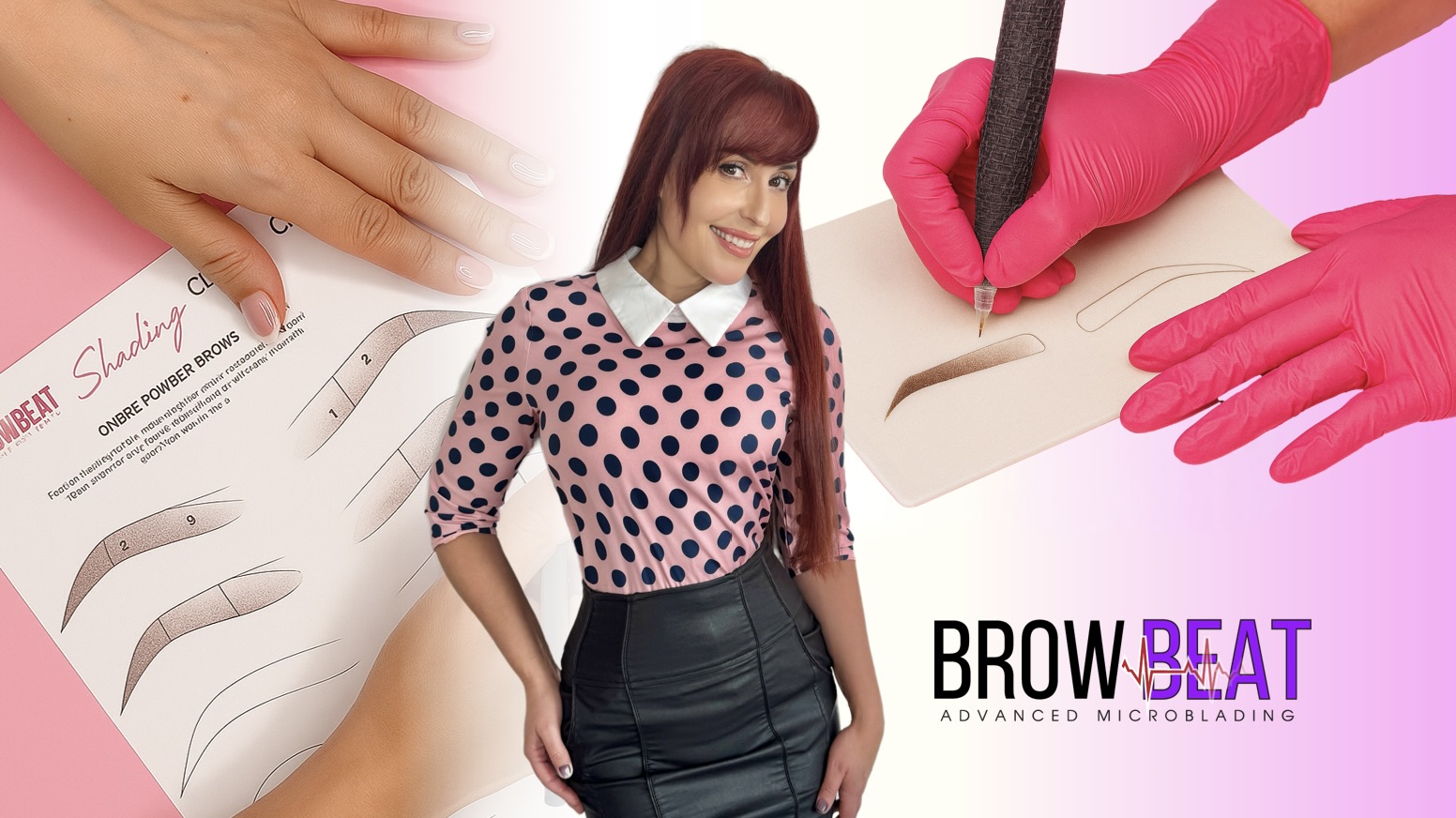
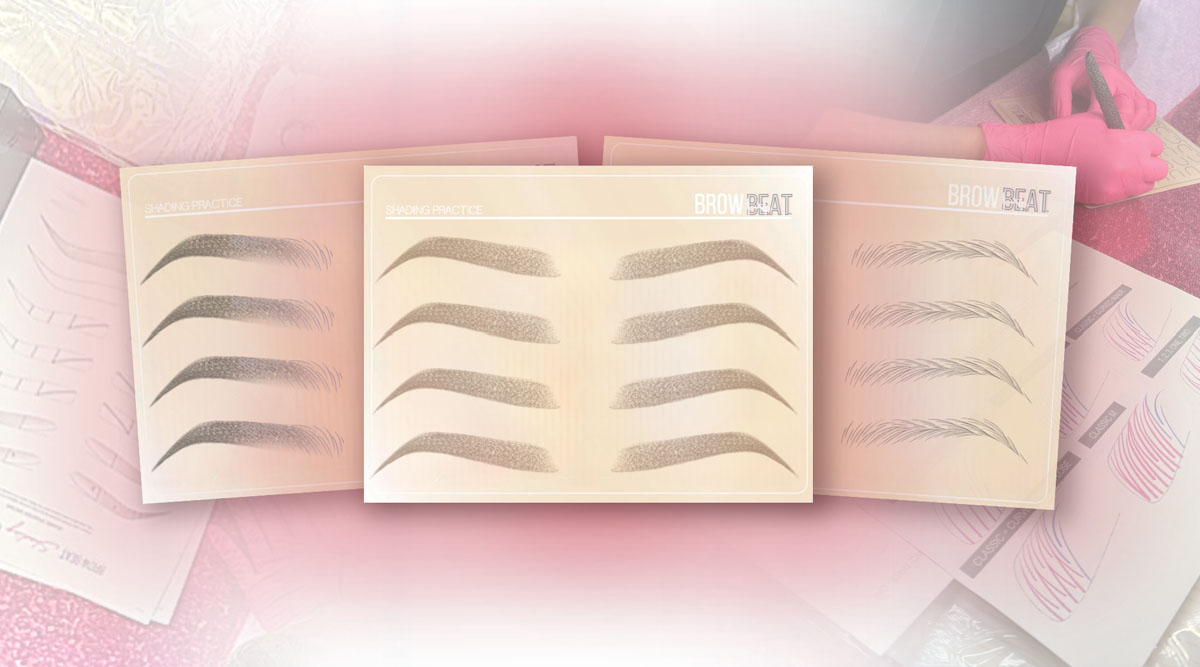
Paper exercises can isolate placement, structure and sequence. Silicone practice introduces the physical demands of the tool. Blank practice surfaces can be used for repeated movement and control exercises. Three-dimensional practice formats make positioning more realistic. The purpose of these exercises is not simply to keep students busy. Each one helps develop something specific.
A practice sheet can help the student repeat a pattern. A silicone surface can help the student see how hand movement affects the result. A curved headband or mannequin setup can force the student to think about body position, chair placement and working around a treatment area rather than over a flat desk.
Practice becomes valuable when the student understands what the exercise is trying to improve.
Paper Exercises and Foundational Practice
Paper practice can look simple compared with machine work or silicone exercises, but that simplicity is part of its value. Students can concentrate on visual structure without having to manage every technical variable simultaneously.
In BrowBeat brow education, paper exercises support work such as mapping, stroke-pattern understanding, design reference and treatment sequence. In Correction education, paper exercises can also be used to help students think through color and previous-work scenarios before moving into practical machine work.
For Lip Blushing, drafting exercises help students understand lip shape and planning before partner mapping and later workflow practice are introduced.
These exercises create a place to understand what belongs where before the student has to execute everything physically.
Silicone Practice and Repetition
Silicone practice introduces another layer of learning: the student now needs to connect visual understanding with movement. Depending on the course, silicone can be used for brow work, Lip Blushing exercises, machine shading, pixilation practice or Correction exercises.
Students can repeat the same movement, compare attempts and make adjustments without every repetition carrying the consequences of live skin.
This is where the difference between knowing and doing becomes very obvious.
A student may understand exactly what the instructor is asking for and still need repeated practice before the hand produces the intended result consistently.
Silicone gives that development somewhere to happen.

Three-Dimensional Practice Formats
Flat practice materials are useful, but they do not reproduce the physical reality of working around a face. BrowBeat Certification uses three-dimensional practice formats where appropriate, including mannequin-head work and silicone headbands shaped for the treatment area.
For brow students, eyebrow-shaped silicone headbands create a more realistic working environment than a flat sheet alone. For Lip Blushing, silicone lip headbands allow students to apply the Lip Blushing workflow on a curved, treatment-like surface after learning the workflow at the desk. This changes the exercise.
The student has to think about viewing angle, hand position, body position and how to work around a face rather than expecting the treatment area to remain perfectly flat and convenient. Those practical details are part of professional skill development.
Partner Mapping and Live Design Practice
Where appropriate, BrowBeat Certification also uses partner practice for mapping.
This is an important distinction from live-model PMU procedures. Students can draft and map on a real person, which introduces individual facial features, movement, communication and real-world placement decisions. They are practicing design and assessment, not performing permanent makeup on live skin.
For Lip Blushing, students first learn lip mapping and drafting, then practice that mapping on a partner. Later, the class returns to desk-based work to learn the Lip Blushing workflow before using the silicone lip headband to apply that workflow in a more realistic treatment setup. That sequence allows design and technical execution to develop separately before they are connected.
Machine Education in PMU Training
Machine education belongs in permanent makeup courses where the technique itself uses a PMU machine. Students need more than the name of the equipment. They need enough understanding to know what the machine is doing, how it relates to the needle cartridge and how their physical movement affects the result.
BrowBeat Certification training includes education in machine setup, cartridge configurations and foundational machine handling.
For Ombré/Powder Brows, machine education supports the development of shading skills. For Lip Blushing, the machine is used for lip application and practical pixilation exercises. In advanced Correction, the machine supports corrective application once the previous work has been assessed and the case is appropriate for direct correction.
PMU Machine Control and Technical Fundamentals
Machine control involves several physical variables working together. Movement matters. Speed matters. Pressure matters. Depth matters. Cartridge selection matters. The artist’s angle and consistency matter. Those concepts can sound simple when listed separately, but the challenge for students is learning how they interact.
A student may understand that the machine should be controlled and still need practical repetition before the hand can maintain that control consistently.
This is why machine education should connect explanation with exercises.
At BrowBeat Certification, mentors can observe students during practical work, offer correction and help students recognize what needs to change in their hand position, pressure, machine angle or movement. That instructor feedback is part of what turns generic machine information into usable training.
Needle and Cartridge Education
Needles and cartridges are part of PMU training where the technique requires them. Students need to understand that different configurations serve different purposes rather than treating every cartridge as interchangeable. BrowBeat training kits include multiple cartridge configurations for machine-based courses so students can learn with the equipment relevant to the work being taught.
The important curriculum point is that students should understand the relationship between the tool, the cartridge and the technique rather than simply being handed equipment with no context.
Manual Tools in Microblading Education
Microblading is different because it is a manual technique rather than machine shading. The tools and practical education therefore need to reflect that distinction.
BrowBeat’s brow training materials include manual Microblading tools and blades for the Microblading portion of the education, along with supporting materials used for mapping, measuring and practical work. The manual technique requires its own control, stroke placement and pattern education.
Pigment and Color Education
Pigment and color education is part of permanent makeup training because students need to understand that color decisions are connected to the procedure being performed.
However, the relevant color education changes depending on the technique.
For new brow work, shared pigment and color education supports the broader 3-in-1 Brow Certification. Students can learn about brow pigment characteristics, color selection, skin color assessment, color matching, mixing and the relationship between selected pigment and healed color.
For Lip Blushing, color education is lip-specific. Students work with lip color concepts and pigment choices relevant to new lip work. Dark Lip Neutralization is a separate, more specialized corrective subject because the artist is not simply selecting a desired lip color. Existing lip color and melanin-rich lips change the reasoning.
PMU Correction requires different color thinking again because previous healed brow pigment is already present.

Correction Color Education Is Not the Same as New Pigment Selection
Correction deserves a clear boundary because students can easily assume all pigment education is the same. It is not. Choosing pigment for new brow work begins with creating a new result. Correction begins with an existing healed color that is already present in the skin.
BrowBeat’s educational philosophy is to assess the color that is present, identify what color is missing and determine the appropriate corrective color or approach.
That is a different reasoning process from choosing a brow pigment for new work. It also belongs in advanced Correction education, not in foundational 3-in-1 training.
In the 3-in-1 Brow Certification, previous PMU is introduced as something students should recognize and avoid working over at their current level. The actual corrective education is taught separately in the advanced PMU Correction course.
Mapping, Color and Technique Should Work Together
Some parts of PMU education are shared across several techniques, and it does not always make sense to teach the same foundation from scratch three separate times.
In BrowBeat’s 3-in-1 Brow Certification, mapping supports Microblading, Ombré/Powder Brows and Combo Brows. Shared brow color education also supports all three techniques. The technical execution then changes according to the method being learned. This makes the curriculum more coherent.
Students are not being taught three completely disconnected brow systems. They are learning shared foundations and then understanding how different techniques use those foundations differently.
What Is Included in Brow Training?
Brow training at BrowBeat Certification can include mapping and design, Microblading stroke work, silicone practice, realistic brow-positioning exercises, machine education for shaded brows, Ombré/Powder Brow training, Combo integration, brow pigment and color education, client-process education and practical exercises.
The 3-in-1 Brow Certification teaches Microblading, Ombré/Powder Brows and Combo/Hybrid Brows as three separate techniques.
Ombré/Powder Brow education begins as a clean focus on Day 3 and allows the machine-shading portion of the course to begin with the appropriate attention.
Detailed brow curriculum, including the relationship among the three techniques and the shared pigment education, can be found in the dedicated 3-in-1 Brow Certification page.
What Is Included in Lip Blushing Training?
Lip Blushing requires its own curriculum because the treatment area, design process, color decisions and technical application are different from brow work.
BrowBeat Certification’s Lip Blushing education begins by helping students understand the lips as a treatment area before asking them to execute the complete procedure. The curriculum includes lip-specific education, mapping and drafting, pigment and color concepts, PMU machine education, cartridge considerations, practical application exercises, client-process education and the Lip Blushing workflow.
The course also includes practical exercises designed specifically around lips rather than simply adapting brow practice materials to another part of the face.
Lip Mapping and Partner Practice
Students first learn how to draft and map the lip shape. That gives them an opportunity to understand the design process before technical application becomes the focus. They then practice lip mapping on a partner.
This is live design practice, not a live Lip Blushing procedure. The purpose is to give students experience working with real facial features, natural lip shape, positioning and communication while keeping the exercise focused on mapping. That distinction allows students to practice looking at an actual person without using live skin as the place where they are first developing machine control.
Learning the Lip Blushing Workflow
After the mapping portion, students return to desk-based education to learn the Lip Blushing workflow. This gives the procedure a structure. Rather than treating Lip Blushing as a collection of unrelated machine movements, students can understand the order of the process and how the individual parts of the treatment relate to one another. The workflow can then be practiced in a more realistic setting.
Silicone Lip Headband Practice
BrowBeat Certification uses silicone lip headbands designed specifically for practical Lip Blushing workflow exercises. The headband places the silicone lip area in a facial position rather than leaving the student to perform the entire exercise on a flat sheet at a desk.
Students can then work through the Lip Blushing workflow while also thinking about positioning, working angle and movement around the treatment area. This exercise comes after students have learned the workflow at the desk, so the more realistic practice format is being used to apply something they have already begun to understand.
The headband is not there simply because a three-dimensional practice surface looks more realistic. It creates another layer of practical decision-making.

Machine Practice in Lip Blushing Education
Lip Blushing is a machine-based PMU procedure, so students need practical machine education that relates specifically to lip work.
BrowBeat’s Lip Blushing training includes machine and cartridge education along with practical exercises that help students develop controlled application. Students work on practice materials before moving into the complete headband workflow exercise. This gives them opportunities to concentrate on individual movements before those movements need to function as part of the larger treatment sequence.
The Lip curriculum also includes pixilation exercises and practical work involving passes and layering. Those subjects are part of learning how Lip Blushing is physically performed.
Lip Pigment and Color Education
Lip color education needs to be specific to lips. Students learn color concepts relevant to Lip Blushing and work with pigments designed for the training. They need to understand that selecting a desired Lip Blush color is part of creating new lip work and should be approached in relation to the lips in front of them. That ordinary Lip Blush color education is different from Dark Lip Neutralization.
Dark or melanin-rich lips can present a corrective color problem that requires additional assessment and reasoning. BrowBeat’s advanced lip education addresses that subject separately rather than collapsing ordinary desired-color selection and corrective lip color into one generic lesson.
This distinction matters because the student’s question changes. New Lip Blush color selection asks what color is appropriate for the intended result. Dark Lip Neutralization asks what corrective strategy is appropriate based on the existing lip color and characteristics.
Dark Lip Education Adds Another Level of Assessment
BrowBeat’s Lip education also includes specialized learning related to dark and melanin-rich lips. This is not simply an extra pigment chart attached to ordinary Lip Blushing. Students need to assess what they are seeing before making corrective color decisions. The curriculum addresses existing lip color, saturation, hue and value, pigment selection, machine and cartridge considerations, practical exercises, client expectations and case considerations.
What Is Included in Advanced PMU Correction Training?
PMU Correction is different from foundational training because the artist is not beginning with new work on a blank canvas. Previous healed permanent makeup is already present. That changes the curriculum immediately.
BrowBeat’s advanced Correction education includes assessment of previous PMU, corrective color education, consideration of existing pigment density, case suitability, corrective machine application and practical exercises designed around previous-work problems.
The student is being asked to make more advanced decisions because there is already pigment in the skin that affects what can reasonably happen next.
This is why Correction is taught as its own advanced course rather than being folded into the 3-in-1 Brow Certification.
Previous PMU Is a Stop Signal for Beginning Students
Within foundational brow education, students need to recognize that previous permanent makeup changes the situation. That does not mean they are being trained to correct it. In the 3-in-1 Brow Certification, the important lesson is that previous PMU is outside the beginner’s current scope. Students should recognize it and understand that they are not yet ready to simply work over it.
The actual education for evaluating and correcting previous healed work belongs in the separate advanced Correction course. That boundary is important because a little information about Correction should not create false confidence about a problem that requires substantially more judgment.
Correction Begins With Assessment
Advanced Correction education asks the artist to examine what is already present before deciding what should happen next. Existing color matters. Pigment density matters. Coverage matters. The suitability of the case matters. The student is not simply being taught how to put more pigment over previous work. They are learning that assessment comes first.
Some previous work may be appropriate for direct correction. Some may not.
That decision-making belongs to the advanced Correction curriculum and is one of the reasons foundational PMU education and corrective education should remain separate.
Corrective Color Requires Different Reasoning
When previous healed pigment has an unwanted color, BrowBeat’s Correction philosophy begins with what is actually visible. Assess the color that is present. Identify what color is missing. Then determine the appropriate corrective color or approach.
This gives students a reasoning process rather than asking them to memorize one generic instruction to “neutralize” every unwanted color. The full corrective color theory belongs in the dedicated Correction education. Here, the important curriculum point is that corrective pigment selection is its own advanced subject and should not be confused with choosing pigment for new brow work.
Client Process and Treatment Workflow
Technical execution is only one part of understanding a permanent makeup procedure. Students also need a clear treatment process. BrowBeat curriculum includes education around treatment order, client communication, consent documentation, aftercare information and the sequence used to move through the procedure. This helps connect isolated technical exercises to the larger treatment environment.
A student may learn a movement at the desk, but eventually that movement has to exist inside a complete process. Understanding what happens before and after the technical application gives the skill context.
Client Education Is Part of Professional PMU Training
Students need to be able to explain what they are doing as well as perform the technical work. Client education can include communicating about the procedure, setting realistic expectations and explaining relevant aftercare information associated with the training. This matters because a client experiences more than the artist’s hand movement.
They experience the consultation, explanations, expectations and communication surrounding the procedure. Including client-process education in training helps students begin connecting technical skill with the larger responsibility of working with another person.
The deeper business and career implications can be learned about in the Permanent Makeup Career Guide. Here, client education is discussed in depth.

Contamination
Prevention and Treatment Setup
Permanent makeup training also needs to address the treatment environment and the importance of working in an organized, contamination-conscious way. BrowBeat curriculum includes education related to treatment setup and contamination prevention as part of preparing students to understand how a PMU procedure is organized.
This is another example of curriculum that supports technical work without being the technique itself. A student can understand a beautiful design and still need to know how the working environment should be approached.
Detailed legal health and safety requirements are separate and should be verified through the appropriate current regulatory information.
What Comes in a PMU Training Kit?
Training kits vary according to the course because different techniques require different equipment and practice materials. At BrowBeat Certification, kits are designed around the education being taught rather than using one generic box for every PMU course.
Depending on the training, materials can include pigments, manual Microblading tools, a wireless PMU machine, cartridge configurations, mapping and measuring supplies, practice sheets, blank silicone practice materials, three-dimensional practice surfaces, consent and aftercare materials and course-specific exercises.
The important educational point is that the materials have a purpose within the training. A cartridge is useful because the student is learning machine work. A practice sheet is useful because there is an exercise attached to it. A headband is useful because it creates a more realistic treatment position. A kit should support the curriculum rather than become a substitute for it.
PMU Machines and Equipment in BrowBeat Training Kits
Machine-based BrowBeat courses include a five-speed wireless PMU machine along with the equipment and cartridge configurations relevant to the training.
Students are not simply given a machine and expected to determine how it fits into the procedure on their own. Machine education and practical exercises give the equipment context.
Different courses can also include different pigment sets and practice materials according to the work being taught. Brow training materials are designed around brow education, Lip materials around Lip Blushing and Dark Lip education, and Correction materials around advanced corrective practice. This is why kit comparison should always happen in relation to the course rather than by counting the number of objects in the box.
Why Course Materials Should Connect to Exercises
A useful training material should answer a simple question: What is the student supposed to learn by using this? If there is no clear answer, the material may add more visual value to a kit photograph than educational value to the course.
BrowBeat’s practical materials are connected to exercises. Paper supports planning and pattern work. Silicone supports repetition. Blank sheets allow focused movement practice. Treatment-area headbands create more realistic positioning. Machines and cartridges support machine-based techniques. Mapping supplies support design exercises. The relationship between the material and the exercise is what makes the material educational.

Instructor Feedback Is Part of Practical Curriculum
Practical exercises become more valuable when students receive feedback while they are performing them. BrowBeat mentors circulate during practical work, observe students and provide guidance as the exercises develop. That feedback can help with physical details such as hand position, machine angle, pressure or the way the student is approaching an exercise.
This matters because students do not always recognize their own habits while they are concentrating on a new skill. An instructor can often identify the problem more quickly, explain what needs to change and give the student an opportunity to try again. The exercise then becomes more than repetition. It becomes guided repetition.
Why a PMU Curriculum Needs Both Knowledge and Practice
Theory without practice leaves the student knowing what something should look like without necessarily being able to create it. Practice without understanding can leave the student repeating movements without knowing why they work. Permanent makeup education needs both.
Students benefit from understanding the purpose of a technique, seeing how the process is organized and then physically working through exercises that develop the necessary control.
As those pieces begin connecting, the student moves from memorizing isolated information toward understanding a complete process. That is what makes curriculum different from a list of topics.
How the Different Parts of PMU Training Connect
A permanent makeup curriculum becomes more useful when students can see how the individual subjects relate to one another. Mapping is not an isolated drawing exercise if the design later guides the procedure. Pigment education is not an isolated color lesson if the artist needs that knowledge to make a selection. Machine exercises are not simply about learning to hold equipment if the student eventually needs to use those movements inside a complete treatment workflow.
The pieces should connect.
That connection is one reason BrowBeat Certification uses step-by-step processes throughout training. Students have something to return to while the individual skills are still becoming familiar. As experience develops, the process can begin to feel more natural. In the beginning, structure reduces guesswork.
Shared Foundations Do Not Mean Every Technique Is the Same
Some permanent makeup skills support more than one technique. That does not make the techniques interchangeable. Brow mapping is a good example. A student can learn a strong mapping foundation and use that understanding across several brow techniques. Shared brow pigment and color education can likewise support Microblading, Ombré/Powder Brows and Combo/Hybrid Brows.
The execution still changes.
Microblading remains manual hair-stroke work. Ombré/Powder remains machine shading. Combo/Hybrid brings strokes and shading together as one finished technique.
Teaching a shared foundation once, then showing students how it applies across different techniques, can make the relationships easier to understand.
Why Technique-Specific Curriculum Still Matters
Shared foundations have limits. A student cannot learn general PMU machine basics and assume they now understand every machine-based procedure. The treatment area, intended result and application method still affect what needs to be learned.
Lip machine work needs lip-specific education. Powder Brow shading needs brow-specific machine education. Corrective machine application occurs only after previous work has been assessed and determined appropriate for direct correction. The same principle applies to color.
General color concepts can provide a foundation, but selecting pigment for new brow work is different from choosing a desired Lip Blush color. Both are different again from determining a corrective approach for previous healed brow pigment or dark and melanin-rich lips.
A useful PMU curriculum teaches students where knowledge transfers and where the problem has changed enough to require different education.
Why Previous Permanent Makeup Changes the Curriculum
Previous healed PMU is an especially important example of why course boundaries matter. A beginning brow student can learn to recognize that previous work changes the situation without being taught to correct it. That recognition is valuable on its own.
It tells the student that the skills used to create new work should not automatically be applied over existing pigment simply because the artist knows how to perform the new technique. Actual Correction education belongs at a more advanced level. There, the artist learns to assess what is present, consider case suitability and make corrective decisions based on the previous work.
This distinction protects the educational progression. Exposure to a subject is not the same thing as being trained to perform it.
Course Content Should Reflect the Student’s Level
Curriculum should also make sense for the experience level of the student.
Foundational education needs to establish skills that later training can build upon. Advanced education should be able to assume that certain fundamentals already exist.
Trying to compress both levels into one course can create problems in either direction. Beginners may be given information they are not yet equipped to use, while experienced artists may spend too much time revisiting subjects they already understand.
This is why BrowBeat Certification separates advanced Correction education from foundational brow training. The distinction is not about making one course sound more exclusive. It is about making the curriculum appropriate for the problem being taught.

What Students Should Take Away From PMU Curriculum
The purpose of permanent makeup education is not to see how many facts a student can remember by the end of class. Students need usable structure. They should understand what they are trying to accomplish, what information affects their decisions, how the practical process is organized and what they need to continue practicing. That is why formulas and workflows matter.
A beginner who has not yet accumulated years of experience cannot rely on instinct in the same way an experienced artist can. A repeatable process gives the student something more reliable than guessing. Over time, experience can make that process feel increasingly natural. The curriculum provides the structure from which that experience can grow.
What Is Not the Same as a Complete PMU Curriculum?
It is useful to understand what curriculum is not. A kit is not a curriculum. A demonstration is not a curriculum. A collection of videos is not automatically a curriculum. A long list of industry terminology is not a curriculum. And allowing a student to attempt a procedure does not, by itself, prove that the education leading up to that attempt was complete.
A curriculum connects information, instruction, practical exercises and feedback around a defined learning objective. The question is not simply, “Was this topic mentioned?” The better question is, “What is the student supposed to understand or be able to practice because this topic was taught?”
Why BrowBeat Certification Does Not Build Curriculum Around Live-Model Procedures
BrowBeat Certification does not use student live-model PMU procedures as the centerpiece of its curriculum. The decision is deliberate. Students need time to develop hand-eye coordination, understand the process and become more familiar with the tools before live skin becomes part of their independent work.
Instead, BrowBeat uses practical exercises that allow students to repeat, adjust and receive feedback while they are still learning.
Partner practice is used where it makes educational sense for mapping and design, but mapping another person is not the same thing as performing a PMU procedure on them. The curriculum prioritizes building a stronger technical foundation rather than treating live-model access as proof that a course is sufficiently hands-on.
What Should You Look for in a PMU Curriculum?
A useful PMU curriculum should be understandable. The student should be able to see how the theory relates to the practical work, why particular exercises are being used and how the course content supports the technique being taught.
The curriculum should also respect boundaries.
A beginner course should not create false confidence about advanced work. A machine course should provide appropriate machine education. A manual technique should not be taught as though it is simply another form of machine shading. Corrective education should recognize that previous healed pigment changes the problem.
Most importantly, the curriculum should give students something they can continue using after class. Information becomes much more valuable when the student understands how to apply it.
Related Permanent Makeup Training Guides
If the next question is how the training process itself works, the guide to how semi-permanent makeup training works explains BrowBeat’s in-person learning progression and student experience.
If the question is how to evaluate and choose a PMU course, the guide to choosing the right permanent makeup course focuses on comparing training providers and educational formats.
If the question is what PMU certification means, the permanent makeup certification process guide explains training certificates and the distinction between education and legal authorization.
If the student wants detailed information about a specific technique, the relevant Microblading, Ombré/Powder Brow, Combo/Hybrid Brow, Lip Blushing or advanced PMU Correction education is the better place to continue.
PMU Training Should Connect Information With Skill
A strong permanent makeup curriculum should leave students with more than a collection of notes and equipment. The student should understand what they are trying to create, why the process is organized the way it is and what they need to continue practicing.
Tools should connect to exercises. Exercises should connect to skills. Skills should connect to a treatment process. Feedback should help the student understand what to adjust. That is what turns course content into education.
BrowBeat Certification’s in-person PMU training in Dallas is built around that connection between understanding and practical development. Students can explore the specific training options to see which curriculum matches the permanent makeup skill they want to learn.
Frequently Asked Questions About What’s Included in PMU Training
What is included in permanent makeup training?
Permanent makeup training can include theoretical education, mapping and design, practical exercises, tools, machine education, needle and cartridge education, pigment and color concepts, treatment workflow, client-process education and practice materials. The exact curriculum depends on the technique being taught.
What do students learn in a PMU course?
Students learn the knowledge and practical processes associated with the particular PMU technique or training program. That can include understanding the procedure, planning the work, using the relevant tools, practicing technical execution and learning how the individual steps fit together.
Does every permanent makeup course teach the same curriculum?
No. Different techniques require different education. Microblading, machine-shaded brows, Combo Brows, Lip Blushing and advanced Correction should not all have identical curricula because the methods and decisions involved are different.
Does PMU training include hands-on practice?
BrowBeat Certification’s in-person PMU education includes practical exercises appropriate to the course. These can involve paper, silicone, hands-on tool exercises, mannequin or treatment-area headband practice and partner mapping where applicable.
Does permanent makeup training include mapping?
Mapping is included where it applies to the procedure. Brow mapping provides a design foundation for brow work, while Lip Blushing uses lip-specific drafting and mapping. The detailed mapping methods belong in the relevant specialty education.
Does PMU training include machine education?
Machine education can include understanding the equipment, cartridges and foundational control concepts. Detailed movement, pressure, depth, speed and application methods depend on the technique and belong in the relevant technical training.
Does permanent makeup training include pigment and color education?
Yes, where color selection is part of the procedure. BrowBeat separates general brow pigment education, Lip Blush color education, Dark Lip Neutralization and corrective color education because those situations require different reasoning.
Does BrowBeat teach brow pigment and color education?
Yes. Shared brow pigment and color education belongs within the 3-in-1 Brow Certification and supports Microblading, Ombré/Powder Brows and Combo/Hybrid Brows.
Does Lip Blushing training include color education?
Yes. Lip Blushing includes lip-specific pigment and color education. Corrective color strategy for dark and melanin-rich lips is treated as a separate specialized subject rather than being collapsed into ordinary desired Lip Blush color selection.
Is PMU Correction included in beginner brow training?
No. Beginning brow students are taught to recognize that previous PMU changes the situation and should not simply be worked over. Actual PMU Correction is taught separately as advanced education.
What is included in PMU Correction training?
BrowBeat’s advanced Correction education includes assessment of previous aged PMU, case suitability, corrective color reasoning, consideration of existing pigment density, corrective machine application and practical exercises. The dedicated Correction pages explain those subjects in greater depth.
What practice materials are used in PMU training?
Depending on the course, practice can include paper exercises, silicone sheets, blank silicone surfaces, mannequin-head work, eyebrow-shaped silicone headbands, lip-shaped silicone headbands and other course-specific practical materials.
Why does BrowBeat use silicone headbands?
Silicone headbands place the practice area on a curved, treatment-like surface. This helps students think about body position, viewing angle and movement around the treatment area rather than practicing everything on a flat desk.
Does BrowBeat use live models during PMU training?
No. BrowBeat Certification does not use student live-model PMU procedures during training. Partner practice can be used for mapping, while technical execution is developed through appropriate practice materials and realistic silicone formats.
What comes in a BrowBeat PMU training kit?
Kit contents depend on the course. Confirmed materials can include pigments, manual Microblading tools, a wireless PMU machine for machine-based training, cartridge configurations, mapping supplies, practice sheets, silicone materials, treatment-area headbands and course-specific forms and exercises.
Where can I learn more about BrowBeat's PMU curriculum?
BrowBeat Certification provides in-person permanent makeup education in Dallas, Texas. Students can explore the specific brow, Lip Blushing and advanced Correction training information to see how the curriculum changes according to the skill being taught.